Find the Best Septic Tank Installation & Replacement Contractors for Your Business
No obligation • Fast responses • Nationwide coverage

Why you can trust Septic Spot
Septic Spot is a leading United States resource for understanding and comparing septic services. Our editors review providers using consistent criteria and verify key business details. Listings and scores are independent, and companies cannot pay to influence our content.
Search providers near you
Top Septic Tank Installation & Replacement Contractors in Bountiful, Utah Ranked
Installing or replacing a septic system is a significant home improvement project that ensures the safe and effective treatment of household wastewater. In Bountiful, this process is governed by specific state and county regulations designed to protect public health and local groundwater. This guide explains the essential steps, from permits and soil testing to final inspection, helping you understand what to expect and how to connect with qualified local professionals for your onsite wastewater system needs.
Understanding the Permit Process in Davis County
Before any excavation begins, securing the proper permits is the first and most critical legal step. In Bountiful and throughout Davis County, all septic system installations and replacements require approval from the Davis County Health Department. It is illegal to proceed without a permit. The process starts with submitting an "Onsite Wastewater System Application," which must include a detailed site plan and a certified system design, often prepared by a licensed professional engineer.
A key policy to be aware of is the connection requirement: if a public sewer line is available within 300 feet of your property line, you will likely be required to connect to it instead of installing a new septic tank 1. For replacement projects, the county must be notified at least 72 hours before you begin excavating to abandon or replace an old tank2. Navigating these initial regulations is foundational to a successful project.
The Critical Role of Soil Testing (Perc Tests)
The type of system you can install is almost entirely determined by your property's soil. A soil percolation test, commonly called a "perc test," is mandatory for standard residential systems in Utah. This test measures the soil's absorption rate, determining how quickly effluent can filter through the ground.
The test must be conducted by a professional certified by the Utah Division of Water Quality. The investigation involves digging test pits to a depth of at least 10 feet or until "practical refusal" is met3. If the planned system is deeper than 6 feet, even deeper soil evaluations are required3. The results of this evaluation dictate whether a conventional gravity-fed system is suitable or if an alternative system, like a mound or pressurized drip system, is necessary to properly treat wastewater.
System Design and Component Selection
Once soil data is available, a licensed designer or engineer creates the official system plans. These designs must comply with Utah Administrative Rule R317-4, which outlines all technical requirements for onsite wastewater systems4. The design will specify the tank type, drain field size, and layout.
Tank materials approved for use in Utah include concrete, fiberglass, or plastic5. A standard 1,000-gallon concrete tank can cost between $500 and $900, with costs increasing by $50 to $150 for each additional 100 gallons of capacity6. The design will also ensure all required setbacks are met, maintaining legal distances from property lines, wells, water bodies, and structures7 8.
Find the perfect septic tank installation & replacement contractors for your needs
Get personalized recommendations and expert advice
The Installation Timeline and Key Inspections
A professional installation follows a defined sequence with mandatory checkpoints. After permits are secured and the design is approved, the physical work begins.
- Site Inspection & Staking: The installer and a county inspector will visit the site to evaluate the proposed location, verify property lines, and ensure the plan is feasible.
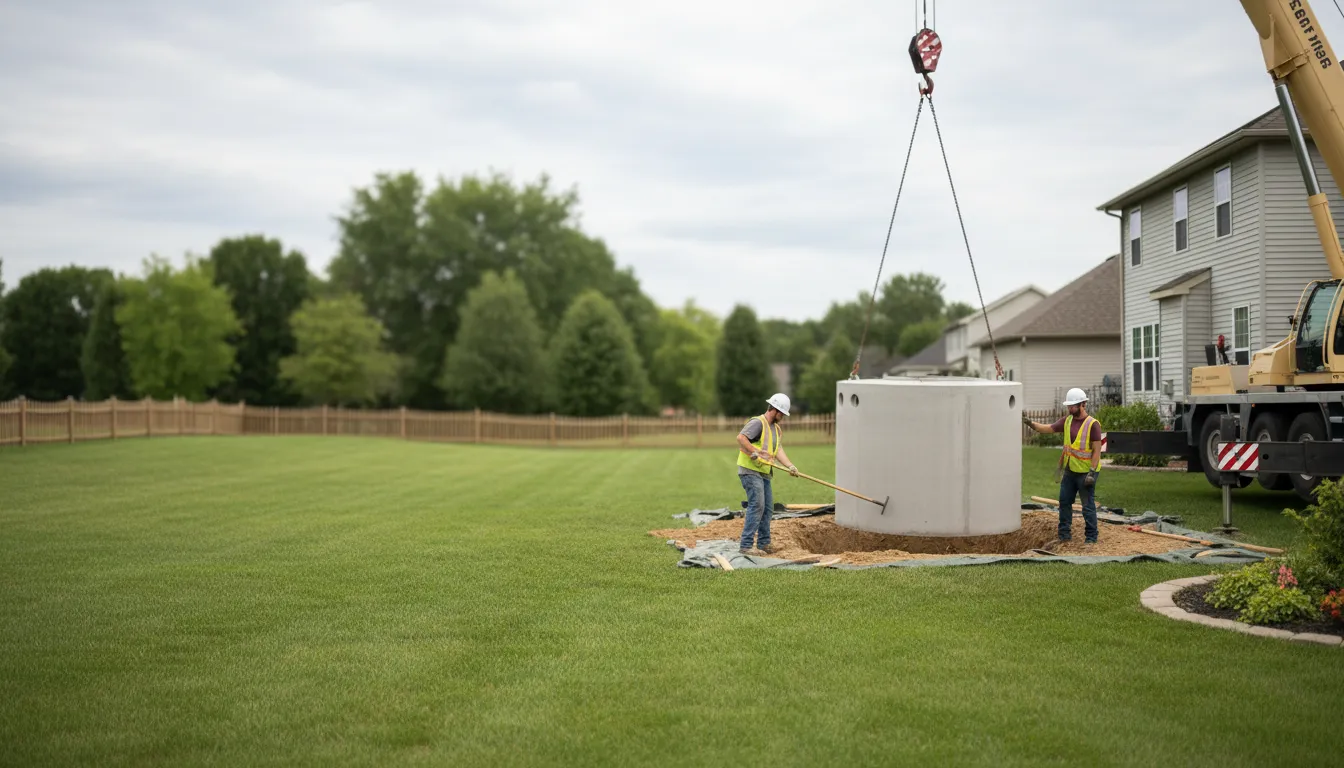
- Excavation & Installation: The crew excavates for the tank and drain field. The tank is set, leveled, and connected to the home's plumbing.
- Open Excavation Inspection: This is a crucial milestone. Before any backfilling occurs, a Davis County Health Department inspector must visit to examine the tank placement, pipe connections, and the excavated drain field9 10. Nothing can be covered until this inspection passes.
- Backfilling & Final Grading: Once approved, the system is carefully backfilled and the site is graded to direct surface water away from the drain field.
- Final Approval: A final inspection ensures the installation matches the approved design and that the site restoration is complete, leading to the system's official approval for use.
Understanding Costs for Septic System Projects
The total cost for a complete septic system installation in Bountiful varies widely based on site-specific conditions. For a standard conventional system, homeowners can generally expect a range from $5,000 to over $10,00011 12. Several factors influence the final price:
- Soil Conditions: Poor-draining soil that requires an alternative system (like a mound) can significantly increase costs.
- System Size and Complexity: Larger homes needing a bigger tank and drain field, or systems with pumps and advanced treatment components, cost more.
- Excavation Difficulty: Rocky terrain, steep slopes, or limited access can increase labor and equipment time.
- Tank Material: While concrete is common, fiberglass or plastic tanks may have different price points.
- Professional Fees: This includes costs for soil testing, engineering design, permit fees, and the installation labor itself.
Maintaining Your New Septic System
After installation, proper maintenance is key to a long system life. While pumping schedules vary, a typical household septic tank should be pumped every 3-5 years. Conserve water, avoid pouring grease or chemicals down drains, and never drive or build over the drain field. Keeping detailed records of inspections, pumping, and repairs is also recommended for future reference and if you sell your home.
Frequently asked questions
Sources
Footnotes
-
Septic Systems - Southwest Utah Public Health Department - https://swuhealth.gov/septic-systems/ ↩
-
Utah Admin. Code R317-4-14 - Appendices - Law.Cornell.Edu - https://www.law.cornell.edu/regulations/utah/Utah-Admin-Code-R317-4-14 ↩
-
SEPTIC SYSTEM APPLICATION CHECKLIST - https://swuhealth.org/wp-content/uploads/2022/02/SEPTIC-SYSTEM-APPLICATION-CHECKLIST-v012022.pdf ↩ ↩2
-
R317-4, Onsite Wastewater Systems - Utah Administrative Rules - https://rules.utah.gov/publicat/code/r317/r317-004.htm ↩
-
DAR File No. 37575 - Utah Administrative Rules - https://rules.utah.gov/publicat/bulletin/2013/20130515/37575.htm ↩
-
Residential Septic Tank Pricing | Homeowner's Guide to Costs - https://www.ntotank.com/blog/residential-septic-tank-pricing ↩
-
The Ultimate Guide to Septic System Installation Process - https://septic911.com/septic-system-installation-process/ ↩
-
Indiana Septic Tank Requirements | On-Site Sewage Systems - https://www.ntotank.com/blog/indiana-septic-tank-requirements ↩
-
Onsite Wastewater Systems - Davis County - https://www.daviscountyutah.gov/health/environmental-health-division/permits/onsite-wastewater-systems-new ↩
-
Septic System Install Timeline | RCI Septic Service - https://www.rciseptic.com/complete-step-by-step-timeline-septic-system-installation-from-permit-to-finish ↩
-
Complete Septic System Installation: Process, Permits, And ... - https://www.theseptictankman.com/blog/complete-septic-system-installation-process-permits-and-pitfalls ↩
-
Anderson Engineering: Septic Tank Design Services in Utah - https://www.andersoneng.com/septic-tank-system-and-onsite-wastewater-treatment-design-utah/ ↩