Find the Best Septic Tank Pumping Contractors for Your Business
No obligation • Fast responses • Nationwide coverage

Why you can trust Septic Spot
Septic Spot is a leading United States resource for understanding and comparing septic services. Our editors review providers using consistent criteria and verify key business details. Listings and scores are independent, and companies cannot pay to influence our content.
Search providers near you
Top Septic Tank Pumping Contractors in Topeka, Kansas Ranked
For homeowners in Topeka and Shawnee County, maintaining a healthy septic system is a critical responsibility. Septic tank pumping is the essential process of removing accumulated solids and sludge from your tank to prevent system failure, backups, and costly environmental damage. This guide explains why regular septic system maintenance matters, outlines local requirements and best practices, and helps you understand what to look for when scheduling this vital service with a qualified local professional.
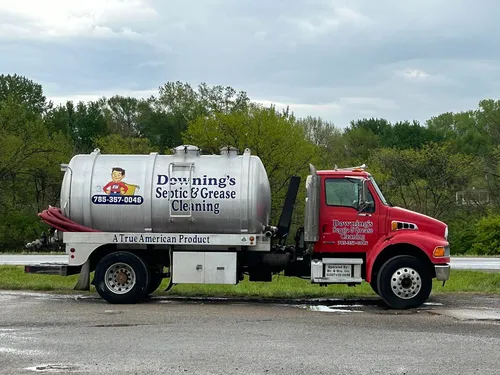
Downing Septic Tank Cleaning
2611 SW 17th St #105, Topeka, KS 66604
Downing Septic Tank Cleaning is a licensed and insured company serving Topeka, KS, and the surrounding northeast Kansas area, including Kansas City and Lawrence. With over 20 years of experience, they provide septic tank installation, pumping, and cleaning services for residential, commercial, and industrial clients. Their expertise includes inspection and repair of lateral fields, grease trap installation and cleaning, and holding tank pumping. The company offers 24/7 service, ensuring support for clients any day of the year.
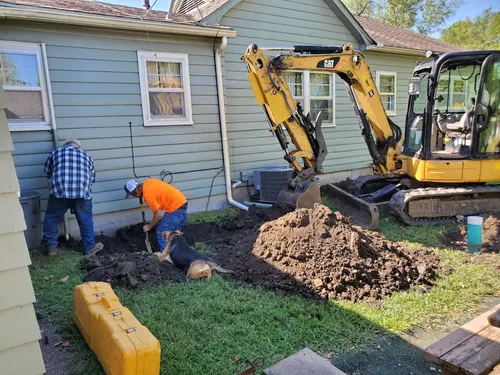
Hare Excavating Inc.
Topeka, KS
Hare Excavating Inc. is a septic tank and excavating contractor based in Topeka, KS. The company serves Shawnee and surrounding counties, providing septic tank pumping, inspection, repair, and installation services. With over 27 years in business, Hare Excavating Inc. offers expertise in sewage system maintenance and related excavation work, including basement waterlines.
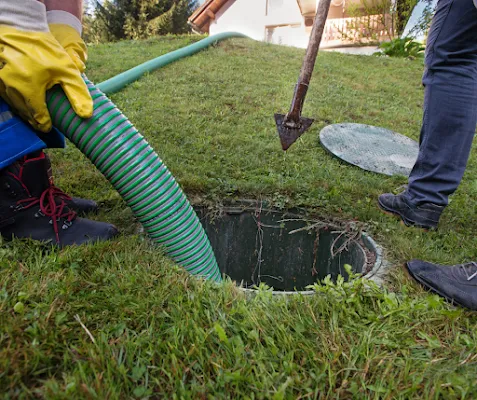
Rooter-Man Plumbing, Water Cleanup, Septic Pumping, Septic Cleaning & Drain Cleaning
4015 SW 21st St Suite 310, Topeka, KS 66604
Rooter-Man Plumbing, Water Cleanup, Septic Pumping, Septic Cleaning & Drain Cleaning provides septic tank pumping and plumbing services in Topeka, KS. With over 50 years of experience, they offer a wide range of services including drain cleaning, sewer line repair, and septic maintenance. The company uses advanced techniques such as power drain snakes and high-pressure water jets to clear main drain lines and offers video inspections to identify pipe issues efficiently. Rooter-Man serves multiple locations across Kansas and provides emergency services, including weekends and holidays.
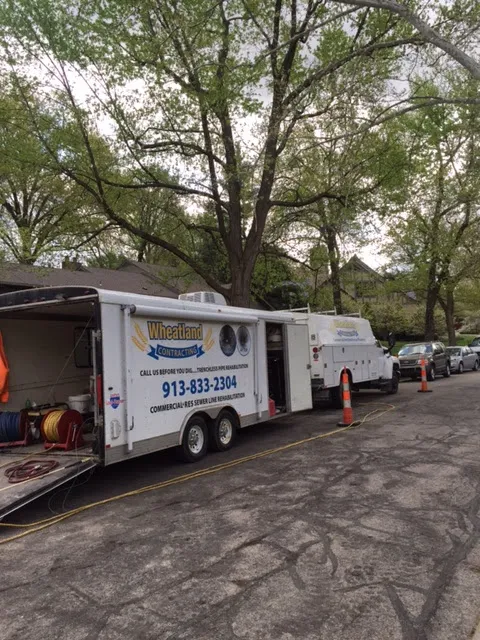
Wheatland Contracting
Topeka, KS
Wheatland Contracting provides a range of plumbing and septic services in Topeka, KS, including septic tank pumping, inspections, repairs, and full system installations. They handle both residential and commercial projects, offering solutions from underground rough-in to final fixture installation. Their capabilities include sewer line repairs through a single access point to minimize disruption and professional drain clearing using camera inspections and hydro-jetting. The company serves both homeowners and contractors with tailored plumbing and septic system services.
Why Regular Septic Maintenance is Non-Negotiable
Your septic system is a silent workhorse, treating all the wastewater from your home. When functioning properly, it protects your family's health, your property value, and the local environment, including groundwater sources. Neglecting routine septic tank cleaning and pumping is the primary cause of system failure. A failed system can lead to sewage backing up into your home, foul odors in your yard, and contamination of soil and water, which poses serious public health risks and can result in very expensive repairs or a complete drain field replacement. Regular maintenance is far more affordable and less disruptive than dealing with a crisis.
Understanding Your Septic System: The Basics
A conventional septic system has two main parts: the tank and the drain field (or leach field). All water from your toilets, showers, sinks, and washing machine flows into the underground tank. Here, solids settle to the bottom as sludge, oils and grease float to the top as scum, and the relatively clear liquid in the middle (effluent) flows out into the drain field for further treatment by the soil. Over time, the sludge and scum layers build up. If not removed via pumping, they can overflow into the drain field, clogging the soil and causing the entire system to fail.
How Often Should You Pump Your Septic Tank in Topeka?
There is no one-size-fits-all answer, but general guidelines and local regulations provide a clear framework. For conventional systems in Topeka and Shawnee County, septic tanks should be inspected at least every 3 years and pumped every 3 to 5 years. However, this frequency depends heavily on several household factors:
- Household Size: More people generate more wastewater and solids. A household of 5-6 people with a standard 1,000-gallon tank may need to pump every 1.5 to 3 years 1.
- Tank Size: Capacity is key. A 1,000-gallon tank is typical for most homes (often supporting up to 3 bedrooms), but larger homes require larger tanks.
- Usage Habits: Using a garbage disposal significantly increases the amount of solids entering the tank. If you use one regularly, plan to pump about one-third more frequently.
- Overall Water Usage: The volume of wastewater flowing through the system accelerates accumulation.
The only way to know your optimal schedule is through a professional inspection, which measures the sludge and scum levels in your tank.
The Professional Septic Pumping Process
When you hire a licensed septic service provider in Topeka, here's what you can expect:
- Locating & Access: The technician will locate your tank and dig to expose the access manhole(s).
- Initial Inspection: They may check inlet/outlet baffles and the overall condition before pumping.
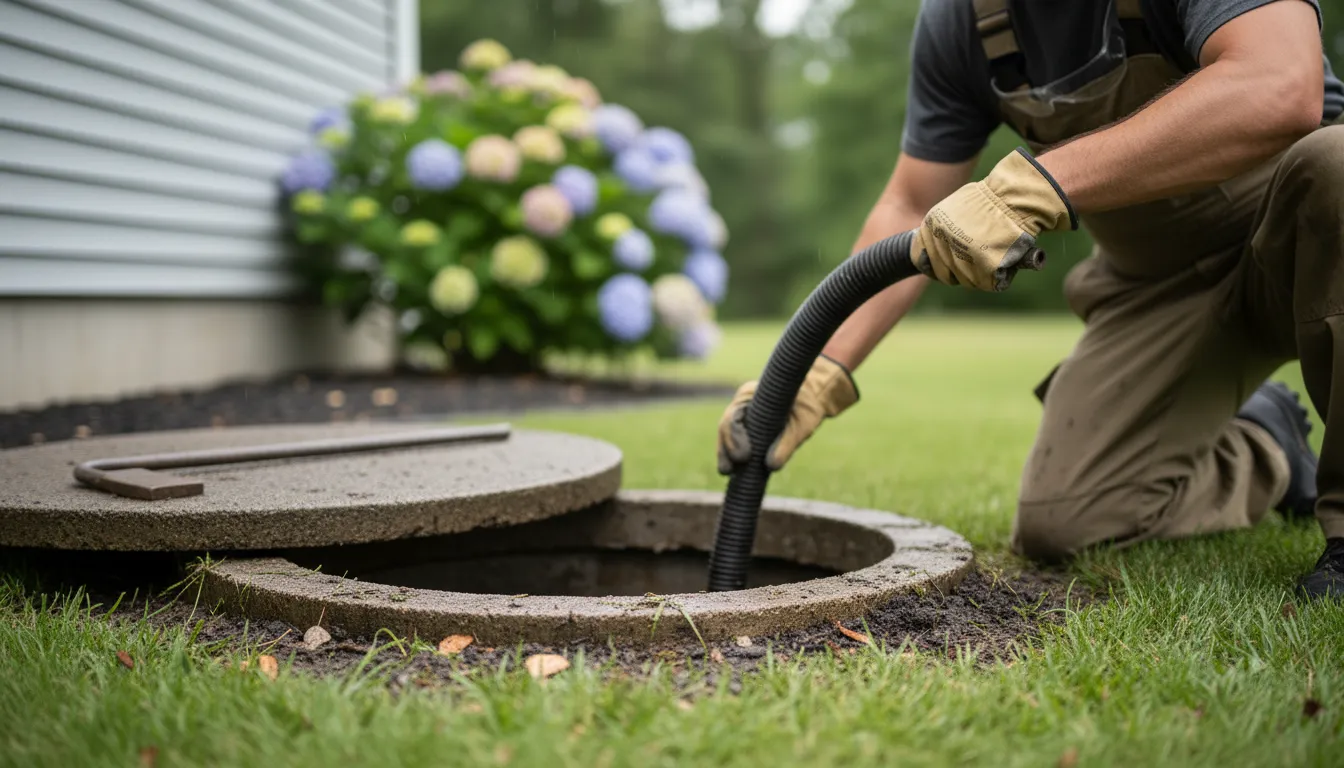
- Pumping: A large truck with a vacuum hose will remove all contents from the tank-sludge, scum, and liquid.
- Waste Disposal: The collected waste is transported to a licensed treatment facility.
- Final Inspection & Advice: A good provider will note any issues (like damaged baffles) and may advise on your ideal pumping interval.
Find the perfect septic tank pumping contractors for your needs
Get personalized recommendations and expert advice
The Critical Role of Inspections
Pumping and inspection go hand-in-hand. A thorough septic system inspection every three years checks for leaks, measures sludge/scum levels, and assesses the functionality of critical components like baffles and effluent filters 2 3. Inspections are especially important during a home sale, as local regulations may require a professional inspection for property transfer 4. An inspector will also verify that your tank meets location requirements, such as being at least 10 feet from buildings and 50 feet from water sources 5.
What Does Septic Tank Pumping Cost in Topeka?
The cost for septic tank pumping services varies based on several factors. On average, homeowners can expect to pay between $275 to $611, with a typical cost around $445 6 7. The final price depends on:
- Tank Size: Larger tanks cost more to pump.
- Accessibility: Easy, clear access keeps costs down. Difficult access (overgrown, blocked, or deep) increases labor time.
- Sludge Buildup: Tanks that are severely overdue for service may require more time and effort. While price is a consideration, choosing a reputable, licensed professional who properly disposes of waste is paramount.
Protecting Your System Between Pumpings
Proper care extends the life of your system and stretches the time between necessary pump-outs.
- Conserve Water: Fix leaks and spread out laundry loads to avoid overwhelming the system.
- Mind What You Flush: Only human waste and toilet paper should go down the toilet. Avoid flushing wipes (even "flushable" ones), feminine hygiene products, dental floss, and chemicals.
- Use the Trash Can: Never pour cooking grease, coffee grounds, or food scraps down the drain. Avoid using a garbage disposal if possible.
- Landscape Carefully: Don't drive or park over your drain field, and plant only grass over it to prevent root damage.
Kansas and Shawnee County Guidelines
The Kansas Department of Health and Environment (KDHE) provides essential guidance for septic system owners, emphasizing that regular maintenance is the best way to avoid system failure 8 9. Following KDHE recommendations and consulting with a licensed local professional ensures your system complies with state and county regulations, protecting your investment and the community.
Signs Your Septic Tank Needs Immediate Attention
Don't wait for a full-blown disaster. Contact a septic pumping service if you notice:
- Slow drains or sewage backups in your home.
- Gurgling sounds in your plumbing.
- Unpleasant odors around your yard or tank/drain field area.
- Exceptionally lush, green grass over the drain field (a sign of effluent surfacing).
- Standing water or soggy soil in the drain field area.
Frequently asked questions
Sources
Footnotes
-
Septic Tank Maintenance: A Key to Longer Septic System Life - https://bookstore.ksre.ksu.edu/pubs/septic-tank-maintenance-a-key-to-longer-septic-system-life_MF947.pdf ↩
-
Septic Tank and Grease Trap Cleaning| Shawnee County, KS - https://www.a1septictankcleaning.com/system-information ↩
-
How to Care for Your Septic System | US EPA - https://www.epa.gov/septic/how-care-your-septic-system ↩
-
New Septic System Regulations in Kansas/Missouri - https://www.honey-wagonkc.com/blog/posts/new-septic-system-regulations.html ↩
-
Kansas Septic Tank Requirements | Guide to Installation and Compliance - https://www.ntotank.com/blog/kansas-septic-tank-requirements ↩
-
Septic Tank Pumping Frequency: Crucial Maintenance Guide - https://septic911.com/septic-tank-pumping-frequency/ ↩
-
Understanding the Average Cost to Pump a Septic Tank - https://www.scorpionsepticservices.com/blog/understanding-the-average-cost-to-pump-a-septic-tank ↩
-
Septic Tank Maintenance - KDHE.ks.gov - https://www.kdhe.ks.gov/DocumentCenter/View/8952/Septic-Tank-Maintenance-Updated-PDF ↩
-
SEPTIC TANKS - KDHE - https://www.kdhe.ks.gov/DocumentCenter/View/8966/Septic-Tanks-PDF ↩