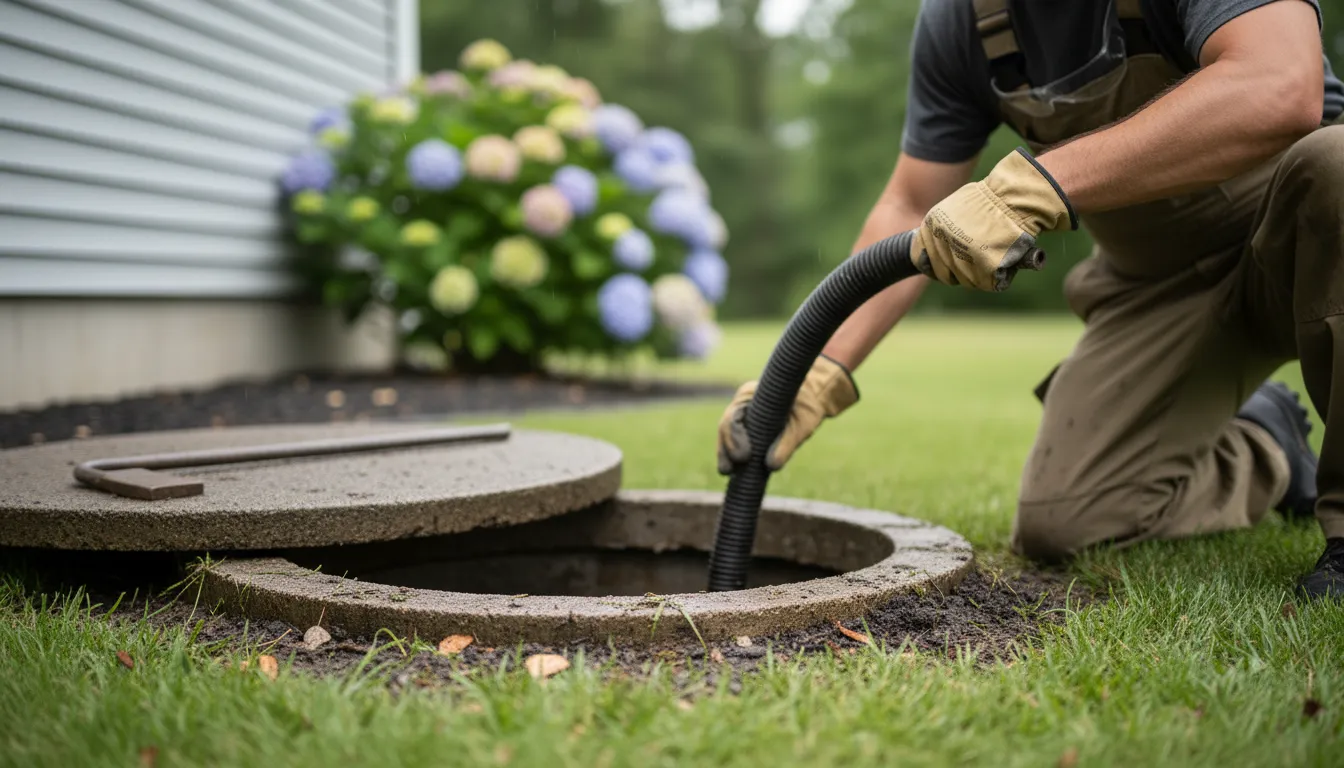
Find the Best Septic Tank Pumping Contractors for Your Business
No obligation • Fast responses • Nationwide coverage

Why you can trust Septic Spot
Septic Spot is a leading United States resource for understanding and comparing septic services. Our editors review providers using consistent criteria and verify key business details. Listings and scores are independent, and companies cannot pay to influence our content.
Search providers near you
Best Septic Tank Pumping Contractors in Michigan Ranked
Maintaining your septic system is a critical responsibility for Michigan homeowners. Regular septic tank pumping is the cornerstone of this maintenance, preventing system failure, protecting public health, and safeguarding local waterways. Because Michigan lacks a statewide sanitary code, regulations and requirements vary significantly by county and township. This guide explains the essential practices, local rules, and costs associated with septic system maintenance in Michigan, helping you find qualified local professionals to ensure your system functions properly for years to come.

Michigan Septic, LLC
938 S Meridian Rd, Mason, MI 48854
Michigan Septic, LLC is a septic tank pumping company serving Lansing, MI. They focus on septic tank pumping to help maintain system health and prevent emergencies. The company encourages timely pumping to extend the life of septic systems and reduce costly repairs.
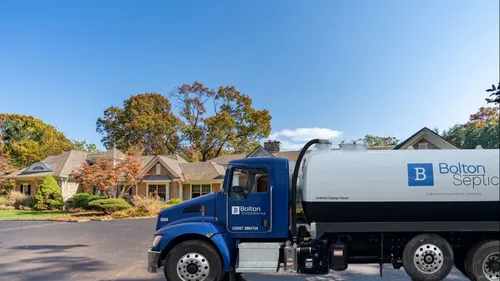
Bolton Septic
Ann Arbor, MI
Bolton Septic is a full-service septic company serving Ann Arbor, MI, and surrounding counties including Oakland, Livingston, Wayne, and Washtenaw. Established in 1967, Bolton Septic offers septic tank pumping, inspection, and maintenance for residential and commercial properties. They emphasize preventative maintenance to extend the life of septic systems and provide licensed professionals to inspect and evaluate tanks during service. Bolton Septic is part of the Bolton Environmental Family, combining over 200 years of experience to support a wide range of septic needs.
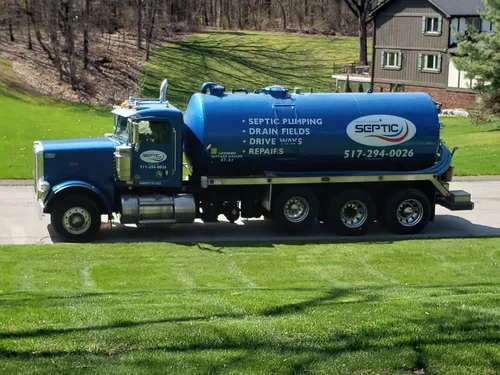
Patrick Esper Septic
Lansing, MI
Patrick Esper Septic is a septic service provider located in Lansing, MI. They offer a range of services including septic tank pumping, system repairs, and installation of septic tanks and drain fields. Their capabilities include effluent pump repair and drain field replacement, as well as engineered septic services and community system installation. The company also provides excavation, grading, and land clearing services related to septic system projects.
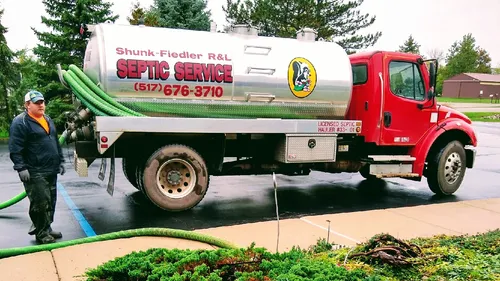
Shunk Fiedler / R&L Septic Service
938 S Meridian Rd, Mason, MI 48854
Shunk Fiedler / R&L Septic Service is a septic tank pumping company serving Lansing, MI. They specialize in septic tank pumping to help extend system life and prevent costly repairs. The company encourages timely maintenance to avoid emergencies, especially during seasonal changes.

Apex Septic And Excavating, Inc
114 E Lawrence Ave Ste. 210, Charlotte, MI 48813
Apex Septic And Excavating, Inc is a septic tank pumping and installation company based in Lansing, MI. They offer a range of excavation services for both commercial and residential projects, including site preparation, grading, trenching, and land clearing. The company specializes in septic system installation and maintenance, ensuring compliance with local regulations. They also provide emergency excavation services for urgent issues like foundation failures and pipeline breaks. Apex has experience creating stable foundations for pole barns and barndominiums using precise staking and leveling techniques. Their septic pumping service uses advanced equipment to efficiently remove waste and sludge while following proper disposal guidelines.
Understanding Michigan's Unique Regulatory Landscape
Unlike most states, Michigan does not have a uniform, statewide sanitary code governing septic systems. Instead, oversight is delegated to local county health departments. This means the rules for inspection, pumping, and system upgrades can differ dramatically depending on whether you live in Washtenaw, Berrien, Monroe, or any other county.
Many local jurisdictions have adopted "Time of Sale/Transfer" (TOST) ordinances 1. These rules mandate a professional inspection of the septic system whenever a property is sold. The inspection must often be conducted by a professional registered or licensed with that specific county health department. This local patchwork of regulations makes it essential for homeowners to proactively contact their local health department to understand the exact requirements for their property.
Why Regular Pumping is Non-Negotiable
A septic system is not a set-it-and-forget-it appliance. It's a living ecosystem where bacteria break down solid waste. Over time, solids (sludge) accumulate at the bottom of the tank. If not removed, this sludge can flow into the drainfield, clogging the soil and causing a system backup-a messy, unhealthy, and expensive problem.
Regular pumping removes these accumulated solids, giving the system's biological processes room to work effectively. The Mid-Michigan District Health Department and other agencies emphasize that preventative maintenance through pumping is far less costly than repairing or replacing a failed drainfield, which can run into the tens of thousands of dollars 2.
How Often Should You Pump Your Septic Tank in Michigan?
While local ordinances may dictate specific frequencies, general guidelines from health departments and industry professionals provide a reliable baseline for most households.
- Standard Recommendation: The most common advice is to pump your septic tank every 3 to 5 years 3.
- Tank Size & Household Size: A more precise method is based on tank size and the number of people in your home. For example, a 1,000-gallon tank serving a family of four may need pumping every 2.5 years, while a 1,500-gallon tank might last 4 years, and a 2,000-gallon tank could go 5 years between services.
- The 25% Rule: A key technical indicator used by inspectors is to pump the tank whenever an inspection shows that sludge and scum combined occupy more than 25% of the tank's liquid depth 4.
- High-Usage Factors: Certain habits will require more frequent pumping. Using a garbage disposal regularly can increase solid waste by up to 50%, significantly shortening the time between necessary pumpings 5 6. Homes with more residents or frequent guests will also need more frequent service.
Find the perfect septic tank pumping contractors for your needs
Get personalized recommendations and expert advice
What Does Septic Tank Pumping Cost in Michigan?
The cost for septic tank pumping in Michigan typically ranges from $250 to $600 or more for a standard residential system 7 8. Several factors can influence the final price:
- Tank Size and Access: Larger tanks or two-compartment systems cost more to pump. The single biggest cost variable is often accessibility. If your tank lids are buried and require excavation, the price will increase. Installing permanent risers (access pipes to the surface) is a one-time cost that saves money and hassle on every future service.
- Location and Travel: Service calls to remote or difficult-to-access rural properties may incur higher travel fees.
- Additional Services: Many companies offer inspection services alongside pumping, which may be bundled or priced separately. It is highly advisable to get a full inspection during pumping to assess the health of the entire system.
While this is an essential maintenance expense, it pales in comparison to the cost of emergency repairs or a full system replacement due to neglect 9.
A Homeowner's Guide to Septic System Care
Pumping is the most vital service, but overall system health depends on daily habits and broader maintenance.
Daily and Weekly Best Practices
- Conserve Water: Spread out laundry loads, fix leaky faucets, and install water-efficient fixtures. The average person uses about 70 gallons per day; reducing this load prevents hydraulic overload of your drainfield.
- Mind What You Flush: Only human waste and toilet paper should go down the drain. Never flush wipes (even "flushable" ones), feminine hygiene products, dental floss, cooking grease, or chemicals.
- Skip the Additives: Avoid chemical septic tank additives or "cleaners." They are unnecessary, can harm the beneficial bacterial ecosystem, and may contaminate groundwater 10.
Annual and Periodic Maintenance
- Keep It Accessible: Know where your tank and drainfield are located. Do not drive or park vehicles over the tank or drainfield, as compaction can damage pipes 11 12.
- Protect the Drainfield: Divect roof drains and surface water away from the drainfield. Avoid planting trees or shrubs with deep roots nearby, as roots can infiltrate and clog pipes 13.
- Keep Detailed Records: Maintain a file with your septic system's design (the "as-built"), and records of every inspection, pumping, and repair. This is invaluable for troubleshooting and is often required during a property sale.
Finding and Working with a Qualified Professional
Given Michigan's local regulatory structure, choosing the right service provider is crucial.
- Check Local Registration: Always verify that the septic service provider (often called a "septic hauler") is registered, licensed, or approved by your county health department 14 15. They will have the most current list of qualified professionals who understand local codes.
- Get Multiple Quotes: For a standard pumping, contact 2-3 licensed companies for estimates. Be prepared to describe your tank's size (if known) and accessibility.
- Ask About Inspections: When scheduling a pump, ask if a full system inspection is included or available. A reputable provider will inspect the tank's baffles, check for leaks, and often assess the drainfield.
- Understand the Process: A proper pumping service will pump out all solids and liquids from the tank. They should also briefly rinse the tank interior with clean water to observe for cracks or leaks, but not "wash" it completely, as this destroys the necessary bacterial colony.
By following these guidelines and partnering with a knowledgeable local professional, you can ensure your Michigan septic system remains a reliable and effective part of your home for decades.
Frequently asked questions
Sources
Footnotes
-
Protecting Homeowners and Our Waters: Septic Systems of ... - https://www.mitcrpc.org/post/protecting-homeowners-and-our-waters-septic-systems-of-mid-michigan ↩
-
How Often Should You Get Your Septic Tank Pumped? - https://www.coastalsepticsolutions.com/blog/how-often-should-you-get-your-septic-tank-pumped ↩
-
Sewage Systems | CMDHD - https://www.cmdhd.org/septicsystems ↩
-
How Often Should You Pump Your Septic Tank: 3 Factors Solved - https://www.frasiers.com/blog/sewage-tank-pump-frequency/ ↩
-
Septic Tank Pumping | Al Pearson & Son Michigan - https://alpearsonandson.net/services/septic-tank-pumping/ ↩
-
Homeowner Septic System Operation and Maintenance Guide - https://woodcountyhealth.org/wp-content/uploads/2021/04/Operation-and-Maintenance-Guide_2021.pdf ↩
-
Pump Your Septic Tanks Regularly | Washtenaw County, MI - https://www.washtenaw.org/1644/Pump-Your-Septic-Tanks-Regularly ↩
-
How Much Does Septic Tank Pumping Cost? (2026) - https://todayshomeowner.com/plumbing/cost/septic-tank-pumping-cost/ ↩
-
SepticSmart - Mid-Michigan District Health Department - https://www.mmdhd.org/environmental-services/septic/septic-smart/ ↩
-
Homeowner's Guide to Septic Systems - https://marionhealth.org/wp-content/uploads/2024/02/EPA_Homeowner_Guide_Septic_Systems.pdf ↩
-
MONROE COUNTY ENVIRONMENTAL HEALTH/SANITARY CODE - https://www.co.monroe.mi.us/DocumentCenter/View/4972 ↩
-
Septic Services - Livingston County, MI - https://milivcounty.gov/environmental-health/septic/ ↩
-
On-Site Septic | Berrien County, MI - https://www.berriencounty.org/760/On-Site-Septic ↩
-
Septic System Ordinances | Michigan Lakes and Streams ... - https://mymlsa.org/government-and-legal-issues/ordinances/septic-system-ordinances/ ↩
-
Untitled - https://www.miamicountyhealth.net/pdf/household-sewage/0ae78b_83c03b08efb94b088c09d4eede9b6109.pdf ↩