Find the Best Septic Tank Pumping Contractors for Your Business
No obligation • Fast responses • Nationwide coverage

Why you can trust Septic Spot
Septic Spot is a leading United States resource for understanding and comparing septic services. Our editors review providers using consistent criteria and verify key business details. Listings and scores are independent, and companies cannot pay to influence our content.
Search providers near you
Top Septic Tank Pumping Contractors in Minneapolis, Minnesota Ranked
Maintaining a healthy septic system is a critical responsibility for homeowners in Minneapolis. Regular septic tank pumping is the cornerstone of this maintenance, a process that removes accumulated solids to prevent system failure, costly repairs, and environmental contamination. This essential service ensures your household wastewater is managed safely and efficiently. For Minneapolis residents, finding a qualified, licensed professional for this task is simplified by understanding local regulations, typical costs, and what to expect from the service process.
Meyer Sewer Service
5325 Manning Ave S, Afton, MN 55001
Meyer Sewer Service is a septic tank pumping company serving St Paul, MN, and the surrounding area. They provide residential, commercial, and industrial pumping services with over 40 years of experience. The company is licensed, bonded, and insured, ensuring professional and secure service. Meyer Sewer Service has been a member of the Better Business Bureau since 2001 and has earned an A+ rating. They are known for their reliable septic pumping and have built a strong reputation in the community since 1976.
Alto Sewer Service - MN Drain Cleaning Company
1019 Concord St N, South St Paul, MN 55075
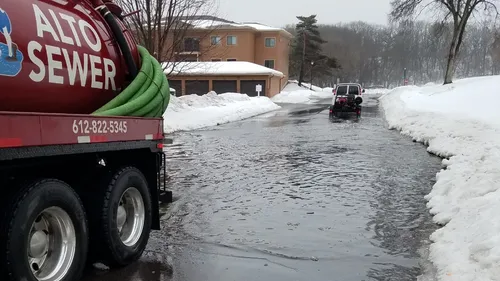
Alto Sewer Service - MN Drain Cleaning Company is based in Minneapolis, MN, providing commercial and residential septic tank pumping and inspection services. Established in 1965, the company offers a range of services including water jetting, video inspections, pipe locating, steam thawing, and septic maintenance. They serve the Twin Cities Metro area with expertise in handling clogged plumbing and septic system needs. Alto Sewer Service operates 24 hours a day, 364 days a year, offering after-hours availability for urgent situations.
Pinky's Environmental & Sewer
St Paul, MN
Pinky's Environmental & Sewer is a family-owned septic tank pumping company serving St Paul, MN, and surrounding counties in Minnesota and Wisconsin. With over 50 years of experience, they provide septic tank cleaning and maintenance services to residential, commercial, and industrial clients. Their technicians are knowledgeable and courteous, and the company emphasizes environmental care and customer education. Pinky's offers 24/7 phone monitoring for emergency service requests.
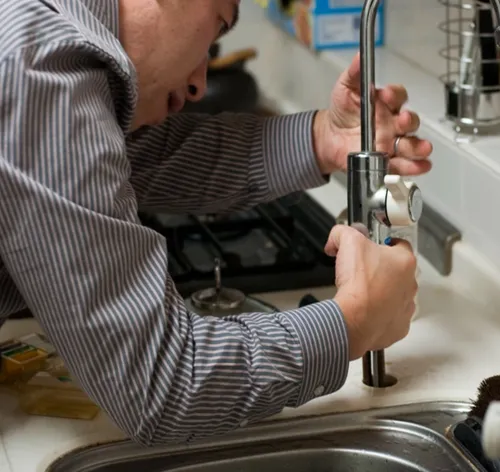
Alto Sewer & Drain Cleaning Services
Minneapolis, MN
Alto Sewer & Drain Cleaning Services is a full-service company based in Minneapolis, MN, specializing in septic tank pumping, inspection, and comprehensive drain and sewer cleaning. They offer services such as hydro-jetting, video inspections to diagnose pipe issues, commercial pumping, and frozen pipe thawing. Their licensed and bonded septic maintenance supports subsurface sewage treatment systems. Alto Sewer focuses on preventing blockages and maintaining system longevity through routine cleaning and professional care.
Understanding Septic System Maintenance in Minneapolis
A septic system is an on-site wastewater treatment structure, commonly used in areas not served by centralized municipal sewer lines. The system relies on a tank where solids settle and begin to decompose, while liquid effluent flows out to a drain field for further soil treatment. Over time, the solids (sludge and scum) accumulate and must be physically removed through septic tank pumping to prevent them from flowing into and clogging the drain field, which is the most common and expensive cause of system failure.
In Minnesota, these systems are formally known as Subsurface Sewage Treatment Systems (SSTS) and are regulated by the Minnesota Pollution Control Agency (MPCA). Adherence to state and local codes is not just recommended; it's legally required to protect public health and groundwater quality.
Minneapolis and Minnesota Pumping Regulations
For homeowners in Minneapolis and surrounding Hennepin County, state law provides a clear baseline for maintenance. Septic tank cleaning is mandated at minimum intervals based on system usage.
- Standard Requirement: The MPCA requires that a licensed professional inspect and pump your septic tank at least once every three years for most residential systems.
- Increased Frequency: Systems with smaller tanks or those serving larger households may require more frequent septic tank servicing, potentially every one to two years 1. Heavy water use can also accelerate the accumulation of solids.
- Local Authority: Always check with your local municipality (city or county environmental health department) for any ordinances that may be more stringent than the state minimum2.
Following this schedule is the best way to avoid emergencies and extend the lifespan of your entire wastewater system.
The Role of a Professional Inspection
Pumping is almost always accompanied by a thorough inspection. Minnesota law requires that these inspections be performed by a state-licensed ISTS (Individual Sewage Treatment System) Maintainer or Provider. A proper inspection is more than just a look into the tank.
During a professional septic system inspection, the technician should:
- Measure Sludge and Scum: Accurately gauge the levels of solids through the main maintenance hole, not just the inspection pipe, to determine pumping necessity and frequency.
- Check Tank Integrity: Look for cracks, leaks, or corrosion in the tank itself.
- Inspect Baffles and Outlets: Ensure inlet and outlet baffles are intact and functional to prevent solids from exiting the tank.
- Examine Components: Assess the condition of access risers, lids, and any pumps or alarms.
- Evaluate the Drain Field: Look for signs of surfacing effluent or overly lush vegetation, which indicate potential failure.
Many providers recommend installing access risers if you don't have them. These bring the tank lids to ground level, making future septic tank emptying and inspections safer, easier, and less disruptive to your landscaping3.
What to Expect: The Pumping Process
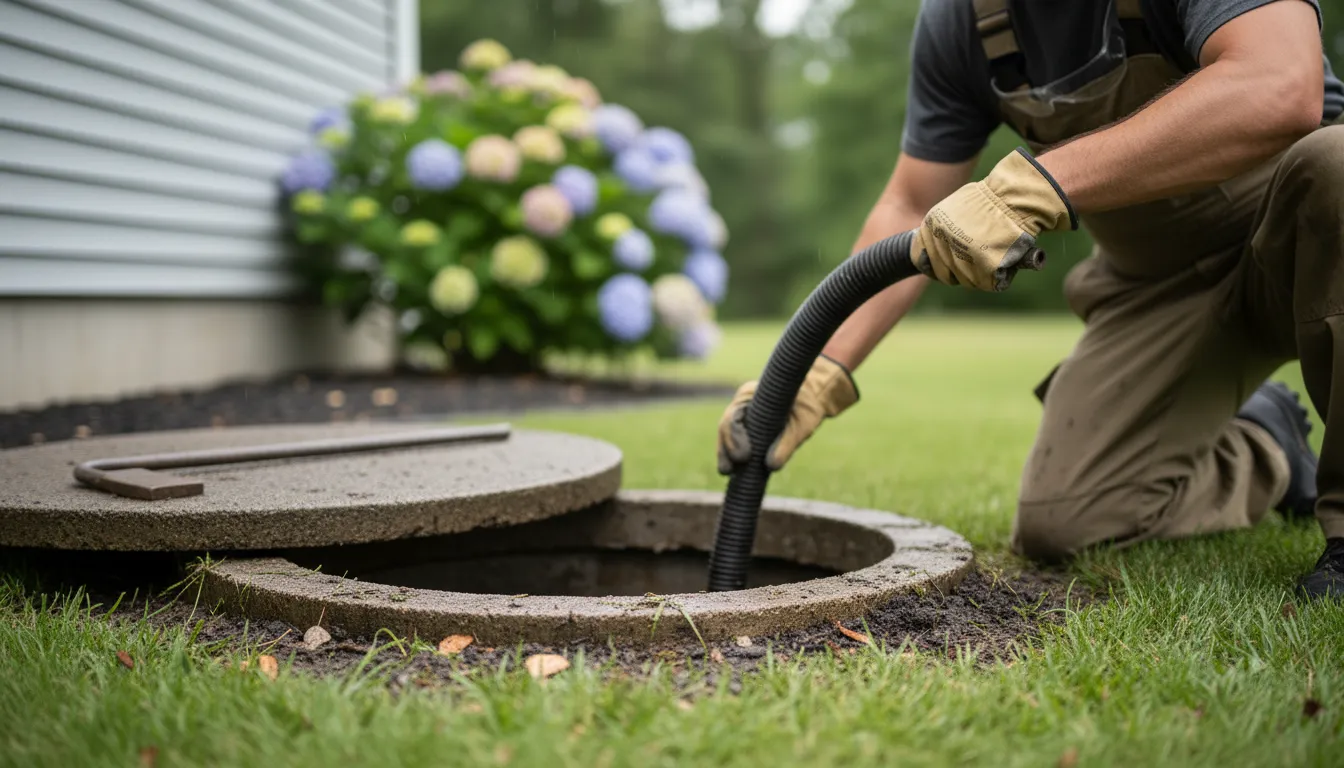
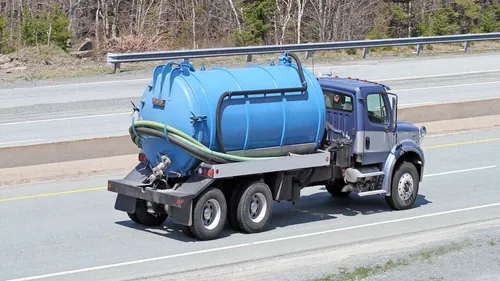
When you schedule septic tank pumping in Minneapolis, a service truck with a large vacuum tank will arrive. The certified operator will locate and uncover the tank's access lids. Using a large hose, they will vacuum all the contents-solids and liquids-from the tank into their truck for proper disposal at a licensed treatment facility.
The process typically takes one to three hours, depending on tank size and access. It's a good practice to be home to discuss any findings from the inspection. After pumping, the tank is left empty and ready to resume normal operation; there is no need to "restart" or add bacteria, as the system will re-establish its necessary biological activity naturally.
Find the perfect septic tank pumping contractors for your needs
Get personalized recommendations and expert advice
Cost of Septic Tank Pumping in Minneapolis
The price for septic tank cleaning can vary based on several factors, including tank size (measured in gallons), its accessibility, and the specific service provider. Based on local market data:
- The average cost range for a standard residential septic tank pump-out in the Minneapolis area is between $280 and $520.
- The overall spectrum of pricing can range from as low as $175 to $275 for a straightforward, small-tank job to $890 or more for large, complex, or difficult-to-access systems4 5 6.
- Additional costs may apply for inspections, repairing or installing risers, or if the technician discovers issues that need immediate attention.
Always get detailed estimates from multiple licensed providers. The lowest price may not include a full inspection or may have hidden fees for travel or disposal.
Choosing a Licensed Service Provider
Selecting the right professional is crucial. Always verify that the company or individual holds a current Minnesota SSTS Service Provider License from the MPCA. You can ask for their license number and check its status. A reputable provider will be transparent about their pricing, willing to explain the inspection process, and able to provide a detailed report of their findings. They should also file the required documentation with your local permitting authority to prove compliance with the state's three-year rule7.
Maintaining Your System Between Pumpings
Proper care between professional visits extends your system's life and prevents problems.
- Conserve Water: Fix leaks and spread out laundry loads to avoid hydraulically overloading the system.
- Mind What You Flush: Only human waste and toilet paper should go down the drain. Avoid flushing wipes (even "flushable" ones), feminine hygiene products, grease, coffee grounds, and chemicals8.
- Protect the Drain Field: Never park vehicles or build structures over it. Divect rainwater drainage away from the area.
Signs Your System Needs Attention Sooner
Don't wait for a scheduled pumping if you notice these warning signs:
- Slow drains or gurgling plumbing fixtures throughout the house.
- Sewage odors around the yard or home.
- Wet, spongy, or unusually green grass over the drain field.
- Sewage backing up into household drains.
If you observe any of these, contact a licensed professional immediately to assess the situation.
Frequently asked questions
Sources
Footnotes
-
Care and maintenance | Onsite Sewage Treatment Program - https://septic.umn.edu/care-and-maintenance ↩
-
Septic systems | Minnesota Pollution Control Agency - https://www.pca.state.mn.us/business-with-us/septic-systems ↩
-
Septic Systems | Lino Lakes, MN - https://linolakes.us/188/Septic-Systems ↩
-
How Much Does Septic Tank Pumping Cost in 2025? - HomeAdvisor - https://www.homeadvisor.com/cost/plumbing/clean-septic-tank/ ↩
-
Septic Pumping in Minneapolis, MN - Costs 02 / 2026 - Homeyou - https://www.homeyou.com/mn/septic-pumping-minneapolis-costs ↩
-
Septic Tank Pumping Frequency: Crucial Maintenance Guide - https://septic911.com/septic-tank-pumping-frequency/ ↩
-
SSTS service and maintenance | Minnesota Pollution Control Agency - https://www.pca.state.mn.us/business-with-us/ssts-service-and-maintenance ↩
-
Keep your septic system healthy - Minnesota Pollution Control Agency - https://www.pca.state.mn.us/news-and-stories/keep-your-septic-system-healthy ↩