Find the Best Septic Tank Pumping Contractors for Your Business
No obligation • Fast responses • Nationwide coverage

Why you can trust Septic Spot
Septic Spot is a leading United States resource for understanding and comparing septic services. Our editors review providers using consistent criteria and verify key business details. Listings and scores are independent, and companies cannot pay to influence our content.
Search providers near you
Top Septic Tank Pumping Contractors in Moorhead, Minnesota Ranked
Maintaining a healthy septic system is a crucial responsibility for homeowners in Moorhead. Regular septic tank pumping and inspection are essential to prevent system failures, protect your property value, and safeguard local groundwater from contamination. This guide provides clear, actionable information on septic system maintenance, local regulations, and how to find qualified professionals in the Moorhead area to ensure your system operates reliably for years to come.

Understanding Your Septic System
A septic system is an on-site wastewater treatment system, typically consisting of a tank and a soil-based drainfield. All the water from your home-from toilets, showers, sinks, and laundry-flows into the underground septic tank. Here, solids settle to the bottom as sludge, while fats and oils float to the top as scum. The liquid wastewater (effluent) then exits the tank into the drainfield, where it is naturally filtered by the soil.
The septic tank's primary job is to separate and partially treat solids. Over time, the sludge and scum layers accumulate. If these layers become too thick, they can flow into the drainfield, causing clogs, backups, and costly environmental damage. This is why periodic septic tank cleaning and inspection are non-negotiable parts of homeownership.
Moorhead and Clay County Regulations
In Moorhead, septic system maintenance is governed by state and local regulations enforced by the Minnesota Pollution Control Agency (MPCA) and Clay County Planning and Zoning 1. Minnesota law classifies these as Subsurface Sewage Treatment Systems (SSTS).
A key rule for homeowners is the requirement for a system inspection during a property transfer. This inspection, which must be conducted by a licensed maintenance professional, often requires the tank to be pumped empty to allow for a thorough compliance check of all components 2. Beyond real estate transactions, regular maintenance is mandated to protect public health. The MPCA provides guidelines that form the basis for local enforcement, recommending that systems be assessed and pumped as needed, typically on a cycle of every three years for an average household.
How Often Should You Pump Your Septic Tank?
While a common benchmark is every three years, the ideal pumping schedule for your Moorhead home is not one-size-fits-all. The MPCA and industry experts emphasize that the frequency of septic tank service depends on several key factors 3.
- Household Size and Water Usage: More people generally means more wastewater and solids. A family of four will typically need pumping more often than a single occupant.
- Tank Size: A larger tank holds more volume and may not need servicing as frequently. For example, a 1,500-gallon tank serving a standard family might need pumping roughly every four years, while a 1,000-gallon tank might need it every 2.5 years under similar use 4.
- Solid Waste Input: Using a garbage disposal significantly increases the amount of solids entering the tank, which can shorten the time between necessary pumpings.
- System Age and Condition: Older systems or those with a history of issues may require more vigilant monitoring.
A licensed professional doesn't just pump on a schedule; they perform a crucial inspection. They will measure the sludge and scum layers inside your tank to determine if pumping is truly necessary at that time, providing a data-driven maintenance recommendation.
Find the perfect septic tank pumping contractors for your needs
Get personalized recommendations and expert advice
What to Expect During a Professional Service Visit
Hiring a certified septic service provider in Clay County ensures the job is done correctly and in compliance with MPCA rules. A comprehensive service visit includes much more than just removing waste.
- Locating and Accessing the Tank: The technician will locate your tank and risers (access ports). If you don't have risers, installing them is highly recommended for easier future access.
- Inspecting the System: Before pumping, a thorough inspection is conducted. This includes checking the tank's inlet and outlet baffles (which are critical for preventing solids from escaping), looking for cracks or leaks, and assessing the overall structural integrity of the tank 5 6.
- Measuring Sludge and Scum: The professional will measure the depth of the sludge layer at the bottom and the scum layer at the top. This measurement is the primary indicator of whether pumping is needed.
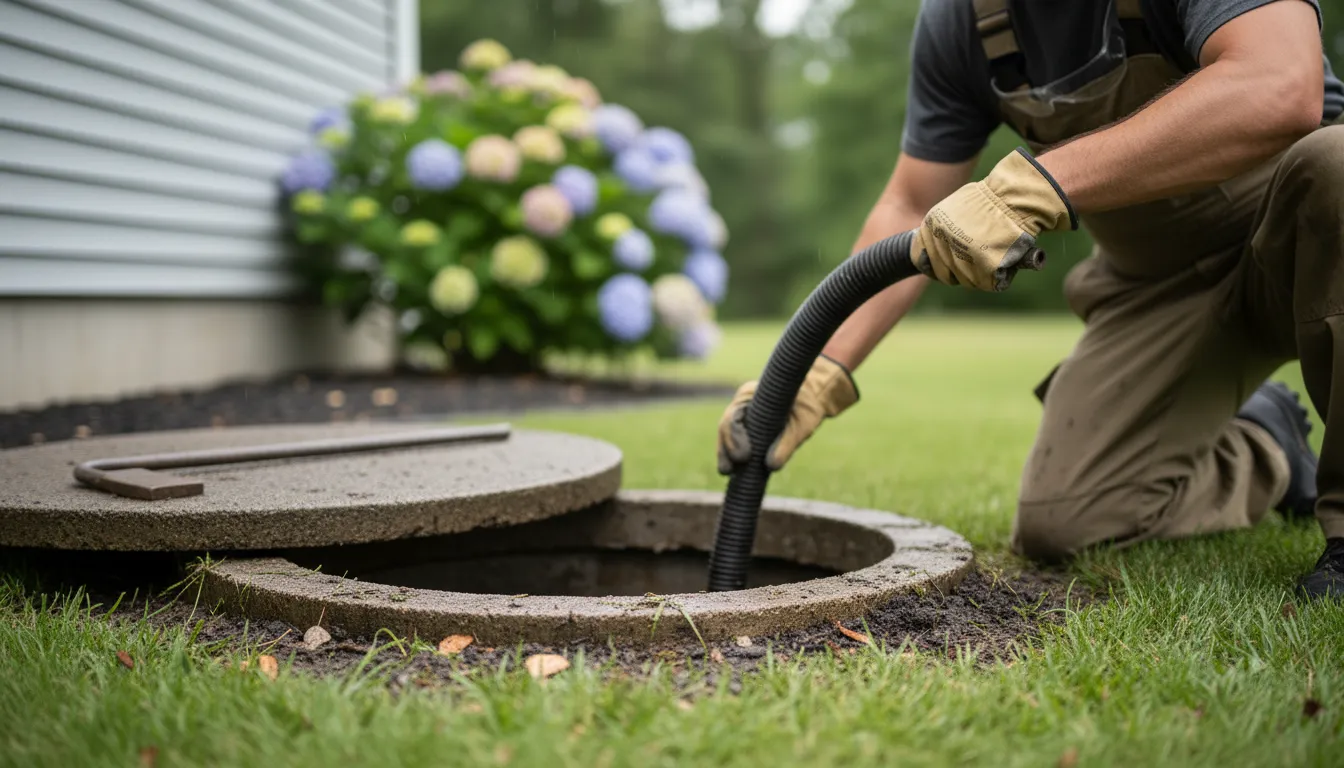
- Pumping the Tank: Using a vacuum truck, all contents-sludge, scum, and liquid-are pumped out and transported to an approved treatment facility.
- Post-Pumping Inspection: After the tank is empty, the technician can perform a more detailed inspection of the tank's interior and components.
- Providing Documentation: You should receive a detailed service report noting the measurements, condition of components, and any recommendations for repairs or future maintenance. Keep this record for your files.
Cost of Septic Tank Pumping in Moorhead
The cost for septic tank cleaning in Moorhead is typically in line with regional averages. For a standard residential tank, most homeowners can expect to pay between $200 and $500 for a complete pump-out. The final price is influenced by:
- Tank Size and Capacity: Larger tanks cost more to pump. A 1,000-gallon tank may range from $250 to $700, while a 1,500-gallon tank can cost between $350 and $1,100 7 8.
- Tank Accessibility: Tanks that are buried deep, lack risers, or are difficult for the truck to reach may incur additional charges.
- Condition of the Tank: If the tank lid or baffles are damaged and need repair, this will add to the service cost.
- Additional Services: Costs for inspections, effluent filter cleaning, or minor repairs are usually separate from the base pumping fee.
While price is a consideration, the expertise and licensing of the provider are paramount. A properly maintained system avoids the far greater expense of drainfield replacement or environmental remediation.
Signs Your Septic Tank Needs Attention
Don't wait for a disaster. Be proactive and watch for these warning signs that your septic tank may be full or your system is failing:
- Slow Drains: Sinks, showers, and toilets that drain slowly, especially if multiple fixtures are affected.
- Sewage Backups: Wastewater backing up into household drains is a serious red flag.
- Unpleasant Odors: Foul smells around the drainfield or inside your home.
- Lush, Green Grass: An unusually green and soggy patch over the drainfield, even during dry weather, indicates effluent is surfacing.
- Gurgling Sounds: Strange noises coming from your plumbing.
If you notice any of these signs, contact a licensed septic service professional immediately to assess the situation.
Maintaining Your System Between Pumpings
Proper daily care extends the life of your system and reduces the frequency of required pumpings.
- Conserve Water: Fix leaky faucets and toilets, and spread out laundry loads to avoid overwhelming the system.
- Mind What You Flush: Only human waste and toilet paper should go down the toilet. Never flush wipes (even "flushable" ones), feminine hygiene products, dental floss, or chemicals.
- Use the Sink Wisely: Avoid pouring grease, oil, or coffee grounds down the drain. Minimize use of a garbage disposal.
- Protect the Drainfield: Never park vehicles or build structures over the drainfield. Direct rainwater drainage away from it.
Frequently asked questions
Sources
Footnotes
-
Local septic system programs - Minnesota Pollution Control Agency - https://www.pca.state.mn.us/business-with-us/local-septic-system-programs ↩
-
SSTS Rule Update: Septic Tanks Need To Be Pumped Complete Inspection - https://www.mnrealtor.com/blogs/mnr-news1/2021/01/08/ssts-rule-change ↩
-
How Often to Pump a Septic Tank 2026 - Clear River Environmental - https://clearriverenvironmental.com/how-often-to-pump-a-septic-tank/ ↩
-
How Often Should You Pump Your Septic Tank: 3 Factors Solved - https://www.frasiers.com/blog/sewage-tank-pump-frequency/ ↩
-
SSTS service and maintenance | Minnesota Pollution Control Agency - https://www.pca.state.mn.us/business-with-us/ssts-service-and-maintenance ↩
-
Keep your septic system healthy - Minnesota Pollution Control Agency - https://www.pca.state.mn.us/news-and-stories/keep-your-septic-system-healthy ↩
-
Residential Septic Tank Pricing | Homeowner's Guide to Costs - https://www.ntotank.com/blog/residential-septic-tank-pricing ↩
-
How Much Does it Cost to Pump a Septic Tank? 2026 Price Guide - https://rescueheroplumbing.com/how-much-does-it-cost-to-pump-a-septic-tank ↩