Find the Best Septic Tank Pumping Contractors for Your Business
No obligation • Fast responses • Nationwide coverage

Why you can trust Septic Spot
Septic Spot is a leading United States resource for understanding and comparing septic services. Our editors review providers using consistent criteria and verify key business details. Listings and scores are independent, and companies cannot pay to influence our content.
Search providers near you
Best Septic Tank Pumping Contractors in Nebraska Ranked
Maintaining your septic system is a critical responsibility for Nebraska homeowners. Regular septic tank pumping is the cornerstone of this maintenance, preventing system failures, protecting groundwater, and ensuring the health of your property and family. This guide provides clear, practical information on how septic pumping works in Nebraska, including state-specific regulations, recommended schedules, and what to expect when you hire a certified professional.
Crown Pumping
Omaha, NE
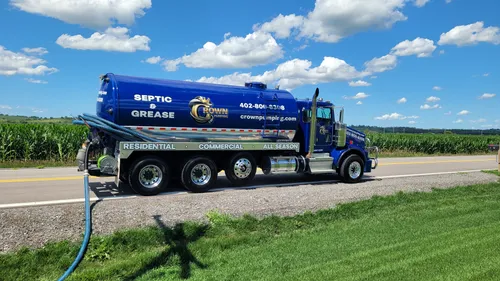
Crown Pumping is a septic tank pumping company based in Omaha, NE. They provide septic tank pumping and grease trap cleaning services to residential and commercial customers in Omaha, Iowa, and nearby communities. Their services focus on maintaining septic and plumbing systems to prevent costly issues and ensure smooth operation.

Norm's Pumping Service Inc
20418 Husker Ln, Council Bluffs, IA 51503
Norm's Pumping Service Inc provides septic system services including pumping, inspections, repairs, and installations in Omaha, NE. With over 70 years of experience since 1954, they serve both residential and commercial clients. Their capabilities include septic pump repairs and certified septic tank inspections, as well as grease trap maintenance to prevent sewer line clogs. Norm's offers emergency and routine septic pumping to help maintain system performance.
Midland Pumping Service
Omaha, NE
Midland Pumping Service is a septic tank pumping and inspection company based in Omaha, NE. With over 25 years of experience, they provide a variety of services including grease trap maintenance, septic tank inspections, pumping for residential and commercial properties, and hydro jetting to clear clogs and blockages. The company serves multiple areas in Douglas and Sarpy counties as well as Pottawattamie County, Iowa. Midland Pumping Service also offers 24/7 emergency services to address urgent septic and pumping needs.
Allen Septic
240 W 3rd St, Douglas, NE 68344
Allen Septic is a septic service provider based in Lincoln, NE, offering a range of services including septic tank pumping, system repair, installation, and lagoon maintenance. They work with both residential and commercial clients to ensure septic systems meet specific property needs. The company uses modern technology such as sewer inspection cameras and electronic line locators to accurately locate and inspect septic systems. They also provide main line cleaning with professional-grade equipment to clear blockages and maintain system flow. Allen Septic offers 24/7 emergency services to address urgent septic issues promptly.
Sewer Specialist LLC
Omaha, NE
Sewer Specialist LLC is a veteran-owned company providing septic tank pumping, inspection, and sewer services in Omaha, NE, and the surrounding areas including Council Bluffs and nearby towns. They offer a range of services such as drain cleaning, pipe lining, sewer line repair, and water line replacement. Their team uses advanced technology to diagnose and fix sewer and septic issues efficiently. The company is licensed and insured, offers 24/7 emergency service, and provides military and veteran discounts.
Why Regular Septic Pumping is Essential in Nebraska
A septic system is an on-site wastewater treatment plant for your home. When functioning correctly, it safely processes household waste. Solids settle in the tank, forming sludge and scum, while treated liquid flows out to the drainfield. Over time, these solids accumulate. If not removed through pumping, they can clog the system, leading to backups in your home, foul odors, and costly drainfield repairs or replacement. More critically, a failing system can contaminate Nebraska's groundwater, which is a vital drinking water source for many residents 1 2. Regular pumping is a proactive, cost-effective measure that safeguards your investment and your environment.
Nebraska's Regulations for Septic System Maintenance
Nebraska takes septic system management seriously to protect public health and water quality. The Nebraska Department of Environment and Energy (NDEE) oversees regulations under Title 124.
- Certified Professionals Required: By law, only Nebraska-certified professionals are authorized to inspect, pump, or repair septic systems. Hiring a certified provider ensures the work is done correctly and in compliance with state rules.
- Homeowner Responsibilities: As a system owner, you are responsible for its proper operation and maintenance. This includes scheduling regular pumping, keeping accurate records of all service, and protecting the system from damage.
- Proper Pumping Access: A key compliance note is that pumping must be performed through the main access manhole, not just a smaller inspection pipe. This ensures all solids are thoroughly removed.
- System Registration: If your tank is repaired or replaced, the updated system information must be registered with the NDEE 3.
How Often Should You Pump Your Septic Tank in Nebraska?
The standard recommendation is to have your septic tank pumped every 3 to 5 years. However, several factors can require more frequent service, such as every 1 to 3 years for high-use households.
The most reliable method is to have a certified inspector check the sludge and scum levels inside your tank. A common guideline is to schedule pumping when:
- The scum layer is within 6 inches of the outlet tee.
- The sludge layer is within 12 inches of the outlet tee 4 5.
For specific systems like holding tanks, Nebraska regulations require pumping when the liquid level reaches 90% of capacity 6.
Find the perfect septic tank pumping contractors for your needs
Get personalized recommendations and expert advice
What to Expect: The Septic Pumping Process
Understanding the process can help you prepare for a service visit.
- Locating & Accessing the Tank: The technician will locate the tank's main manhole and inspection ports. You can help by having a sketch of your system's location if available.
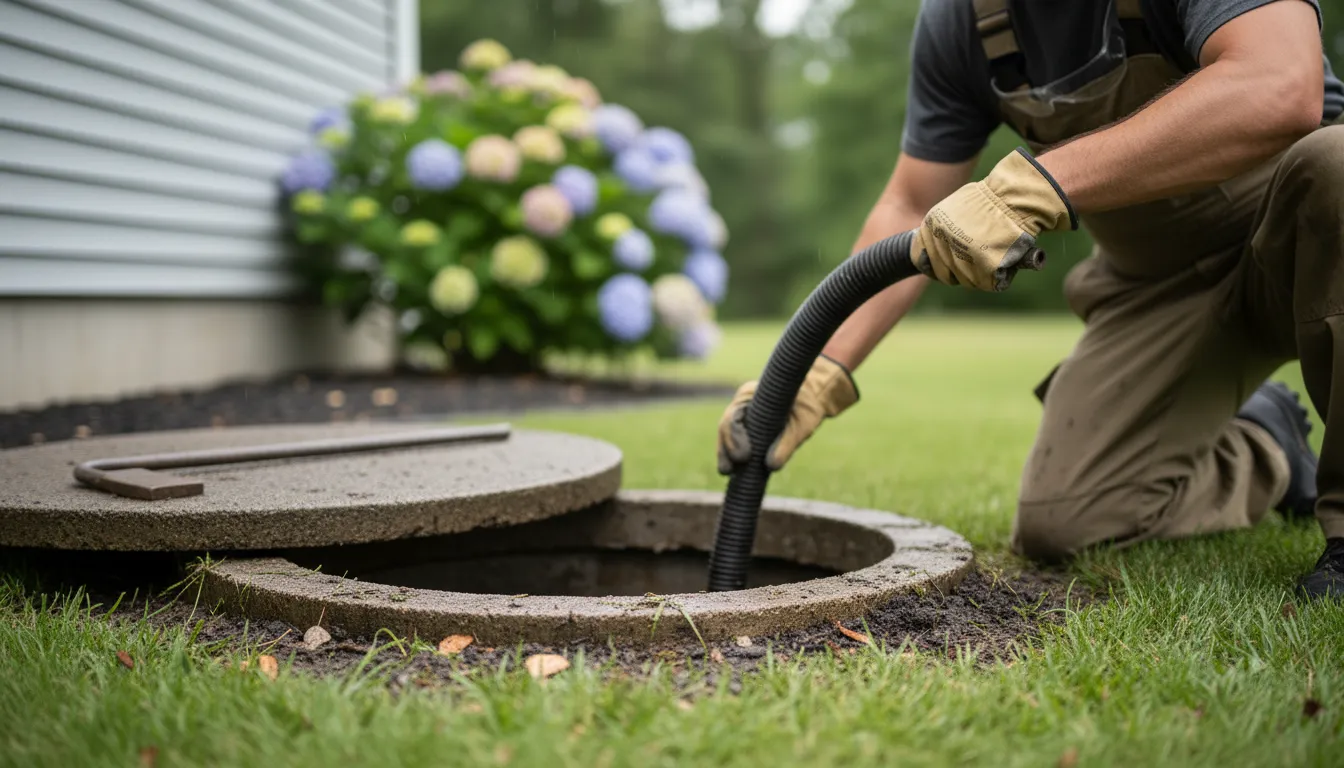
- Opening the Manhole: The main, large-diameter manhole cover is removed to allow access for the pump hose.
- Inspecting the Tank: Before pumping, a professional will often inspect the tank's interior, baffles, and outlet tee for damage or wear.
- Pumping Solids: A large vacuum truck pumps out all accumulated sludge, scum, and liquid from the tank.
- Proper Disposal: The septage is transported to an approved treatment facility, such as a wastewater treatment plant, for processing.
- System Check: After pumping, the technician may run water to check for proper flow and ensure there are no immediate issues.
Cost of Septic Tank Pumping in Nebraska
The cost for septic tank pumping in Nebraska typically ranges from $200 to $600 7 8. The final price depends on several variables:
- Tank Size: Larger tanks hold more waste and take longer to pump.
- Accessibility: Easy access to the manhole keeps costs down. Difficult access (e.g., overgrown vegetation, buried lids, limited driveway space) can increase the price.
- Amount of Solids: Tanks that are severely overdue for service may require more time and effort.
- Travel Distance: For rural properties, travel time may be factored into the quote.
Always request a detailed estimate from your chosen certified professional.
Best Practices for Septic System Care
Pumping is vital, but daily habits determine how quickly your tank fills.
- Conserve Water: Fix leaks and spread out laundry loads to avoid overwhelming the drainfield.
- Mind What You Flush: Only human waste and toilet paper should go down the drain. Avoid flushing wipes (even "flushable" ones), feminine hygiene products, dental floss, and chemicals.
- Use the Trash, Not the Drain: Avoid using a garbage disposal, as it significantly increases solids entering the tank. Pour cooking grease into a container for disposal, not down the sink.
- Protect the Drainfield: Never drive or park vehicles over the tank or drainfield. Do not build patios, sheds, or decks over this area. Plant only grass or shallow-rooted plants nearby to prevent root damage 9 10.
- Keep Detailed Records: Maintain a file with your system's design, permit, inspection reports, and all pumping receipts noting the date and volume removed.
Signs Your Nebraska Septic Tank Needs Attention
Don't wait for a disaster. Watch for these warning signs:
- Slow-draining sinks, tubs, or toilets.
- Gurgling sounds in your plumbing.
- Sewage backups in your home.
- Unpleasant odors around the tank or drainfield area.
- Exceptionally lush, green grass over the drainfield (a sign of effluent surfacing).
- Standing water or soggy soil in the yard near the system.
If you notice any of these, contact a certified septic professional immediately.
Frequently asked questions
Sources
Footnotes
-
Tank Pumping and Domestic Septage Disposal In accordance with ... - https://dee.nebraska.gov/sites/default/files/publications/12-041%20Tank%20Pumping%20and%20Domestic%20Septage%20Disposal%20Fact%20Sheet%209.pdf ↩
-
Onsite Wastewater Treatment Facilities: Just for Homeowners - https://dee.nebraska.gov/water/surface-water/wastewater/just-homeowners ↩
-
All About DWEE: Onsite Septic Systems - https://dee.nebraska.gov/news-events/press-releases/all-about-dwee-onsite-septic-systems ↩
-
Your Septic System is Your Responsibility! - https://northeasthealthdistrict.org/wp-content/uploads/2023/05/homeowner_guide_long.pdf ↩
-
Why Maintain Your Septic System | US EPA - https://www.epa.gov/septic/why-maintain-your-septic-system ↩
-
Homeowner's Guide to Septic Systems - https://marionhealth.org/wp-content/uploads/2024/02/EPA_Homeowner_Guide_Septic_Systems.pdf ↩
-
Septic Tank Pumping Frequency in Omaha, NE - https://crownpumping.com/septic-tank-pumping-frequency-in-omaha-ne/ ↩
-
Septic Tank Pumping Cost in Omaha, NE - http://crownpumping.com/septic-tank-pumping-cost-in-omaha-ne/ ↩
-
Septic systems operation and maintenance overview | UNL Water | Nebraska - https://water.unl.edu/article/wastewater/septic-systems-operation-and-maintenance-overview/ ↩
-
Maintaining Your Septic System | UNL Water | Nebraska - https://water.unl.edu/article/wastewater/maintaining-your-septic-system/ ↩