Find the Best Septic Tank Pumping Contractors for Your Business
No obligation • Fast responses • Nationwide coverage

Why you can trust Septic Spot
Septic Spot is a leading United States resource for understanding and comparing septic services. Our editors review providers using consistent criteria and verify key business details. Listings and scores are independent, and companies cannot pay to influence our content.
Search providers near you
Top Septic Tank Pumping Contractors in Bethlehem, Pennsylvania Ranked
Maintaining a healthy septic system is a crucial responsibility for homeowners not connected to a municipal sewer line. Septic tank pumping is the essential service of removing accumulated sludge and scum from your tank to prevent system failure, environmental contamination, and costly repairs. For residents of Bethlehem, adhering to local and state guidelines for regular maintenance is not just a recommendation-it's a key part of protecting your property and the local watershed. This resource helps you understand the specific requirements for your area and connects you with qualified local professionals for septic cleaning and inspection services.
Septix
455 Texas Rd, Easton, PA 18042
Septix is a septic tank pumping, inspection, repair, and installation company based in Allentown, PA. They offer comprehensive septic system services, including emergency response for alarms and backups. Septix provides 24/7 emergency services to address urgent septic problems promptly. Customers can schedule consultations to diagnose issues and receive repair or replacement solutions.
Camerlengo Septic Services LLC
1069 Old School Rd, Quakertown, PA 18951
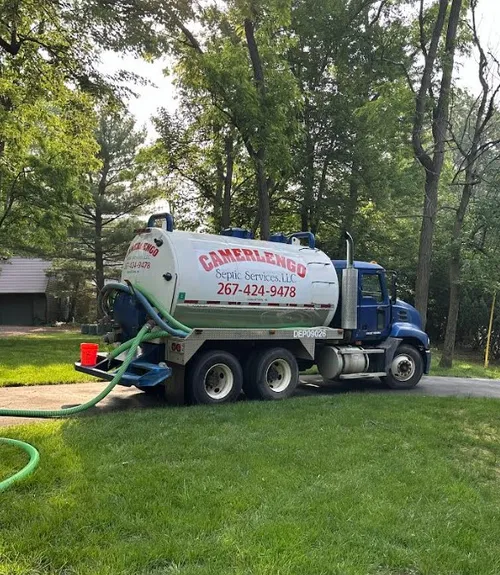
Camerlengo Septic Services LLC provides septic tank pumping and septic system repair services in Allentown, PA, and the surrounding Bucks and Montgomery counties. The company offers 24/7 emergency septic service, including fast response for septic backups, pump failures, and holding tank overflows. Their licensed and insured team is PSMA-certified and equipped to diagnose and repair septic system issues efficiently. Camerlengo Septic Services is locally owned and operated, with expertise in the specific soil conditions and regulations of Southeastern Pennsylvania.
Lehigh Valley Plumbing Experts
502 Jefferson St Suite B, Whitehall Township, PA 18052
Lehigh Valley Plumbing Experts is a plumbing company serving Allentown, PA, and the surrounding Lehigh Valley area. They provide a range of plumbing services including septic tank pumping, septic system care, tank inspection, and high-tech sewer jetting. The company offers both residential and commercial plumbing solutions, with capabilities in drain cleaning, leak detection, and plumbing maintenance. Their team has nearly two decades of experience and provides 24/7 emergency plumbing services for urgent needs.
Kiriposki & Sons Inc.
5447 Blue Church Rd, Coopersburg, PA 18036
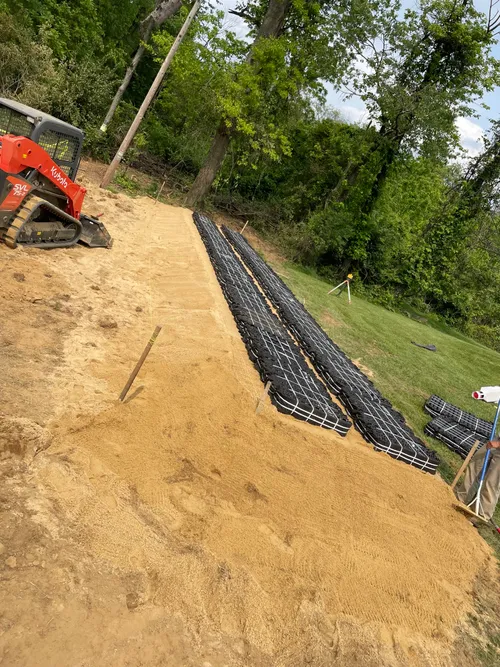
Kiriposki & Sons Inc. is a septic tank pumping and septic system repair company serving Allentown, PA. They offer septic services for residential, commercial, and job site customers, along with portable restroom rentals including handicap restrooms and handwashing stations. With over 50 years of experience, their team is trained to handle septic repairs and sewage management safely and effectively.
Bethlehem Sewerage & Excavating Services, LLC
1807 6th St, Bethlehem, PA 18020
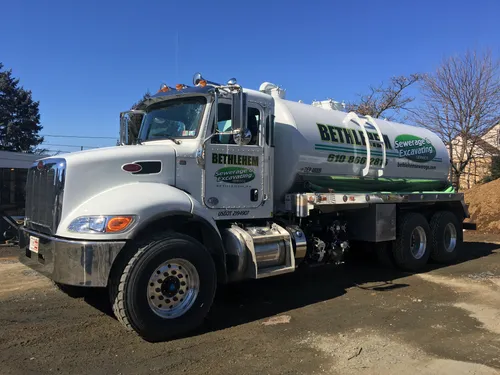
Bethlehem Sewerage & Excavating Services, LLC is a septic tank pumping company based in Allentown, PA. The company offers a range of services including sewer line, water line, septic tank, and system services. They provide customized solutions tailored to the specific needs of each property. Bethlehem Sewerage & Excavating Services has been locally owned and operated since 1954, and is fully licensed and insured, ensuring trained and certified professionals handle each job.
Why Regular Septic Maintenance is Critical in Bethlehem
A functioning septic system quietly treats household wastewater, allowing liquids to drain into a soil absorption field (leach field) while solids decompose in the tank. Over time, however, solids accumulate as sludge at the tank's bottom. If this layer becomes too thick, solids can flow into and clog the drain field, leading to system backups, foul odors, and expensive repairs or complete replacement. Regular septic tank pumping removes these solids, ensuring the entire system operates efficiently for decades.
In Pennsylvania, the Department of Environmental Protection (PADEP) oversees regulations for on-lot sewage systems, often implemented through local municipal authorities like the Bethlehem Township Municipal Authority. These local ordinances are designed to protect public health and groundwater quality in our specific region. Neglecting maintenance can lead to system failure, which may result in property damage, health hazards, and potential violations of local sewage codes.
Local Pumping Frequency Guidelines
While national averages suggest septic tank cleaning every 3-5 years, Bethlehem and the surrounding Lehigh Valley have more specific guidelines influenced by Pennsylvania's Act 537 sewage management programs.
- General Pennsylvania Guidance: State guidelines often recommend or require pumping every three years for many systems 1 2.
- Bethlehem Township Recommendation: The local municipality encourages homeowners to have their septic tanks cleaned every two years. This more frequent schedule is a proactive measure to ensure system longevity and environmental protection.
- Inspection Cadence: Alongside pumping, inspections are recommended every 1-3 years to check for structural integrity, water tightness, and to measure sludge and scum levels 3. A common rule is to pump the tank before sludge exceeds one-third of the tank's liquid depth 4.
Adhering to these local schedules helps prevent emergencies and is a cornerstone of responsible homeownership in our community.
Factors That Affect Your Pumping Schedule
The "every 2-3 years" guideline is a strong starting point, but several household-specific factors can necessitate more frequent septic tank service.
- Household Size: More people generate more wastewater and solid waste, accelerating the accumulation of sludge in the tank 5.
- Tank Size: A smaller tank (e.g., 750-900 gallons) will fill with solids much faster than a larger tank (e.g., 1,500 gallons) serving the same number of people 6.
- Total Water Usage: High water consumption from frequent laundry loads, long showers, or excessive use of garbage disposals can push solids through the tank too quickly, reducing treatment time and requiring more frequent pumping 7.
- Waste Habits: Flushing non-biodegradable items (wipes, feminine hygiene products, paper towels) or pouring grease down drains adds unnecessary solids that do not break down, rapidly filling the tank.
Find the perfect septic tank pumping contractors for your needs
Get personalized recommendations and expert advice
What to Expect: The Septic Pumping Process
Understanding the process can help homeowners prepare for a service visit. A professional septic pumping service typically involves several key steps:
- Locating and Uncovering the Tank: The technician will locate the tank's access lids, often buried under soil. You may need to mark these lids beforehand to save time.
- Initial Inspection: The lids are removed, and the technician will often perform a quick visual inspection of the inlet and outlet baffles and check the sludge/scum levels.
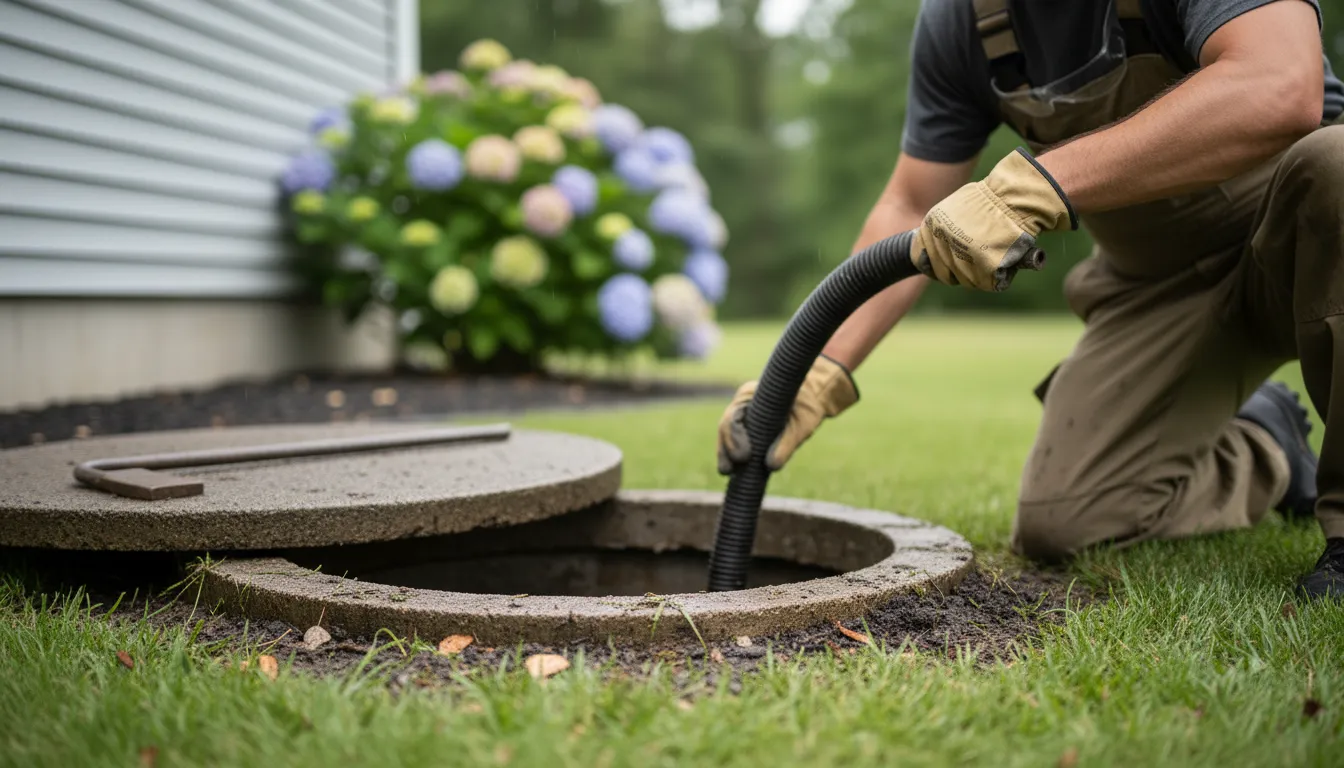
- Pumping: A large hose is inserted into the tank, and a vacuum truck removes all liquid and solid contents. A thorough job will involve agitating the tank contents to ensure all sludge is removed.
- Post-Pumping Inspection: After pumping, a more detailed inspection can be conducted to check for cracks, leaks, or baffle damage. This is the ideal time to assess the system's overall health.
- System Closure and Cleanup: The access lids are securely replaced, and the site is cleaned up. The technician should provide you with a service report detailing what was done and any observations or recommendations.
Understanding Costs for Septic Cleaning in the Lehigh Valley
The cost to pump a septic tank in the Bethlehem and Allentown area can vary based on several factors. Typical pumping costs in the region generally range from $250 to over $500 for standard maintenance 8 9.
- Primary Cost Drivers: The single biggest factor is tank size. Pumping a smaller residential tank (e.g., 1,000 gallons) may cost less, while a larger tank (1,500-2,000 gallons) will be on the higher end of the scale.
- Additional Cost Factors: Other services can add to the base price, such as:
- Tank Location: Difficult access (e.g., long hose runs, obstructed lids) may incur extra charges.
- Additional Services: A full inspection, camera scan of the drain field, or minor repairs are typically separate line items.
- Emergency Service: Pumping required for a backed-up system often costs more than a scheduled maintenance visit.
While price is a consideration, the expertise, reliability, and proper licensing of the service provider are paramount for this critical home maintenance task.
Beyond Pumping: Essential Septic System Care
Pumping is the core maintenance task, but a holistic approach to septic system care will maximize its lifespan.
- Regular Inspections: Professional inspections between pumpings can catch small issues like failing baffles or early signs of drain field problems before they become catastrophic failures 10.
- Water Conservation: Fixing leaky faucets, installing efficient fixtures, and spreading out laundry loads reduces hydraulic load on the system.
- Mindful Flushing: Only human waste and toilet paper should be flushed. Everything else belongs in the trash.
- Landscaping Care: Keep the drain field area clear of trees with deep roots and never park vehicles or build structures over any part of the septic system.
- Record Keeping: Maintain a log of all pumping dates, inspections, repairs, and the system's design (as-built drawing). This is invaluable for future service and if you sell your home.
Finding and Choosing a Local Service Provider
When it's time to schedule septic tank maintenance, selecting the right contractor is essential. Look for providers who are licensed by the state of Pennsylvania and familiar with Bethlehem Township and Northampton County regulations. They should be willing to provide references from local clients. Always ask for a detailed estimate that outlines the cost for pumping, any inspection fees, and potential charges for additional repairs or diagnostics. A reputable company will be transparent about their process and happy to answer your questions about your specific system.
Frequently asked questions
Sources
Footnotes
-
ACT 537: SEWAGE MANAGEMENT PROGRAMS Treatment ... - https://greenport.pa.gov/elibrary/PDFProvider.ashx?action=PDFStream&docID=6866&chksum=&revision=2&docName=ACT+537%3A+SEWAGE+MANAGEMENT+PROGRAMS+-+TREATMENT+TANK+PUMPING+IS+FUNDAMENTAL&nativeExt=pdf&PromptToSave=False&Size=240364&ViewerMode=2&overlay=0 ↩
-
minimum operation and maintenance needs for onlot sewage ... - https://greenport.pa.gov/elibrary/PDFProvider.ashx?action=PDFStream&docID=9121643&chksum=&revision=0&docName=COMPONENT+2M+%28SEWAGE+MANAGEMENT+PROGRAM%29+MINIMUM+O+%26amp%3B+M+NEEDS&nativeExt=pdf&PromptToSave=False&Size=202513&ViewerMode=2&overlay=0 ↩
-
On-Lot Septic Systems - Bethlehem Township Municipal Authority - https://bethlehemtownship.org/wastewatermanage ↩
-
Frequent Questions on Septic Systems | US EPA - https://www.epa.gov/septic/frequent-questions-septic-systems ↩
-
How Often Should You Pump Your Septic Tank? A Homeowner's ... - https://www.dandsportabletoilets.com/post/how-often-should-you-pump-your-septic-tank-a-homeowner-s-guide ↩
-
Septic Tank Pumping - https://extension.psu.edu/septic-tank-pumping ↩
-
Septic Systems | Department of Environmental Protection | Commonwealth of Pennsylvania - https://www.pa.gov/agencies/dep/residents/my-water/septic-systems ↩
-
How Much Does It Cost to Pump a Septic Tank? - https://www.wholesalesepticsupply.com/blogs/news/how-much-does-it-cost-to-pump-a-septic-tank ↩
-
Septic Pumping in Allentown, PA - Costs 02 / 2026 - Homeyou - https://www.homeyou.com/pa/septic-pumping-allentown-costs ↩
-
PUMP It Out! - https://www.crcog.net/vertical/sites/%7B6AD7E2DC-ECE4-41CD-B8E1-BAC6A6336348%7D/uploads/Sewer_Brochure%281%29.pdf ↩