Find the Best Septic Tank Pumping Contractors for Your Business
No obligation • Fast responses • Nationwide coverage

Why you can trust Septic Spot
Septic Spot is a leading United States resource for understanding and comparing septic services. Our editors review providers using consistent criteria and verify key business details. Listings and scores are independent, and companies cannot pay to influence our content.
Search providers near you
Top Septic Tank Pumping Contractors in Pittsburgh, Pennsylvania Ranked
Maintaining a healthy septic system is a crucial responsibility for homeowners not connected to a municipal sewer line. Regular septic tank pumping is the most important preventative maintenance task you can perform to avoid messy, expensive system failures and protect the local environment. This guide provides Pittsburgh and Allegheny County residents with essential information on septic service schedules, costs, and best practices to help you find and evaluate qualified local professionals for this vital home care need.

Understanding Septic System Maintenance in Allegheny County
A septic system is an on-site wastewater treatment facility for your home. When functioning correctly, it safely processes household water from toilets, showers, sinks, and appliances. Solid waste settles in the tank, where bacteria begin to break it down, while liquid effluent flows out into a drain field in the soil for further treatment. Over time, however, solids (sludge) accumulate at the bottom of the tank, and scum builds up at the top. If not removed, these layers can overflow into the drain field, causing clogs, backups into your home, and environmental contamination.
In Pennsylvania, septic systems are regulated under Act 537, which empowers local municipalities to create Sewage Management Programs (SMPs). Many townships in the Pittsburgh area have adopted mandatory pumping ordinances to ensure community health and environmental safety. This means your local government may require you to pump your tank on a set schedule and provide documentation as proof.
Recommended Pumping Frequency: Every 3-5 Years
The universal guideline for septic tank cleaning is to have it done every three to five years for a typical residential system 1. This is not a one-size-fits-all rule, however. Several factors can necessitate more frequent septic system servicing:
- Household Size: More people generate more wastewater and solid waste, filling the tank faster.
- Tank Size: Older or smaller homes may have smaller tanks (e.g., 500-gallon) that require more frequent attention than a modern 1,000-gallon tank.
- Water Usage: High-efficiency appliances conserve water, while excessive use (like long showers, frequent laundry loads) can hydraulically overload the system.
- Garbage Disposal Use: Using a garbage disposal significantly increases the amount of solids entering the tank, accelerating sludge buildup.
For households with high usage or a small tank, biennial (every two-year) pumping may be recommended. The most reliable way to determine your ideal schedule is through a professional inspection, which should be conducted every one to three years.
What to Expect: The Inspection and Pumping Process
A full septic tank maintenance visit involves more than just pumping. A qualified technician will typically follow a comprehensive process.
1. Inspection: Before any pumping occurs, a licensed professional should inspect your system. This includes locating and uncovering the tank lid, checking the inlet and outlet pipes for blockages, assessing the structural integrity of the tank, and evaluating the drain field for signs of failure (like soggy ground or foul odors) 2. They will also check any electrical components, such as pumps or alarms, if your system has them.
2. Pumping Decision: The inspection will reveal the levels of sludge and scum in the tank. A core rule is that the tank should be pumped when the sludge depth is such that there is less than double the sludge depth between the bottom of the scum layer and the top of the sludge layer, or if the sludge and scum combined take up more than one-third of the tank's liquid depth 3 4. Your technician will advise if pumping is immediately necessary.
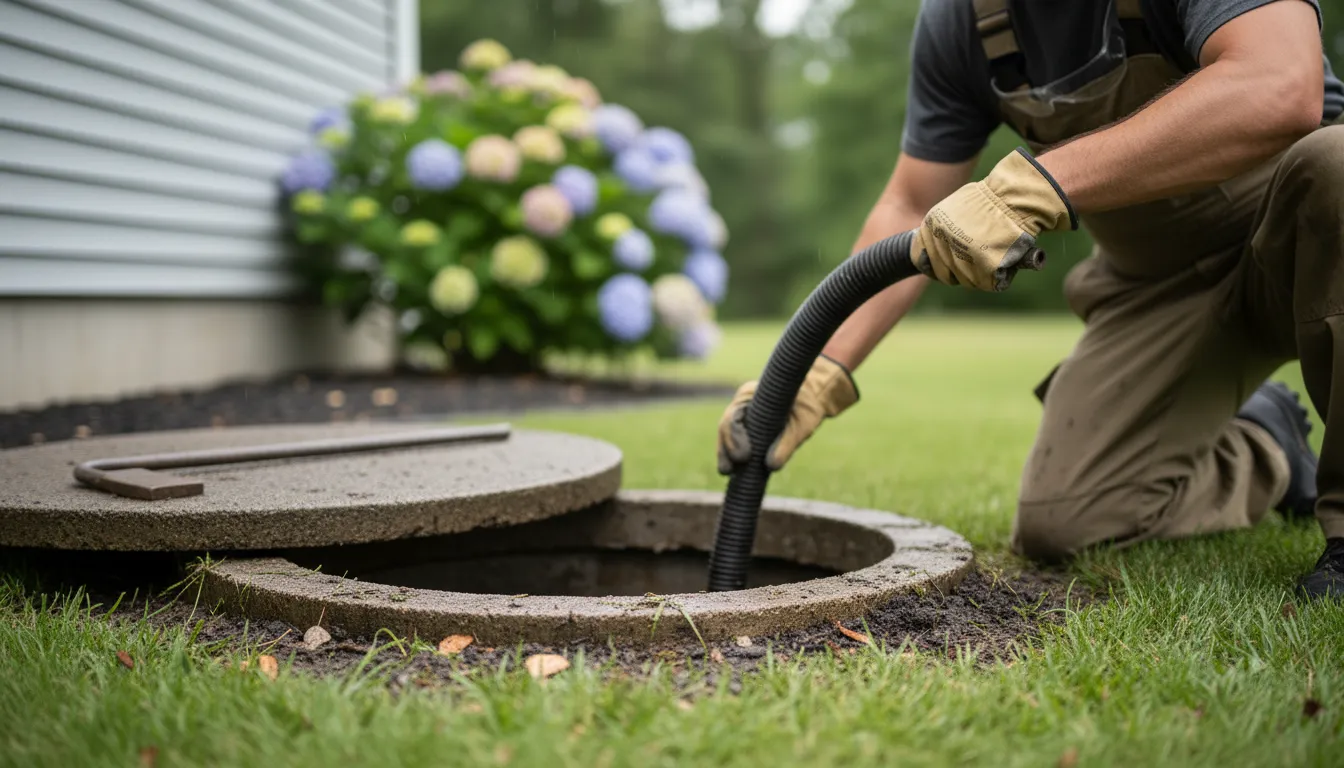
3. The Pumping Service: Using a large tank truck, the technician will vacuum all liquid and solid waste from your septic tank. A thorough pumper will also use the truck's hose to agitate the sludge layer to ensure a complete cleanout. They should inspect the empty tank briefly for cracks or structural issues before replacing the lid.
Find the perfect septic tank pumping contractors for your needs
Get personalized recommendations and expert advice
Cost of Septic Pumping in Pittsburgh
The cost for routine septic tank emptying in the Pittsburgh area is relatively consistent. Most homeowners can expect to pay between $300 and $500 for a standard pump-out of a 1,000-gallon tank with an accessible lid.
Several variables can influence the final price:
- Tank Size: Pumping a 500-gallon tank may be on the lower end (closer to $280), while a 1,500-gallon tank will cost more 5.
- Lid Accessibility: If the tank lids are buried and the pumper must spend time locating and digging them up, you will likely incur an additional charge, sometimes $50-$150 or more.
- Sludge Buildup: A severely neglected tank that is overly full of hardened sludge may require extra time and effort, potentially raising the cost toward the higher end of the range, which can approach $890 in some cases 6 7.
- Travel & Permit Fees: Some companies may add a trip charge for remote locations, and your local township may require a permit for the service, which could be an additional fee.
Always get a detailed estimate that accounts for these factors before scheduling service.
Proactive Tips for a Healthy Septic System
Preventative care can extend the life of your system and minimize maintenance costs.
- Conserve Water: Fix leaky faucets and toilets promptly. Spread out laundry loads over the week instead of doing many in one day. Using high-efficiency toilets and showerheads reduces the daily hydraulic load on your system 8.
- Mind What You Flush: Your septic system is designed for human waste and toilet paper only. Never flush wipes (even "flushable" ones), feminine hygiene products, dental floss, diapers, cigarette butts, or cat litter. These materials do not break down and will clog your system.
- Careful with Kitchen Waste: Avoid pouring cooking oils, grease, or fat down the drain, as they solidify and contribute to scum buildup. Minimize use of a garbage disposal, as it adds substantial solids. Compost food scraps instead 9 10.
- Protect Your Drain Field: Never park vehicles or build structures over your drain field. Keep roof drains, sump pumps, and other surface water away from the area. Plant only grass over the drain field; tree and shrub roots can invade and damage the pipes.
Navigating Local Regulations
As a Pittsburgh-area homeowner, your first step should be to contact your local township or borough office. Inquire about their specific Sewage Management Program (SMP) requirements under Act 537 11 12. Many municipalities, such as those in surrounding Allegheny and Washington Counties, have mandatory pumping schedules-often every three years-and require you to submit a pumping receipt from a licensed hauler to remain in compliance 13. Failing to adhere to these local ordinances can result in fines. A reputable local septic service provider will be familiar with the regulations in your specific township.
Frequently asked questions
Sources
Footnotes
-
Septic System Basics - Penn State Extension - https://extension.psu.edu/septic-system-basics ↩
-
The Ins and Outs of Septic Systems in Pennsylvania - https://www.eastvincent.org/vertical/sites/%7B5B8F1E55-6CA8-450E-BB40-12A8385B1313%7D/uploads/septicsystems%281%29.pdf ↩
-
Septic Tanks - Preventative Routine Maintenance - https://des.sc.gov/permits-regulations/septic-tanks/homeowner-resources/septic-tanks-preventative-routine-maintenance ↩
-
SEPTIC SYSTEMS 101 | PASEO - https://pa-seo.org/septic-systems-101/ ↩
-
How Much Does It Cost to Pump a Septic Tank? [2026 Data] | Angi - https://www.angi.com/articles/how-much-does-septic-tank-pumping-cost.htm ↩
-
What is the average cost of septic pumping in Penn 15675? - https://www.facebook.com/groups/accesswestmoreland/posts/7771630379621024/ ↩
-
Septic Pumping in Pittsburgh, PA - Costs 02 / 2026 - Homeyou - https://www.homeyou.com/pa/septic-pumping-pittsburgh-costs ↩
-
How Often to Pump Septic Tank: 2026 Maintenance Guide - https://dandhsepticservices.com/how-often-to-pump-septic-tank/ ↩
-
Septic Systems | Department of Environmental Protection | Commonwealth of Pennsylvania - https://www.pa.gov/agencies/dep/residents/my-water/septic-systems ↩
-
PUMP It Out! - https://www.crcog.net/vertical/sites/%7B6AD7E2DC-ECE4-41CD-B8E1-BAC6A6336348%7D/uploads/Sewer_Brochure%281%29.pdf ↩
-
ACT 537: SEWAGE MANAGEMENT PROGRAMS Treatment ... - https://greenport.pa.gov/elibrary/PDFProvider.ashx?action=PDFStream&docID=6866&chksum=&revision=2&docName=ACT+537%3A+SEWAGE+MANAGEMENT+PROGRAMS+-+TREATMENT+TANK+PUMPING+IS+FUNDAMENTAL&nativeExt=pdf&PromptToSave=False&Size=240364&ViewerMode=2&overlay=0 ↩
-
ACT 537: SEWAGE MANAGEMENT PROGRAMS Treatment Tank Pumping Is Fundamental - https://greenport.pa.gov/elibrary/PDFProvider.ashx?action=PDFStream&docID=6866&chksum=&revision=2&docName=ACT+537%3A+SEWAGE+MANAGEMENT+PROGRAMS+-+TREATMENT+TANK+PUMPING+IS+FUNDAMENTAL&nativeExt=pdf&PromptToSave=False&Size=240364&ViewerMode=2&overlay=0 ↩
-
Local Township Pumping Guidelines & Requirements - https://www.johnklineseptic.com/local-township-pumping-guidelines-requirements ↩