Find the Best Septic Tank Pumping Contractors for Your Business
No obligation • Fast responses • Nationwide coverage

Why you can trust Septic Spot
Septic Spot is a leading United States resource for understanding and comparing septic services. Our editors review providers using consistent criteria and verify key business details. Listings and scores are independent, and companies cannot pay to influence our content.
Search providers near you
Top Septic Tank Pumping Contractors in Reading, Pennsylvania Ranked
Maintaining a healthy septic system is a critical responsibility for homeowners in Reading and across Berks County. Regular septic tank pumping is the cornerstone of this maintenance, preventing costly backups, protecting your property, and safeguarding local groundwater. This guide explains the essential details of septic system maintenance, including local regulations, recommended service intervals, and what to expect, helping you connect with qualified professionals for this vital service.
Kiriposki & Sons Inc.
5447 Blue Church Rd, Coopersburg, PA 18036
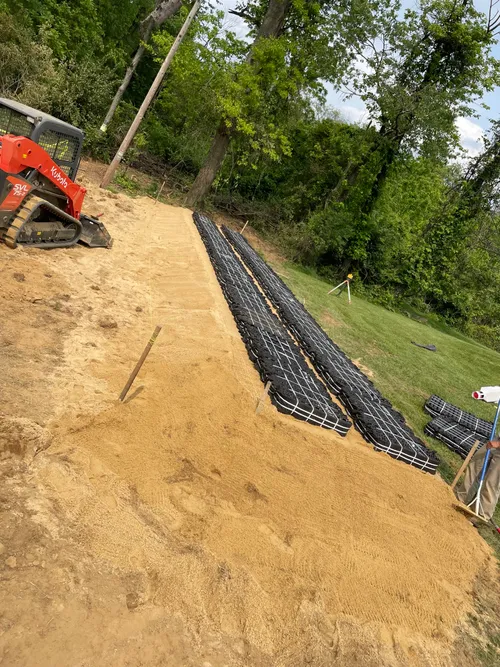
Kiriposki & Sons Inc. is a septic tank pumping and septic system repair company serving Allentown, PA. They offer septic services for residential, commercial, and job site customers, along with portable restroom rentals including handicap restrooms and handwashing stations. With over 50 years of experience, their team is trained to handle septic repairs and sewage management safely and effectively.
Richard R. Schmick Inc.
Allentown, PA
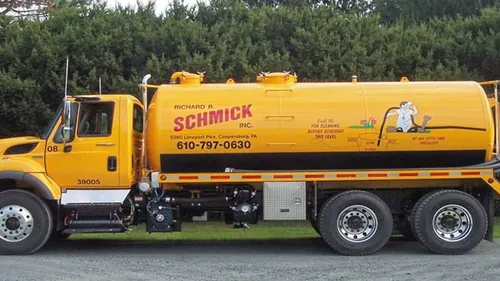
Richard R. Schmick Inc. provides septic tank pumping, septic system repair, and septic pump repair services in Allentown, PA. With over three generations of experience, they offer complete septic services for both residential and commercial clients. The company is recognized by the Pennsylvania Department of Environmental Protection as an approved septic hauler, highlighting their capability in septic tank cleaning and grease trap cleaning.
Understanding Your Septic System and Why Pumping is Essential
A septic system is an on-site wastewater treatment structure, typically consisting of a tank and a drain field. When wastewater from your home enters the tank, solids settle to the bottom as sludge, and fats float to the top as scum. The liquid effluent in the middle flows out to the drain field for further treatment in the soil. Septic tank cleaning-the process of removing the accumulated sludge and scum-is necessary because these layers will eventually fill the tank. If not pumped out, solids can flow into and clog the drain field, leading to system failure, sewage backups into your home, and environmental contamination.
For residents in the Reading area, proper septic system maintenance isn't just a good idea; it's often a legal requirement. Many municipalities in Berks County operate under Sewage Management Programs that mandate regular inspections and pumping. Staying on top of this schedule protects your investment and ensures compliance with local health codes.
How Often Should You Pump Your Septic Tank in Reading?
The standard guideline for septic tank service frequency is every 3 to 5 years for a conventional system. However, this is a general rule, and several factors specific to your household can necessitate more frequent pumping.
- Local Regulations: In Reading and surrounding townships, local ordinances often require inspections and pumping every 3 years 1. Always check with your specific municipal office for the most current requirements.
- Household Size: A family of four or more people generates more wastewater and solid waste, which can fill the tank faster than a single occupant.
- Tank Size: Older or smaller tanks have less capacity and require more frequent attention.
- Garbage Disposal Use: Using a garbage disposal significantly increases the amount of solids entering the tank, potentially shortening the time between necessary pumpings 2.
- Overall Water Usage: High water consumption from frequent laundry loads, long showers, or leaking fixtures doesn't allow solids enough time to settle, pushing them toward the drain field.
A crucial recommendation from experts is to never go longer than 5 years without having your tank inspected and pumped 3. Waiting for a problem to occur, like slow drains or odors, usually means damage has already begun.
The Inspection: Knowing When It's Time to Pump
Rather than relying solely on a calendar, the most accurate way to determine the need for septic tank emptying is through a professional inspection. Licensed professionals recommend inspecting the tank, pipes, and drain field at least every 1 to 3 years 4.
During an inspection, the technician will check the sludge and scum layers. A common rule is that pumping is required if the combined depth of sludge and scum exceeds one-third of the tank's liquid depth. Some municipalities even recommend an inspection before pumping to definitively assess whether the service is needed at that time, ensuring you don't pay for unnecessary work 5.
Find the perfect septic tank pumping contractors for your needs
Get personalized recommendations and expert advice
What to Expect: The Pumping Process and Associated Costs
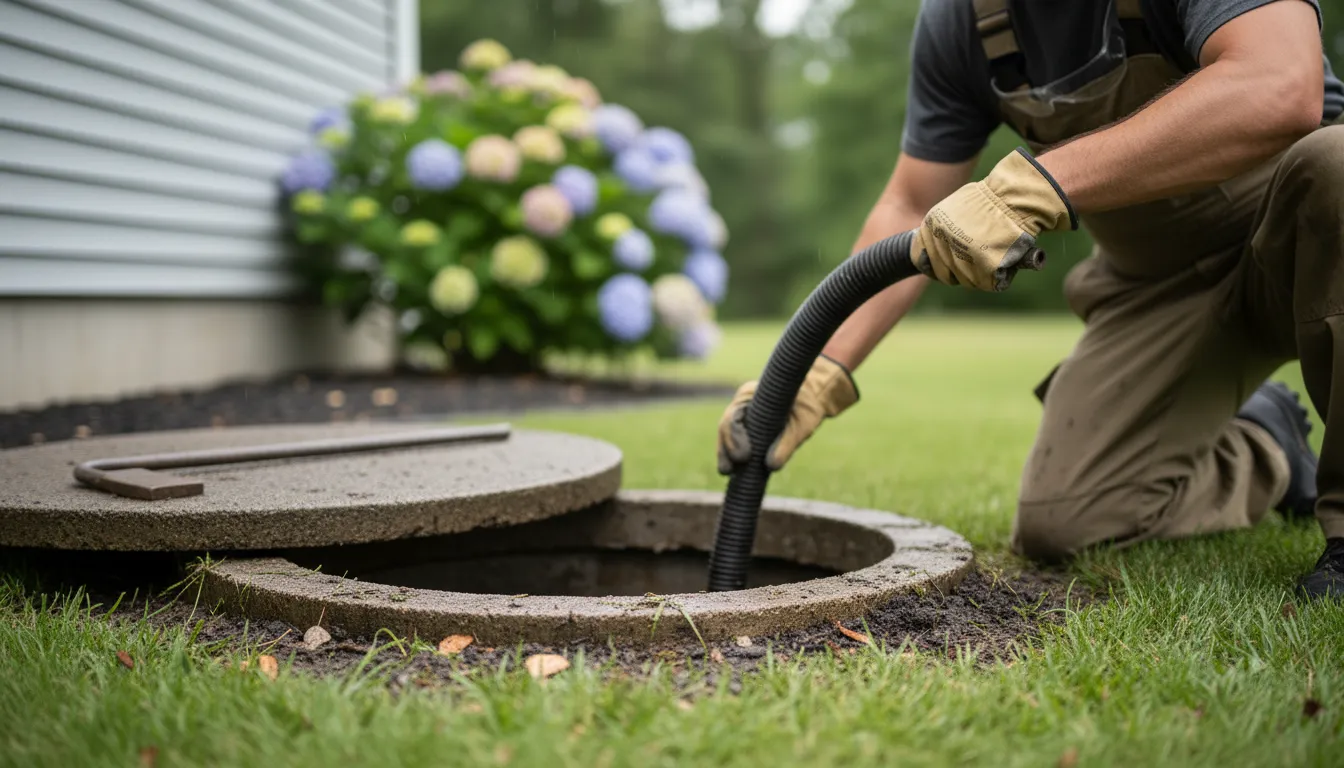
When you schedule a septic tank pumping service, a technician will arrive with a vacuum truck. They will locate and uncover your tank's access lids, insert a large hose, and remove all the contents-sludge, scum, and liquid-for proper disposal at a licensed treatment facility. They may also perform a basic inspection of the tank's components during this process.
In the Reading area, the cost for this service typically ranges from $275 to over $600, with an average around $445 6 7 8. Several factors influence the final price:
- Tank Size: Larger tanks (e.g., 1,500 gallons) cost more to pump than standard 1,000-gallon tanks.
- Accessibility: Tanks that are buried deep, under landscaping, or far from where the truck can park may incur additional charges.
- Sludge Volume: A severely overdue tank that is full of hardened sludge may require more time and effort to clean thoroughly.
Proactive Maintenance Tips for a Healthy System
Beyond regular pumping, you can extend the life of your septic system with smart habits:
- Conserve Water: Spread out laundry loads and fix leaky faucets and toilets to avoid overwhelming the system.
- Mind What You Flush: Only human waste and toilet paper should go down the drain. Avoid flushing wipes (even "flushable" ones), feminine hygiene products, dental floss, cooking grease, and chemicals.
- Protect the Drain Field: Never park vehicles or build structures over the drain field. Keep roof drains and sump pumps directed away from it.
- Consider Timing: According to Penn State Extension, pumping the tank before an extended vacation or period of inactivity allows the system to dry out and can improve its overall efficiency 9 10.
Finding and Choosing a Service Provider in Berks County
When searching for septic services, look for licensed, insured professionals with good local reputations. They should be familiar with the specific regulations in your township. You can ask for references, verify their license with the Pennsylvania Department of Environmental Protection (DEP), and request a detailed estimate that includes all potential fees. Checking with your township office is also an excellent way to find a list of certified pumpers who are approved to provide the documentation required for local Sewage Management Programs 11 12.
Frequently asked questions
Sources
Footnotes
-
Septic Tank Pumping Frequency Guidelines - https://www.beckertwpsherburnecomn.gov/sites/g/files/vyhlif16406/files/media/services/file/426/septic_tank_pumping_frequency_guidelines.pdf ↩
-
How Often Should You Have Your Septic Tank Pumped? - https://www.johnklineseptic.com/how-often-should-you-have-your-septic-tank-pumped ↩
-
How Often Should You Pump Your Home Septic Tank? - https://www.wrenvironmental.com/blog/2018/january/how-often-should-you-pump-your-home-septic-tank-/ ↩
-
SEPTIC SYSTEMS 101 | PASEO - https://pa-seo.org/septic-systems-101/ ↩
-
Septic System Basics - Penn State Extension - https://extension.psu.edu/septic-system-basics ↩
-
HOW OFTEN SHOULD YOU BE PUMPING YOUR SEPTIC TANK? - https://www.sandiegocounty.gov/content/dam/sdc/dpw/WATERSHED_PROTECTION_PROGRAM/WatershedRebates/SRP/PDF/Chart-Septic-Large.pdf ↩
-
Septic Tank Pumping Frequency: Crucial Maintenance Guide - https://septic911.com/septic-tank-pumping-frequency/ ↩
-
Septic Tanks - Preventative Routine Maintenance - https://des.sc.gov/permits-regulations/septic-tanks/homeowner-resources/septic-tanks-preventative-routine-maintenance ↩
-
Septic Tank Pumping - Penn State Extension - https://extension.psu.edu/septic-tank-pumping ↩
-
Septic Tanks - https://ontelauneetwp.net/wp-content/uploads/2020/01/Septic-tanks.pdf ↩
-
Septic Systems | Department of Environmental Protection | Commonwealth of Pennsylvania - https://www.pa.gov/agencies/dep/residents/my-water/septic-systems ↩
-
PUMP It Out! - https://www.crcog.net/vertical/sites/%7B6AD7E2DC-ECE4-41CD-B8E1-BAC6A6336348%7D/uploads/Sewer_Brochure%281%29.pdf ↩