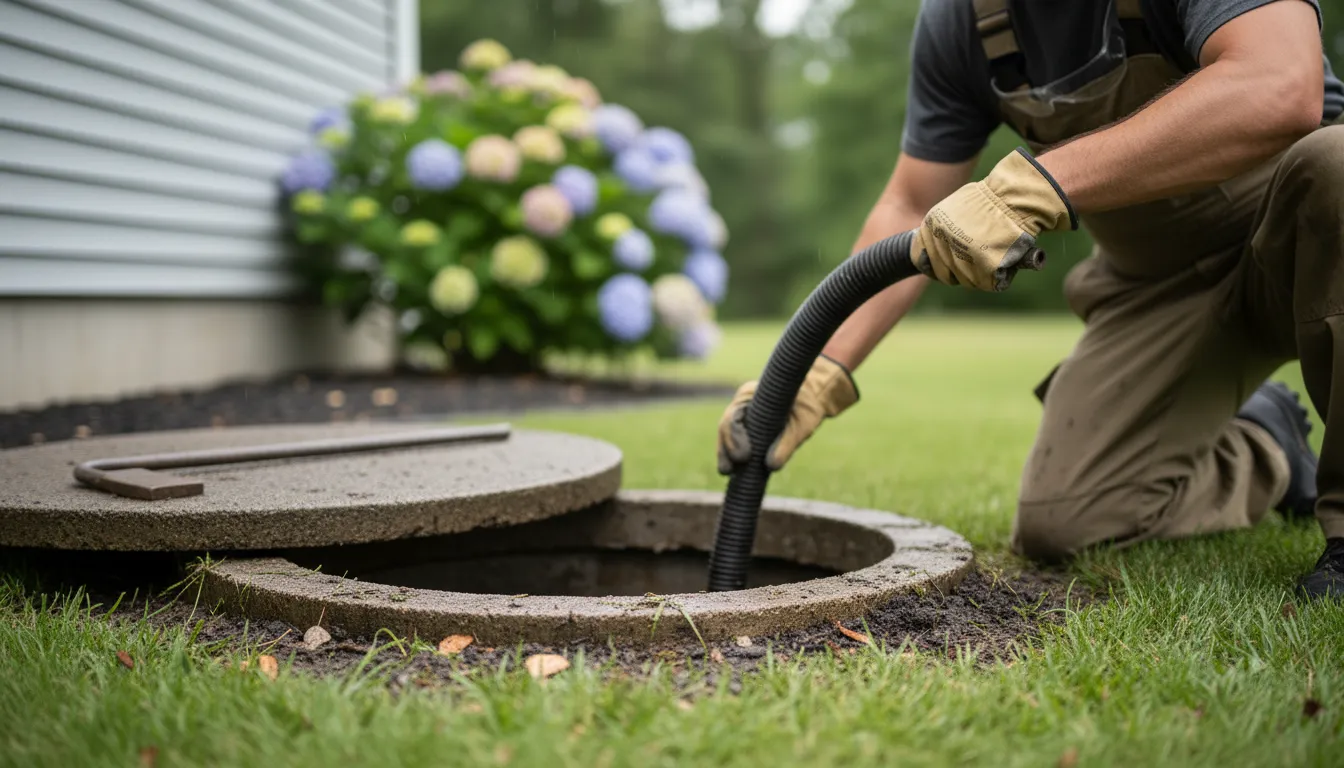
Find the Best Septic Tank Pumping Contractors for Your Business
No obligation • Fast responses • Nationwide coverage

Why you can trust Septic Spot
Septic Spot is a leading United States resource for understanding and comparing septic services. Our editors review providers using consistent criteria and verify key business details. Listings and scores are independent, and companies cannot pay to influence our content.
Search providers near you
Top Septic Tank Pumping Contractors in Cranston, Rhode Island Ranked
Maintaining a healthy septic system is a crucial responsibility for homeowners not connected to municipal sewer lines. Regular septic tank pumping and inspection are the cornerstones of this care, preventing system failures, protecting public health, and safeguarding local water quality. For Cranston residents, understanding Rhode Island's specific regulations and best practices can help you find qualified local professionals to ensure your system functions properly for years to come.
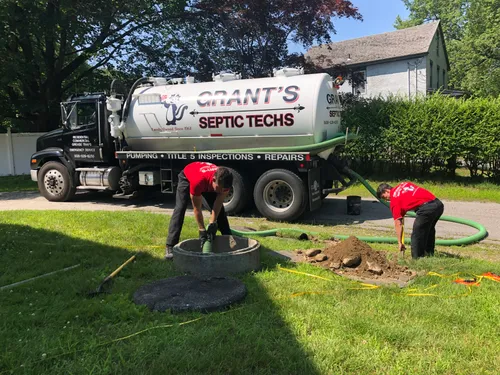
Grant's Septic Techs
5 Farm St, Upton, MA 01568
Grant's Septic Techs is a family-owned septic tank pumping company serving Worcester, MA. They provide septic tank pumping services with a focus on thorough and honest work. The company is known for careful yard restoration after service and clear communication throughout the process.
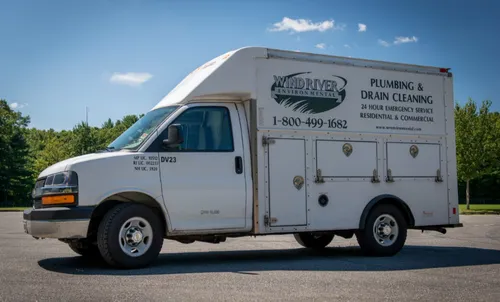
Wind River Environmental of Johnston, RI
141 Shun Pike, Johnston, RI 02919
Wind River Environmental of Johnston, RI provides septic tank pumping, inspection, and repair services in Providence, RI. Serving residential, commercial, and municipal clients, the company offers tailored solutions that comply with local codes and regulations. With a history dating back to 1946, Wind River Environmental brings decades of experience and a broad resource network to handle projects of varying complexity. The company is available 24/7 to address urgent septic and wastewater needs.

A & D Sanitation.
223 Hinchey Ln, Somerset, MA 02726
A & D Sanitation provides septic tank pumping, inspection, and repair services in Providence, RI. The company handles septic system maintenance including pumping, line snaking to clear blockages, and basic repairs such as installing filters, risers, and covers. They also offer yearly bacteria treatments and inspections required for Rhode Island point-of-sale ISDS. Their services include maintaining cesspool tight tanks and providing tank seals and jetting.

Croome Sanitation Inc
26 Hillside Ave, Rehoboth, MA 02769
Croome Sanitation Inc is a family-owned septic service company serving Providence, RI, and the surrounding areas of Southeast Massachusetts and Rhode Island. Established in 1962, the company offers a wide range of septic system services including pumping, Title 5 inspections, sewer camera diagnostics, pump station maintenance, and excavation work. Their expertise extends to wastewater treatment systems, providing comprehensive care to maintain system health and compliance with local regulations. Croome Sanitation also offers same-day and emergency services to address urgent septic needs.
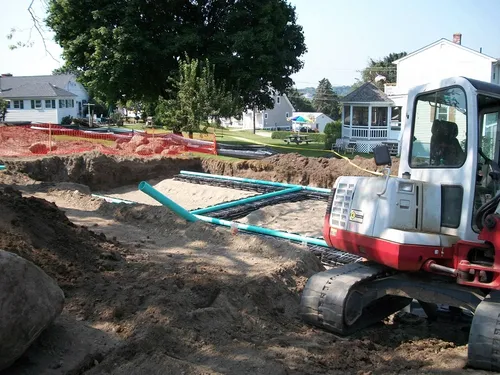
Michael Perri & Sons Septic Service, Inc.
Providence, RI
Michael Perri & Sons Septic Service, Inc. is a family-owned and operated septic company serving Providence, RI, and the entire state of Rhode Island. They provide a full range of septic services including routine pumping, cleaning, inspections, repairs, and new system installations. Their skilled team also offers hydro-jetting, backhoe services, enzyme bacteria treatments, and drainage installation to maintain and protect septic systems. With over 50 years of experience and licenses for underground utility work, they handle both residential and commercial septic needs across multiple Rhode Island communities.
Why Regular Septic Maintenance is Essential in Cranston
A septic system is an on-site wastewater treatment facility for your home. When functioning correctly, it safely processes household water from toilets, showers, sinks, and appliances. Solid waste settles in the tank, forming a layer of sludge, while fats and oils float to the top as scum. The liquid effluent then flows out to a drainfield where it is filtered through the soil. Without periodic septic tank cleaning, these solids accumulate, eventually flowing into and clogging the drainfield-a much more expensive problem to fix than routine pumping. Proper maintenance protects your property value, prevents unpleasant backups, and is a key part of environmental stewardship in our community.
Understanding Rhode Island and Cranston Regulations
The Rhode Island Department of Environmental Management (RIDEM) sets the statewide framework for septic system oversight, which includes septic system servicing. While state law provides guidelines, local municipal ordinances can be more stringent. In Cranston, these local rules often mandate regular inspections by licensed professionals to ensure compliance with water quality standards. Staying ahead of these requirements isn't just about avoiding fines; it's about proactive system care. A licensed inspector will check critical components, including scum and sludge depth and the structural integrity of inlet and outlet baffles, providing a clear report on your system's health.
How Often Should You Pump Your Septic Tank?
The most common question homeowners have is about frequency. A general rule is to schedule septic tank emptying every 3 to 5 years, but the ideal schedule for your home depends on two primary factors: tank size and household size.
- Tank Size: Older homes may have smaller tanks (e.g., 500-750 gallons), while newer installations are typically 1,000 gallons or larger. A smaller tank fills with solids faster.
- Household Occupancy: More people generate more wastewater and solid waste. Use the following guidelines as a starting point, adjusting for other factors like garbage disposal use:
- 1-2 people: Every 4-5 years
- 3-4 people: Every 3-4 years
- 5-6 people: Every 2-3 years
- 7+ people: Every 1-2 years
Important Note: If your household frequently uses a garbage disposal, it significantly increases the rate of solid accumulation. In this case, you should plan for more frequent pumping-potentially cutting the recommended interval in half 1 2.
Find the perfect septic tank pumping contractors for your needs
Get personalized recommendations and expert advice
The Importance of Regular Septic Inspections
While pumping removes accumulated solids, an inspection assesses the overall condition of your entire system. Experts recommend having your system inspected every 1 to 3 years 3. A thorough inspection by a licensed professional goes beyond just measuring sludge. They will:
- Locate and assess the tank and drainfield.
- Check for leaks or signs of failure in the tank.
- Inspect mechanical components like pumps and alarms.
- Evaluate the drainfield for signs of surfacing effluent or soggy ground. This proactive approach can identify small issues-like a damaged baffle or a minor leak-before they turn into catastrophic, landscape-destroying repairs.
What to Expect: Service Process and Costs
When you contact a provider for septic tank maintenance, a standard service visit typically includes locating the tank (often using a probe if the lids are buried), pumping out all solids and liquids, and a basic visual inspection of the tank's interior. In Cranston, the cost for this standard pumping service typically ranges from $290 to $700, with an average cost around $423.
Several factors can influence the final price:
- Tank Accessibility: Difficult-to-reach tanks or those with buried lids may cost more.
- Tank Size: Larger tanks (e.g., 1,500 gallons) cost more to pump than standard 1,000-gallon tanks.
- Condition: If your tank is significantly overdue for service (e.g., 7+ years), the sludge may have hardened, requiring additional effort and potentially adding $100 to $200 to the bill.
- Timing: Emergency or after-hours services for a backup can cost between $450 and $1,200 4 5.
Always ask for a detailed estimate that outlines what is included. A reputable provider will be transparent about pricing.
Protecting Your Drainfield and System Longevity
Pumping and inspections are vital, but daily habits determine your system's long-term health. Your drainfield is a critical component that can be easily damaged. To protect it:
- Never drive or park vehicles on the drainfield area. The weight can compact the soil and crush pipes.
- Plant trees and shrubs away from the drainfield. Roots are a primary cause of pipe blockages and damage 6.
- Divect rainwater from roofs and driveways away from the drainfield to prevent saturation.
- Avoid pouring grease, harsh chemicals, paints, or non-biodegradable items down the drain.
How to Find and Choose a Service Provider in Cranston
Selecting the right professional is key. Always verify that the company or individual is licensed by the state of Rhode Island to perform septic system pumping and inspection 7 8. You can often check this through the RIDEM website or by asking the company for their license number. Look for established local companies with positive reviews and a reputation for thoroughness. They should be willing to explain the process, provide a written report after inspection, and locate your tank if the access lids are not readily visible (often by probing with a steel rod about five feet from where the home's main sewer pipe exits the foundation) 9.
Frequently asked questions
Sources
Footnotes
-
Caring for Your Septic System - Mass.gov - https://www.mass.gov/guides/caring-for-your-septic-system ↩
-
How Often Should You Pump Your Septic Tank - Rhode Island - https://www.rockhouseconstruction.com/how-often-should-you-pump-your-septic-tank-rhode-island ↩
-
Frequent Questions on Septic Systems | US EPA - https://www.epa.gov/septic/frequent-questions-septic-systems ↩
-
Septic Pumping Cost by State: 2024 Complete Price Guide - https://wastedoor.com/article/septic-pumping-cost-by-state ↩
-
Septic Tank Pumping Cost: Guide & Pricing in 2025 - Splash Plumbing - https://www.splashplumbing.com/how-much-does-it-cost-to-pump-septic-tank-understanding-pricing-and-factors-involved/ ↩
-
RI Septic System Maintenance Recommendations - https://fostersurvey.com/ri-septic-system-maintenance-recommendations/ ↩
-
SepticSmart Homeowners | Rhode Island Department of Environmental Management - https://dem.ri.gov/environmental-protection-bureau/water-resources/permitting/septic-smart-home ↩
-
Rhode Island Septic Inspection Requirements: What to Know - https://www.rockhouseconstruction.com/rhode-island-septic-inspection-requirements-what-to-know ↩
-
Maintaining your Septic System - The University of Rhode Island - https://web.uri.edu/owt/wp-content/uploads/sites/2062/Maintaining-Your-Septic-System.pdf ↩