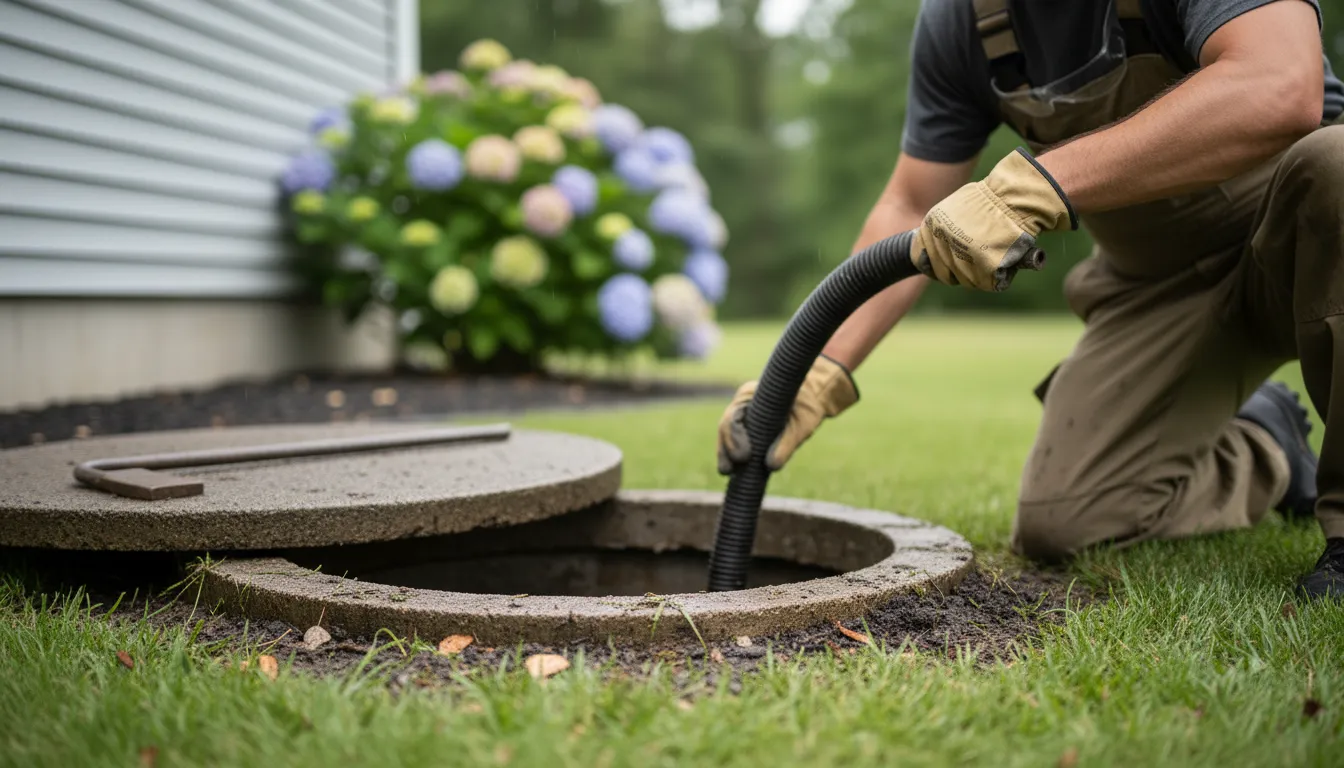
Find the Best Septic Tank Pumping Contractors for Your Business
No obligation • Fast responses • Nationwide coverage

Why you can trust Septic Spot
Septic Spot is a leading United States resource for understanding and comparing septic services. Our editors review providers using consistent criteria and verify key business details. Listings and scores are independent, and companies cannot pay to influence our content.
Search providers near you
Top Septic Tank Pumping Contractors in East Providence, Rhode Island Ranked
Maintaining your septic system is a crucial responsibility for any homeowner not connected to a municipal sewer line. Regular septic tank pumping and inspection are essential to prevent backups, protect your property value, and safeguard local groundwater quality. For residents of East Providence, understanding Rhode Island's specific regulations and maintenance schedules is key to a healthy, long-lasting system. This guide provides the local information you need to find qualified professionals and make informed decisions about your septic service.
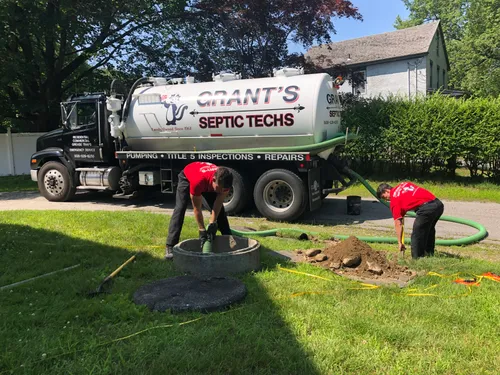
Grant's Septic Techs
5 Farm St, Upton, MA 01568
Grant's Septic Techs is a family-owned septic tank pumping company serving Worcester, MA. They provide septic tank pumping services with a focus on thorough and honest work. The company is known for careful yard restoration after service and clear communication throughout the process.
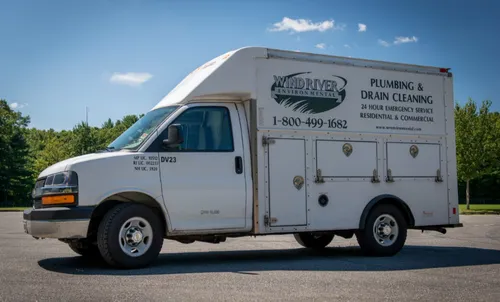
Wind River Environmental of Johnston, RI
141 Shun Pike, Johnston, RI 02919
Wind River Environmental of Johnston, RI provides septic tank pumping, inspection, and repair services in Providence, RI. Serving residential, commercial, and municipal clients, the company offers tailored solutions that comply with local codes and regulations. With a history dating back to 1946, Wind River Environmental brings decades of experience and a broad resource network to handle projects of varying complexity. The company is available 24/7 to address urgent septic and wastewater needs.

A & D Sanitation.
223 Hinchey Ln, Somerset, MA 02726
A & D Sanitation provides septic tank pumping, inspection, and repair services in Providence, RI. The company handles septic system maintenance including pumping, line snaking to clear blockages, and basic repairs such as installing filters, risers, and covers. They also offer yearly bacteria treatments and inspections required for Rhode Island point-of-sale ISDS. Their services include maintaining cesspool tight tanks and providing tank seals and jetting.

Croome Sanitation Inc
26 Hillside Ave, Rehoboth, MA 02769
Croome Sanitation Inc is a family-owned septic service company serving Providence, RI, and the surrounding areas of Southeast Massachusetts and Rhode Island. Established in 1962, the company offers a wide range of septic system services including pumping, Title 5 inspections, sewer camera diagnostics, pump station maintenance, and excavation work. Their expertise extends to wastewater treatment systems, providing comprehensive care to maintain system health and compliance with local regulations. Croome Sanitation also offers same-day and emergency services to address urgent septic needs.
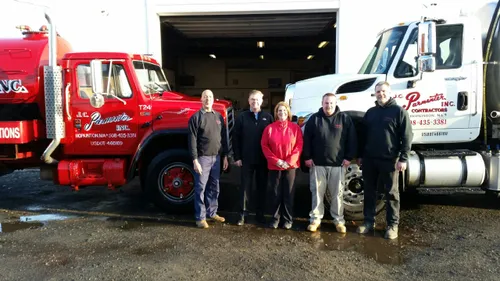
John C Parmenter Inc.
85 Hayden Rowe St, Hopkinton, MA 01748
John C Parmenter Inc. is a septic service company based in Worcester, MA, with over 100 years of experience. They offer septic tank pumping, repair, Title 5 inspections, and full septic system installations. The company serves Hopkinton and surrounding towns, handling everything from routine maintenance to new construction septic projects. Their licensed inspectors provide comprehensive Title 5 reports, and they also offer emergency septic services.
Understanding Your Septic System in East Providence
A septic system is an on-site wastewater treatment structure, typically consisting of a tank and a soil absorption field (leach field). When wastewater from your home enters the tank, solids settle to the bottom as sludge, and fats float to the top as scum. The liquid effluent in the middle flows out to the leach field, where it is naturally filtered by the soil. Over time, the sludge and scum layers accumulate. If they aren't removed through regular septic tank cleaning, they can overflow into the leach field, causing costly and unsanitary failures.
In East Providence, like all of Rhode Island, these systems are regulated by the Rhode Island Department of Environmental Management (DEM). Proper maintenance isn't just a recommendation-it's a requirement for environmental and public health. A failing system can contaminate nearby wells, streams, and Narragansett Bay.
Recommended Pumping Frequency for East Providence Homes
How often you need to schedule septic tank emptying depends on several factors. The general rule for conventional systems is every 3 to 5 years. However, your household's specific habits can significantly adjust this timeline.
- Household Size: This is the primary driver. A smaller tank serving a larger family will fill up faster.
- 1-2 People: Every 4-5 years.
- 3-4 People: Every 3-4 years.
- 5+ People: Every 1-3 years.
- Tank Size: Smaller tanks require more frequent septic tank service.
- System Type: If your system includes a pump (a mechanical component), it typically requires more frequent inspection and servicing, often every 1-2 years.
- Water Usage: Excessive water use from many laundry loads in a single day, long showers, or leaking fixtures can overwhelm the system and necessitate more frequent pumping.
The only way to know for sure is through a routine inspection, which should be conducted every 1-3 years to measure the sludge and scum layers. A professional can then tell you if it's time to pump.
Rhode Island and East Providence Regulations You Must Know
Rhode Island has specific laws governing septic systems, designed to phase out older, polluting designs and ensure proper function.
- Mandatory Inspection Upon Sale: State law requires that a septic system be inspected within 12 months of a property transfer. This is a critical step in any real estate transaction in East Providence.
- Cesspool Replacement: Rhode Island law mandates the replacement of all cesspools. If you are selling a property with a cesspool, it must be replaced with a modern septic system within one year of the sale 1 2. This is a significant but essential upgrade for environmental protection.
- Licensed Professionals: All septic system pumping and major maintenance work must be performed by a licensed professional, as required by the RI DEM. Always verify a provider's credentials.
What to Expect During a Pumping and Inspection Service
A standard septic tank maintenance visit involves two key parts: inspection and pumping.
- Comprehensive Inspection: Before any pumping occurs, a licensed technician will locate and open your tank's access ports. They will measure the thickness of the scum and sludge layers to assess the tank's health and determine if pumping is needed 3. They should also inspect the baffles or tee assemblies (which prevent solids from exiting the tank) for integrity and check for any signs of leakage or damage 4.
- The Pumping Process: Using a large tank truck, the technician will vacuum out all the accumulated solids and liquids from your tank. It's important that they pump through the manhole (not just the observation port) to ensure a thorough cleaning. They may also briefly run water from your home to check that the inlet and outlet are flowing correctly.
After the service, you should receive a report detailing what was done, the condition of your system, and any recommendations for repairs or future maintenance.
Find the perfect septic tank pumping contractors for your needs
Get personalized recommendations and expert advice
Cost of Septic Services in East Providence
The cost for routine septic tank inspection and maintenance in the East Providence area typically ranges from $250 to $500 per visit 5 6. Several factors can influence the final price:
- Tank Size and Accessibility: Larger tanks cost more to pump. Tanks that are buried deep, under landscaping, or difficult for the truck to reach may incur additional charges.
- Amount of Solids: Heavily accumulated sludge and scum may require more time and effort to remove.
- Additional Services: Costs will be higher if repairs (like a damaged baffle) are needed or if the inspection is for a real estate transaction.
While price is a consideration, the quality of service and the provider's licensing are far more important for protecting your long-term investment.
Best Practices for Septic System Care
Pumping is essential, but what you do between services matters tremendously. Follow these tips to extend the life of your system and avoid emergencies:
- Conserve Water: Spread out water-intensive activities. Fix leaky faucets and toilets promptly. Consider installing high-efficiency fixtures.
- Mind What You Flush: Only human waste and toilet paper should go down the toilet. Never flush wipes (even "flushable" ones), feminine hygiene products, dental floss, or chemicals.
- Use the Sink Wisely: Avoid using a kitchen garbage disposal, as it significantly increases the rate of sludge buildup in your tank. Pour fats, oils, and grease into a container for disposal in the trash, not down the drain.
- Protect the Drainfield: Never park vehicles or build structures (like sheds or patios) over your leach field. Plant only grass over this area; tree and shrub roots can clog and damage the pipes 7.
- Avoid Additives: Steer clear of septic system "cleaners" or "starters." These additives are unnecessary and can actually harm the bacterial balance in your tank, potentially damaging the system 8 9.
Signs Your System Needs Immediate Attention
Don't wait for your scheduled maintenance if you notice any of these warning signs of a failing system:
- Slow Drains: Sinks, showers, and toilets that drain slowly throughout the house.
- Sewage Backups: Wastewater backing up into household drains.
- Bad Odors: Unpleasant smells around the septic tank or drainfield area.
- Lush, Wet Spots: Soggy ground or unusually green, lush grass over the drainfield, especially when it hasn't rained.
- Standing Water: Puddles of greywater near the system components.
If you observe any of these issues, contact a licensed septic professional in East Providence immediately to assess the situation.
Frequently asked questions
Sources
Footnotes
-
Septic & Onsite Wastewater Treatment Systems - RI DEM - https://dem.ri.gov/environmental-protection-bureau/water-resources/permitting/septic-onsite-wastewater-treatment-owts ↩
-
How Often Should You Pump Your Septic Tank - Rhode Island - https://www.rockhouseconstruction.com/how-often-should-you-pump-your-septic-tank-rhode-island ↩
-
Maintaining your Septic System - The University of Rhode Island - https://web.uri.edu/owt/wp-content/uploads/sites/2062/Maintaining-Your-Septic-System.pdf ↩
-
Rhode Island Septic System Regulations for Homeowners - https://www.rockhouseconstruction.com/rhode-island-septic-system-regulations-for-homeowners ↩
-
SepticSmart Homeowners | Rhode Island Department of Environmental Management - https://dem.ri.gov/environmental-protection-bureau/water-resources/permitting/septic-smart-home ↩
-
Frequent Questions on Septic Systems | US EPA - https://www.epa.gov/septic/frequent-questions-septic-systems ↩
-
Septic Systems | Rhode Island Department of Environmental ... - https://dem.ri.gov/ri-stormwater-solutions/take-action/simple-steps/septic-systems.php ↩
-
RI Septic System Maintenance Recommendations - https://fostersurvey.com/ri-septic-system-maintenance-recommendations/ ↩
-
Smart Solutions for Optimizing Septic Tank Pumping Frequency - https://smartsepticpros.com/blog/septic-tank-pumping-frequency/ ↩