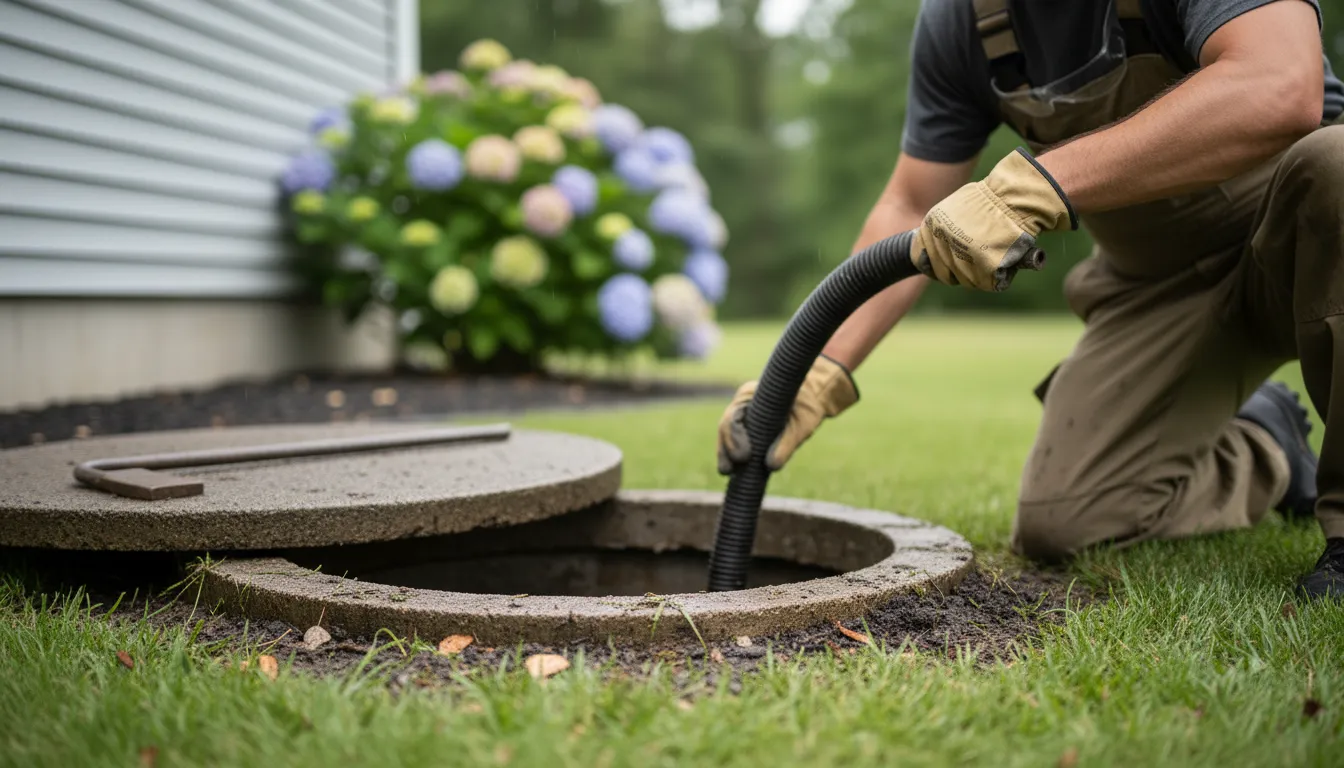
Find the Best Septic Tank Pumping Contractors for Your Business
No obligation • Fast responses • Nationwide coverage

Why you can trust Septic Spot
Septic Spot is a leading United States resource for understanding and comparing septic services. Our editors review providers using consistent criteria and verify key business details. Listings and scores are independent, and companies cannot pay to influence our content.
Search providers near you
Top Septic Tank Pumping Contractors in North Charleston, South Carolina Ranked
Maintaining your septic system is a crucial responsibility for homeowners in North Charleston. Septic tank pumping is the essential process of removing accumulated solids from your tank to prevent system failure, costly repairs, and environmental contamination. In our coastal area, where high water tables and seasonal flooding are common, proactive maintenance is especially important. This guide will help you understand the local regulations, recommended schedules, and best practices for septic service, empowering you to find qualified professionals to keep your system functioning properly.
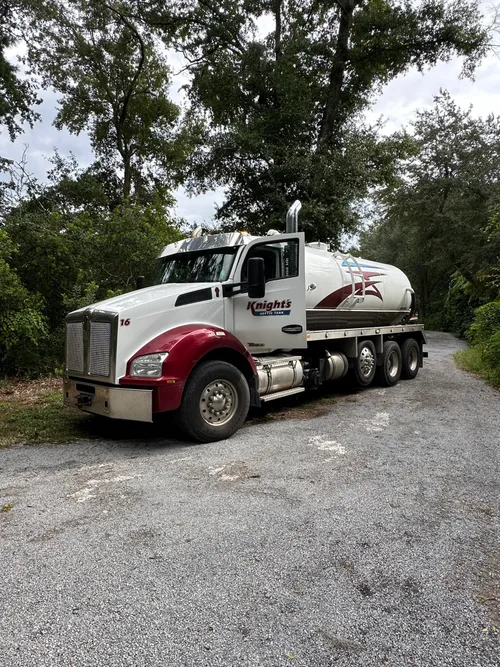
Knights Septic Tank Services
288 Hodge Rd, Summerville, SC 29483
Knights Septic Tank Services has been serving Charleston, SC, and the surrounding Lowcountry area since 1969. The company offers a full range of septic services including pumping, inspection, installation, and repair for both residential and commercial clients. They also manufacture precast concrete septic tanks and grease traps through their specialized divisions. Their licensed engineers and technicians bring over 30 years of combined experience to each project. Knights Septic Tank Services operates pump trucks seven days a week by appointment to accommodate customer needs.

Anderson Plumbing & Industrial Inc.
Charleston, SC
Anderson Plumbing & Industrial Inc. is a family-owned company serving Charleston, SC, and surrounding areas with industrial, commercial, and residential plumbing services. They specialize in complex plumbing system repairs, septic tank pumping and repair, and trenchless pipe rehabilitation using advanced technologies such as robotic camera inspection and UV curing. With decades of experience, Anderson Plumbing & Industrial offers emergency services and a workmanship guarantee to address urgent and routine plumbing needs efficiently.
A-1 Septic Tank Service
1717 Pineview Rd, Charleston, SC 29407
A-1 Septic Tank Service provides septic tank pumping, installation, and repair services in Charleston, SC. The company offers tailored septic solutions with a focus on professional installation and maintenance. With years of experience, A-1 Septic Tank Service is equipped to handle various septic system needs to support residential and commercial properties.
Why Septic System Maintenance is Critical in North Charleston
A septic system is an on-site wastewater treatment facility for properties not connected to a municipal sewer line. It relies on a natural process of separation and bacterial digestion within the tank, with liquid effluent dispersing into a soil-based drainfield. When solids (sludge and scum) build up too high, they can flow into and clog the drainfield, leading to system backups, soggy yards, and contamination of groundwater.
In North Charleston, this risk is amplified by our coastal environment. The South Carolina Department of Environmental Services (SCDES) emphasizes that shallow water tables, common in our region, require vigilant care 1. A saturated drainfield cannot properly absorb effluent, making regular pumping and inspection your first line of defense against a very expensive repair bill, which can range from $3,000 to over $10,000.
How Often Should You Schedule Septic Pumping?
The standard recommendation from SCDES and industry experts is to pump your septic tank every 3 to 5 years for a typical residential system. However, this is a general guideline. The exact frequency for your home depends on several factors:
- Household Size: A large family (5 or more people) generates more wastewater and solid waste, typically necessitating pumping every 2 to 3 years 2. A single occupant or couple may extend the interval to 5 years, but only after a professional inspection confirms it's safe 3 4.
- Tank Size and Usage: The volume of your tank relative to your daily water use is key. Garbage disposals significantly increase solid waste, requiring more frequent service.
- System Type: Alternative or mechanical systems, such as aerobic treatment units (ATUs), often require more frequent, sometimes annual, inspection and pumping 5.
The most reliable method is to have the sludge and scum levels measured during a routine inspection. Pumping is needed when the solids fill one-third to one-half of the tank's volume or when the sludge layer is within 12 inches of the outlet baffle 6.
The Role of Professional Inspection
Pumping is not the only maintenance task. SCDES recommends a full system inspection by a licensed professional every 1 to 2 years. During an inspection, a contractor will:
- Measure sludge and scum levels to determine if pumping is needed.
- Check for leaks in the tank and distribution box.
- Inspect inlet and outlet baffles or tees.
- Examine the drainfield for signs of failure, like soggy soil or surfacing effluent.
Inspections are also commonly required during real estate transactions. While not universally mandated by state law, many lenders and local jurisdictions in high-growth areas like Charleston County will require a passing inspection report before property transfer 7.
Find the perfect septic tank pumping contractors for your needs
Get personalized recommendations and expert advice
Best Practices for a Healthy Septic System
Routine pumping is the cornerstone of maintenance, but your daily habits have a huge impact. Following these guidelines can extend your system's life and prevent emergencies.
Conserve Water: Spreading out water use prevents hydraulically overloading the system. Fix leaky faucets and toilets promptly, and avoid doing multiple loads of laundry in one day, especially during rainy periods when the coastal soil is already saturated 8.
Mind What You Flush: Your septic system is designed for human waste and toilet paper. Never flush:
- "Flushable" wipes, feminine hygiene products, or condoms.
- Cooking grease, fats, or oils.
- Cat litter, coffee grounds, or cigarette butts.
- Harsh chemicals, paints, or pesticides, which can kill the essential bacteria in your tank 9 10.
Protect Your Drainfield: This is the most expensive component to replace. Never drive, park, or build structures (like sheds or patios) over the drainfield. Also, plant only grass over the area; tree and shrub roots can seek out moisture and clog or damage the pipes.
Working with Licensed Septic Professionals
In South Carolina, all septic system pumping, repair, and installation work must be performed by a contractor licensed by the SCDES 11 12. Hiring a licensed professional ensures the work meets state codes, protects your property value, and safeguards public health and the local environment. When evaluating providers, verify their SCDES license and ask about their experience with coastal systems common in the North Charleston area.
Understanding Costs: Maintenance vs. Repair
Investing in routine maintenance is far more economical than dealing with a failure. The cost for a standard septic tank pumping service in the region typically ranges from $250 to $500 every 3-5 years 13. Contrast this with the cost of repairing a clogged or failing drainfield, which can easily run from $3,000 to $10,000 or more for a full system replacement 14. Proactive pumping and inspection is a small price to pay for peace of mind and long-term savings.
Frequently asked questions
Sources
Footnotes
-
Be Septic Safe - https://www.clemson.edu/extension/water/resources/be-septic-safe.html ↩
-
How Often Should You Pump Your Septic Tank in South ... - https://moreheadsepticservices.com/how-often-should-you-pump-your-septic-tank-south-carolina/ ↩
-
How Often Should You Get Your Septic Tank Pumped? - https://www.coastalsepticsolutions.com/blog/how-often-should-you-get-your-septic-tank-pumped ↩
-
How Often to Pump a Septic Tank - Clear River Environmental - https://clearriverenvironmental.com/how-often-to-pump-a-septic-tank/ ↩
-
Frequent Questions on Septic Systems | US EPA - https://www.epa.gov/septic/frequent-questions-septic-systems ↩
-
Septic Tanks - Preventative Routine Maintenance - https://des.sc.gov/permits-regulations/septic-tanks/homeowner-resources/septic-tanks-preventative-routine-maintenance ↩
-
Homeowners with septic systems: how often are you getting ... - https://www.reddit.com/r/homeowners/comments/16ukz78/homeowners_with_septic_systems_how_often_are_you/ ↩
-
Septic Systems - Mount Pleasant Waterworks - https://www.mountpleasantwaterworks.com/your_water/septic_systems.php ↩
-
How Often Should You Pump Your Septic Tank in South ... - https://moreheadsepticservices.com/how-often-should-you-pump-your-septic-tank-south-carolina/ ↩
-
Be Septic Safe: Best Practices for Septic System Maintenance - https://hgic.clemson.edu/factsheet/be-septic-safe-best-practices-for-septic-system-maintenance/ ↩
-
Septic Tanks - Preventative Routine Maintenance - https://des.sc.gov/permits-regulations/septic-tanks/homeowner-resources/septic-tanks-preventative-routine-maintenance ↩
-
Effective Grey Water Disposal in Charleston: What You Need ... - https://trashgurl.com/are-you-in-compliance-local-regulations-on-septic-grey-water-disposal/ ↩
-
Be Septic Safe - Clemson University - https://www.clemson.edu/extension/water/resources/be-septic-safe.html ↩
-
Be Septic Safe - https://www.clemson.edu/extension/water/resources/be-septic-safe.html ↩