Find the Best Drain Field Repair Companies for Your Business
No obligation • Fast responses • Nationwide coverage

Why you can trust Septic Spot
Septic Spot is a leading United States resource for understanding and comparing septic services. Our editors review providers using consistent criteria and verify key business details. Listings and scores are independent, and companies cannot pay to influence our content.
Search providers near you
Top Drain Field Repair Companies in North Little Rock, Arkansas Ranked
A failing drain field is a serious issue that can lead to sewage backups, soggy lawns, and environmental contamination. Drain field repair or replacement involves addressing the underground network of perforated pipes and soil that treats and disperses wastewater from your septic tank. This guide explains the local process, regulations, and costs to help you understand your options and connect with qualified professionals in the North Little Rock area.
Understanding Your Drain Field System
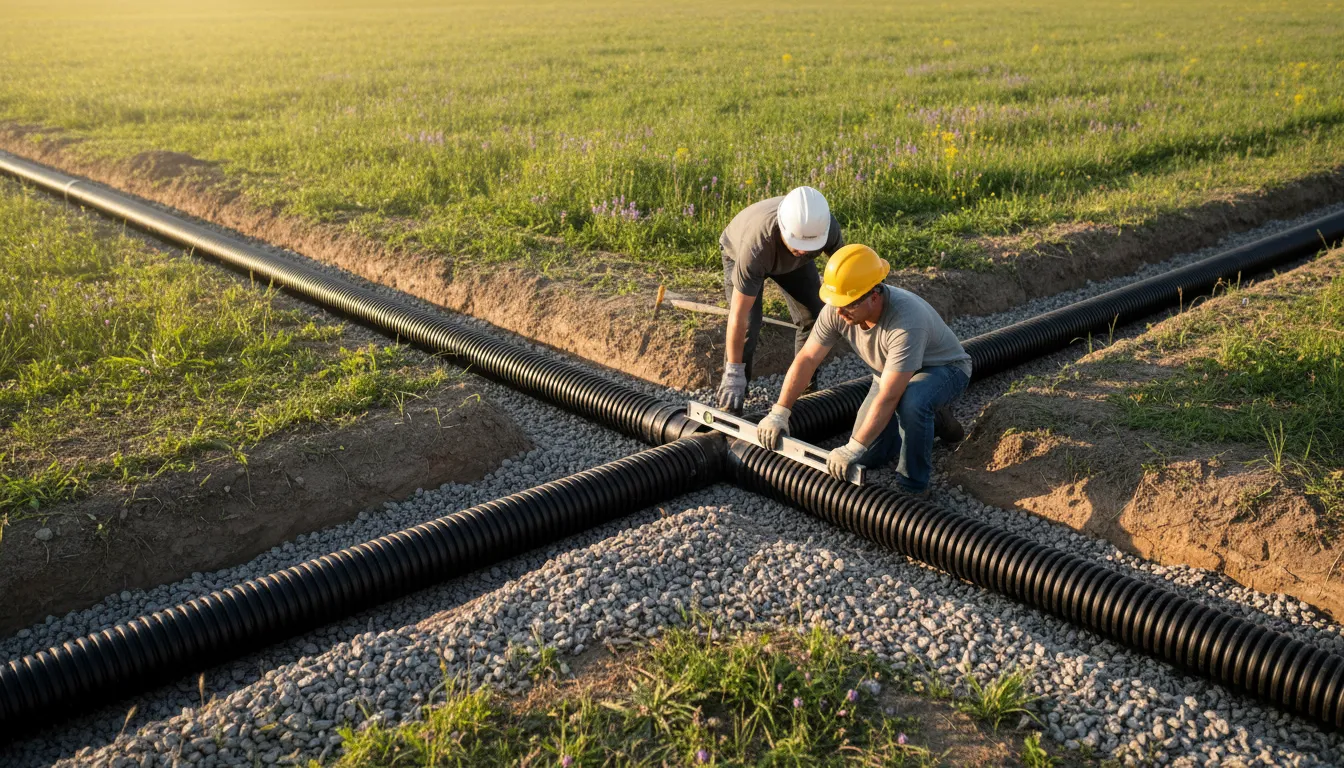
Often called a leach field or absorption field, the drain field is the final and most critical stage of a conventional septic system. After solids settle in the septic tank, the liquid effluent flows into a distribution box and out through a series of perforated pipes buried in trenches filled with gravel. This effluent slowly percolates through the soil, where natural processes remove harmful bacteria and nutrients before the water rejoins the groundwater table. When this area becomes clogged, saturated, or physically damaged, it can no longer absorb wastewater, leading to system failure.
Signs You Need Drain Field Service
Recognizing early warning signs can prevent a complete system failure and more expensive repairs. Common indicators include:
- Sewage Odors: Foul smells in your yard or home, especially near the drain field area.
- Slow Drains & Backups: Gurgling pipes, toilets that drain slowly, or sewage backing up into household drains.
- Soggy Ground: Spongy, wet, or overly lush grass directly over the leach field, even during dry weather.
- Standing Water: Puddles of grey, foul-smelling water on the lawn.
- Algae Blooms: Excessive growth of algae in nearby ponds or ditches, indicating nutrient-rich runoff.
If you notice any of these signs, it's crucial to stop using water in the home and contact a licensed professional for an inspection immediately.
Arkansas and North Little Rock Regulations
All septic system work in North Little Rock is governed by the Arkansas Department of Health (ADH). You cannot legally begin any repair or replacement without following their rules 1.
- Licensed Professionals: A state-licensed Designated Representative (DR) must design any new or replacement system. The installation or repair work itself must be performed by a licensed installer.
- Permits: You must obtain a Permit for Construction from the ADH before any work begins. After installation and a successful inspection, you will receive a Permit for Operation.
- Setbacks: Systems must be placed a minimum distance from property features. A key setback is 100 feet from water wells, streams, lakes, or other water bodies2.
- Site Evaluation: A mandatory soil evaluation, including percolation (perc) tests and test pits, determines the soil's suitability and dictates the type of system allowed 3.
The Drain Field Repair & Replacement Process
Replacing a leach field is a multi-step process that ensures the new system is safe, effective, and compliant.
-
Site Evaluation & Soil Testing: A licensed designer or soil scientist conducts a thorough site evaluation. This includes digging test pits to examine soil layers and performing a perc test to measure how quickly water drains through the soil. In Arkansas, conventional systems typically require a percolation rate faster than 60-75 minutes per inch (mpi). This step determines if a standard trench system or an alternative (like an aerobic treatment unit) is necessary.
-
System Design & Permitting: The licensed DR uses the soil data to create a custom design for the new absorption field. This design, along with the application, is submitted to the ADH for review and to obtain the Permit for Construction 4.
-
Removal & Site Preparation: The old, failed lateral lines are carefully excavated and removed. The area is then graded and prepared for the new installation 5.
-
New Drain Field Installation: New perforated pipes are laid in gravel-filled trenches according to the approved design. Installation costs for the lateral lines alone are often estimated at $9 to $12 per linear foot. The complexity of the site and soil conditions greatly influence the final installation method.
-
Final Inspection & Approval: Once installed but before the trenches are covered, the ADH inspector must visit the site to approve the work. After passing inspection and being covered, the system can be put into service, and the Permit for Operation is issued 6.
Find the perfect drain field repair companies for your needs
Get personalized recommendations and expert advice
Cost Considerations for North Little Rock Homeowners
The cost to address a failing leach field varies widely based on the extent of the problem, soil conditions, and the size of the system needed.
- Drain Field Replacement: For the absorption field component alone, homeowners can expect costs ranging from $2,000 to $10,000 7. This is typically the core expense when the tank is still functional.
- Full System Replacement: If the entire septic system (tank and field) needs replacement, average total costs in the region are reported between $3,753 and $5,362, with potential extremes from $1,337 to over $9,409 depending on system type and site challenges 8 9.
- Professional Inspection: A comprehensive septic inspection, which is highly recommended before purchasing a home with a septic system or when trouble arises, typically costs $300 to $600.
- Additional Costs: You may also need to budget for finishing work like sodding the disturbed area ($1-$2 per square foot) or adding components for an aerobic system ($300-$900) if required by the site conditions 10.
Alternative Systems for Challenging Sites
Not all properties in the North Little Rock area have soil suitable for a conventional leach field. If the perc test is too slow or the water table is too high, the ADH may require an alternative system 11. Common alternatives include:
- Aerobic Treatment Units (ATUs): These systems inject oxygen into the treatment tank, accelerating the breakdown of waste and producing a higher-quality effluent that can be dispersed in more restrictive soils.
- Sand Mounds: An elevated mound of sand is constructed above the natural soil to provide adequate treatment and drainage.
- Drip Irrigation Systems: Treated effluent is slowly dispersed through a network of small drip lines over a larger area.
These systems are more complex and have higher initial costs and ongoing maintenance requirements but make septic service possible on sites where it otherwise wouldn't be allowed.
Maintaining Your New Drain Field
Protecting your investment is key. Proper maintenance includes:
- Water Conservation: Spread out laundry and dishwasher use to avoid overwhelming the system.
- Mind What You Flush: Only human waste and toilet paper should go down the drain. Avoid chemicals, grease, and non-biodegradable items.
- Protect the Area: Never drive or park vehicles over the drain field, and avoid planting trees or deep-rooted shrubs nearby.
- Regular Pumping: Have your septic tank pumped every 3-5 years by a professional to prevent solids from escaping into and clogging the new leach field.
Frequently asked questions
Sources
Footnotes
-
Rule PERTAINING TO ONSITE WASTEWATER SYSTEMS - https://healthy.arkansas.gov/wp-content/uploads/Onsite_Wastewater_Rule.pdf ↩
-
Onsite Wastewater FAQs - Arkansas Department of Health - https://healthy.arkansas.gov/programs-services/public-health-safety/onsite-wastewater/onsite-wastewater-faqs/ ↩
-
Homeowner Guidelines - Sitewise Arkansas - https://www.sitewisearkansas.com/home/sitewse-septic-design/residential-septic-system-design/homeowner-guidelines ↩
-
Arkansas Septic Tank Requirements | On-Site Wastewater Treatment Facilities - https://www.ntotank.com/blog/arkansas-septic-system-requirements ↩
-
The Ultimate Guide to Replacing a Septic Drain Field - https://www.rciseptic.com/the-ultimate-guide-to-replacing-a-septic-drain-field ↩
-
Residential Wastewater - Sitewise Arkansas - https://www.sitewisearkansas.com/home/sitewse-septic-design/residential-septic-system-design ↩
-
Cost to Replace Septic Tank and Drain Field [2026 Data] | Angi - https://www.angi.com/articles/how-much-new-drain-fields-foot.htm ↩
-
How Much Does A Septic System Cost? - https://uniquedrainseptic.com/blogs/resources/how-much-does-a-septic-system-cost ↩
-
Septic Tank Installation in North Little Rock, AR - Costs 03 / 2026 - https://www.homeyou.com/ar/septic-tank-installation-north-little-rock-costs ↩
-
Septic Systems: Homebuyer's Guide | Little Rock % - https://www.centralarinspections.com/blog/septic-systems-homebuyers-guide/ ↩
-
Alternative Septic Systems For Difficult Sites - Building Advisor - https://buildingadvisor.com/buying-land/septic-systems/alternative-septic-systems/ ↩