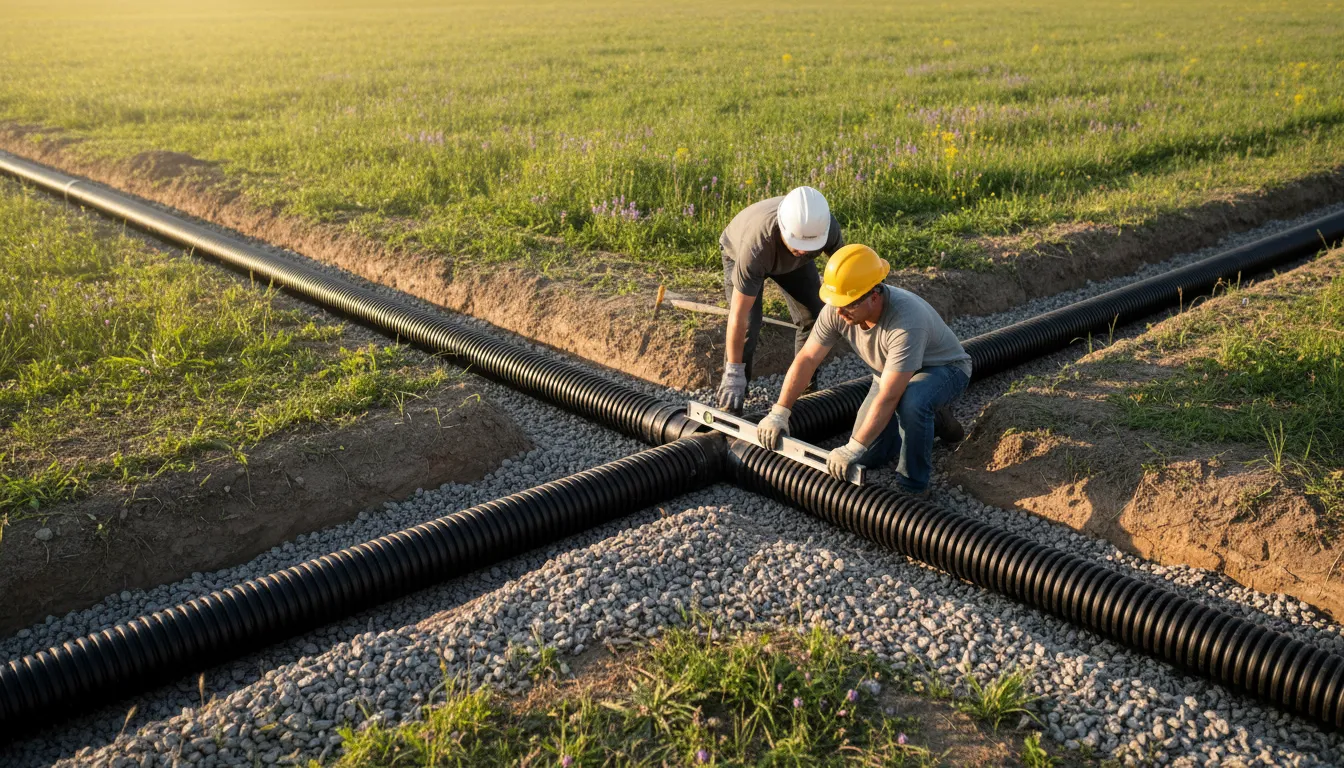
Find the Best Drain Field Repair Companies for Your Business
No obligation • Fast responses • Nationwide coverage

Why you can trust Septic Spot
Septic Spot is a leading United States resource for understanding and comparing septic services. Our editors review providers using consistent criteria and verify key business details. Listings and scores are independent, and companies cannot pay to influence our content.
Search providers near you
Best Drain Field Repair Companies in Colorado Ranked
A failing drain field, also known as a leach field or soil treatment area (STA), is a serious issue for any Colorado homeowner with a septic system. This critical component is responsible for safely dispersing and filtering treated wastewater into the soil. When repairs or a full replacement are needed, navigating Colorado's specific regulations is essential. This guide explains the process, costs, and key considerations for drain field work in Colorado, helping you understand the steps to take and connect with qualified local professionals.
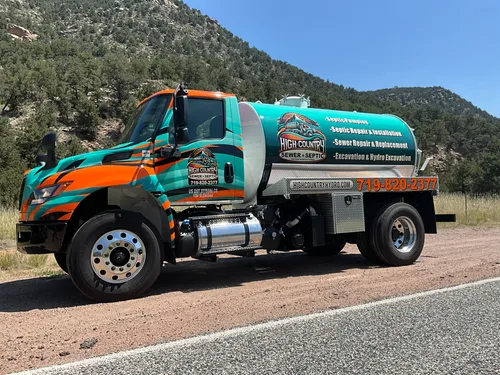
High Country Sewer & Septic
1895 Main St, Colorado Springs, CO 80911
High Country Sewer & Septic is a family-owned business serving Colorado Springs, CO, and the surrounding Front Range area. They offer comprehensive septic services including tank pumping, inspections, installations, repairs, and drain field restoration. The company manages all aspects of septic system care, from permits and inspections to excavation and settling checks, ensuring a streamlined process without the need for multiple contractors. With over 14 years of experience, they understand the unique challenges posed by local soil and elevation conditions. Their work is backed by five-year warranties and $2 million in insurance coverage. Same-day estimates and owner involvement on every project provide added assurance. They also offer after-hours communication to support emergency needs.

Septic Remedy LLC
388 Spruce Lake Dr, Divide, CO 80814
Septic Remedy LLC is a locally owned septic service company based in Colorado Springs, CO. They provide a range of septic services including inspections, repairs, installations, septic tank locating, pipe jettering, and pump repairs. The company serves El Paso, Teller, Douglas, and Park counties, offering certified septic system inspections and installations tailored to the Colorado environment. Septic Remedy is NAWT certified and emphasizes thorough inspections and effective septic system maintenance. They have built a reputation as a preferred choice for realtors and homeowners, with a focus on educating customers to prevent costly repairs. The company operates six days a week and is available for urgent septic repairs when needed.

Peak DirtWorks
2757 County Rd 46, Florissant, CO 80816
Peak DirtWorks is a licensed concrete, excavation, and septic contractor based in Florissant, Colorado. Serving residential and rural properties in Teller and Park Counties, including Colorado Springs, CO, they provide a range of services such as septic system installation, repair, and upgrades, along with full excavation and concrete construction. Their capabilities include engineered septic system installation and repairs, foundation digging, and concrete footings designed for high-elevation and freeze-thaw conditions common in the region. Peak DirtWorks works closely with property owners, local officials, and engineers to ensure systems meet site and regulatory requirements.
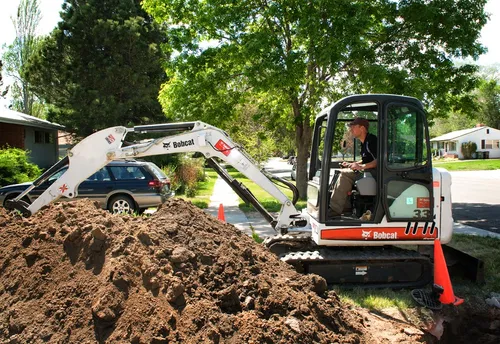
Spotted Dog Excavating Sewer and Water Repair
Colorado Springs, CO
Spotted Dog Excavating Sewer and Water Repair is a septic tank inspection, septic system repair, and drain field repair company located in Colorado Springs, CO. They specialize in sewer line replacement, septic system overhauls, and excavation work while taking care to minimize property disruption. The company is known for thorough inspections, including camera diagnostics, and for installing modern lift stations and supply lines to leach fields. Spotted Dog Excavating has built a reputation for detailed, knowledgeable service and careful site management over many years of operation.
Colorado Septic
80 Big Springs Dr #304, Nederland, CO 80466
Colorado Septic is a septic tank pumping, inspection, and repair company serving Denver, CO. They provide comprehensive onsite wastewater treatment system services, including pumping, cleaning, inspecting, and repairing septic tanks and drain fields. Their capabilities include using sewer cameras to locate blockages and employing hydro-jetting and drain rooter machines to clear obstructions. Colorado Septic focuses on identifying problems early to prevent further damage and ensure timely service completion.
Understanding Colorado's Regulatory Framework
In Colorado, septic systems are formally known as On-site Wastewater Treatment Systems (OWTS). The state operates under a "local primacy" model, meaning while the Colorado Department of Public Health and Environment (CDPHE) sets baseline standards through Regulation 431, enforcement and detailed rules are handled by your county or district public health agency 2. This is the first and most important step: always contact your local health department before planning any repair or replacement. Regulations in Boulder County, for example, will differ in specifics from those in Fremont or Grand County.
A permit is mandatory for constructing, repairing, or replacing any part of an OWTS. Attempting work without the required permits can result in fines, orders to cease work, and complications when selling your property.
When is Drain Field Repair or Replacement Needed?
Drain fields fail gradually. Recognizing early warning signs can save you from a more costly full replacement:
- Sewage Odors or Surfacing Wastewater: The most urgent sign. Wet, soggy areas or standing effluent over the drain field indicate a serious failure.
- Slow Drains and Gurgling Plumbing: Throughout the house, not just one fixture.
- Unusually Lush, Green Grass: Over the drain field area, especially during dry periods.
- Failed System Inspection: A routine or transfer inspection identifies hydraulic failure, biomat clogging, or soil saturation.
Common causes of failure in Colorado include 3:
- Hydraulic Overload: Consistently putting too much water into the system (e.g., long showers, faulty toilets, draining hot tubs).
- Soil Compaction: Driving, parking, or building over the drain field.
- Solid Carryover: Lack of regular tank pumping allows solids to escape into and clog the distribution lines.
- Root Intrusion: Trees and shrubs planted too close to the absorption area.
- System Age and Normal Wear.
The Permit Process: Minor vs. Major Repairs
The scope of your project dictates the permit path. Local health departments categorize work as either minor repairs or major repairs/replacements.
Minor Repairs These are limited fixes that don't alter the system's design capacity or the soil treatment area. Examples include repairing a broken pipe (typically under 5 feet), replacing a damaged distribution box, or clearing a clogged line.
- Permit Type: A "Minor Repair Permit" or similar.
- Process: Generally simpler, often requiring an application, site plan, and a lower fee (typically $25-$300).
- Inspection: The repair must still be inspected by the health department before it is covered with soil.
Major Repairs & Full Replacements This category includes any work on the soil treatment area (drain field) itself, replacing the septic tank, or increasing the system's design flow (e.g., adding bedrooms).
- Permit Type: A full Construction Permit.
- Process: More rigorous. It almost always requires a site evaluation by a licensed professional (engineer or soil consultant) and the submission of engineered design plans.
- Site Evaluation: This involves digging test pits to examine soil composition, depth to bedrock, and water table levels-critical factors for designing a functioning replacement field.
- Fees: Significantly higher, often ranging from $600 to over $1,800 depending on the county and project complexity.
Find the perfect drain field repair companies for your needs
Get personalized recommendations and expert advice
Cost Considerations for Colorado Homeowners
Drain field work is a significant investment. Costs are highly variable based on system size, soil conditions, topography, and local permit fees.
- System Inspection & Assessment: $250-$500.
- Minor Repair Permit: $25-$300.
- Major Repair/Replacement Permit: $600-$1,800+4 5.
- Engineering & Design Fees: $1,000-$3,000+.
- Excavation & Installation: This is the largest cost variable. A partial drain field repair can cost several thousand dollars. A complete system replacement can range from $10,000 to $30,000 or more, depending on the required technology (e.g., conventional trench vs. advanced pressurized drip system)6.
Pro Tip: Always get detailed, written estimates from multiple licensed Colorado septic contractors. The estimate should break down permitting, design, installation, and restoration costs.
The Role of Inspections: Routine, Repair, and Transfer
Inspections are non-negotiable checkpoints in Colorado.
- Routine Maintenance Inspections: Recommended every 3-5 years to catch problems early 7. This typically involves pumping the tank and assessing the drain field's performance.
- Pre-Covering Inspection: This is mandatory. After any permitted repair or installation, the local health inspector must examine the work (pipe layering, gravel depth, etc.) before the trench is backfilled.
- Property Transfer (Use Permit): Most counties require a system inspection and issuance of a "Use Permit" when selling a home or changing its use (e.g., converting a basement) 8. A failing drain field will halt a real estate transaction until repairs are permitted and completed.
Protecting Your New or Repaired Drain Field
Proper maintenance is the key to longevity. After investing in a repair, protect it:
- Avoid Compaction: Never drive, park, or build structures (sheds, patios) over the drain field. Even lightweight garden sheds can cause issues.
- Manage Water: Use water-efficient fixtures, fix leaks promptly, and space out laundry loads. Do not drain roof gutters or sump pumps into the system.
- Landscaping: Plant only grass over the field. Keep trees and shrubs with deep roots far away.
- Mind What Goes In: Do not flush wipes, feminine hygiene products, grease, or harsh chemicals. Use septic-safe toilet paper.
- Pump Regularly: Have the septic tank pumped every 3-5 years, or as recommended by your inspector, to prevent solids from clogging the drain field 9.
The Mandatory Hookup Rule
An important statewide regulation to be aware of: if a public sewer main becomes available within 400 feet of your property line, you may be legally required to connect to it and properly abandon your septic system10 11 12. Check with your local health and public works departments about any planned sewer expansions in your area.
Choosing a Licensed Colorado Contractor
This is not a DIY project. Colorado requires septic system installers and repair contractors to be licensed13 14. When selecting a professional:
- Verify their license is current with the state and your local health department.
- Ask for proof of insurance and bonding.
- Request references from recent, similar projects in your county.
- Ensure they handle the entire process: permit application, coordination with engineers and inspectors, and installation.
Frequently asked questions
Sources
Footnotes
-
Regulation 43 - Colorado Secretary of State - https://www.sos.state.co.us/CCR/GenerateRulePdf.do?ruleVersionId=5317 ↩
-
On-site Wastewater Treatment System Regulations - https://nchd.org/wp-content/uploads/2024/08/Onsite-wastewater-treatment-system-regulations.pdf ↩
-
How to Get Septic to Pass Inspection - https://www.guardianangelinspections.com/how-to-get-septic-to-pass-inspection ↩
-
Septic System Permitting | Lake County, CO - https://www.lakecountyco.gov/212/Septic-System-Permitting ↩
-
OWTS Permits and Fees - Boulder County - https://bouldercounty.gov/environment/water/septicsmart/permit-and-fee-schedule/ ↩
-
Homeowners Guide to Septic Systems Brochure - Elbert County - https://www.elbertcounty-co.gov/DocumentCenter/View/1394/Septic-Smart--Homeowners-guide ↩
-
Septic Systems (OWTS) - | Larimer County - https://www.larimer.gov/health/environmental-health/septic-systems/septic-systems-owts ↩
-
Use Permits (Septic Systems) - Douglas County - https://www.douglas.co.us/health-department/use-permits-septic-systems/ ↩
-
Homeowner Resources - https://www.cpow.net/resources/homeowner-resources/ ↩
-
Septic System FAQs - Douglas County - https://www.douglas.co.us/health-department/septic-system-faqs/ ↩
-
Septic Permit Information | Grand County, CO - Official Website - https://www.co.grand.co.us/1246/Septic-Permit-Information ↩
-
Onsite Wastewater Treatment System | Pueblo County - https://county.pueblo.org/public-health/septic ↩
-
Septic Systems | Fremont County, Colorado - https://fremontcountyco.gov/building/septic-systems ↩
-
On-site Wastewater Treatment System and Septic System License - https://broomfield.org/847/Septic-Systems ↩