Find the Best Drain Field Repair Companies for Your Business
No obligation • Fast responses • Nationwide coverage

Why you can trust Septic Spot
Septic Spot is a leading United States resource for understanding and comparing septic services. Our editors review providers using consistent criteria and verify key business details. Listings and scores are independent, and companies cannot pay to influence our content.
Search providers near you
Top Drain Field Repair Companies in Denver, Colorado Ranked
A failing drain field, also known as a leach field or absorption area, is a serious issue for any Denver-area home with a septic system. This critical component is responsible for safely filtering and dispersing treated wastewater into the soil. When it malfunctions, it can lead to sewage backups, soggy yards, and environmental contamination. Understanding the local regulations, soil conditions, and repair processes is essential for homeowners. This guide provides the information you need to navigate drain field issues, connect with certified local professionals, and ensure your system complies with Colorado's strict health and environmental standards.
Colorado Septic
80 Big Springs Dr #304, Nederland, CO 80466
Colorado Septic is a septic tank pumping, inspection, and repair company serving Denver, CO. They provide comprehensive onsite wastewater treatment system services, including pumping, cleaning, inspecting, and repairing septic tanks and drain fields. Their capabilities include using sewer cameras to locate blockages and employing hydro-jetting and drain rooter machines to clear obstructions. Colorado Septic focuses on identifying problems early to prevent further damage and ensure timely service completion.

John Todd Co
7623 N, Lavaun Dr, Louviers, CO 80131
John Todd Co is a family-owned septic service company based in Denver, CO, with a history dating back to 1945. They provide a full range of septic system services including pumping, inspection, repair, and installation for both residential and commercial clients. Their expertise covers soil testing, system design, permit processing, and drain field replacement, serving the Denver Metro Area and the Colorado front range.
Septic Daddy
1991 Co Rd 132, Elizabeth, CO 80107
Septic Daddy is a family-owned septic service company based near Denver, CO, offering comprehensive septic system solutions. They provide services including septic tank installation, inspection, repair, and drain field replacement, handling projects from design and permits to full system installation and diagnostics. With over 25 years of combined experience, Septic Daddy is licensed and insured to serve customers in Elbert, Douglas, Arapahoe, El Paso, and surrounding areas.
Understanding Your Septic System's Drain Field
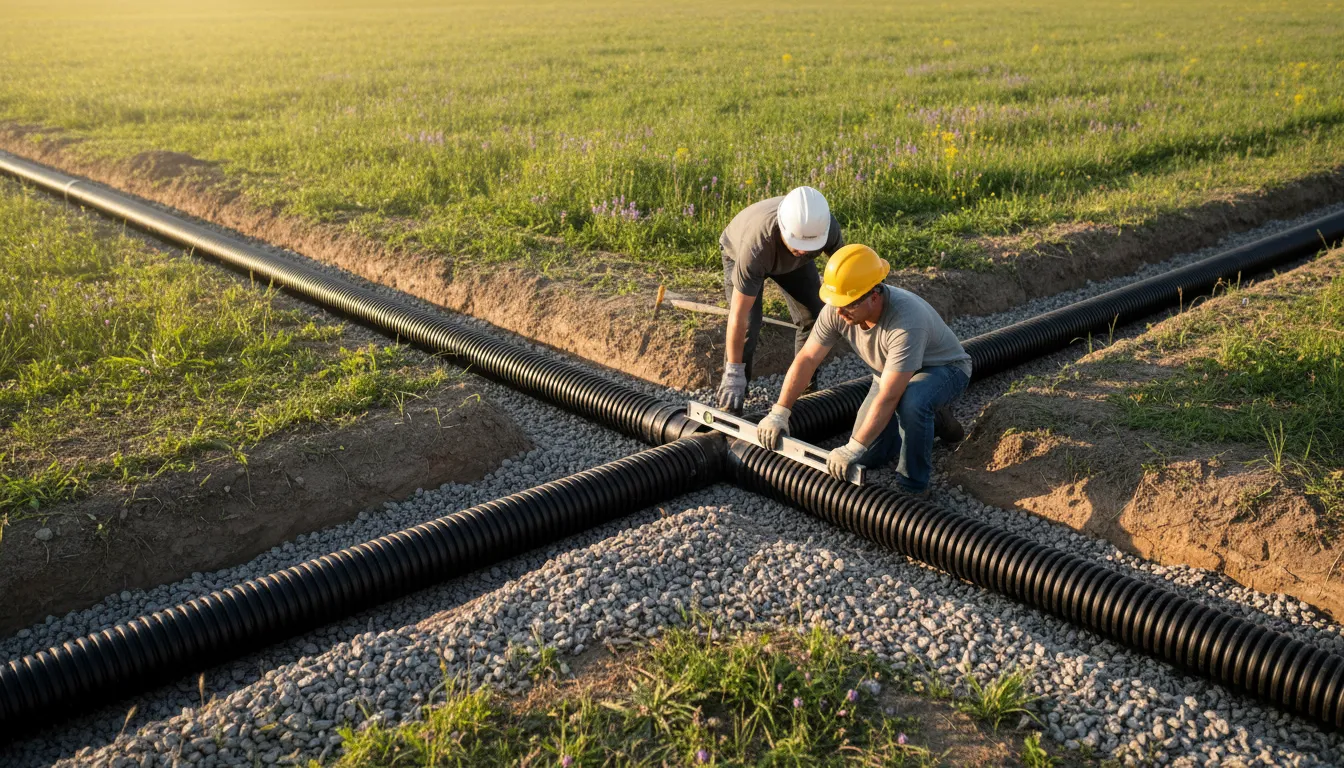
The drain field is the final stage of your onsite wastewater treatment system (OWTS). After solids settle in the septic tank, the liquid effluent flows to a distribution box and is then channeled through a network of perforated pipes buried in trenches filled with gravel. This effluent slowly percolates into the surrounding soil, where natural processes provide final treatment. In Denver and surrounding counties, the performance of this leach field is heavily dependent on local soil conditions and must be designed and maintained according to state code.
Common signs of drain field failure include:
- Sewage odors in the yard, especially after rain.
- Spongy, soggy, or persistently wet soil over the absorption area.
- Unusually lush, green grass growing over the field.
- Slow-draining household fixtures or sewage backing up into the home.
Denver-Area Regulations and Permitting
All septic system work in Colorado, including drain field repair or replacement, is governed by Colorado Department of Public Health and Environment (CDPHE) Regulation 43 1. This means you cannot simply hire an excavator to dig up and replace a field. The process is overseen by your local county health department, such as Denver Environmental Health, Adams County, or Jefferson County Public Health.
The first and most critical step is obtaining a permit. A permit application typically requires:
- A site plan prepared by a licensed professional.
- The results of a soil analysis and percolation test.
- Design specifications for the proposed repair or new leach field.
- Proof that the contractor performing the work is certified by the state.
Permit fees vary by county but often range from several hundred to over a thousand dollars. Skipping the permit process can result in significant fines and an illegal, non-compliant system that may hinder property sales.
The Role of Soil and Site Evaluation
Denver's diverse geology makes soil testing a non-negotiable part of any drain field project. Soil composition directly determines the "perc rate," or how quickly water absorbs, which dictates the size and type of absorption system required 2.
Key Site Factors Influencing Drain Field Design:
- Soil Type: The Front Range features clay, sandy loam, and rocky substrates. Clay soils drain very slowly, often requiring a larger field, while sandy soils may drain too quickly for proper treatment.
- Percolation Test: A licensed professional must conduct this test by digging holes, saturating the soil, and measuring the drop in water level over time. This data is submitted with your permit application.
- Setback Requirements: Regulations mandate minimum distances from property lines, wells, streams, and structures. For example, drain fields must typically be at least 100 feet from a private water well 3 4.
- High Water Table or Bedrock: If seasonal groundwater is high or bedrock is shallow, a standard trench system may not work. In these cases, an engineered system like a raised mound or sand filter may be necessary 5.
Diagnosing Drain Field Problems
Before deciding on repair or replacement, a thorough diagnosis is needed. Certified inspectors follow a systematic process:
- Locate and Uncover: Using plans and probes, the technician locates the septic tank, distribution box, and the edges of the drain field.
- Pump and Inspect the Tank: The tank is pumped to allow inspection of inlet/outlet baffles and the tank's structural integrity. In Adams County, pumping is required for a proper inspection 6 7.
- Inspect the Absorption Area: The ground over the leach field is checked for surface symptoms like standing water or overly lush vegetation.
- Probe and Load Test: The inspector may probe the trenches to check for ponding effluent or perform a hydraulic load test, where a measured amount of water is introduced to the field to see if it absorbs properly 8.
This investigation determines whether the problem is a simple hydraulic overload, a clogged pipe, or a complete failure of the soil's absorption capacity.
Find the perfect drain field repair companies for your needs
Get personalized recommendations and expert advice
Repair vs. Complete Replacement
The diagnosis will point toward either a targeted repair or a full leach field replacement.
When Repair is Possible: Repairs are typically viable for localized, mechanical issues. Common repairable problems include:
- A crushed or broken pipe leading from the tank to the field.
- A malfunctioning or clogged distribution box that isn't dispersing effluent evenly.
- A damaged section of pipe within the field due to root intrusion or vehicle traffic over the area.
- A clogged outlet baffle in the septic tank causing solids to enter the field 9.
When Replacement is Necessary: Full drain field replacement is required when the soil itself has failed. This is often due to the development of a thick "biomat"-a layer of anaerobic bacteria and organic matter that clogs the soil pores-or long-term hydraulic overloading. Replacement is also necessary if the original field was improperly sized, has reached the end of its lifespan (often 20-30 years), or is impacted by changed site conditions like a raised groundwater table 10.
Cost Considerations for Denver Homeowners
The cost for drain field work in the Denver metro area varies widely based on the scope, soil, and system type. It's important to budget for the entire project, not just construction.
- Soil Evaluation & Perc Test: $700 - $2,000.
- Permit Fees: Vary by county; typically $500 - $1,500+ 11.
- Engineering Design (if needed): $500 - $2,000+ for engineered mound or alternative systems.
- Drain Field Repair: For fixing pipes or a distribution box, costs may start around $3,000.
- Complete Leach Field Replacement: For a full new absorption system, costs commonly range from $5,000 to $15,000 or more. Complex projects or those requiring engineered solutions can exceed $20,000 12 13 14.
These are estimates; obtaining multiple detailed quotes from licensed Colorado septic contractors is crucial.
Choosing a Certified Colorado Contractor
Never hire a general landscaper or handyman for this work. Colorado law requires that the installation, repair, and alteration of septic systems be performed by a state-certified installer. You can verify a contractor's certification through the CDPHE or your local health department. A reputable professional will handle the permit process, conduct or subcontract the required soil testing, provide a detailed written contract, and ensure the final installation is inspected and approved by the county.
Frequently asked questions
Sources
Footnotes
-
Clean water: On-site wastewater treatment systems - https://cdphe.colorado.gov/OWTS ↩
-
Understanding the Importance of Soil Testing for Colorado Septic ... - https://www.soiltestandseptic.com/post/understanding-the-importance-of-soil-testing-for-colorado-septic-systems ↩
-
Regulation 43 - Colorado Secretary of State - https://www.sos.state.co.us/CCR/GenerateRulePdf.do?ruleVersionId=5317 ↩
-
ONSITE WASTEWATER TREATMENT SYSTEM (OWTS) - https://www.garfield-county.com/community-development/wp-content/uploads/sites/12/2019/01/OWTS-Complete-Packet.pdf ↩
-
Septic Tank Drain Field Layout 101: A Complete Guide - Land Perc - https://landperc.com/septic-tank-drain-field-layout/ ↩
-
Septic Systems | Adams County Health Department - https://adamscountyhealthdepartment.org/licensing-inspections/septic-systems/ ↩
-
Septic System Replacement Costs, Repair & Pumping in ... - https://boonstraexcavation.com/septic-systems/ ↩
-
Georgia's Septic Drain Field Requirements: Homeowner's Guide - https://smartsepticpros.com/blog/georgias-septic-drain-field-requirements/ ↩
-
Realtors Guide to Septic Inspections in Southern Colorado - https://saveurseptic.com/wp-content/uploads/2025/02/Realtors-Guide-to-Septic-Inspections-Final.pdf ↩
-
Fixing Septic Drain Fields: What Florida Homeowners Should Know - https://mathisandsonsseptic.com/mathis-sons-septic-blog-orlando-fl/septic-drain-fields-what-florida-homeowners-should-know/ ↩
-
NOTICE OF PUBLIC RULEMAKING HEARING - https://www.sos.state.co.us/CCR/Upload/AGORequest/AdoptedRules02012-00976.RTF ↩
-
Cost to Install a Septic System in Denver [2026 Data] - https://www.angi.com/articles/what-does-it-cost-install-septic-system/co/denver ↩
-
Cost to Install a Septic System - https://www.scorpionsepticservices.com/blog/how-much-does-it-cost-to-install-a-septic-system ↩
-
Colorado Septic Tank Installation Cost & Services | Denver - https://www.simplysewersdenver.com/septic-tank-installation/ ↩