Find the Best Drain Field Repair Companies for Your Business
No obligation • Fast responses • Nationwide coverage

Why you can trust Septic Spot
Septic Spot is a leading United States resource for understanding and comparing septic services. Our editors review providers using consistent criteria and verify key business details. Listings and scores are independent, and companies cannot pay to influence our content.
Search providers near you
Top Drain Field Repair Companies in Centennial, Colorado Ranked
A failing drain field, also known as a leach field or absorption area, is a serious issue for any home with a septic system. When this critical component stops absorbing wastewater, it can lead to soggy yards, foul odors, and even sewage backups into your home. In Centennial, navigating the repair or replacement of your septic drain field involves strict local regulations and site-specific engineering. This guide helps you understand the process, costs, and key considerations for finding qualified local professionals to restore your system's function.
Absolute Diversified Services, LLC
Centennial, CO
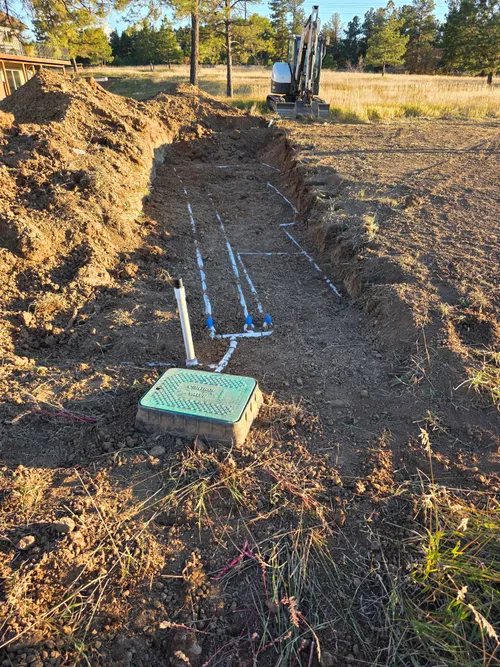
Absolute Diversified Services, LLC is a family-owned septic solutions company serving Centennial, CO, and surrounding counties since 2012. They offer a full range of septic services including pumping, inspections, system installation, repairs, and excavation. Their expertise covers septic tank replacements, leach field repairs, and sewer line work, ensuring systems meet local codes and regulations. With nearly two decades of experience in excavation and septic systems, they also provide land clearing and concrete removal services. The company serves Douglas, Arapahoe, Adams, and Elbert counties, including nearby communities such as Castle Rock and Aurora.
Alpine Earthworks, LLC
Centennial, CO
Alpine Earthworks, LLC is a rural property service provider based in Centennial, CO, specializing in septic system installation, inspection, repair, and drain field replacement. The company serves Colorado landowners with expertise in managing septic systems alongside other earthwork services such as fencing, land grading, and excavation. Their team handles permits, excavation, and installation with a focus on compliance with county codes and local soil conditions. Alpine Earthworks combines native knowledge of Colorado's land and weather with top-tier equipment to deliver comprehensive septic and utility solutions for rural properties.

John Todd Co
7623 N, Lavaun Dr, Louviers, CO 80131
John Todd Co is a family-owned septic service company based in Denver, CO, with a history dating back to 1945. They provide a full range of septic system services including pumping, inspection, repair, and installation for both residential and commercial clients. Their expertise covers soil testing, system design, permit processing, and drain field replacement, serving the Denver Metro Area and the Colorado front range.
Septic Daddy
1991 Co Rd 132, Elizabeth, CO 80107
Septic Daddy is a family-owned septic service company based near Denver, CO, offering comprehensive septic system solutions. They provide services including septic tank installation, inspection, repair, and drain field replacement, handling projects from design and permits to full system installation and diagnostics. With over 25 years of combined experience, Septic Daddy is licensed and insured to serve customers in Elbert, Douglas, Arapahoe, El Paso, and surrounding areas.
Understanding Your Septic System's Drain Field
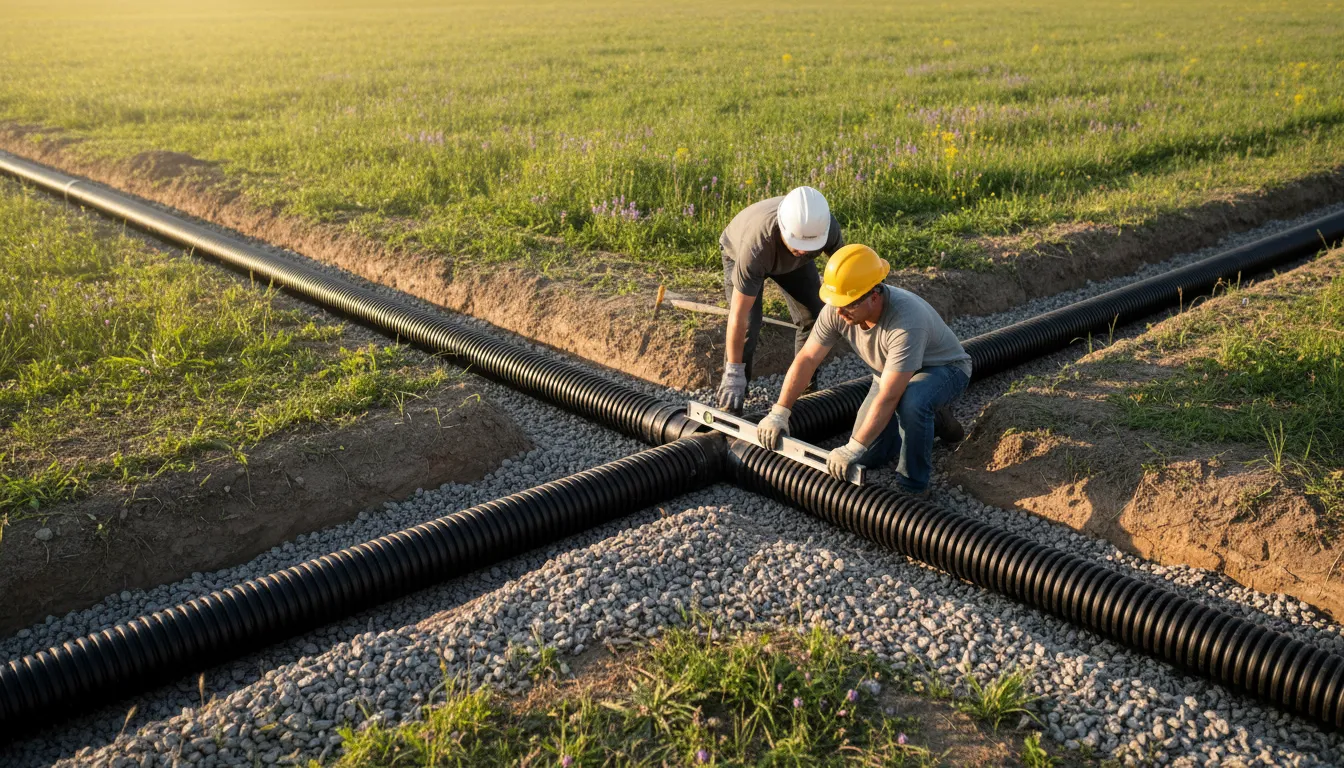
The drain field is the final stage of your on-site wastewater treatment system. After solids settle in the septic tank, liquid effluent flows through pipes into a network of perforated tubes buried in trenches filled with gravel. This effluent slowly percolates into the soil, where natural processes provide final treatment. A failure occurs when the soil can no longer absorb the liquid, often due to clogging, compaction, or hydraulic overloading.
Centennial and Arapahoe County Regulations
All septic system work in Centennial is governed by the Arapahoe County Health Department and must comply with Colorado Regulation 431. You cannot begin any repair or replacement work without first obtaining the proper permit from the county. The regulations are designed to protect public health and groundwater by ensuring systems are designed for specific soil conditions and properly constructed. A final inspection by the county is required before the new leach field can be backfilled.
The Critical Role of Soil Testing
Colorado's soil, often clay-heavy in this region, plays the most significant role in determining your repair path. A mandatory soil percolation (perc) test is required to measure how quickly water drains through the soil at your site. The results of this test, conducted by a qualified soil engineer or sanitarian, dictate the size and type of system you can install. Slow-draining soils (with a percolation rate longer than 60 minutes per inch) will require an engineered design2.
Signs You Need Drain Field Repair or Replacement
How do you know if your absorption field is failing? Look for these common warning signs:
- Soggy Ground or Standing Water: Persistent wet spots or lush, green grass over the drain field area, especially when it hasn't rained.
- Sewage Odors: Foul smells emanating from the yard or near the septic tank.
- Slow Drains: Gurgling pipes, slow-flushing toilets, or drains that back up inside the home.
- Contaminated Well Water: If you have a well, a failing system can introduce nitrates or bacteria into your water supply.
If you notice these signs, the first step is to have your septic tank pumped and inspected by a professional to rule out tank blockages before concluding the drain field has failed.
The Repair and Replacement Process
Addressing a failed leach field is a multi-step process that involves professionals from several fields.
1. Professional Site Evaluation and Diagnosis
A septic service provider will pump the tank and perform a hydraulic load test to confirm the drain field failure3. They will also help identify a suitable, non-compacted area for a potential replacement field, which must be separate from the old failed site.
2. Soil Analysis and System Design
A licensed soil scientist or engineer conducts the required perc test and soil analysis4. Based on the results, a system is designed. For standard soils, this may be a conventional trench system. For challenging sites with high water tables, shallow bedrock (less than 6 feet), slow soils, or small lot sizes, an engineered alternative system like a pressurized mound system will be necessary 5.
3. Permitting and Installation
Your septic contractor will submit the engineered design to the Arapahoe County Health Department for a repair/alteration permit6. Once approved, installation begins. This involves excavating the old field (if necessary), constructing the new trenches or mound, laying new distribution pipes, and covering them with gravel and soil.
4. Final Inspection and Restoration
After installation but before backfilling, the county health inspector will visit to ensure the work matches the permitted design7. Once approved, the area can be fully backfilled and landscaped.
Find the perfect drain field repair companies for your needs
Get personalized recommendations and expert advice
Cost Factors for Drain Field Work in Centennial
Costs for leach field work are highly variable and depend almost entirely on your property's soil conditions and the system type required. Labor typically accounts for about 60% of the total project cost, with rates ranging from $75 to $140 per hour8.
Here is a general breakdown of potential costs based on available data:
- Soil Percolation Test: Approximately $1,300.
- Permit Fees: Can range from $450 to $2,000 depending on the complexity of the project9.
- Drain Field Repair (e.g., rejuvenation): Costs are variable but generally lower than a full replacement.
- Full Conventional Drain Field Replacement: Typically ranges from $7,000 to $15,000+10.
- Engineered Alternative/Mound System: Required for many Colorado homes, with costs often ranging from $15,000 to $40,000 or more for a standard 4-bedroom home11.
Disclaimer: These are estimated price ranges. Regulations and prices can fluctuate; always get detailed quotes from licensed professionals and verify requirements with the Arapahoe County Health Department.
Choosing a Service Provider in Centennial
Selecting the right team is crucial for a compliant and long-lasting installation.
- Verify Licensing: Ensure the contractor is licensed to work in Arapahoe County and has extensive experience with Colorado Regulation 43.
- Check for Engineering Partnerships: For most replacements, you'll need a soil engineer. Some companies offer this in-house, while others partner with local engineering firms.
- Get Multiple Quotes: Obtain detailed, written estimates that break down design, permitting, installation, and inspection costs.
- Ask for References: Request and contact references for similar projects, especially those involving mound systems if your site requires one.
- Confirm Insurance: Verify the contractor carries liability and workers' compensation insurance.
Maintaining Your New Drain Field
Protect your investment with proper care:
- Practice Water Conservation: Spread out laundry loads and fix leaky fixtures to avoid overloading the system.
- Mind What You Flush: Only human waste and toilet paper should go down the drain. Avoid chemicals, grease, and non-biodegradable items.
- Keep Vehicles and Structures Off: Never drive, park, or build over the drain field area. The soil must remain uncompacted to breathe.
- Divert Surface Water: Ensure roof drains and yard runoff are directed away from the absorption field.
- Schedule Regular Tank Pumping: Have the septic tank pumped every 3-5 years to prevent solids from escaping into and clogging the new field.
Frequently asked questions
Sources
Footnotes
-
Regulation 43 - Colorado Secretary of State - https://www.sos.state.co.us/CCR/GenerateRulePdf.do?ruleVersionId=5317 ↩
-
Colorado Septic Tank Requirements | On-site Wastewater ... - https://www.ntotank.com/blog/colorado-septic-tank-requirements ↩
-
Realtors Guide to Septic Inspections in Southern Colorado - https://saveurseptic.com/wp-content/uploads/2025/02/Realtors-Guide-to-Septic-Inspections-Final.pdf ↩
-
Septic Drain Field Installation Guide GA: 7 Key Steps - https://dandhsepticservices.com/septic-drain-field-installation/ ↩
-
LAND RELATED FAQS - https://www.healthygallatin.org/wp-content/uploads/2023/01/Land-Related-FAQs-August-2022.pdf ↩
-
"What Now" Repair Procedure - Douglas County Septic - https://douglascountyseptic.com/what-now-repair-procedure/ ↩
-
On-site Sewage Disposal System | Pueblo West, CO - http://www.pueblowestmetro.us/188/On-site-Sewage-Disposal-System ↩
-
The Ultimate Guide to Replacing a Septic Drain Field - https://www.rciseptic.com/the-ultimate-guide-to-replacing-a-septic-drain-field ↩
-
Cost to Install a Septic System in Denver [2026 Data] - https://www.angi.com/articles/what-does-it-cost-install-septic-system/co/denver ↩
-
Cost to Replace Septic Tank and Drain Field [2026 Data] | Angi - https://www.angi.com/articles/how-much-new-drain-fields-foot.htm ↩
-
The True Cost of a 4-Bedroom Septic System in Colorado - https://www.soiltestandseptic.com/post/the-true-cost-of-a-4-bedroom-septic-system-in-colorado-why-prices-range-from-the-low-20ks-to-the ↩