Find the Best Drain Field Repair Companies for Your Business
No obligation • Fast responses • Nationwide coverage

Why you can trust Septic Spot
Septic Spot is a leading United States resource for understanding and comparing septic services. Our editors review providers using consistent criteria and verify key business details. Listings and scores are independent, and companies cannot pay to influence our content.
Search providers near you
Top Drain Field Repair Companies in Pearl City, Hawaii Ranked
A failing drain field is a serious wastewater issue that can lead to soggy yards, foul odors, and environmental contamination. In Pearl City, addressing this problem involves navigating specific local regulations, site challenges, and professional requirements. This guide explains the process for leach field repair or replacement, why it's critical for your property and community, and how you can connect with qualified local professionals to assess your system and explore compliant solutions.
Understanding Your Drain Field and Signs of Failure
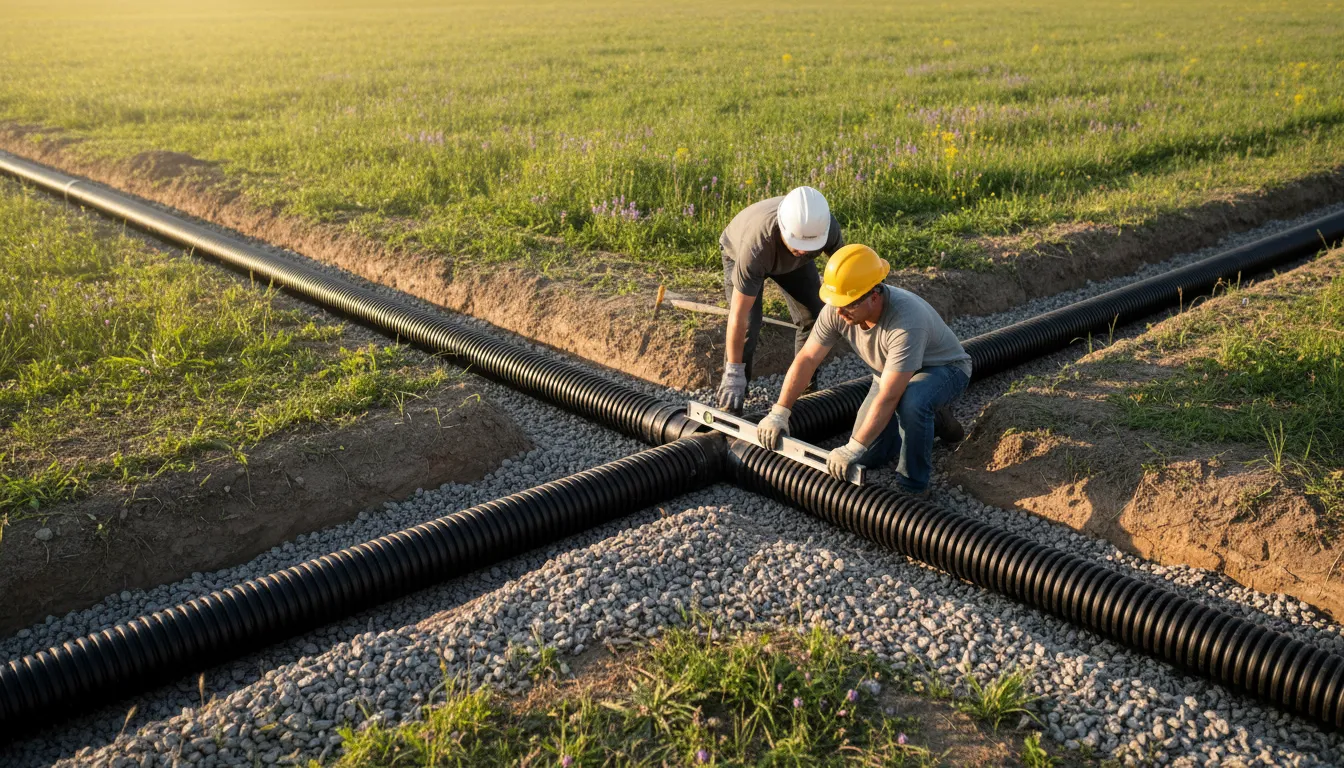
Your septic system's drain field, also known as a leach field or absorption bed, is the final stage of wastewater treatment. After solids settle in the tank, liquid effluent flows into a network of perforated pipes buried in trenches filled with gravel. This effluent slowly percolates into the soil, where natural processes further treat it before it rejoins the groundwater.
When this area fails, it can no longer absorb liquid. Key warning signs include:
- Persistently soggy or spongy ground over the drain field area, even in dry weather.
- Sewage odors emanating from the yard, especially near the drain field or tank.
- Unusually lush, green grass growing over the drain field.
- Slow-draining household fixtures, like sinks, toilets, and showers.
- Sewage backing up into the home, which is a severe health hazard.
In Pearl City, failure is often accelerated by the area's unique soil conditions and the statewide push to upgrade older, non-compliant cesspools to modern septic systems under Act 125.
The Regulatory Landscape in Honolulu County
Any significant repair or full replacement of a drain field in Pearl City is not a simple DIY project. It is a regulated construction activity that requires approval from Honolulu County and the Hawaii Department of Health (DOH) Wastewater Branch.
Key regulations include:
- Act 125: This state law mandates that existing cesspools and failing septic systems be upgraded to modern, compliant individual wastewater systems (IWS) when the system fails or when a property undergoes significant renovation.
- Permits: All work requires approved plans from the Hawaii DOH. A licensed civil engineer typically prepares these plans, which must comply with strict county codes regarding design, materials, and installation.
- Setbacks: Strict minimum distances must be maintained between the new drain field and property lines, wells, water sources, streams, and buildings. These setbacks are non-negotiable and can be a major factor in design 1.
- Licensed Professionals: The design must be stamped by a licensed professional engineer, and the installation must be performed by a licensed wastewater contractor.
Navigating this process successfully hinges on working with professionals who are deeply familiar with local codes.
Site-Specific Challenges in Pearl City
The feasibility and cost of drain field work are heavily influenced by your specific property. Pearl City's varied terrain within Honolulu County presents several common challenges that professionals must evaluate 2 3.
- Soil Type: Soil composition directly determines its absorption rate. Areas with heavy clay content, which is common in parts of the region, have very slow percolation rates. A professional soil evaluation and percolation (perc) test are mandatory first steps to determine if the soil can support a conventional system or if an advanced treatment unit is needed.
- Slope and Bedrock: Steep slopes or shallow bedrock can severely limit the usable area for a new drain field. Specialized designs like mound systems may be required.
- High Water Table: If the groundwater level is too high, it can saturate the drain field trenches, preventing proper treatment and causing immediate failure. Systems may need to be raised or use alternative technology.
- Space Limitations: In established neighborhoods like Pearl City, existing structures, driveways, pools, and large trees can consume the space needed for a new drain field that meets all required setbacks. This can sometimes necessitate creative engineering solutions or the use of more compact, advanced systems.
Find the perfect drain field repair companies for your needs
Get personalized recommendations and expert advice
The Professional Assessment and Design Process
Before any repair or replacement plan is finalized, a thorough professional evaluation is essential. This process typically involves several key steps:
- Initial Consultation & Records Review: A specialist will discuss your system's symptoms, review your property's history, and examine any available records of the existing septic system or cesspool.
- Comprehensive Site Assessment: This is the most critical phase. A professional will survey your property to identify potential locations for a new drain field. This includes evaluating slope, identifying obstacles, and most importantly, conducting soil tests and a percolation test to scientifically measure the soil's absorption capability 4.
- System Component Inspection: The existing septic tank will be pumped and inspected for structural integrity, baffle condition, and signs of leakage that could be contributing to drain field failure 5.
- Final Report & Recommendation: You will receive a written report detailing the system's condition, the cause of failure, and the recommended course of action. For a replacement, this leads to the design phase, where a licensed engineer creates detailed construction plans for permit submission.
Repair vs. Replacement: Options and Considerations
Not all drain field problems require a full, costly replacement. A professional can diagnose which solution is appropriate.
- Minor Repairs: Issues like a clogged distribution box or a single crushed pipe may be repairable. However, these are often temporary fixes if the underlying soil is saturated or the system is at the end of its lifespan.
- Drain Field Replacement: This is necessary when the soil absorption area is completely exhausted or contaminated. The old field is abandoned, and a entirely new leach field is constructed in a different location on the property, following all new design and permit requirements 6.
- System Upgrade/Conversion: For properties with old cesspools or failing conventional systems, replacement often means upgrading to a modern system. This could be a new conventional septic system with a drain field, or an Aerobic Treatment Unit (ATU) that provides higher levels of treatment, allowing for a smaller drain field-a significant advantage on tight lots.
Understanding the Costs Involved
Drain field replacement is a significant investment. Historical data for cesspool-to-septic conversions in Hawaii shows costs can range very widely, from $9,000 to over $60,000, with an average often around $23,000 7 8. The final price for your Pearl City property depends on several factors:
- System Size & Type: The capacity (based on bedroom count) and the technology used (conventional vs. advanced ATU).
- Site Constraints: Difficult soil, high water tables, steep slopes, or limited space will increase engineering and construction costs.
- Permitting & Engineering: Fees for soil testing, engineering design, and DOH permits are a required part of the project cost.
- Excavation & Materials: The depth of excavation, amount of gravel, and type of piping and distribution equipment needed.
While not always specified, budgeting for routine septic tank inspections every 3-5 years is a proactive measure that can help identify issues before they lead to catastrophic drain field failure 9. It's also wise to check with the Hawaii DOH for any potential tax credits or grant programs that may assist with the cost of voluntary cesspool conversions.
Maintaining Your New Drain Field
Once a new drain field is installed, proper maintenance is key to ensuring its long-term function and protecting your investment.
- Practice Water Conservation: Spread out laundry loads, fix leaky fixtures, and consider installing water-efficient appliances to reduce the hydraulic load on the field.
- Divert Water: Ensure roof gutters, sump pumps, and surface runoff are directed away from the drain field area.
- Avoid Compaction: Never drive or park vehicles, or place heavy structures like sheds or patios, over the drain field.
- Mind What You Flush: Only human waste and toilet paper should go down the drain. Avoid chemicals, grease, wipes, and other non-biodegradable items.
- Pump the Tank Regularly: Even with a new drain field, the septic tank must be pumped on a schedule recommended by your professional (typically every 3-5 years) to prevent solids from escaping into the new field.
Frequently asked questions
Sources
Footnotes
-
Septic Drainfield Design 101: A Complete Guide - https://landperc.com/septic-drainfield-design-guide/ ↩
-
Septic Installation near Honolulu County, Hawaii - ACSI - https://acsihawaii.com/septic-installation-near-honolulu-county-hawaii ↩
-
Residential Leach Field Installation Hawaii | Septic Bed Design - https://acsihawaii.com/residential-leach-field-installation-near-honolulu-county-hawaii ↩
-
Household Wastewater Treatment Systems - CTAHR - https://www.ctahr.hawaii.edu/oc/freepubs/pdf/HH-11.pdf ↩
-
Residential Cesspool Inspection Near Honolulu County, Hawaii - ACSI - https://acsihawaii.com/residential-cesspool-inspection-near-honolulu-county-hawaii ↩
-
Drain Field Replacement near Honolulu County, Hawaii ... - https://acsihawaii.com/drain-field-replacement-near-honolulu-county-hawaii ↩
-
Cesspool Conversion Technologies Research Summary Report - https://health.hawaii.gov/wastewater/files/2021/02/technicalfinalreportr.pdf ↩
-
Hawaii Septic Tank Requirements | Individual Wastewater Systems - https://www.ntotank.com/blog/hawaii-septic-tank-requirements ↩
-
Septic Inspections near Honolulu County, Hawaii - ACSI - https://acsihawaii.com/septic-inspections-near-honolulu-county-hawaii ↩