Find the Best Drain Field Repair Companies for Your Business
No obligation • Fast responses • Nationwide coverage

Why you can trust Septic Spot
Septic Spot is a leading United States resource for understanding and comparing septic services. Our editors review providers using consistent criteria and verify key business details. Listings and scores are independent, and companies cannot pay to influence our content.
Search providers near you
Top Drain Field Repair Companies in Coeur dAlene, Idaho Ranked
A failing drain field is a serious issue for any home with a septic system, as it is the component that safely filters and disperses wastewater into the soil. In Coeur d'Alene, Idaho, repairing or replacing a leach field is a regulated process designed to protect public health and the local environment, including the critical Rathdrum Prairie Aquifer. This guide explains the local requirements, costs, and steps involved in drain field work, helping you understand how to navigate the process with licensed professionals to restore your property's wastewater treatment system.

Crimson Septic & Construction, LLC
101 Hwy 47 #9, Columbiana, AL 35051
Crimson Septic & Construction, LLC is a family-owned septic system repair company serving Birmingham, AL. They provide comprehensive septic services including drain field repair and replacement. The company is licensed, bonded, and insured, with a skilled team experienced in handling both large and small septic issues. Crimson Septic & Construction offers same-day and 24/7 emergency services to address urgent septic problems promptly.
Reliable Septic Services LLC
Birmingham, AL 35216
Reliable Septic Services LLC is a septic system company based in Birmingham, AL, offering a full range of services including septic tank pumping, inspections, repairs, installations, and drain field replacement. They serve residential, commercial, and mortgage properties, providing thorough septic cleaning and system evaluations to maintain efficient operation. Their team is experienced in septic system installation and repair, with a focus on minimizing yard disruption during projects. Customer feedback highlights their clear communication and commitment to honest service.
Understanding Drain Field Failure
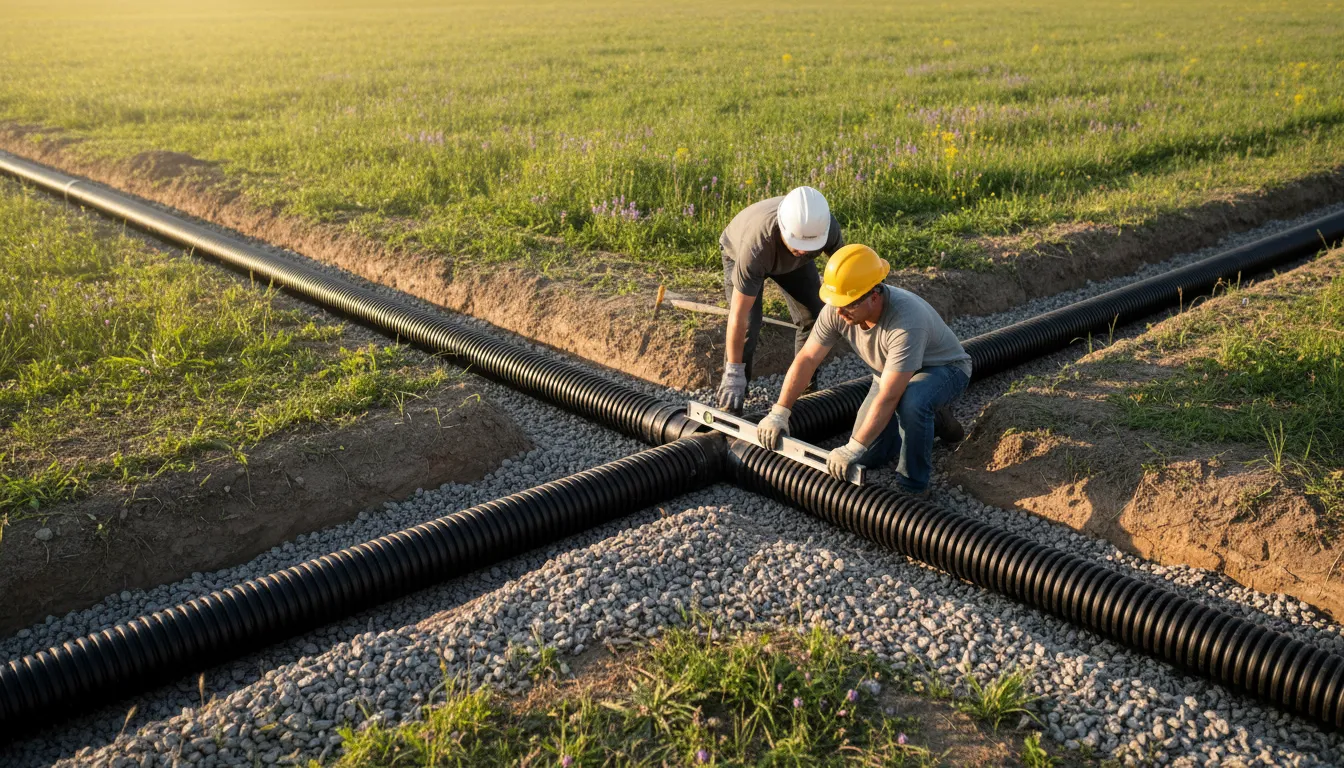
A drain field, also known as a leach field or absorption area, is the final stage of a septic system. After solids settle in the tank, liquid effluent flows into a network of perforated pipes buried in trenches filled with gravel. This effluent slowly percolates through the soil, where natural processes treat it before it reaches groundwater.
Signs of a failing drain field include:
- Sewage odors in the yard or home.
- Soggy, spongy, or overly lush grass directly over the field.
- Slow-draining household fixtures or sewage backups.
- Standing water or surfacing effluent.
When these signs appear, the system is no longer treating wastewater effectively and poses a health risk. In Idaho, a failing system must be repaired or replaced 1.
Coeur d'Alene's Regulatory Authority: Panhandle Health District
All septic system work in the Coeur d'Alene area is strictly regulated by the Panhandle Health District (PHD) 2. The district enforces Idaho's environmental regulations to ensure systems are designed, installed, and repaired correctly. You cannot begin any excavation or construction for drain field repair or replacement without first obtaining the proper permits from PHD 3.
A key regulation is the requirement for a designated replacement area (or reserve area). When a system is installed or replaced, a second area on your property that meets all the same soil and setback requirements must be identified and legally protected for future use. This ensures there is a viable location for a new leach field if the current one eventually fails 4.
The Permit Process for Leach Field Work
Navigating the permit process is the most critical step. Here is a typical sequence:
- Application: You or your licensed installer must submit a Subsurface Sewage Disposal Application along with a detailed plot plan of your property to the Panhandle Health District.
- Site Evaluation & Test Holes: A PHD inspector will visit your property to evaluate the proposed site. This requires test holes (typically 7-10 feet deep) to determine soil type, depth to groundwater, and the presence of any limiting layers like bedrock. The soil must have suitable permeability and a minimum depth (often 6-8 feet) of suitable soil for treatment.
- Permit Issuance: If the site is suitable, PHD will issue a permit specifying the approved system type, tank size, and drain field size. Do not start any work before you have this permit in hand.
- Installation: Only a licensed septic system installer may perform the repair or replacement work. Homeowners may install a system on their primary residence themselves, but they must still follow all codes and pass inspections 5.
- Final Inspection: Once construction is complete, but before any part of the new system is covered, a PHD inspector must perform a final inspection. If it passes, a green approval tag will be left on site. If it fails, a red tag will be issued, and corrections must be made 6.
Key Requirements for Drain Field Siting
Your property must meet specific physical criteria for a new or repaired absorption field:
- Setbacks: The drain field must be a minimum distance from various features 7:
- 100 feet from any well or spring.
- 100 to 300 feet from surface water (lakes, streams, rivers), depending on soil conditions.
- 6 feet of undisturbed earth between individual trenches.
- Slope: The area cannot have a slope exceeding 20% 8.
- Rathdrum Prairie Aquifer: Properties located over this vital aquifer are subject to special, more stringent requirements. In many cases, a minimum parcel size of 5 acres is required for a new septic system, or connection to a municipal sewer system may be mandated 9.
Find the perfect drain field repair companies for your needs
Get personalized recommendations and expert advice
Types of Drain Field Systems
The type of system approved for your property depends on the site evaluation. Common options include:
- Conventional Gravity System: The most common type, where effluent flows by gravity from the tank to the distribution box and out into level, shallow trenches.
- Pressure-Dosed System: Uses a pump chamber to periodically send controlled doses of effluent to the drain field. This allows for more even distribution and is often used on sloping sites or where the field is uphill from the tank.
- Sand Mound System: An above-ground mound of sand is constructed when native soil is too shallow or impermeable. Effluent is pressure-dosed into the sand mound for treatment. This is typically the most expensive option.
Cost Breakdown for Repair and Replacement
Costs can vary widely based on system type, soil conditions, and property accessibility. Here is a general estimate for the Coeur d'Alene area:
- Permit Fees: As of 2025, permit fees from Panhandle Health District are typically in the range of $300 to $950+, depending on whether it's a repair or a full system replacement/expansion 10.
- Site Evaluation/Test Holes: Having a licensed professional dig the required test holes for the health district's evaluation may cost around $550 11.
- Total Project Cost: A complete drain field replacement, including excavation, materials, and installation, often ranges from $5,000 to $12,000 or more. A sand mound system will be at the higher end of this range 12 13.
Connection to Municipal Sewer: A Required Alternative
For properties within the city limits of Coeur d'Alene, an important rule applies: if a municipal sewer line is available at the property line or in the adjacent street, the city will generally require you to connect to it rather than repair or replace your septic system 14. The cost of this connection can be assessed as a lien against your property. Always check with the City of Coeur d'Alene Public Works department before planning a major septic repair.
Maintaining Your New Drain Field
Protect your investment in a new leach field with proper care:
- Never drive or park vehicles over the drain field area.
- Avoid planting trees or deep-rooted shrubs near the field.
- Divect roof drains and surface runoff away from the area.
- Practice water conservation to avoid hydraulically overloading the system.
- Have your septic tank pumped regularly (every 3-5 years) to prevent solids from clogging the field.
Frequently asked questions
Sources
Footnotes
-
Septic Systems and Drainfields: What You Need to Know - https://cdh.idaho.gov/wp-content/uploads/2023/11/Septic-Systems-and-Drainfields-Brochure.pdf ↩
-
Licensing & Permitting - Panhandle Health District - https://panhandlehealthdistrict.org/licensing-and-permitting/ ↩
-
Septic - Eastern Idaho Public Health - https://eiph.id.gov/environmental-health/septic/ ↩
-
Septic, Subdivisions & Water - Central District Health - Idaho.gov - https://cdh.idaho.gov/licenses-permits-inspections/septic-subdivisions-water/ ↩
-
So, You've Decided to Install Your Own Septic System... (Are ... - https://eiph.id.gov/wp-content/uploads/2025/09/Homeowner-Installation-Guide-9-2025.pdf ↩
-
Septic Permits & Records - Panhandle Health District - https://panhandlehealthdistrict.org/licensing-and-permitting/septic-permits-and-records/ ↩
-
Septic - Subsurface Sewage Application & ... - https://phd5.idaho.gov/Documents/Environmental-Health/Septic%20-%20Subsurface%20Sewage%20Application%20&%20Instructions%2004.19.2021.pdf ↩
-
Panhandle Health District - https://panhandlehealthdistrict.org/wp-content/uploads/2023/04/Spec-Site-Eval-Septic-Application.pdf ↩
-
Water & Rural Living: What Idaho Homeowners Need to Know - https://protectthesource.org/wp-content/uploads/2023/01/Water-and-Rural-Living-for-Homeowners-1.pdf ↩
-
Septic & Land Development - Southwest District Health - https://swdh.id.gov/licensing-permitting/septic-land-development/ ↩
-
Sewage System Permit Application and Installation Guidelines - https://panhandlehealthdistrict.org/wp-content/uploads/2019/05/Septic-Application-Guidelines.pdf ↩
-
Cost to Replace Septic Tank and Drain Field [2026 Data] | Angi - https://www.angi.com/articles/how-much-new-drain-fields-foot.htm ↩
-
The Ultimate Guide to Replacing a Septic Drain Field - https://www.rciseptic.com/the-ultimate-guide-to-replacing-a-septic-drain-field ↩
-
13.12.040: SEPTIC TANKS; CONSTRUCTION - https://codelibrary.amlegal.com/codes/coeurdaleneid/latest/coeurdalene_id/0-0-0-5996 ↩