Find the Best Drain Field Repair Companies for Your Business
No obligation • Fast responses • Nationwide coverage

Why you can trust Septic Spot
Septic Spot is a leading United States resource for understanding and comparing septic services. Our editors review providers using consistent criteria and verify key business details. Listings and scores are independent, and companies cannot pay to influence our content.
Search providers near you
Top Drain Field Repair Companies in Berwyn, Illinois Ranked
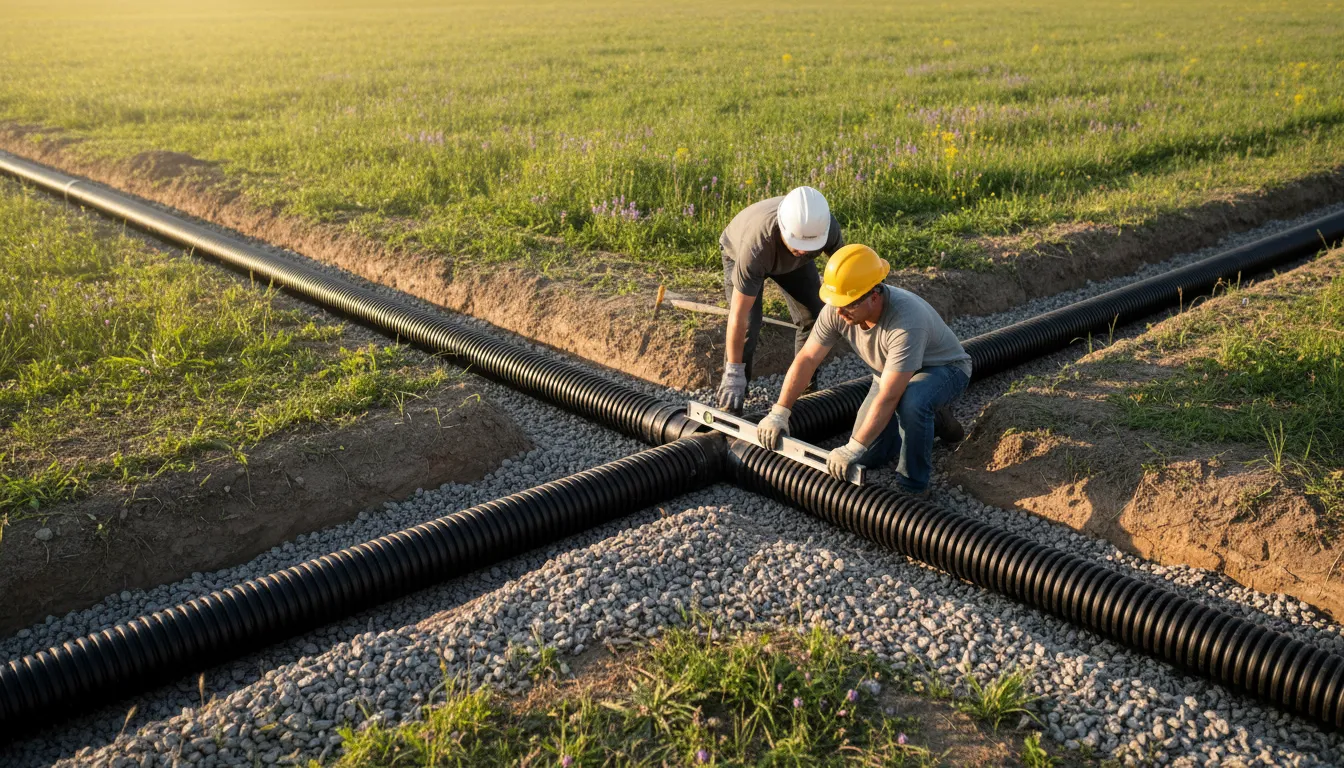
If your home in Berwyn relies on a private septic system, a failing drain field is a serious issue that requires immediate and expert attention. Drain fields, also known as leach fields or soil absorption systems, are the final and most critical stage of wastewater treatment, where effluent is filtered and purified by the soil. When this component fails, it can lead to sewage backups, soggy yards, and environmental health hazards. For homeowners in this densely populated suburb, navigating the complex regulations and space constraints for septic system work is a unique challenge. This guide will help you understand the process, costs, and critical local requirements for drain field repair and replacement in Berwyn, empowering you to make informed decisions and connect with qualified local professionals.
Ability Septic
801 N Raddant Rd, Batavia, IL 60510
Ability Septic is a family-owned septic service provider based near Aurora, IL, serving Batavia and surrounding areas. With over 65 years of experience since 1956, they offer a full range of septic services including pumping, inspection, installation, repair, and drain field maintenance. Their team uses advanced Lenzyme bio-products for eco-friendly septic system solutions and provides 24/7 emergency services to address urgent needs promptly.

Zeilinga Services, Inc.
850 Meadowview Crossing #9, West Chicago, IL 60185
Zeilinga Services, Inc. is a septic system company based in Chicago, IL. They provide septic tank pumping, inspection, repair, and installation services, along with drain field repair and septic pump replacement. Their work includes servicing various septic units such as Aqua 02, AquaKleer, and Norweco systems. They perform thorough maintenance tasks like cleaning pumps, changing filters, checking alarms, and conducting sludge tests to determine pumping needs. Zeilinga Services also offers specialized capabilities including jetting, lift station work, TV camera line inspections, and root control treatments.
Understanding Your Septic System's Drain Field
A septic system is a self-contained wastewater treatment plant for properties not connected to a municipal sewer line. After solids settle in the septic tank, the liquid effluent flows out into a network of perforated pipes buried in trenches filled with gravel-this is the drain field. The soil beneath acts as a natural filter, removing harmful bacteria, viruses, and nutrients before the water rejoins the groundwater. A failure here means the soil can no longer absorb and treat the effluent, causing system-wide problems.
Why Drain Field Failure Happens
Drain fields don't last forever. Common causes of failure include:
- Age: Most traditional drain fields have a lifespan of 20-30 years.
- Clogging: Over time, a biomat (a layer of sludge and bacteria) can form around the trenches, severely reducing soil permeability.
- Physical Damage: Driving heavy vehicles or building structures over the field can crush pipes and compact the soil.
- Hydraulic Overload: Excessive water use from leaks, inefficient fixtures, or large gatherings can flood the field, preventing proper drainage.
- Improper Maintenance: Failure to pump the septic tank regularly allows solids to wash out and clog the drain field lines.
- Soil Composition: The native soil type is a major factor, which is particularly relevant in Berwyn's urban environment.
The Unique Challenges in Berwyn, Illinois
Berwyn presents specific hurdles for septic system work that differ from more rural areas.
Strict Regulatory Environment: All work on private sewage disposal systems in Illinois is governed by the Illinois Private Sewage Disposal Code (77 Ill. Adm. Code 905) 1. In Berwyn, this is enforced by the Cook County Health Department. A permit from the local health authority is mandatory before any excavation or repair begins. Furthermore, if a municipal sewer line becomes available to your property, the city may legally require you to abandon your septic system and connect to the public sewer, rendering a major repair or replacement unnecessary 2.
Space and Soil Constraints: As a fully developed, urban suburb, available land is scarce. Traditional large-scale leach fields often require significant square footage, which may simply not exist on many Berwyn lots. Additionally, soil conditions in Cook County often include heavy clay, which has very slow permeability (percolation rate). This can make a standard system non-viable and require an engineered alternative.
Licensing Requirements: In Illinois, only a licensed Private Sewage Disposal Installation Contractor (or the homeowner themselves) is legally allowed to install or repair a system 3 4. Hiring a licensed professional is crucial for navigating permits and ensuring code compliance.
The Permit and Planning Process
You cannot simply hire a contractor and start digging. The process is sequential and regulated:
- Contact the Health Department: Your first step should be to contact the Cook County Health Department. They can provide specific permit applications, check for existing system records, and outline the requirements for your address 5.
- Site and Soil Evaluation: This is a non-negotiable step. A certified professional must conduct a soil assessment to determine its classification, percolation rate, and depth to bedrock or high groundwater. Illinois law requires a minimum of 5 feet of suitable soil between the bottom of the absorption trench and limiting conditions like bedrock or a high water table 6.
- System Design and Permit Submission: Based on the soil evaluation, a licensed designer or engineer will create a site plan and system design that complies with all setbacks (e.g., tanks must be at least 10 feet from the building, seepage fields 25 feet from streams) 7 8. This design package is submitted with your permit application.
- System Inspection: Before any new drain field is covered, a final inspection by the health department is required to verify the installation matches the approved design and meets all code specifications 9 10.
Repair vs. Full Replacement: Understanding Your Options
Not all drain field problems require a complete overhaul. A professional inspection is needed to diagnose the issue.
Potential Repair Solutions:
- Jet Cleaning: High-pressure water jets can sometimes clear minor blockages in the distribution pipes.
- Adding a New Trench: If only a portion of the field has failed and space allows, adding a new trench or expansion area can be a solution.
- Advanced Treatment Systems: Installing an aerobic treatment unit (ATU) or a sand filter before the drain field can provide superior effluent treatment, potentially reviving a struggling field or allowing a smaller field size.
When Replacement is Necessary: If the soil is permanently saturated or the entire absorption area is clogged, a full drain field replacement is the only option. This involves excavating the old field and installing a completely new one in a different location, if possible.
Find the perfect drain field repair companies for your needs
Get personalized recommendations and expert advice
Alternative Systems for Limited Space
Given Berwyn's density, a conventional gravel trench system may be impossible. Licensed contractors may propose engineered alternatives:
- Mound Systems: Effluent is pumped to a raised, constructed sand mound above the natural soil surface. This is a common solution for shallow bedrock or high water tables and requires less horizontal space but more vertical space 11.
- Subsurface Drip Irrigation: Effluent is delivered through small-diameter tubing buried in shallow trenches. This can be more flexible for oddly shaped lots.
- Sand Filter Systems: Effluent passes through a contained bed of sand for treatment before dispersal, allowing use on sites with poor soils.
- Peat or Textile Media Filters: Compact, pre-packaged filters that provide advanced treatment in a small footprint.
These alternative technologies are more complex and typically come with a significantly higher cost than conventional systems.
What to Expect: Costs for Drain Field Work in Berwyn
Costs are highly variable and depend on system size, soil conditions, and the technology required. Due to space constraints and potential need for alternative systems, Berwyn projects often exceed typical suburban estimates.
- Permits and Testing: Permit fees can range from $450 to $2,000. The crucial soil percolation test typically costs around $1,300.
- Drain Field Replacement: The average cost for replacing just the leach field is approximately $7,000, but this can fluctuate widely with size and soil.
- Septic Tank Replacement: If the tank also needs replacing, add $3,000 to $10,000.
- Total Project Cost: A full system replacement (tank and field) often ranges from $7,000 to $15,000 or more. Labor constitutes about 60% of the total cost. The need for a mound system, drip irrigation, or other advanced treatment can push the total cost toward the higher end of this range or beyond 12.
Choosing a Contractor in Berwyn
Selecting the right professional is critical. Ensure any contractor you consider:
- Holds a current Illinois Private Sewage Disposal Installation Contractor license.
- Has extensive experience with the Cook County Health Department permit process.
- Can provide references for recent jobs in the area.
- Is familiar with designing and installing the alternative systems often required in urban lots.
- Provides a detailed, written estimate that includes all costs for design, permits, materials, labor, and site restoration.
Frequently asked questions
Sources
Footnotes
-
Ill. Admin. Code tit. 77, § 905.40 - Septic Tanks - https://www.law.cornell.edu/regulations/illinois/Ill-Admin-Code-tit-77-SS-905.40 ↩
-
Illinois Septic Tank Requirements - https://www.ntotank.com/blog/illinois-septic-tank-requirements?srsltid=AfmBOooPrppkxqQwRUba14tWPc2TMuTVPD7taQgKYH8zp5mVKb85l05l ↩
-
Illinois Septic Tank Requirements - https://www.ntotank.com/blog/illinois-septic-tank-requirements?srsltid=AfmBOooF9nz5Bm4M_tftOooe3NgV2ASR_ReQsIYeP3IpNjdVt8JLvwv2 ↩
-
Septic Repair/Installation - Lake County, Illinois - https://www.lakecountyil.gov/830/Septic-RepairInstallation ↩
-
Private Sewage Disposal - Clinton County Health Department - https://clintoncountyhealth.com/environmental-health/private-sewage-disposal/ ↩
-
5-2-3: PERMIT REQUIREMENTS: - American Legal Publishing - https://codelibrary.amlegal.com/codes/grundycountyil/latest/grundycounty_il/0-0-0-2457 ↩
-
Septic Sewage - Kane County Health Department - https://www.kanehealth.com/Pages/Septic-Sewage.aspx ↩
-
Sewage Facility Ordinance - Will County Health Department - https://willcountyhealth.org/wp-content/uploads/2018/08/2016-Sewage-Ordinance-1.pdf ↩
-
Buying and Selling Homes | Septic Systems - Illinois Extension - https://extension.illinois.edu/septic-systems/buying-and-selling-homes ↩
-
The Ultimate Guide to Replacing a Septic Drain Field - https://www.rciseptic.com/the-ultimate-guide-to-replacing-a-septic-drain-field ↩
-
septic-systems.pdf - Illinois Environmental Protection Agency - https://epa.illinois.gov/content/dam/soi/en/web/epa/documents/water/conservation/lake-notes/septic-systems.pdf ↩
-
Cost to Replace Septic Tank and Drain Field [2026 Data] | Angi - https://www.angi.com/articles/how-much-new-drain-fields-foot.htm ↩