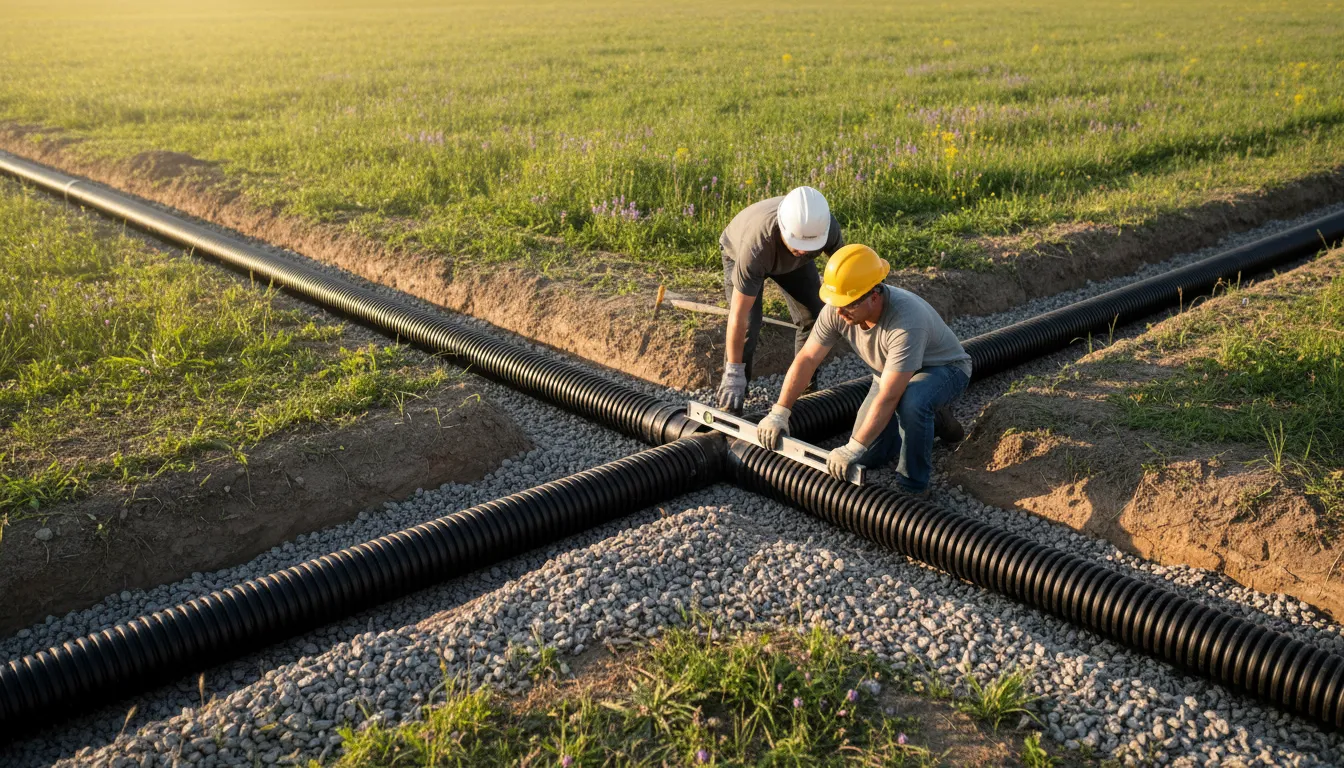
Find the Best Drain Field Repair Companies for Your Business
No obligation • Fast responses • Nationwide coverage

Why you can trust Septic Spot
Septic Spot is a leading United States resource for understanding and comparing septic services. Our editors review providers using consistent criteria and verify key business details. Listings and scores are independent, and companies cannot pay to influence our content.
Search providers near you
Top Drain Field Repair Companies in Chicago, Illinois Ranked
A failing drain field, also known as a leach field or absorption field, is a serious issue for any Chicago-area home with a septic system. This critical component is responsible for safely filtering and dispersing treated wastewater into the soil. When it malfunctions, it can lead to sewage backups, soggy yards, and environmental contamination. Understanding your options for drain field repair or a full septic field replacement is essential for protecting your property, your health, and your investment. This guide will help you navigate the process, from recognizing warning signs to understanding local regulations and connecting with qualified professionals in Chicago.
K-Fex Inc.
5885 N 800 E, New Carlisle, IN 46552
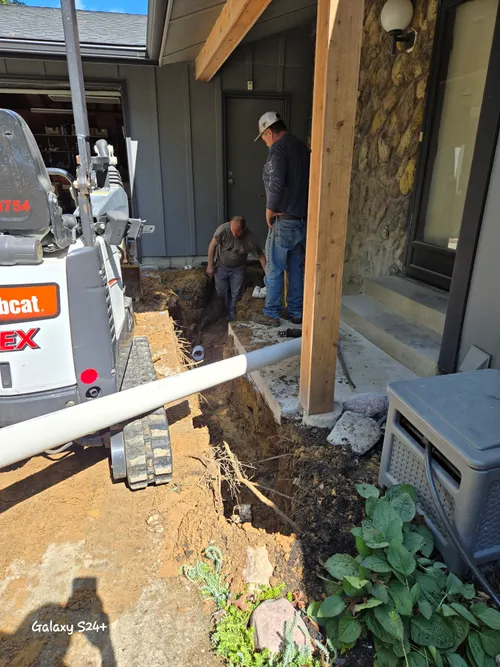
K-Fex Inc. provides septic tank pumping, inspection, repair, and installation services in Chicago, IL. They also handle drain field repair and replacement. The company offers excavation services and has a full-time office staff available during regular business hours. One notable capability is their service to locate and dig up septic tank lids when needed. K-Fex Inc. supports clients through the entire septic system process, including soil testing and health department coordination for system replacements.

Zeilinga Services, Inc.
850 Meadowview Crossing #9, West Chicago, IL 60185
Zeilinga Services, Inc. is a septic system company based in Chicago, IL. They provide septic tank pumping, inspection, repair, and installation services, along with drain field repair and septic pump replacement. Their work includes servicing various septic units such as Aqua 02, AquaKleer, and Norweco systems. They perform thorough maintenance tasks like cleaning pumps, changing filters, checking alarms, and conducting sludge tests to determine pumping needs. Zeilinga Services also offers specialized capabilities including jetting, lift station work, TV camera line inspections, and root control treatments.
JW Trenching, Inc.
28074 W Industrial Ave, Barrington, IL 60010
JW Trenching, Inc. is a septic system repair and installation company serving Chicago, IL. They provide a range of services including soil testing for septic suitability, septic field locating, system design, and consulting. Their capabilities include septic tank replacement and repair, lift station pump replacement, and septic field repair or replacement. They also install various septic systems such as stone trench, chamber trench, mound systems, sand filter, raised filter bed, constructed wetland, textile filter, peat filter, and drip irrigation systems.
Recognizing a Failing Drain Field
The first step in addressing septic system issues is identifying them. A drain field doesn't fail overnight; it shows gradual signs of distress. Ignoring these warnings can lead to more extensive and expensive damage. Common indicators include:
- Soggy Ground or Surfacing Sewage: Puddles of gray water or foul-smelling effluent rising to the surface in your yard, especially over the drain field area, is a primary red flag.
- Slow Drains and Backups: Gurgling pipes, slow-draining sinks and toilets, or sewage backups in your home can point to a saturated drain field that is no longer absorbing liquid.
- Unpleasant Odors: Persistent sewage smells in your yard or near the septic tank area are a clear sign of a problem.
- Unusually Green Grass: While it might look healthy, a patch of grass over the drain field that is significantly lusher and greener than the rest of the lawn can indicate a nutrient-rich sewage leak.
- Failed Inspection: During a real estate transaction or routine maintenance check, a professional may perform a septic system inspection and declare the leach field non-functional.
The Critical Role of Soil Evaluation
Before any repair or replacement can be planned, a thorough site and soil evaluation is required by Illinois law. The soil's ability to absorb and treat effluent-its percolation rate-dictates the entire system's design and viability. A licensed professional will conduct this evaluation, which typically involves:
- Soil Borings/Pit Tests: At least 3-4 test pits or borings, spaced 50 feet apart, are dug to examine soil characteristics down to 30-42 inches deep.
- Analyzing Soil Texture: The ideal soil has a balanced texture. Heavy clay soils have poor absorption and can cause premature failure, while very sandy soils may pass water too quickly without proper treatment.
- Checking Depth to Restrictive Layers: A minimum of six feet of suitable soil is typically required above the seasonal high water table or bedrock to ensure adequate filtration and prevent groundwater contamination 1 2.
This evaluation is not just a formality; it's the foundation for obtaining the necessary permits and designing a system that will function properly for years to come.
Permits, Regulations, and Compliance in Chicago
Septic system work in Illinois is strictly regulated to protect public health and the environment. Navigating the permitting process is a non-negotiable step.
- Governing Authority: For most of Cook County and Illinois, the Illinois Department of Public Health (IDPH) regulates private sewage disposal systems 3. All repairs and replacements require compliance with their codes.
- City of Chicago Exception: It's important to note that the City of Chicago manages a private drains program for issues in the parkway or street right-of-way. However, for the septic system and drain field entirely on your private property, you must work with a licensed contractor and secure the proper permits, typically from the Cook County Department of Public Health.
- The Permit Process: Your licensed contractor will usually handle the permit application, which includes submitting the site evaluation and proposed system design. Approval can take anywhere from two to six weeks. Never proceed with excavation or installation without this approval.
- Final Inspection: Once installation is complete, a final inspection by the local health department official is mandatory to confirm the work meets all code requirements.
Find the perfect drain field repair companies for your needs
Get personalized recommendations and expert advice
The Drain Field Repair & Replacement Process
Understanding the sequence of events can help you manage expectations and timelines for your leach field project.
- Comprehensive Inspection & Diagnosis: A professional will start by locating and uncovering the septic tank access ports, pumping the tank clean, and inspecting the tank interior for cracks, leaks, or baffle damage 4. They will then evaluate the drain field lines to confirm the failure's cause and extent.
- Site Evaluation & Design (1-2 weeks): As detailed above, this phase involves soil testing and creating a system design that complies with local codes based on your property's specific conditions.
- Permit Approval (2-6 weeks): The designed system is submitted to the health department for review and permitting.
- Excavation & Installation (3-7 days): Once permitted, the crew will excavate the area. For a full replacement, the old gravel and pipes are removed. The new system-which may use traditional perforated pipes in gravel or modern plastic leaching chambers-is installed according to the approved design 5.
- Final Inspection & Restoration: After the health department's final inspection passes, the area is backfilled and the landscape is restored.
Understanding Costs: Repair vs. Replacement
The cost for addressing drain field issues in the Chicago area varies significantly based on the solution. It's one of the most substantial investments in home septic system care.
- Drain Field Replacement: A complete septic field replacement is a major project. In Illinois, costs generally range from $5,000 to $12,000 or more, depending heavily on the system's size, the soil conditions, and the complexity of the installation 6 7.
- Drain Field Repair: Some problems, like a clog in a single line or minor pipe damage, may be repairable at a lower cost. Techniques like jetting to clear blockages or spot-replacing sections of pipe are less invasive. However, if the entire soil absorption area is exhausted, repair is not a viable long-term solution, and replacement becomes necessary.
Always get detailed, written estimates from multiple licensed contractors that break down costs for materials, labor, permitting, and restoration.
Choosing a Licensed Professional
This is not a DIY project. The intricacies of soil science, local health codes, and heavy excavation demand expertise. When looking for a contractor for your leach field repair or absorption field replacement, ensure they are:
- Licensed in Illinois: Verify their license is current and in good standing with the Illinois Department of Public Health.
- Insured: Carry adequate liability and workers' compensation insurance.
- Experienced with Local Codes: Familiar with the specific requirements of Cook County and the Chicago area.
- Transparent in Communication: Willing to explain the diagnosis, the proposed solution, the timeline, and the detailed cost estimate.
- Reference-Checked: Provide references from recent, similar projects you can contact.
Investing in a properly functioning drain field is investing in the long-term health of your property and the local environment. By taking a informed, step-by-step approach, you can navigate this complex process with confidence.
Frequently asked questions
Sources
Footnotes
-
septic-systems.pdf - Illinois Environmental Protection Agency - https://epa.illinois.gov/content/dam/soi/en/web/epa/documents/water/conservation/lake-notes/septic-systems.pdf ↩
-
Soil Evaluation for Septic System - Illinois Extension - https://extension.illinois.edu/septic-systems/soil-evaluation-septic-system ↩
-
Private Sewage Disposal - Illinois Department of Public Health - https://dph.illinois.gov/topics-services/environmental-health-protection/private-sewage-disposal.html ↩
-
Preparing for Septic Tank Inspection: 7 Key Steps - https://septic911.com/preparing-for-septic-tank-inspection/ ↩
-
Septic Drain Field Replacement Cost - https://dillonseptic.com/septic-drain-field-replacement-cost/ ↩
-
Private drains program overview - Chicago 311 - https://311.chicago.gov/s/article/Private-drains-program-overview?language=en_US ↩
-
Cost to Replace Septic Tank and Drain Field [2026 Data] | Angi - https://www.angi.com/articles/how-much-new-drain-fields-foot.htm ↩