Find the Best Drain Field Repair Companies for Your Business
No obligation • Fast responses • Nationwide coverage

Why you can trust Septic Spot
Septic Spot is a leading United States resource for understanding and comparing septic services. Our editors review providers using consistent criteria and verify key business details. Listings and scores are independent, and companies cannot pay to influence our content.
Search providers near you
Top Drain Field Repair Companies in Bolingbrook, Illinois Ranked
A failing septic system drain field is a serious issue that can lead to sewage backups, soggy yards, and environmental contamination. In Bolingbrook, addressing problems with your leach field or absorption area is a regulated process designed to protect public health and local groundwater. This guide explains the critical steps, local regulations, and what to expect when you need to repair or replace your septic system's drainage component, helping you connect with qualified local professionals for the job.
Ability Septic
801 N Raddant Rd, Batavia, IL 60510
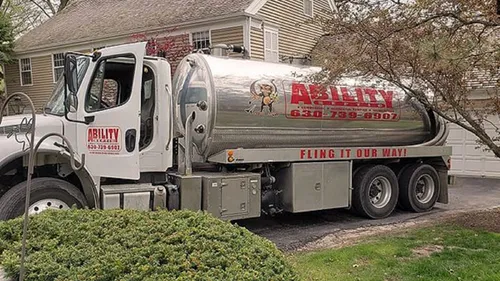
Ability Septic is a family-owned septic service provider based near Aurora, IL, serving Batavia and surrounding areas. With over 65 years of experience since 1956, they offer a full range of septic services including pumping, inspection, installation, repair, and drain field maintenance. Their team uses advanced Lenzyme bio-products for eco-friendly septic system solutions and provides 24/7 emergency services to address urgent needs promptly.

Zeilinga Services, Inc.
850 Meadowview Crossing #9, West Chicago, IL 60185
Zeilinga Services, Inc. is a septic system company based in Chicago, IL. They provide septic tank pumping, inspection, repair, and installation services, along with drain field repair and septic pump replacement. Their work includes servicing various septic units such as Aqua 02, AquaKleer, and Norweco systems. They perform thorough maintenance tasks like cleaning pumps, changing filters, checking alarms, and conducting sludge tests to determine pumping needs. Zeilinga Services also offers specialized capabilities including jetting, lift station work, TV camera line inspections, and root control treatments.
Understanding Your Septic System's Drainage Component
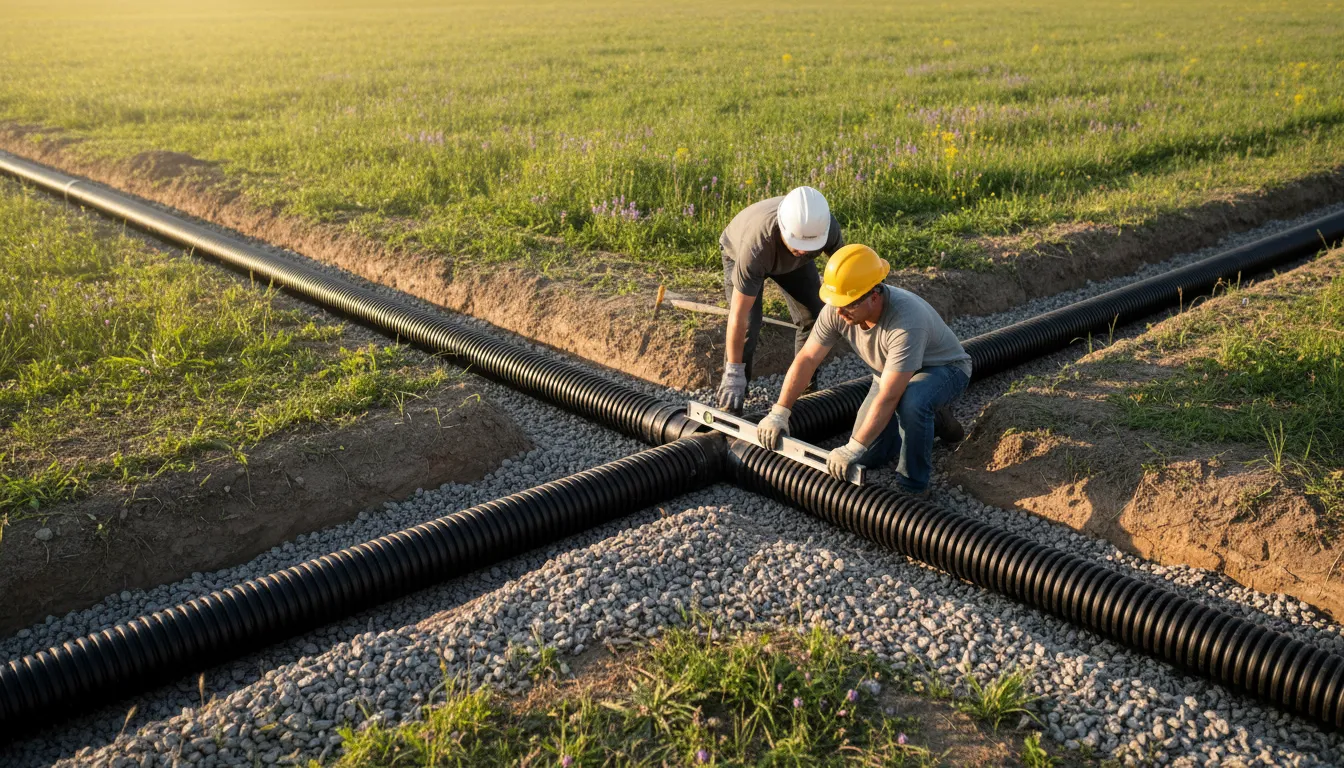
Often called a drain field, leach field, or soil absorption system, this is the final and most crucial stage of a private sewage treatment system. After solids settle in the septic tank, the liquid effluent flows into a network of perforated pipes buried in trenches filled with gravel. This effluent slowly percolates through the soil, where natural processes provide final treatment before the water rejoins the groundwater table. When this area fails, it means the soil can no longer absorb the liquid, leading to system backups and potential health hazards.
Why Drain Field Failure Happens
Several factors can lead to the need for drain field rehabilitation or a complete replacement. Common causes include:
- Soil Saturation: Over time, a biomat-a layer of organic material-can form around the trenches, slowing drainage. Excessive water use or poor drainage from rain can also saturate the soil.
- Physical Damage: Compaction from driving or parking vehicles over the field, or root intrusion from trees and shrubs, can crush pipes and clog the system.
- System Age and Wear: Most conventional drain fields have a lifespan of 20-30 years.
- Improper Maintenance: Failure to pump the septic tank regularly allows solids to flow into and clog the drain field pipes.
In Bolingbrook, a system failure is often identified by soggy ground or sewage odors in the yard, slow drains in the house, or sewage backing up into the home.
The Regulatory Landscape in Will County
All work on private sewage systems in Bolingbrook is strictly regulated by the Will County Health Department and the Illinois Department of Public Health (IDPH) to prevent health hazards and groundwater contamination 1. A fundamental rule is that a permit is required before any repair, modification, or replacement begins 1.
Key Regulations You Must Know:
- Permit Required: You must obtain a "Repair Permit" from the Will County Health Department before any excavation. As of available data, this fee was approximately $225. Permits are void one year after issuance.
- Licensed Contractor Mandatory: All excavation and installation work must be performed by a Sewage Treatment or Disposal System Installation Contractor licensed by Will County 2. This ensures the professional knows local codes.
- Code Compliance: Repairs must generally meet the same code requirements as a new system. This often means a completely failed system cannot simply be patched; it requires full replacement designed to current standards.
- Sewer Availability: If a municipal sanitary sewer line is within 300 feet of your property line, local ordinance may require you to connect to it instead of replacing your septic system 3 4.
- No Surface Discharge: Systems must be designed so effluent does not discharge to the ground surface. Special permitting is required for any alternative system that might involve discharge 5.
The Step-by-Step Process for Replacement
Replacing a leach field is a multi-stage process involving professionals and county inspectors at key points.
1. Initial Site Evaluation and Soil Testing
This is the most critical first step. A state-certified soil classifier must conduct an evaluation, which involves digging multiple soil borings or backhoe pits (usually at least three, spaced 50 feet apart) to a depth of 60 inches 6 7 8. This determines the soil's percolation (perc) rate, texture, and structure. The presence of a high water table (less than 4 feet from the proposed trench bottom) or shallow bedrock (less than 5 feet of soil above limestone) can make the site unsuitable for a conventional system, necessitating an alternative like a mound system 9. The fee for this professional soil evaluation is typically separate from permit fees.
2. System Design and Permit Application
Using the soil evaluation report, a licensed designer or contractor will create a system design plan. This plan sizes the absorption field based on the home's number of bedrooms (with a 1,000-gallon minimum tank for a 3-bedroom home) and the soil's absorption capability 10 11. The design, along with the soil report and application, is submitted to the Will County Health Department for permit approval 12.
3. Construction and Inspections
Once the permit is issued, construction can begin. A crucial note: The Will County Health Department must perform an inspection of the excavated system components (tank, distribution box, trenches) before they are backfilled 13 14. This pre-cover inspection is mandatory to ensure the installation matches the approved design.
4. Final Approval
After the system is installed and the site is restored, a final inspection may be conducted. Once the system passes and all paperwork is complete, the county will issue a final approval for the repaired or replacement absorption system 15.
Find the perfect drain field repair companies for your needs
Get personalized recommendations and expert advice
Costs Associated with Drain Field Work
Costs can vary widely based on system type, soil conditions, and property layout. Based on available data, you can expect the following fee and cost ranges:
- Will County Repair Permit Fee: Approximately $225 16.
- Professional Soil Evaluation Fee: Approximately $175.
- Site Inspection Fee: Approximately $125.
- Total System Replacement Cost: For a full septic tank and drain field replacement, costs in the Bolingbrook area can range from $5,000 to $12,000 or more 17. This wide range is due to factors like the need for an expensive alternative system (e.g., a mound system), difficult site access, or extensive landscaping restoration.
Note: All figures are based on historical data (2016/2026) and should be verified directly with the Will County Health Department. For the most current fees and requirements, contact the Northern Branch office in Bolingbrook at 323 Quadrangle Dr. 18.
Types of Systems Used in Bolingbrook
Depending on your soil evaluation, different types of drainage systems may be approved:
- Conventional Trenches: The most common type, with perforated pipes in gravel-filled trenches.
- Chamber Systems: Use plastic infiltration chambers instead of gravel, often requiring less excavation.
- Mound Systems: An elevated bed of sand is constructed on top of the natural soil when site conditions (like high water tables or poor soil) are not suitable for a conventional in-ground field 19.
- Alternative Treatment Systems: These may include aerobic treatment units (ATUs) or peat filters that provide additional treatment before the drain field, used in challenging sites.
Your licensed contractor will recommend the system type that complies with code and is most effective for your property's specific conditions.
Maintaining Your New Drain Field
Protecting your investment in a new leach field is essential. Key maintenance tips include:
- Pump Your Tank Regularly: Every 3-5 years, depending on usage, to prevent solids from escaping into the new field.
- Conserve Water: Use water-efficient fixtures and spread out laundry loads to avoid hydraulically overloading the system.
- Divert Water: Ensure roof gutters, sump pumps, and surface runoff are directed away from the drain field area.
- Protect the Area: Never drive, park, or build structures over the drain field. Plant only grass over it; keep trees and shrubs with deep roots far away.
Frequently asked questions
Sources
Footnotes
-
Sewage Facility Ordinance - Will County Health Department - https://willcountyhealth.org/wp-content/uploads/2018/08/2016-Sewage-Ordinance-1.pdf ↩ ↩2
-
§ 51.05 SEWAGE TREATMENT OR DISPOSAL SYSTEMS. - https://codelibrary.amlegal.com/codes/willcounty/latest/willcounty_il/0-0-0-31672 ↩
-
Private Sewage Disposal - Illinois Department of Public Health - https://dph.illinois.gov/topics-services/environmental-health-protection/private-sewage-disposal.html ↩
-
Guidelines for Addressing a Failing Septic System - https://www.lakecountyil.gov/DocumentCenter/View/4182/Failing-Systems-Brochure-PDF?bidId= ↩
-
Section 905 - Illinois General Assembly - https://www.ilga.gov/ftp/JCAR/AdminCode/077/077009050000200R.html ↩
-
SUBDIVISION ORDINANCE - Will County - https://willcounty.gov/County-Offices/Economic-Development/Will-County-Land-Use-Department/Development-Services-Division/Subdivision-Engineering/FileId/2594 ↩
-
Soil Evaluation for Septic System - Illinois Extension - https://extension.illinois.edu/septic-systems/soil-evaluation-septic-system ↩
-
Septic Systems: Site Evaluation and Testing - Soil Depth - https://mseptic.com/understanding-onsite-wastewater/2019/7/19/septic-systems-site-evaluation-and-testing-soil-depth ↩
-
9-4-5: GENERAL REQUIREMENTS (IDPH SECTION 905.20): - https://codelibrary.amlegal.com/codes/invernessil/latest/inverness_il/0-0-0-6960 ↩
-
Sewage Facility Ordinance - Will County Health Department - https://willcountyhealth.org/wp-content/uploads/2018/08/2016-Sewage-Ordinance-1.pdf ↩
-
Septic System Design | Do you need a new system? Call us ... - https://readseptic.com/septic-system-design/ ↩
-
Illinois Septic Tank Requirements - https://www.ntotank.com/blog/illinois-septic-tank-requirements?srsltid=AfmBOooEolUR_YciOassay1k84VGwnlvC8ZARC6c2ppFiy_fACoQlLRx ↩
-
Illinois Septic Tank Requirements - https://www.ntotank.com/blog/illinois-septic-tank-requirements?srsltid=AfmBOoqsrZILFJPm0u1-JsYK_XGNy8H5TRPgR1DQq0-Pz3-6TcBuPAE7 ↩
-
§ 51.08 INDIVIDUAL MECHANICAL SEWAGE TREATMENT ... - https://codelibrary.amlegal.com/codes/willcounty/latest/willcounty_il/0-0-0-31758 ↩
-
The Ultimate Guide to Replacing a Septic Drain Field - https://www.rciseptic.com/the-ultimate-guide-to-replacing-a-septic-drain-field ↩
-
§ 51.10 CONTRACTOR'S LICENSE AND EXAMINATION. - https://codelibrary.amlegal.com/codes/willcounty/latest/willcounty_il/0-0-0-31792 ↩
-
Cost to Replace Septic Tank and Drain Field [2026 Data] | Angi - https://www.angi.com/articles/how-much-new-drain-fields-foot.htm ↩
-
Wells and Septic Systems | Will County Health Department - https://willcountyhealth.org/safe-water-wells-and-septic-systems/ ↩
-
septic-systems.pdf - Illinois Environmental Protection Agency - https://epa.illinois.gov/content/dam/soi/en/web/epa/documents/water/conservation/lake-notes/septic-systems.pdf ↩