Find the Best Drain Field Repair Companies for Your Business
No obligation • Fast responses • Nationwide coverage

Why you can trust Septic Spot
Septic Spot is a leading United States resource for understanding and comparing septic services. Our editors review providers using consistent criteria and verify key business details. Listings and scores are independent, and companies cannot pay to influence our content.
Search providers near you
Top Drain Field Repair Companies in Glenview, Illinois Ranked
A properly functioning drain field is the heart of your home's septic system, responsible for safely filtering and dispersing treated wastewater into the soil. When this critical component fails, it can lead to sewage backups, soggy yards, and serious environmental health concerns. In Glenview, Illinois, addressing a failing leach field or absorption area is a regulated process that requires working with licensed professionals. This guide explains the local requirements, repair options, and steps to find qualified specialists for your septic system needs.
Ability Septic
801 N Raddant Rd, Batavia, IL 60510
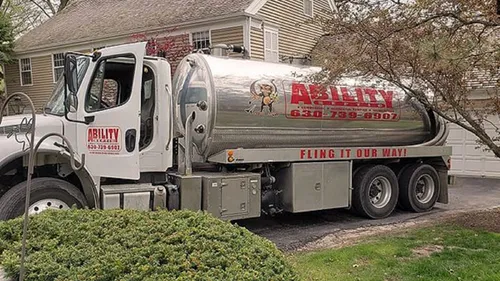
Ability Septic is a family-owned septic service provider based near Aurora, IL, serving Batavia and surrounding areas. With over 65 years of experience since 1956, they offer a full range of septic services including pumping, inspection, installation, repair, and drain field maintenance. Their team uses advanced Lenzyme bio-products for eco-friendly septic system solutions and provides 24/7 emergency services to address urgent needs promptly.

Zeilinga Services, Inc.
850 Meadowview Crossing #9, West Chicago, IL 60185
Zeilinga Services, Inc. is a septic system company based in Chicago, IL. They provide septic tank pumping, inspection, repair, and installation services, along with drain field repair and septic pump replacement. Their work includes servicing various septic units such as Aqua 02, AquaKleer, and Norweco systems. They perform thorough maintenance tasks like cleaning pumps, changing filters, checking alarms, and conducting sludge tests to determine pumping needs. Zeilinga Services also offers specialized capabilities including jetting, lift station work, TV camera line inspections, and root control treatments.
JW Trenching, Inc.
28074 W Industrial Ave, Barrington, IL 60010
JW Trenching, Inc. is a septic system repair and installation company serving Chicago, IL. They provide a range of services including soil testing for septic suitability, septic field locating, system design, and consulting. Their capabilities include septic tank replacement and repair, lift station pump replacement, and septic field repair or replacement. They also install various septic systems such as stone trench, chamber trench, mound systems, sand filter, raised filter bed, constructed wetland, textile filter, peat filter, and drip irrigation systems.
Understanding Your Septic System's Drain Field
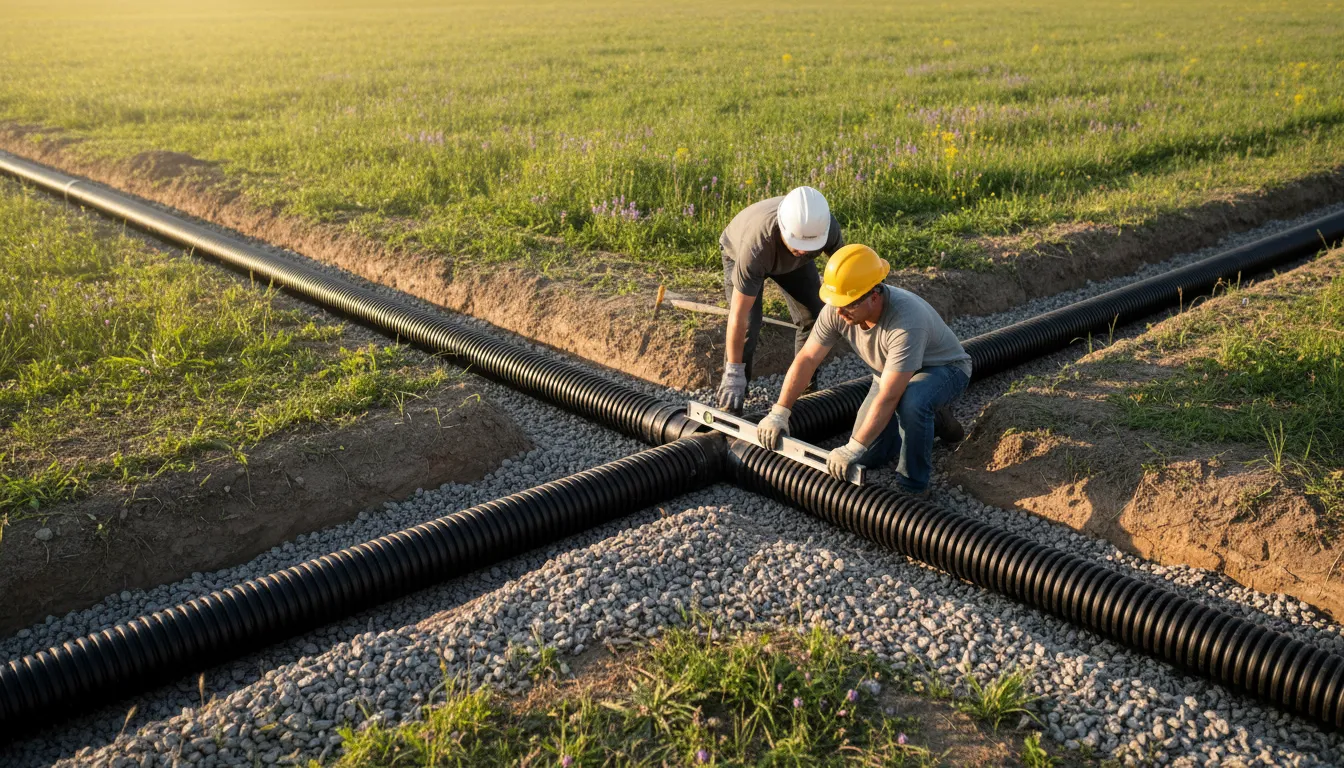
Often called a leach field or absorption field, the drain field is a network of perforated pipes buried in trenches filled with gravel. After solids settle in the septic tank, the liquid effluent flows into the distribution box and is evenly distributed through these pipes. The effluent then slowly percolates through the gravel and soil, where natural processes provide final treatment. A failure in this area means the soil can no longer absorb the water, causing the system to back up or surface wastewater in your yard.
Signs You Need Drain Field Repair or Replacement
Recognizing early warning signs can prevent a complete system failure and more costly repairs. Look for these indicators of a troubled absorption area:
- Soggy Ground or Standing Water: Persistent wet, spongy, or muddy areas over the drain field, especially when it hasn't rained, are a primary sign.
- Sewage Odors: Foul smells emanating from your yard, particularly near the septic tank or drain field location.
- Slow Drains and Backups: Gurgling pipes, slow-draining sinks and toilets, or sewage backups in the home can indicate a saturated field.
- Unusually Lush Vegetation: Patches of grass over the drain field that are much greener and grow faster than the rest of the lawn, due to the nutrient-rich effluent.
- Algae Blooms in Nearby Ponds or Ditches: This can indicate nutrient-rich wastewater is surfacing and running off.
If you notice any of these signs, it's crucial to contact a licensed septic professional for an inspection immediately.
The Glenview and Cook County Regulatory Landscape
All work on private sewage disposal systems in Glenview is governed by the Illinois Department of Public Health (IDPH) Private Sewage Disposal Code and enforced by local health authorities. Homeowners must work with licensed professionals, as any repair or replacement requires a permit.
- Permit Requirement: Before any excavation or work begins, a sewage disposal system permit must be obtained from the Cook County Department of Public Health 1 2. Your contractor will typically handle this application, which includes site plans and system specifications.
- Contractor Licensing: Contractors must be properly licensed under the Illinois Private Sewage Disposal Licensing Act. The Village of Glenview may also require contractors to be registered before starting work 3.
- Mandatory Inspections: Every permitted project requires an inspection. A final inspection by the local health authority is required before any new system can be backfilled and put into use 4.
- Setback Rules: Systems must be installed at specific distances from property lines, dwellings, wells, and water bodies. For example, drain fields are typically required to be at least 10 feet from a dwelling and 75-100 feet from a water well 5 6.
The Professional Assessment Process
When you call a specialist for drain field issues, they will follow a systematic process to diagnose the problem and determine the correct solution.
- Locate System Components: The technician will first locate the septic tank, distribution box, and existing drain field lines using property records or electronic locating equipment.
- Inspect the Septic Tank: A crucial step is to pump and inspect the septic tank. They will measure sludge and scum levels and check the tank's structural integrity and baffles. Often, a failing field is caused by a tank that hasn't been pumped, allowing solids to clog the pipes.
- Evaluate the Drain Field: They will probe the absorption area for signs of saturation and check the distribution box for even flow.
- Soil Evaluation and Percolation Testing: If a full replacement is likely, a certified soil classifier must evaluate the site. A percolation (perc) test measures how quickly water drains through the soil, which directly determines the size of the new drain field required 7 8. This test is a key part of the permit application.
Repair vs. Replacement: Understanding Your Options
Not all failing drain fields require a complete replacement. A professional can determine which solution is viable for your situation.
Potential Repair Solutions:
- Jet Cleaning: High-pressure water jetting can clear minor blockages and bio-mat buildup in the pipes.
- Adding Drain Field Extensions: If space allows, new trenches can be added to supplement the existing field's capacity.
- Terralift or Aeration Treatments: These processes fracture compacted soil around the trenches to restore permeability.
When Replacement is Necessary: Replacement is required when the soil is permanently clogged, the system is undersized, or there is no room for expansion. A new leach field must be installed in a suitable, unused area of your property. The process involves:
- Designing a new system based on soil perc results and household size.
- Obtaining the necessary permits.
- Excavating new trenches.
- Installing new gravel, distribution pipes, and protective barrier fabric.
- Connecting to the existing septic tank.
Find the perfect drain field repair companies for your needs
Get personalized recommendations and expert advice
Cost Considerations for Drain Field Work
Drain field projects are significant investments due to the labor, materials, and regulatory compliance involved. Costs can vary widely based on soil conditions, system size, and local permit fees.
- Permit Fees: In the region, permit fees for a system replacement can range from $450 to $2,000.
- Soil Analysis & Perc Testing: A professional soil evaluation and perc test typically cost around $1,300, though this can vary.
- Drain Field Replacement: As a major excavation and installation project, full drain field replacement costs often start around $7,000 and can go much higher depending on complexity 9. Labor typically constitutes about 60% of the total project cost 10.
Maintaining Your New or Repaired Drain Field
Protect your investment and extend the life of your septic system with proper care:
- Pump Regularly: Have your septic tank pumped every 2 to 3 years to prevent solids from escaping into and clogging the drain field.
- Conserve Water: Spread out laundry loads and fix leaky fixtures to avoid hydraulically overloading the system.
- Mind What You Flush: Only human waste and toilet paper should go down the drain. Avoid chemicals, grease, wipes, and feminine hygiene products.
- Protect the Area: Never drive or park vehicles over the drain field, and do not build structures, patios, or driveways on it. Also, ensure roof gutters, sump pumps, and foundation drains are directed away from the absorption area 11 12.
Choosing a Qualified Professional in Glenview
Selecting the right contractor is critical. Look for a professional who:
- Holds an active Illinois Private Sewage Disposal Installation License.
- Is familiar with Cook County and Glenview permit and inspection processes.
- Can provide references from local projects.
- Conducts a thorough initial inspection, including tank pumping and evaluation, before recommending a solution.
- Obtains all required permits and schedules inspections on your behalf.
Frequently asked questions
Sources
Footnotes
-
Sewage Disposal System Permit | Bureau, Putnam & Marshall Counties Health Department ↩
-
Stormwater, Floodplain and Engineering Resources - Village of Glenview ↩
-
Stormwater, Floodplain and Engineering Resources - Village of Glenview ↩
-
Private Sewage Disposal System Application - Sample County Health Dept ↩
-
Comparing Fill Dirt Types for Safe Septic System Installation - SoilConnect ↩
-
Cost to Replace Septic Tank and Drain Field [2026 Data] | Angi ↩
-
Can a Septic Drain Field Be Repaired - Benjamin Franklin Plumbing ↩