Find the Best Drain Field Repair Companies for Your Business
No obligation • Fast responses • Nationwide coverage

Why you can trust Septic Spot
Septic Spot is a leading United States resource for understanding and comparing septic services. Our editors review providers using consistent criteria and verify key business details. Listings and scores are independent, and companies cannot pay to influence our content.
Search providers near you
Top Drain Field Repair Companies in Joliet, Illinois Ranked
A failing drain field, also known as a leach field or absorption field, is a serious issue for any home with a septic system. This critical component is responsible for safely filtering and dispersing treated wastewater into the soil. When it malfunctions, you may notice soggy ground, sewage odors, or even backups in your home. In Joliet, navigating the repair or replacement of your septic system's drain field involves specific local regulations, soil evaluations, and working with licensed professionals. This guide provides the essential information you need to understand the process, costs, and requirements for restoring your property's wastewater disposal system.
Ability Septic
801 N Raddant Rd, Batavia, IL 60510
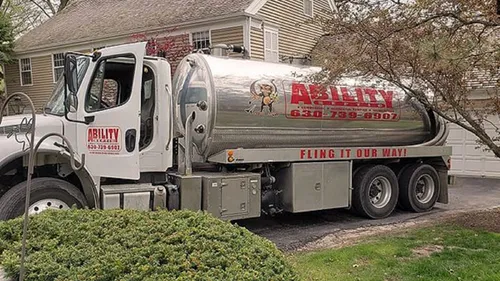
Ability Septic is a family-owned septic service provider based near Aurora, IL, serving Batavia and surrounding areas. With over 65 years of experience since 1956, they offer a full range of septic services including pumping, inspection, installation, repair, and drain field maintenance. Their team uses advanced Lenzyme bio-products for eco-friendly septic system solutions and provides 24/7 emergency services to address urgent needs promptly.

Zeilinga Services, Inc.
850 Meadowview Crossing #9, West Chicago, IL 60185
Zeilinga Services, Inc. is a septic system company based in Chicago, IL. They provide septic tank pumping, inspection, repair, and installation services, along with drain field repair and septic pump replacement. Their work includes servicing various septic units such as Aqua 02, AquaKleer, and Norweco systems. They perform thorough maintenance tasks like cleaning pumps, changing filters, checking alarms, and conducting sludge tests to determine pumping needs. Zeilinga Services also offers specialized capabilities including jetting, lift station work, TV camera line inspections, and root control treatments.
Understanding Your Drain Field's Role
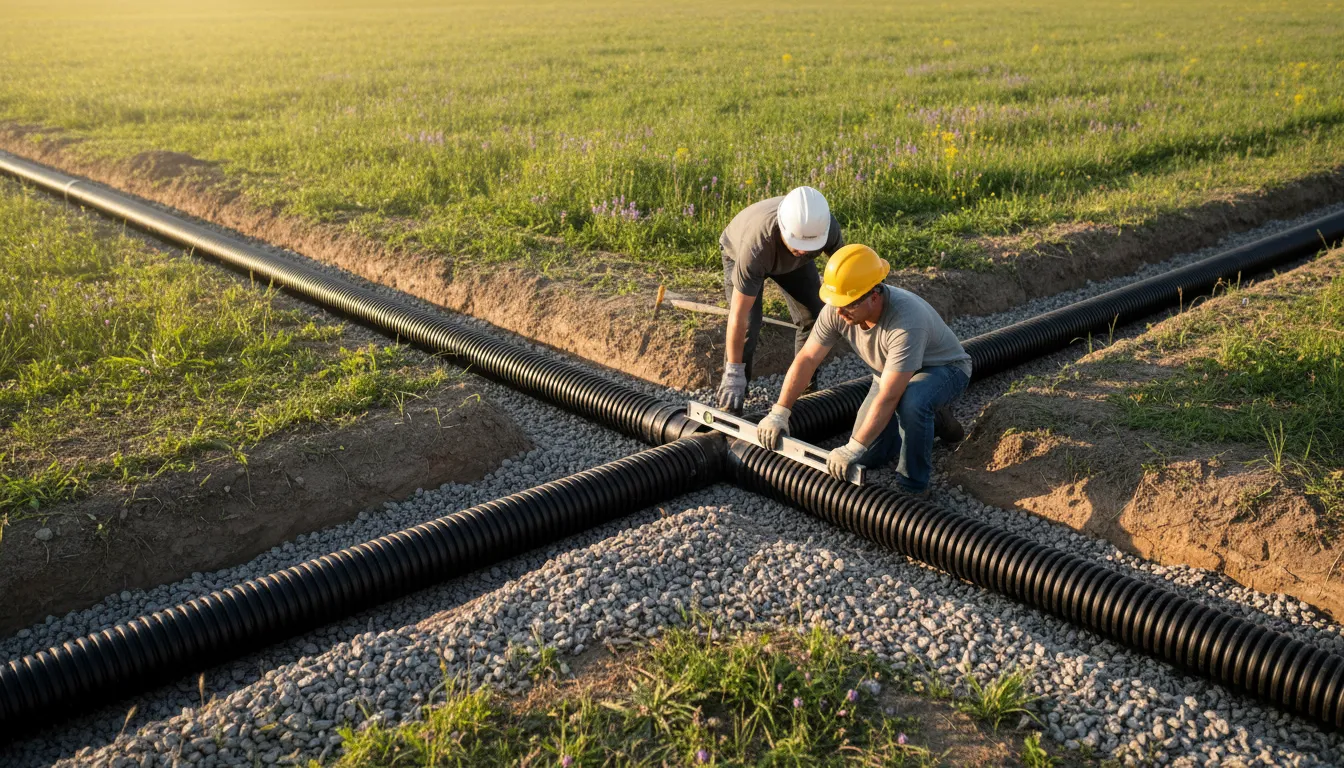
The drain field is the final stage of your onsite wastewater treatment system. After solids settle in the septic tank, the liquid effluent flows through pipes into a network of perforated tubes buried in trenches filled with gravel. This effluent slowly seeps into the surrounding soil, where natural processes provide final treatment. A healthy drain field is vital for preventing groundwater contamination and protecting public health. In Joliet and surrounding Will County, the performance of your leach field is heavily dependent on local soil conditions and strict adherence to county health codes.
Signs You Need Drain Field Service
Recognizing early warning signs can prevent a complete system failure and more costly repairs. Be alert for these common indicators:
- Soggy Ground or Standing Water: Puddles or persistently wet, spongy soil over the drain field area, especially when it hasn't rained.
- Sewage Odors: Unpleasant smells emanating from your yard, particularly near the septic tank or absorption field.
- Slow Drains and Backups: Gurgling pipes, slow-draining sinks and toilets, or sewage backups inside your home.
- Unusually Green Grass: Patches of grass over the drain field that are much lusher and grow faster than the rest of your lawn, indicating a nutrient overload from surfacing effluent.
- Failed Inspection: A routine septic inspection or a real estate transfer inspection that identifies a failing or compromised leach field.
If you observe any of these signs, it's crucial to contact a licensed septic professional in Will County for a diagnosis. Ignoring them can lead to environmental health hazards and more extensive property damage.
Will County Regulations and Permit Process
All work on private sewage disposal systems in Joliet is regulated by the Will County Health Department (WCHD) under the Illinois Private Sewage Disposal Code. You cannot begin any repair, replacement, or alteration without proper authorization.
Key Regulatory Steps:
- Permit Requirement: A sewage permit from the WCHD must be issued before any construction or repair begins. It is illegal to proceed without one.
- Licensed Contractor: All repairs and installations must be performed by a state-licensed and county-registered private sewage disposal system installation contractor 1. Homeowners are not permitted to do the work themselves.
- Site Evaluation and Design: A professional site evaluation is mandatory. This often includes soil classification and percolation ("perc") testing to determine the soil's absorption rate. A design plan based on this evaluation must be submitted to the health department for approval.
- Sanitary Sewer Availability: A critical rule in Will County: if a public sanitary sewer is within 300 feet of your property line, you will not be approved for a new or repaired septic system. Connection to the city sewer will be required 2 3.
- Setbacks and Reserve Area: Systems must adhere to strict property setbacks (e.g., 75 feet from wells, 25 feet from water bodies) 4 5. Furthermore, a 100% expansion area for a future seepage field must be reserved and protected on your property plan 6.
Find the perfect drain field repair companies for your needs
Get personalized recommendations and expert advice
The Soil Evaluation: A Foundation for Success
The suitability of your Joliet property for a conventional drain field hinges almost entirely on soil conditions. Will County officials use detailed soil maps and require on-site evaluations to determine feasibility 7.
- Ideal Soil: Loamy soils-a mix of sand, silt, and clay-provide the ideal balance of drainage and filtration.
- Problematic Soil: Heavy clay soils, common in parts of Illinois, absorb water very slowly. This can cause effluent to pool and the drain field to fail.
- Site Constraints: The health department requires a minimum of 3 feet of unsaturated soil between the bottom of the drain field trenches and the seasonal high water table or bedrock 8. This "vertical separation" is essential for proper wastewater treatment.
If your soil fails a standard perc test, you may need to explore alternative system designs, such as aerobic treatment units (ATUs) or mound systems, which come with significantly higher costs.
The Repair vs. Replacement Decision
A licensed contractor will determine whether your absorption field can be repaired or must be completely replaced.
- Potential Repairs: Sometimes, issues are isolated. Repair options may include cleaning clogged pipes (jetting), adding additional trench lines to expand the field, or using specialized treatments to break down biomat clogging the soil. These are generally less expensive but are only viable for partial failures.
- Full Replacement: When the soil is permanently saturated or the entire field is compromised, a full leach field replacement is necessary. This involves excavating the old field (if required) and constructing a entirely new network of trenches and distribution pipes in a new, approved location on your property.
Cost Breakdown for Joliet Homeowners
The cost for drain field work in Joliet varies widely based on system size, soil, and site accessibility. Here is a breakdown of typical expenses based on local data:
- Permit and Inspection Fees: The Will County Health Department fee for a repair, extension, or alteration permit is approximately $225, plus an additional $125 for the required site inspection, totaling around $350 9. An initial septic verification inspection, if no records exist, costs about $65 10.
- Soil and Design Costs: A professional perc test and soil evaluation can cost around $1,300. Hiring a licensed engineer or designer to create the system plans adds variable cost.
- Drain Field Replacement Cost: The major expense. For a full leach field replacement in our region, homeowners can expect to pay between $5,000 and $20,000 or more 11 12. Labor typically constitutes about 60% of the total project cost 13.
- Factors Influencing Price: Difficult soil (requiring more excavation or sand), the need for an advanced alternative system, limited site access, and the size of the home (dictating field size) all push costs toward the higher end of the range.
The Project Timeline and Final Inspection
Once you have a licensed contractor and an approved permit, the physical work can begin. For a full replacement, the process may take several days to a week. A critical final step is the mandatory inspection by the Will County Health Department.
- Notification: Your contractor is responsible for providing at least a 24-hour notification to the health department inspector before the system is ready to be covered 14.
- Final Approval: The inspector will check the installation against the approved design. Only after receiving final inspection approval can the system be covered with soil 15. The contractor will provide you with a copy of the approval, which you should keep with your property records.
Maintaining Your New Drain Field
Protect your investment with proper care. Avoid driving or parking vehicles over the field, planting trees nearby, and diverting rainwater onto it. Practice water conservation to prevent overloading the system and have your septic tank pumped regularly by a professional (typically every 3-5 years) to prevent solids from escaping into and clogging the new drain field.
Frequently asked questions
Sources
Footnotes
-
Illinois Septic Tank Requirements - https://www.ntotank.com/blog/illinois-septic-tank-requirements ↩
-
Section 905 - Illinois General Assembly - https://www.ilga.gov/ftp/JCAR/AdminCode/077/077009050000200R.html ↩
-
§ 51.05 SEWAGE TREATMENT OR DISPOSAL SYSTEMS. - https://codelibrary.amlegal.com/codes/willcounty/latest/willcounty_il/0-0-0-31672 ↩
-
How Does Soil Impact the Septic System You Can Have? - https://www.septicconnection.com/how-does-soil-impact-the-septic-system-you-can-have ↩
-
Sewage Facility Ordinance - Will County Health Department - https://willcountyhealth.org/wp-content/uploads/2018/08/2016-Sewage-Ordinance-1.pdf ↩
-
Comparing Fill Dirt Types for Safe Septic System Installation - https://www.soilconnect.com/blog/comparing-fill-dirt-types-for-safe-septic-system-installation ↩
-
--- INVESTIGATE BEFORE YOU INVEST --- - https://www.kendallhealth.org/wp-content/uploads/2015/06/EH_INVESTIGINVEST.pdf ↩
-
Services | William R. Kreznor & Associates, Inc. - https://wrksoiltesting.com/services/ ↩
-
APPENDIX A: FEE SCHEDULE - American Legal Publishing - https://codelibrary.amlegal.com/codes/willcounty/latest/willcounty_il/0-0-0-31837 ↩
-
Sign Off Procedures - Will County Health Department - https://willcountyhealth.org/wp-content/uploads/2019/01/Sign-Off-procedures.pdf ↩
-
Septic Drain Field Replacement Cost - https://dillonseptic.com/septic-drain-field-replacement-cost/ ↩
-
The Ultimate Guide to Replacing a Septic Drain Field - https://www.rciseptic.com/the-ultimate-guide-to-replacing-a-septic-drain-field ↩
-
Cost to Replace Septic Tank and Drain Field [2026 Data] | Angi - https://www.angi.com/articles/how-much-new-drain-fields-foot.htm ↩
-
§ 51.08 INDIVIDUAL MECHANICAL SEWAGE TREATMENT ... - https://codelibrary.amlegal.com/codes/willcounty/latest/willcounty_il/0-0-0-31758 ↩
-
Sewage Disposal System Permit | Bureau, Putnam & Marshall ... - https://bpmhd.org/steps-to-obtain-a-sewage-disposal-system-permit/ ↩