Find the Best Drain Field Repair Companies for Your Business
No obligation • Fast responses • Nationwide coverage

Why you can trust Septic Spot
Septic Spot is a leading United States resource for understanding and comparing septic services. Our editors review providers using consistent criteria and verify key business details. Listings and scores are independent, and companies cannot pay to influence our content.
Search providers near you
Top Drain Field Repair Companies in Lombard, Illinois Ranked
A failing drain field is a serious issue for any Lombard home with a septic system. This critical component, also known as a leach field or absorption field, is responsible for safely filtering and dispersing treated wastewater into the soil. When it fails, it can lead to soggy yards, foul odors, and even sewage backups into your home. Navigating drain field restoration requires understanding strict local regulations, securing permits, and working with licensed professionals. This guide explains the process, costs, and key considerations for septic leach field work in Lombard to help you connect with qualified local experts.
Ability Septic
801 N Raddant Rd, Batavia, IL 60510
Ability Septic is a family-owned septic service provider based near Aurora, IL, serving Batavia and surrounding areas. With over 65 years of experience since 1956, they offer a full range of septic services including pumping, inspection, installation, repair, and drain field maintenance. Their team uses advanced Lenzyme bio-products for eco-friendly septic system solutions and provides 24/7 emergency services to address urgent needs promptly.

Zeilinga Services, Inc.
850 Meadowview Crossing #9, West Chicago, IL 60185
Zeilinga Services, Inc. is a septic system company based in Chicago, IL. They provide septic tank pumping, inspection, repair, and installation services, along with drain field repair and septic pump replacement. Their work includes servicing various septic units such as Aqua 02, AquaKleer, and Norweco systems. They perform thorough maintenance tasks like cleaning pumps, changing filters, checking alarms, and conducting sludge tests to determine pumping needs. Zeilinga Services also offers specialized capabilities including jetting, lift station work, TV camera line inspections, and root control treatments.
JW Trenching, Inc.
28074 W Industrial Ave, Barrington, IL 60010
JW Trenching, Inc. is a septic system repair and installation company serving Chicago, IL. They provide a range of services including soil testing for septic suitability, septic field locating, system design, and consulting. Their capabilities include septic tank replacement and repair, lift station pump replacement, and septic field repair or replacement. They also install various septic systems such as stone trench, chamber trench, mound systems, sand filter, raised filter bed, constructed wetland, textile filter, peat filter, and drip irrigation systems.
Understanding Drain Field Failure in Lombard
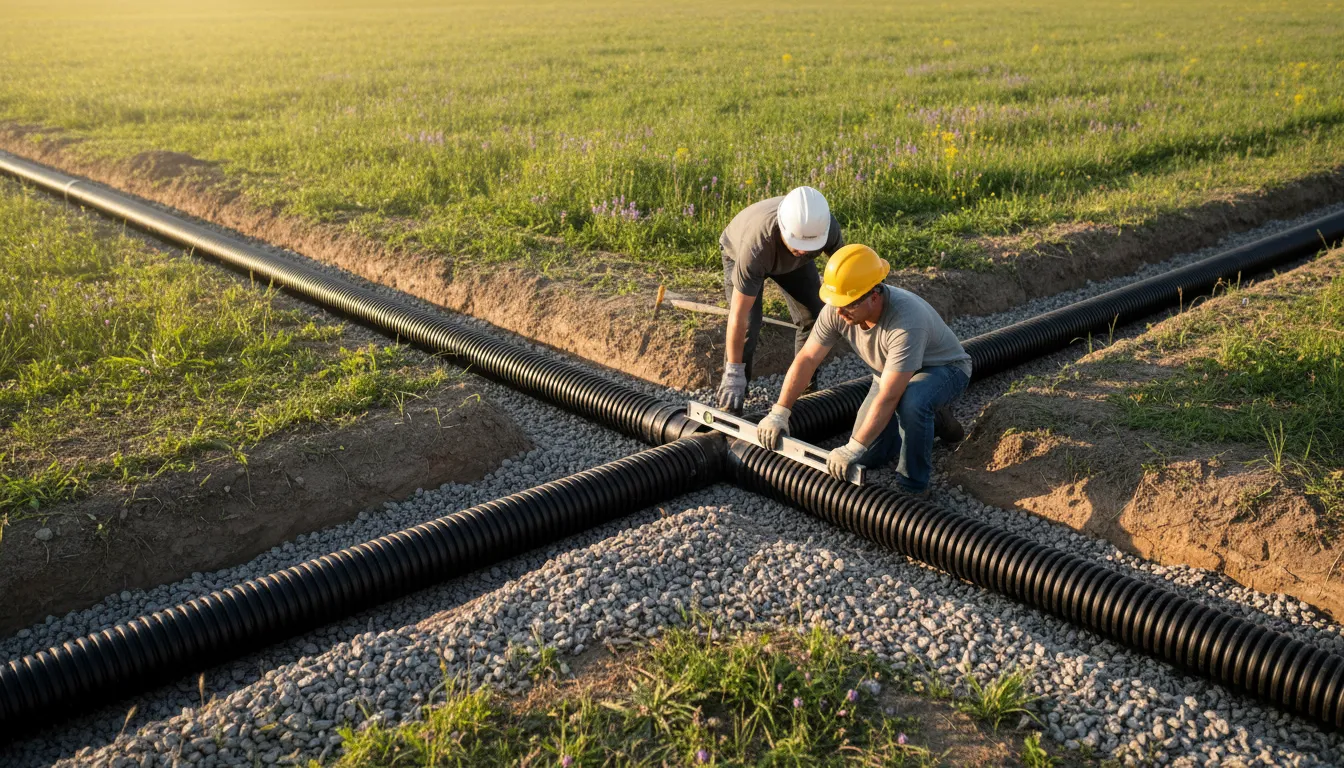
The drain field is the final stage of your onsite wastewater treatment system. After solids settle in the septic tank, liquid effluent flows through pipes into a network of perforated tubes buried in trenches filled with gravel. This effluent slowly percolates into the soil, where natural processes provide final treatment.
Failure occurs when the soil can no longer absorb water. Common signs include:
- Soggy Ground or Standing Water: Persistent wet spots or lush grass over the field, especially when it hasn't rained.
- Sewage Odors: Unpleasant smells emanating from the yard.
- Slow Drains & Backups: Gurgling pipes, slow-draining sinks and toilets, or sewage backing up into the lowest drains in the house.
- Nitrate Contamination: High levels in nearby well water, indicating untreated effluent is reaching groundwater.
In Lombard and DuPage County, these problems are not just an inconvenience-they are a public health concern. The DuPage County Health Department strictly regulates all septic system work to protect groundwater and prevent contamination.
The Regulatory Landscape: Permits and Professional Requirements
All drain field repair or replacement in Lombard is governed by a combination of Illinois State Code and DuPage County regulations. You cannot simply hire an excavator to dig up your yard.
Key regulatory steps include:
- Professional Evaluation: The process must begin with an evaluation by a state-licensed septic professional or engineer. They will assess the tank and determine if the issue truly lies with the absorption area.
- Soil & Site Evaluation (Perc Test): For a new or replacement leach field, a percolation test is almost always required 1. This test, conducted by a licensed evaluator, measures how quickly water drains through your soil. The results determine the size and design of the necessary drainage field. In Lombard, soils can vary; ideal loamy or sandy soils drain well, while high-clay soils common in parts of Illinois may require a larger or specially engineered system.
- Permit Application: Before any excavation begins, a permit must be obtained. Your contractor will typically handle this, submitting the soil evaluation results and a detailed system design plan to the DuPage County Health Department for approval 2. A site development permit from the Village of Lombard may also be required.
- Mandatory Inspections: County inspectors must examine the work at specific stages, most crucially before any piping is backfilled. This ensures the installation meets all code requirements 3.
- Sewer Availability Check: A critical first question from the Health Department will be whether public sewer is available near your property. If a municipal sewer line is within a legally specified distance, you may be required to connect to it instead of repairing your private septic system 4.
Who Can Do the Work? Only Illinois state-certified and licensed septic installation contractors are legally permitted to perform this work 5 6. Always verify a contractor's license.
Design and Installation: Key Factors for Success
A successful drain field installation is not just about digging trenches. Proper design and site preparation are essential for longevity.
System Design: The design is based on the perc test results, household size, and local climate. It specifies the number and length of trenches, the depth of the gravel bed, and the type of distribution system. In areas with high groundwater (within 6 feet of the surface), alternative systems like raised mounds or pressure-dosed fields may be necessary.
Critical Site Considerations:
- Setbacks: Illinois law mandates minimum distances from various features. For example, drain fields must be at least 10 feet from a building foundation, 50-100 feet from a water well (depending on well type), and a safe distance from property lines, streams, and ponds.
- Preventing Compaction: The soil in the leach field must remain porous. Never drive or park vehicles, build structures like sheds or patios, or store heavy materials over the area. Soil compaction is a leading cause of premature failure 7 8.
- Water Management: The field must be placed where surface water does not pool. Roof downspouts, sump pump discharges, and yard drainage must be directed away from the absorption area to prevent saturation 9 10.
- Landscaping: Only grass should be planted over a drain field. Tree and shrub roots will seek out the moisture and nutrients, eventually clogging and breaking the pipes 11.
Find the perfect drain field repair companies for your needs
Get personalized recommendations and expert advice
The Cost of Drain Field Repair and Replacement in Lombard
Costs for leach field work are significant and vary widely based on soil conditions, system size, and the complexity of the installation.
Typical Cost Breakdown:
- Permit Fees: Ranging from approximately $450 to $2,000, depending on the project's complexity and the required engineering plans 12.
- Soil Percolation Test: Generally costs around $1,300.
- Septic Tank Replacement (if needed): $3,000 to $10,000.
- Drain Field Replacement: This is the major expense, typically ranging from $7,000 to $15,000 or more for a conventional system 13. Labor often accounts for up to 60% of the total project cost. Difficult sites requiring engineered mound systems or advanced treatment technology can drive costs much higher.
It's important to note that these are estimates. The only way to get an accurate cost for your Lombard property is through an on-site evaluation and quote from a licensed local contractor.
Repair vs. Complete Replacement
Not all failing fields require a full replacement. A licensed professional can determine the best course of action.
- Possible Repairs: Issues like a clogged distribution box, crushed pipes from surface pressure, or minor soil compaction might be addressed without a full rebuild. Techniques like jetting to clean pipes or adding additional trenches are sometimes viable.
- Full Replacement: This is necessary when the soil is permanently saturated (biomat overload), the original field is undersized, or the system is very old. Replacement usually involves excavating a new field in a different location on your property, following the full permit and inspection process.
Maintaining Your New Drain Field
Protect your investment with proper care:
- Pump Your Tank Regularly: Have the septic tank pumped every 3-5 years to prevent solids from washing out into the new field.
- Conserve Water: Use water-efficient fixtures and spread out laundry loads to avoid hydraulically overloading the system.
- Mind What You Flush: Only human waste and toilet paper should go down the toilet. Avoid chemicals, grease, wipes, and feminine hygiene products.
- Keep the Area Clear: Reiterate: no driving, building, or planting deep roots over the field.
Frequently asked questions
Sources
Footnotes
-
Septic Tank Plans: A Complete Homeowner's Guide - https://landperc.com/septic-tank-plans-guide/ ↩
-
Sewer and Water Permits | DuPage Co, IL - https://www.dupagecounty.gov/government/departments/public_works/sewer_and_water_permits.php ↩
-
Septic Sewage - Kane County Health Department - https://www.kanehealth.com/Pages/Septic-Sewage.aspx ↩
-
SEWER & WATER REQUIREMENTS - Lombard, IL - https://www.villageoflombard.org/DocumentCenter/View/111/Sewer-and-Water-Handout-PDF ↩
-
Illinois Septic Tank Requirements - https://www.ntotank.com/blog/illinois-septic-tank-requirements ↩
-
Septic Repair/Installation - Lake County, Illinois - https://www.lakecountyil.gov/830/Septic-RepairInstallation ↩
-
Homeowners Guide for Well and Septic Systems - https://www.dupagehealth.org/DocumentCenter/View/9711/Homeowners-Guide-for-Well-and-Septic-Systems---English-PDF ↩
-
Septic Tank Drain Field Layout 101: A Complete Guide - Land Perc - https://landperc.com/septic-tank-drain-field-layout/ ↩
-
Homeowner's Guide for Well and Septic Systems - https://www.dupagehealth.org/DocumentCenter/View/177/Homeowners-Guide-for-Well-and-Septic-Systems-PDF ↩
-
AMENDMENTS TO ILLINOIS PRIVATE SEWAGE DISPOSAL CODE - https://codelibrary.amlegal.com/codes/southbarringtonil/latest/southbarrington_il/0-0-0-3038 ↩
-
septic-systems.pdf - Illinois Environmental Protection Agency - https://epa.illinois.gov/content/dam/soi/en/web/epa/documents/water/conservation/lake-notes/septic-systems.pdf ↩
-
Septic Tank Installation Cost 2025 | What It Really Costs - https://www.blueribbonseptic.com/blog/septic-savings-how-much-does-a-new-septic-tank-installation-really-cost ↩
-
Cost to Replace Septic Tank and Drain Field [2026 Data] | Angi - https://www.angi.com/articles/how-much-new-drain-fields-foot.htm ↩