Find the Best Drain Field Repair Companies for Your Business
No obligation • Fast responses • Nationwide coverage

Why you can trust Septic Spot
Septic Spot is a leading United States resource for understanding and comparing septic services. Our editors review providers using consistent criteria and verify key business details. Listings and scores are independent, and companies cannot pay to influence our content.
Search providers near you
Top Drain Field Repair Companies in Oak Park, Illinois Ranked
A properly functioning drain field is the unsung hero of your septic system, responsible for safely filtering and dispersing treated wastewater into the soil. When this critical component fails, it can lead to soggy yards, foul odors, and serious environmental health concerns. In a densely populated, historic suburb like Oak Park, addressing drain field issues promptly and correctly is essential due to strict local regulations and often challenging site conditions. This guide will help you understand the process, costs, and key considerations for leach field repair or replacement, connecting you with the information needed to navigate this complex project with local, licensed professionals.
Ability Septic
801 N Raddant Rd, Batavia, IL 60510
Ability Septic is a family-owned septic service provider based near Aurora, IL, serving Batavia and surrounding areas. With over 65 years of experience since 1956, they offer a full range of septic services including pumping, inspection, installation, repair, and drain field maintenance. Their team uses advanced Lenzyme bio-products for eco-friendly septic system solutions and provides 24/7 emergency services to address urgent needs promptly.

Zeilinga Services, Inc.
850 Meadowview Crossing #9, West Chicago, IL 60185
Zeilinga Services, Inc. is a septic system company based in Chicago, IL. They provide septic tank pumping, inspection, repair, and installation services, along with drain field repair and septic pump replacement. Their work includes servicing various septic units such as Aqua 02, AquaKleer, and Norweco systems. They perform thorough maintenance tasks like cleaning pumps, changing filters, checking alarms, and conducting sludge tests to determine pumping needs. Zeilinga Services also offers specialized capabilities including jetting, lift station work, TV camera line inspections, and root control treatments.
JW Trenching, Inc.
28074 W Industrial Ave, Barrington, IL 60010
JW Trenching, Inc. is a septic system repair and installation company serving Chicago, IL. They provide a range of services including soil testing for septic suitability, septic field locating, system design, and consulting. Their capabilities include septic tank replacement and repair, lift station pump replacement, and septic field repair or replacement. They also install various septic systems such as stone trench, chamber trench, mound systems, sand filter, raised filter bed, constructed wetland, textile filter, peat filter, and drip irrigation systems.
Understanding Your Drain Field and Signs of Failure
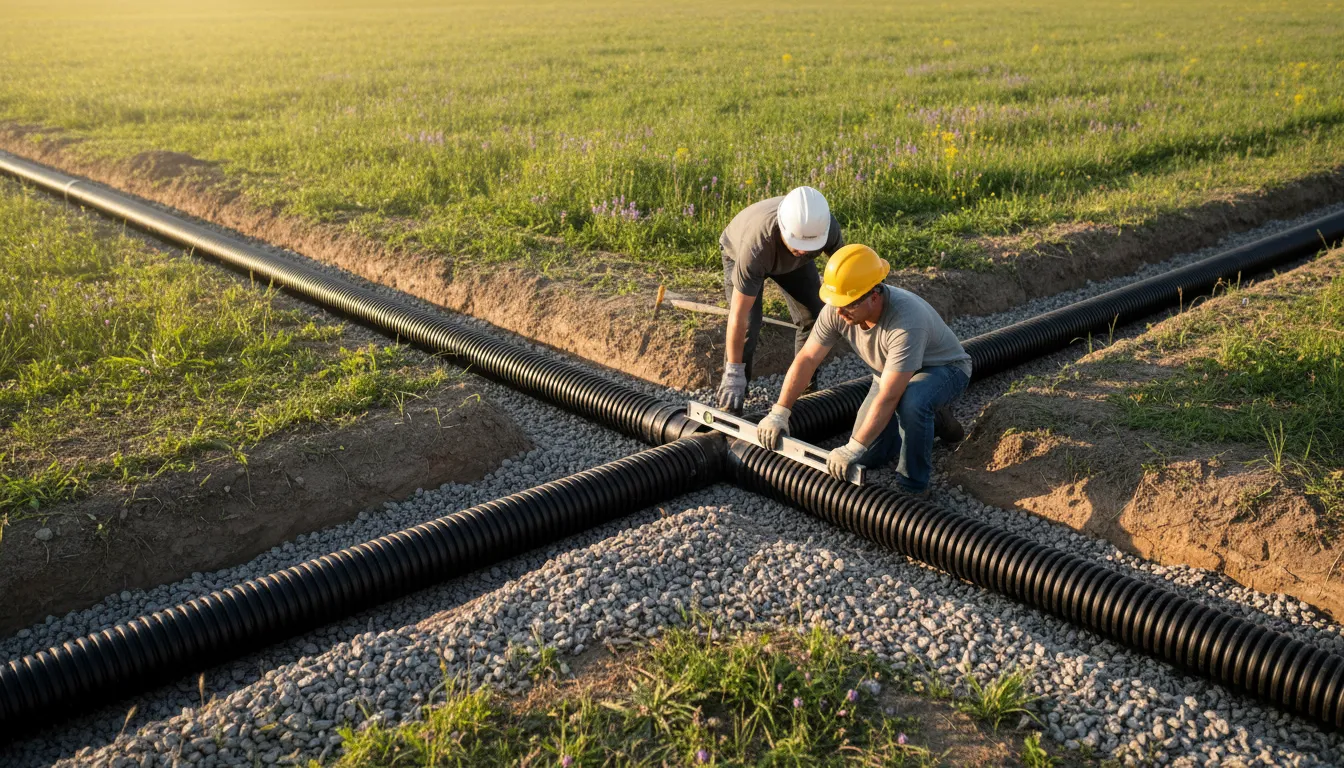
Your septic system's absorption field, also known as a leach field, is a network of perforated pipes buried in trenches filled with gravel. Its job is to distribute the liquid effluent from the septic tank for final treatment by the soil. Over time, these systems can fail due to age, soil compaction, root intrusion, or hydraulic overloading.
Common warning signs that your drain field in Oak Park may need attention include:
- Sewage odors in the yard or home.
- Noticeably lush, green grass or soggy, spongy areas directly over the drain field lines.
- Slow-draining household fixtures or gurgling pipes.
- Sewage backing up into the home or surfacing in the yard.
If you notice any of these issues, it's crucial to act quickly. A failing leach field is a public health nuisance and can contaminate groundwater. The first step is always to have a licensed professional perform a thorough inspection to confirm the problem and its extent.
Oak Park's Regulatory Landscape: Permits and Professionals
Repairing or replacing a septic system component in Illinois is not a DIY project. State and local health codes are stringent, especially in suburban Cook County communities like Oak Park, where lot sizes are often smaller and environmental oversight is high.
Permit Requirements: A permit is required in Illinois before repairing or altering any part of a private sewage disposal system, including the drain field. While the Illinois Department of Public Health sets the state rules, the permit review and approval are managed at the local level. For Oak Park residents, this typically means working with the Cook County Department of Public Health 1.
The Role of Licensed Contractors: All excavation and installation work must be performed by a Licensed Private Sewage Installation Contractor. These professionals understand the specific codes, can submit the necessary engineered plans, and ensure the work passes final inspection. Hiring a licensed contractor is not just a recommendation-it's a legal requirement for this type of work.
The Step-by-Step Process for Repair or Replacement
Navigating a drain field project involves a series of regulated steps. Skipping any can result in fines, failed inspections, and an unsafe system.
- Site Inspection and Soil Evaluation: A licensed inspector or engineer will perform a comprehensive evaluation. This includes a soil evaluation and percolation (perc) test to determine the soil's absorption rate and identify the best location and type of system for your property. This test is critical, as Oak Park's soil conditions heavily influence the solution.
- Engineered Design Plan: Based on the soil evaluation, a detailed, engineered site plan is drafted. This plan locates the proposed new drain field, septic tank, and all necessary setbacks from property lines, wells, and structures. This design proposal must be submitted for approval before any excavation begins.
- Permit Submission and Approval: The engineered plans, along with the permit application and fee, are submitted to the local health authority (Cook County) for review and approval.
- Excavation and Installation: Once the permit is issued, your licensed contractor can begin the physical work. This involves excavating the old, failed drain field (often requiring its proper abandonment) and installing the new system according to the approved plans.
- Final Inspection: Before the new drain field is covered with soil, a representative from the health department must inspect the installation to ensure it complies with all codes 2 3. Only after passing this inspection can the project be completed.
Find the perfect drain field repair companies for your needs
Get personalized recommendations and expert advice
Critical Local Factors Influencing Your Project
Oak Park's unique characteristics play a major role in the feasibility, design, and cost of drain field work.
- Soil Type: The region is known for clay-heavy or compacted soils 4. Clay has very poor drainage, which can cause a standard trench system to fail. In these cases, an engineered alternative like a mound system or a specialized drip irrigation system may be required to properly treat and disperse effluent 4. These systems are more complex and costly to install.
- Site Constraints: As a built-out, historic suburb, small lot sizes are common in Oak Park. This can severely limit where a new drain field can be placed, often requiring creative engineering and sometimes the use of smaller, more specialized excavation equipment. Setback requirements from neighboring properties become a significant planning factor.
- Environmental Conditions: A high water table or steep slopes on your property can complicate a standard installation. These conditions may necessitate advanced treatment systems, like aerobic treatment units (ATUs), to further treat the wastewater before dispersal to meet environmental regulations and protect groundwater.
Understanding the Costs Involved
The cost for drain field repair or replacement in Oak Park is highly variable and depends directly on the factors above. It's important to budget for both professional services and physical construction.
- Permit Fees: Typical permit fees for system abandonment and replacement range from $100 to $250, though total project-related fees paid to the health department can be higher.
- Soil Testing and Engineering: The crucial soil evaluation and the creation of an engineered design plan typically cost between $500 and $3,000.
- Replacement Costs: Full drain field replacement is a significant investment. Costs commonly range from $3,000 to over $10,000 5. Challenging conditions like poor soil (clay) or restricted site access can increase these costs by 30-50% 5. For minor repairs to a portion of the field, costs may be lower, but a full replacement is often necessary.
- Additional Expenses: Don't forget to budget for restoring your yard after excavation. This often includes site regrading ($1,000-$3,300) and sod installation ($1-$2 per square foot) 6.
Choosing the Right System for Your Property
Based on the soil perc test results, your licensed contractor will recommend the most appropriate system. In Oak Park, where traditional systems may not be viable, alternatives are common:
- Mound Systems: These are built above the natural soil surface using imported sand. They are a standard solution for properties with shallow soil depth to bedrock or a high water table.
- Drip Irrigation Systems: These systems slowly distribute effluent through a network of small-diameter tubing, which can be ideal for tight spaces, sloping land, or poor-draining soils.
- Aerobic Treatment Systems (ATS): These systems inject oxygen into the treatment tank, providing a higher level of treatment. They may be required in environmentally sensitive areas or on lots with severe constraints.
Maintaining Your New Drain Field
Protecting your investment is key. Once your new leach field is installed, proper maintenance is essential for its longevity:
- Practice water conservation to avoid overloading the system.
- Never drive or park vehicles over the drain field area.
- Avoid planting trees or deep-rooted shrubs near the field.
- Have your septic tank pumped regularly (typically every 3-5 years) to prevent solids from escaping into and clogging the new field.
Frequently asked questions
Sources
Footnotes
-
Illinois Septic Tank Requirements | Onsite Wastewater Treatment Systems - https://www.ntotank.com/blog/illinois-septic-tank-requirements ↩
-
Illinois Septic Tank Requirements - https://www.ntotank.com/blog/illinois-septic-tank-requirements ↩
-
Buying and Selling Homes | Septic Systems - Illinois Extension - https://extension.illinois.edu/septic-systems/buying-and-selling-homes ↩
-
What is the best septic system if your land fails a perc test? - https://www.premiertechaqua.com/en-us/blog/best-septic-system-failed-perc-test ↩ ↩2
-
Septic Drain Field Replacement Cost - https://dillonseptic.com/septic-drain-field-replacement-cost/ ↩ ↩2
-
Cost to Replace Septic Tank and Drain Field [2026 Data] | Angi - https://www.angi.com/articles/how-much-new-drain-fields-foot.htm ↩