Find the Best Drain Field Repair Companies for Your Business
No obligation • Fast responses • Nationwide coverage

Why you can trust Septic Spot
Septic Spot is a leading United States resource for understanding and comparing septic services. Our editors review providers using consistent criteria and verify key business details. Listings and scores are independent, and companies cannot pay to influence our content.
Search providers near you
Top Drain Field Repair Companies in Orland Park, Illinois Ranked
A failing drain field, also known as a leach field or absorption field, is a serious issue for any Orland Park home with a septic system. This critical component is responsible for safely filtering and dispersing treated wastewater into the soil. When it fails, it can lead to soggy yards, foul odors, and environmental contamination. Navigating the repair or replacement of a septic drain field involves strict local regulations, professional soil evaluations, and significant investment. This guide explains the process, costs, and local requirements to help you understand your options and connect with qualified, licensed professionals in the Orland Park area.
Ability Septic
801 N Raddant Rd, Batavia, IL 60510
Ability Septic is a family-owned septic service provider based near Aurora, IL, serving Batavia and surrounding areas. With over 65 years of experience since 1956, they offer a full range of septic services including pumping, inspection, installation, repair, and drain field maintenance. Their team uses advanced Lenzyme bio-products for eco-friendly septic system solutions and provides 24/7 emergency services to address urgent needs promptly.

Zeilinga Services, Inc.
850 Meadowview Crossing #9, West Chicago, IL 60185
Zeilinga Services, Inc. is a septic system company based in Chicago, IL. They provide septic tank pumping, inspection, repair, and installation services, along with drain field repair and septic pump replacement. Their work includes servicing various septic units such as Aqua 02, AquaKleer, and Norweco systems. They perform thorough maintenance tasks like cleaning pumps, changing filters, checking alarms, and conducting sludge tests to determine pumping needs. Zeilinga Services also offers specialized capabilities including jetting, lift station work, TV camera line inspections, and root control treatments.
Understanding Your Septic System's Drain Field
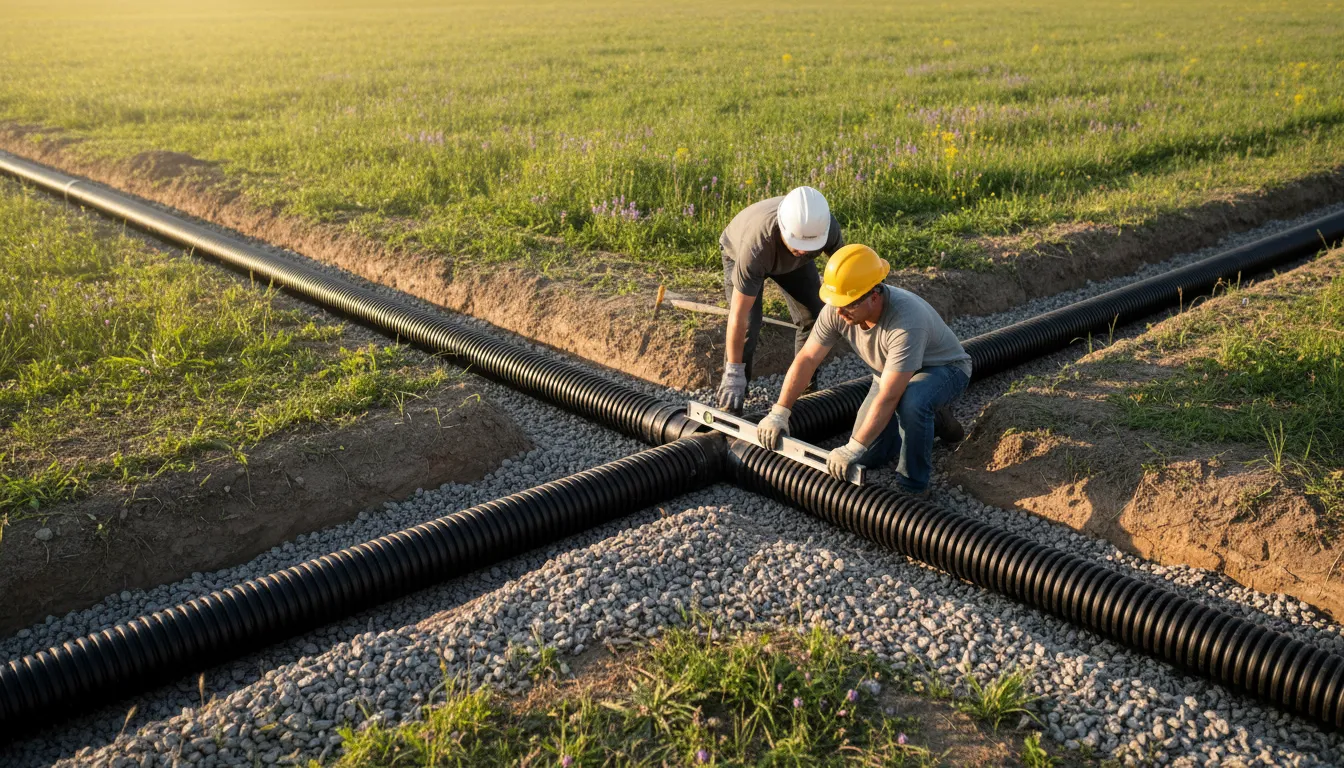
The drain field is the final stage of a private sewage disposal system. After solids settle in the septic tank, the liquid effluent flows into a network of perforated pipes buried in trenches filled with gravel. This effluent slowly seeps into the soil, where natural processes provide final treatment. A functioning leach field is essential for protecting both your property and the local groundwater, which is a shared resource in our community.
Common signs of drain field failure include:
- Sewage odors in the yard or home.
- Soggy, spongy, or standing water over the field area, even in dry weather.
- Slow-draining toilets and fixtures.
- Unusually green, lush grass over the field.
If you notice these signs, it's crucial to act quickly. Continuing to use a failed system can cause further damage, create health hazards, and lead to more expensive repairs.
The Strict Regulatory Landscape in Orland Park
Septic system work in Orland Park is heavily regulated by multiple agencies to safeguard public health and the environment. Any repair, alteration, or installation of a private sewage disposal system requires a permit. The work must comply with the Illinois Department of Public Health (IDPH) Code, county health department rules (Cook County or Will County, depending on your property's location), and Village of Orland Park ordinances.
A critical first step is determining if your property is eligible for a new drain field. If a public sanitary sewer line is available within 300 feet of your property line, the Village may require you to connect to the municipal sewer instead of replacing the septic system. This is a major consideration that can change the entire scope and cost of your project.
The Permit and Inspection Process
Before any shovel hits the ground, you must navigate the permitting process:
- Site Evaluation & Soil Testing: A licensed professional must perform soil borings or backhoe pits to evaluate the soil's absorption rate (a percolation or "perc" test). This test determines the size and type of system needed and typically costs around $1,300 1.
- Design Plan Submission: A sewage system designer uses the soil data and your home's bedroom count to create a detailed plan. This plan, along with the permit application, is submitted to the local health department for approval 2.
- Obtaining the Permit: For repairs in Orland Park, a sewer repair permit application with a $200 fee is required. If you plan to do the work yourself, a homeowner's affidavit is also needed 3.
- Mandatory Inspection: Crucially, a Village plumbing inspector must examine the completed installation before the site is backfilled. You can request a same-day inspection by calling (708) 403-6225. Failing an inspection can result in re-inspection fees and costly delays.
The Step-by-Step Process for Replacement
Replacing a drain field is a major excavation project that follows a defined sequence.
1. Professional System Evaluation A licensed contractor will first confirm that the drain field is the source of the problem and not a clogged pipe or failing tank. They will assess the entire system to recommend the correct course of action 4.
2. Soil Testing and System Design As noted, a formal soil evaluation is legally required. The designer will look for "limiting layers," such as creviced limestone or high groundwater. State code prohibits constructing a subsurface system if there is less than 4 feet of suitable soil above such a layer 5. The design must also account for mandatory setbacks from property lines, wells (typically 100 feet), and water mains 6.
3. Excavation and Installation Once permits are secured, the contractor will excavate the old, failed leach field. The new field is constructed according to the approved design, which may involve different technologies like conventional trench systems or advanced aerobic treatment units depending on the soil conditions. The area designated for the new field must be protected from traffic and soil compaction during this phase, which can last 3 to 7 days.
4. Final Approval and Protection After the final inspection and approval, the area is backfilled. Properly grading the soil and establishing grass over the field helps prevent erosion and surface water from pooling. It's now your responsibility to protect this new investment by practicing good septic system maintenance 7.
Find the perfect drain field repair companies for your needs
Get personalized recommendations and expert advice
Cost Breakdown for Drain Field Projects in Orland Park
Drain field replacement is a significant financial undertaking. Costs are highly variable and depend on system design, soil conditions, and site accessibility (e.g., large trees or tight spaces can increase cost).
- Permits and Design: Permit fees can range from $450 to $2,000 when including health department review. The essential soil percolation test averages $1,300 8.
- Drain Field Replacement: The cost for the new leach field itself is approximately $7,000 on average 9.
- Full System Replacement: If the septic tank also needs replacement, that adds $3,000 to $10,000+. Therefore, a complete septic system replacement in Orland Park can easily exceed $10,000-$15,000 or more 10 11.
These figures underscore the importance of regular septic tank pumping and maintenance to extend the life of your drain field and avoid this major expense.
Choosing the Right Licensed Professional
Illinois law requires that installation be performed by an IDPH-licensed private sewage disposal system installation contractor 12 13. When evaluating local providers, ensure they hold this specific license. A qualified professional will handle the entire process-from the initial diagnosis and soil evaluation to securing permits, performing the installation, and coordinating the mandatory inspections. They understand the local codes, including critical rules like protecting the designated repair area from future excavation 14.
Working with a knowledgeable local contractor is the best way to navigate Orland Park's regulatory requirements efficiently and avoid the costly mistakes that can come from improper installation or failed inspections.
Frequently asked questions
Sources
Footnotes
-
Soil Evaluation for Septic System - Illinois Extension - https://extension.illinois.edu/septic-systems/soil-evaluation-septic-system ↩
-
§ 51.05 SEWAGE TREATMENT OR DISPOSAL SYSTEMS. - https://codelibrary.amlegal.com/codes/willcounty/latest/willcounty_il/0-0-0-31672 ↩
-
Sewer Repairs | Village of Orland Park, IL - https://www.orlandpark.org/departments/development-services/permits-licenses-inspections/permits/sewer-repairs ↩
-
Frequent Questions on Septic Systems | US EPA - https://www.epa.gov/septic/frequent-questions-septic-systems ↩
-
Section 905 - Illinois General Assembly - https://www.ilga.gov/ftp/JCAR/AdminCode/077/077009050000200R.html ↩
-
Private Wells Should Be Sited Far from Septic Tanks and Field Lines - https://www.apecwater.com/blogs/water-quality/j8-08-private-water-wells-sited-from-septic-tanks-fieldlines ↩
-
Frequent Questions on Septic Systems | US EPA - https://www.epa.gov/septic/frequent-questions-septic-systems ↩
-
Chapter 5-1: Building Code - Village of Orland Park, IL - https://ecode360.com/37396950 ↩
-
Septic Drain Field Replacement Cost - https://dillonseptic.com/septic-drain-field-replacement-cost/ ↩
-
Cost to Replace Septic Tank and Drain Field [2026 Data] | Angi - https://www.angi.com/articles/how-much-new-drain-fields-foot.htm ↩
-
How To Replace A Septic Drain Field Without Costly Mistakes - Miller Septic - https://millersepticfl.com/how-to-replace-a-septic-drain-field-without-costly-mistakes/ ↩
-
Illinois Septic Tank Requirements - https://www.ntotank.com/blog/illinois-septic-tank-requirements ↩
-
Sewage Facility Ordinance - Will County Health Department - https://willcountyhealth.org/wp-content/uploads/2018/08/2016-Sewage-Ordinance-1.pdf ↩
-
Part 3: Regulations of General Applicability - Village of Orland Park, IL - https://ecode360.com/37449591 ↩