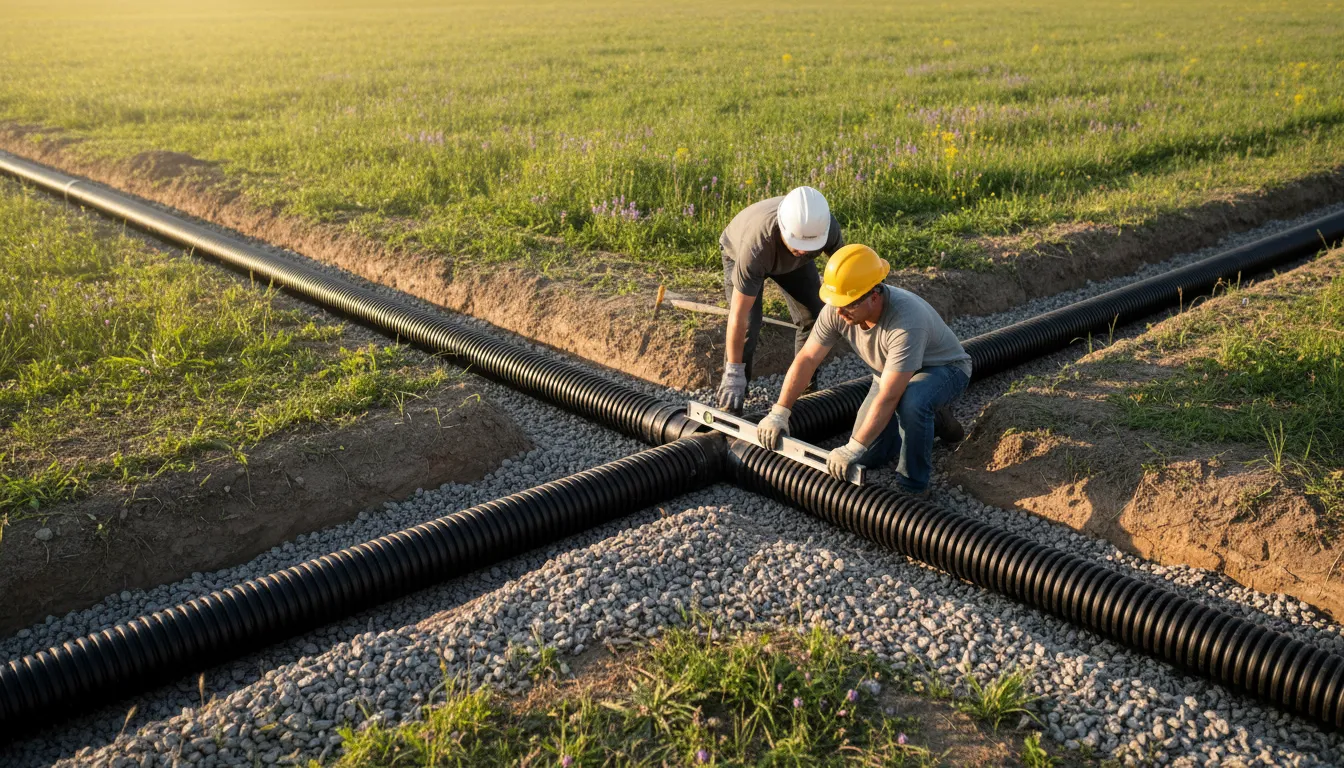
Find the Best Drain Field Repair Companies for Your Business
No obligation • Fast responses • Nationwide coverage

Why you can trust Septic Spot
Septic Spot is a leading United States resource for understanding and comparing septic services. Our editors review providers using consistent criteria and verify key business details. Listings and scores are independent, and companies cannot pay to influence our content.
Search providers near you
Best Drain Field Repair Companies in Missouri Ranked
A failing drain field, also known as a leach field or absorption field, is a serious issue for any Missouri homeowner with a septic system. This critical component is responsible for safely dispersing treated wastewater into the soil. When it fails, it can lead to sewage backups, soggy yards, and environmental contamination. Understanding the state-specific regulations, permit requirements, and repair processes is essential for a successful and legal resolution. This guide provides clear, practical information to help you navigate drain field repair and replacement in Missouri, connect with qualified local professionals, and protect your property and health.
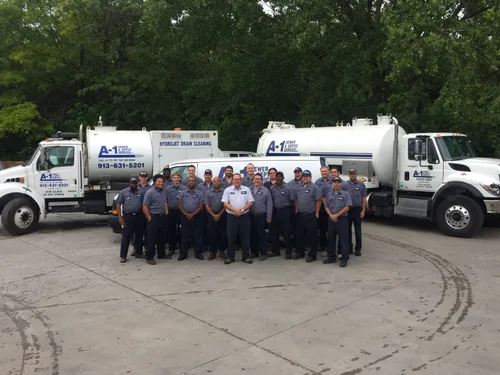
A-1 Sewer & Septic
1891 Merriam Ln, Kansas City, KS 66106
A-1 Sewer & Septic provides plumbing and septic system services in Kansas City, MO. They offer septic tank pumping, septic system repair, drain field repair, and comprehensive drain cleaning services including hydro jetting. Serving residential, commercial, and industrial clients, A-1 Sewer & Septic has been operating since 1968. The company offers same-day emergency and weekend services to address urgent plumbing and septic issues promptly.
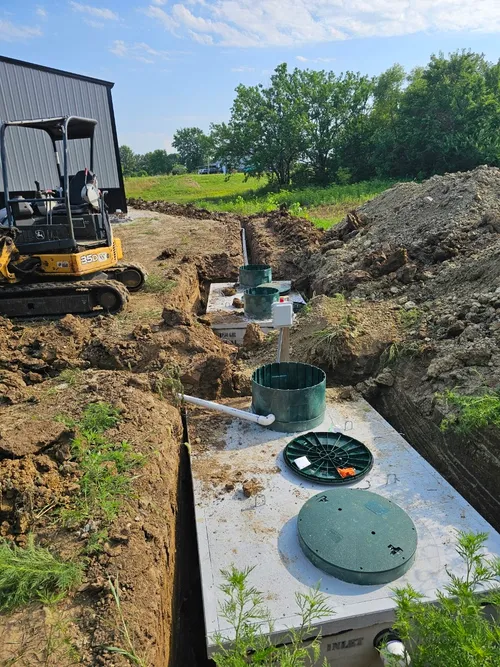
Burns Septic And Excavation
Kansas City, MO
Burns Septic And Excavation is a septic system repair and installation company based in Kansas City, MO. They provide services including new septic system installations, septic tank replacements, and drain field repair or replacement. The company serves multiple counties in Missouri and Kansas, such as Cass, Johnson, Lafayette, and Jackson counties. Their capabilities include both lateral (drain field) replacements and preventative maintenance to support septic system health.

KCS, LLC
Kansas City, MO
KCS, LLC is a licensed and insured septic tank installation and drain field repair contractor serving Kansas City, MO, and surrounding areas. With over 25 years of experience, they provide comprehensive septic and wastewater solutions including tank replacement, lateral field installation, full system installs, septic engineering design, and septic to sewer conversion. Their expertise extends to water and sewer line installations and repairs, ensuring efficient and compliant septic system performance tailored to local soil and environmental conditions. KCS, LLC is recognized for its specialized knowledge and has been featured on FOX4KC's "KC Experts."
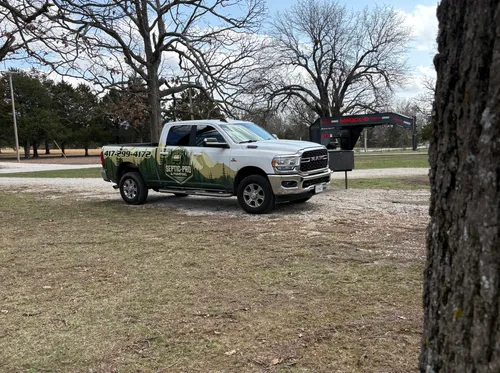
Septic-Pro & Pumping, LLC
Springfield, MO
Septic-Pro & Pumping, LLC is a family-owned and operated company providing septic system installation, repair, and pumping services in Springfield, MO. They serve residential, farm, and business clients across Southwest Missouri, including multiple counties and parts of Northern Arkansas. Their services include full septic system installations, troubleshooting and repairs for issues like line breaks and failed lateral fields, as well as pumping for septic tanks, grease traps, and drain basins. The company offers emergency pumping and repair services to address urgent septic problems promptly.
Residential Sewage Treatment
12800 2nd St, Grandview, MO 64030
Residential Sewage Treatment is a family-owned septic service provider based in Kansas City, MO, serving Clay County and surrounding areas. Established in 1972, the company offers a range of residential and commercial septic services including installation, repair, maintenance, and inspection of septic tanks and drain fields. They specialize in installing Aerobic Treatment Units certified by the National Sanitation Foundation, which are suitable for properties not compatible with traditional septic systems. Their certified technicians also handle lift station maintenance and drip irrigation system repairs to support proper wastewater management.
Understanding Your Missouri Drain Field
The drain field is the final stage of your onsite wastewater treatment system. After solids settle in the septic tank, the liquid effluent flows into a network of perforated pipes buried in trenches filled with gravel or other aggregate. This effluent slowly percolates into the soil, where natural processes provide final treatment. In Missouri, the design and function of these systems are heavily influenced by local soil conditions, which is why a professional site evaluation is the first critical step for any new installation or major repair.
Common signs of drain field failure include:
- Sewage odors in the yard or home.
- Soggy, spongy, or overly green grass directly over the field.
- Slow-draining toilets and fixtures, or sewage backing up into the home.
- Standing water or surfacing sewage in the drain field area.
If you notice any of these signs, it's important to act quickly to prevent a public health nuisance and potential regulatory action.
Missouri Regulations and Permit Requirements
All major drain field work in Missouri is regulated to protect groundwater and public health. The Missouri Department of Health and Senior Services (DHSS) sets the statewide rules, which are enforced by your local county or city health department.
When is a Permit Required?
A construction permit from your local health authority is mandatory for:
- Installing a new septic system (including the drain field).
- Replacing an existing drain field.
- Making major repairs to a drain field.
- Modifying or expanding an existing system.
Minor repairs, such as fixing a broken pipe or clearing a blockage, may not require a permit, but it's always best to check with your local authority first. The rule of thumb is: if you're digging up and replacing the absorption area, you almost certainly need a permit.
The Permit Application Process
While your licensed installer will typically manage the permit process, the ultimate responsibility lies with the homeowner, who can also pull the permit. The process generally involves:
- Site Evaluation: A licensed professional must conduct a soil morphology study. Missouri regulations do not accept percolation ("perc") tests for system design.
- System Design: A registered installer designs a system that meets Missouri's minimum standards, including adequate septic tank size (e.g., 1,000 gallons for a 1-3 bedroom home) and a drain field sized for your soil type and household 1.
- Application Submission: The completed application, design, and site evaluation are submitted to the local health department with the required fee.
- Permit Issuance: Once approved, the permit is issued, and work can be scheduled.
- Inspection: All system components must be exposed for inspection. The installer must notify the health department at least four hours before the inspection is needed 2.
Permit and Project Costs
Costs for drain field projects vary widely based on system size, soil conditions, and local labor rates. The permit fee itself is a separate, upfront cost. In areas like Boone County and Columbia, permit fees for onsite wastewater systems are approximately $440 to $510 3 4. This does not include the significant cost of excavation, materials, and labor for the repair or replacement itself, which can range from several thousand to over twenty thousand dollars.
Find the perfect drain field repair companies for your needs
Get personalized recommendations and expert advice
Working with Licensed Professionals in Missouri
State law requires that the installation, modification, or major repair of a septic system be performed by a registered installer 5. Hiring a licensed professional is non-negotiable for permitted work. These experts understand the complex state and local codes, can perform the required soil evaluations, and will ensure the system passes the mandatory inspections.
Key questions to ask a prospective contractor:
- "Are you a Missouri-registered septic system installer?"
- "Can you provide references for recent drain field replacements in this county?"
- "Will you handle the entire permit process with the health department?"
- "What is your process for the required soil morphology study?"
Special Considerations for Subdivisions
Missouri has specific rules for developments. If your property is part of a subdivision with seven or more lots that are each less than five acres, the entire subdivision's wastewater plan requires approval from the Missouri Department of Natural Resources (MoDNR) in addition to local health department permits 6 7. This is an important layer of regulation aimed at protecting water resources in denser communities.
Homeowner Responsibilities and Maintenance
As a septic system owner in Missouri, you are legally responsible for maintaining your system so that it "does not create a public health hazard or nuisance". This means preventing sewage from discharging to the ground surface or contaminating water sources. Proper maintenance of the entire system, including the septic tank (pumped regularly) and conserving water, is the best way to extend the life of your drain field and avoid a costly premature failure.
A proactive inspection of your system, including a tank pump-out and assessment of the drain field, is recommended every 1-3 years. If a repair is needed, addressing it early under the guidance of a licensed professional is always more manageable and less expensive than a full emergency replacement.
Frequently asked questions
Sources
Footnotes
-
Septic Tank - Understanding Septic Tank Permits and Regulations - https://westcoastsanitationinc.com/understanding-septic-tank-permits-and-regulations/ ↩
-
On-site Septic Systems and Subdivisions | Missouri Department of ... - https://dnr.mo.gov/water/business-industry-other-entities/technical-assistance-guidance/onsite-wastewater-septic-systems ↩
-
Septic System Requirements - Columbia, MO - https://www.como.gov/wp-content/uploads/2021/03/Septic-System-Requirements-2020-fees-pdf.pdf ↩
-
On-Site Wastewater Systems - https://www.showmeboone.com/resource-management/on-sitewastewatersystems.asp ↩
-
Onsite Wastewater Treatment | Health & Senior Services - https://health.mo.gov/living/environment/onsite/ ↩
-
OWTS Construction Permit Application Process - https://health.mo.gov/living/environment/onsite/permitprocess.html ↩
-
On-site Wastewater Treatment (Septic) in a Subdivision - PUB2226 - https://dnr.mo.gov/document-search/site-wastewater-treatment-septic-subdivision-pub2226/pub2226 ↩