Find the Best Drain Field Repair Companies for Your Business
No obligation • Fast responses • Nationwide coverage

Why you can trust Septic Spot
Septic Spot is a leading United States resource for understanding and comparing septic services. Our editors review providers using consistent criteria and verify key business details. Listings and scores are independent, and companies cannot pay to influence our content.
Search providers near you
Top Drain Field Repair Companies in Springfield, Missouri Ranked
A failing drain field is a serious issue for any home with a septic system, leading to soggy yards, foul odors, and potential environmental contamination. In Springfield, the unique Ozark soil conditions and local regulations make professional assessment and repair essential. This guide helps you understand the process, costs, and key considerations for leach field repair or replacement, connecting you with the local licensed professionals who can get the job done right.
Understanding Your Drain Field's Role
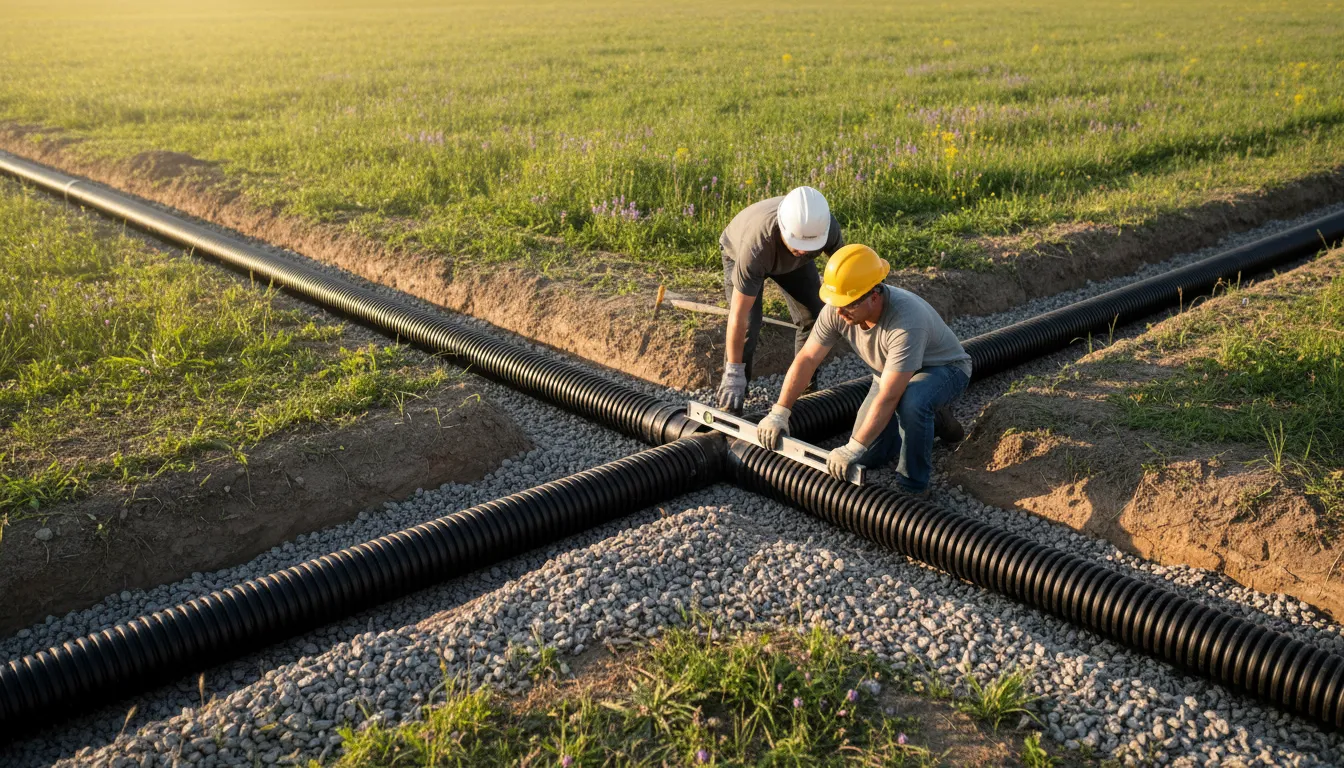
Often called a leach field or absorption field, the drain field is the final and most critical stage of your onsite wastewater treatment system (OWTS). After solids settle in the septic tank, the liquid effluent flows into a network of perforated pipes buried in trenches filled with gravel or modern plastic chambers. This effluent slowly percolates through the soil, where natural biological processes provide the final treatment before the water rejoins the groundwater table 1. When this area fails, untreated wastewater can surface, creating health hazards and violating local codes.
Signs You Need Drain Field Repair or Replacement
Recognizing early warning signs can save you from a complete system failure and more expensive repairs. Look for these common indicators in your Springfield yard:
- Sewage Odors: Persistent foul smells near the drain field or septic tank area.
- Soggy Ground or Surfacing Effluent: Spongy, wet patches or standing grey water over the leach field, especially when it hasn't rained.
- Slow Drains and Backups: Gurgling pipes, slow-draining sinks and toilets, or sewage backups in the home, indicating the system is not draining properly.
- Unusually Lush Grass: Patches of grass over the drain field that are greener and grow faster than the rest of the lawn due to the nutrient-rich effluent.
- Failed Inspection: A routine inspection or dye test confirms the field is not absorbing effluent as designed.
Springfield and Greene County Regulations You Must Follow
All septic system work in Greene County, including Springfield, is regulated to protect public health and local water quality. Ignoring these rules can result in fines and an unusable system.
- Permit Required: You must obtain a construction permit from the Greene County Health Department before beginning any repair or replacement of an Onsite Wastewater Treatment System (OWTS).
- Licensed Professionals: All system installations and major repairs must be performed by a Missouri-licensed installer. Homeowners may perform their own repairs only if they can demonstrate adequate knowledge to the permitting authority 2.
- Critical Setbacks: Systems must be placed at minimum distances from other features: 100 feet from water wells, 50 feet from streams, and 10 feet from property lines.
- System Sizing: Regulations specify minimum tank sizes (e.g., 1,000 gallons for up to a 3-bedroom home) and require the absorption area to be sized based on official soil loading rates, not just percolation tests 3 4.
The Impact of Ozark Soils on Your System
The soil in and around Springfield is a primary factor in system design, performance, and cost. The rocky, clay-heavy soils common in the Ozarks present specific challenges.
- Soil Morphology Evaluation: Missouri regulations often prefer a deep soil morphology evaluation over traditional percolation tests for the Ozark region. A certified professional will dig test pits 4-6 feet deep to analyze soil structure, color, and rock fragment content, which provides a more accurate picture of long-term absorption capability.
- Drainage and Soil Type: Heavy clay soils have very slow permeability, meaning they cannot absorb effluent quickly from a standard trench system. In these cases, an engineered solution like a raised mound system, drip irrigation system, or sand filter may be required 5. These advanced systems can increase project costs by 30-50% or more compared to a conventional drain field.
- Site Layout Challenges: The natural terrain can also complicate repairs. Steep slopes, limited space due to property lines or structures, and large tree roots can all restrict design options and potentially increase installation complexity and cost.
Find the perfect drain field repair companies for your needs
Get personalized recommendations and expert advice
The Step-by-Step Process for Repair or Replacement
Navigating a drain field project involves several key stages, from evaluation to final inspection.
- Professional Site Evaluation: The process begins with a thorough site assessment by a licensed installer or soil scientist. They will locate the existing system, perform the required soil evaluation, and identify the cause of failure.
- Design and Permit Application: Based on the evaluation, a new system or repair plan is designed to meet current codes. This plan, along with the permit application, is submitted to the Greene County Health Department for approval 6.
- Excavation and Installation: Once permitted, the licensed contractor will excavate the area. For a full replacement, the old drain field is typically abandoned, and a new one is constructed with new distribution pipes, gravel or chambers, and clean soil cover.
- Final Inspection and Approval: After installation, a county inspector must approve the work before the system is covered. This ensures everything is built according to the permitted plans 7.
- Protecting Your New Investment: To ensure longevity, avoid driving or parking vehicles over the drain field, paving it, or planting trees and shrubs with deep root systems in the area.
Understanding the Costs in Springfield
The cost for drain field work varies widely based on system type, soil conditions, and site accessibility.
- Replacement Cost Range: For a standard conventional system replacement in Springfield, homeowners can expect costs to generally range from $3,000 to $7,000 8. For complex sites requiring engineered mound or drip systems, costs can easily reach $12,000 or more 8 9.
- Springfield Averages: Broader data for septic system installation in the Springfield area suggests an average range of $3,725 to $5,323 10.
- Potential Financial Assistance: The City of Springfield offers a Private Sewer Repair Program that may provide financial assistance for repairing or replacing private sewer service lines (which connect a home to the public main) under specific conditions. It's important to note this is typically for sewer line connections, not septic drain fields, but it's worth investigating if your property is within a chosen, surveyed basin 11.
Maintaining Your New Drain Field
A new drain field is a significant investment. Protect it by practicing good septic habits: conserve water to avoid hydronic overload, avoid pouring grease or harsh chemicals down drains, and have your septic tank pumped regularly by a professional (typically every 3-5 years) to prevent solids from clogging the new field.
Frequently asked questions
Sources
Footnotes
-
Septic Systems and Other Treatment Methods (Fact Sheet) - https://extension.missouri.edu/publications/eqm104f ↩
-
Resources | Onsite Wastewater Treatment | Health & Senior Services - https://health.mo.gov/living/environment/onsite/resources.php ↩
-
Septic System Requirements for Springfield, MO and Greene County - https://enviroteksystems.com/septic-system-requirements-springfield-mo-greene-county/ ↩
-
Greene County Missouri Septic System Regulations - https://enviroteksystems.com/septic-systems-springfield-mo/greene-county-regulations/ ↩
-
Residential Sewage Lagoon Systems: A Homeowner's Guide to ... - https://extension.missouri.edu/publications/wq402 ↩
-
On-site Septic Systems and Subdivisions - https://dnr.mo.gov/water/business-industry-other-entities/technical-assistance-guidance/onsite-wastewater-septic-systems ↩
-
Septic Installation & Repair in Springfield MO | Excavation Services | Farr Better Plumbing - https://farrbetterplumbing.com/excavation/septic-install-repair/ ↩
-
How To Replace A Septic Drain Field Without Costly Mistakes - https://millersepticfl.com/how-to-replace-a-septic-drain-field-without-costly-mistakes/ ↩ ↩2
-
Septic Drain Field Replacement Cost - https://dillonseptic.com/septic-drain-field-replacement-cost/ ↩
-
Septic Tank Installation in Springfield, MO - Costs 03 / 2026 - homeyou - https://www.homeyou.com/mo/septic-tank-installation-springfield-costs ↩
-
Private Sewer Repair Program | Springfield, MO - Official Website - https://www.springfieldmo.gov/2623/Private-Sewer-Repair-Program ↩