Find the Best Drain Field Repair Companies for Your Business
No obligation • Fast responses • Nationwide coverage

Why you can trust Septic Spot
Septic Spot is a leading United States resource for understanding and comparing septic services. Our editors review providers using consistent criteria and verify key business details. Listings and scores are independent, and companies cannot pay to influence our content.
Search providers near you
Top Drain Field Repair Companies in Rio Rancho, New Mexico Ranked
A properly functioning drain field, also known as a leach field or absorption field, is the critical final stage of your septic system, where treated wastewater is safely returned to the soil. When this component fails, it can lead to sewage backups, soggy yards, and serious environmental health risks. For Rio Rancho homeowners, navigating drain field issues involves understanding strict local regulations, obtaining necessary permits, and finding qualified professionals to assess whether a repair or a full replacement is needed. This guide provides the essential information to help you understand the process, costs, and key considerations for maintaining or restoring your septic system's vital drainage area.
Understanding Your Septic System's Drain Field
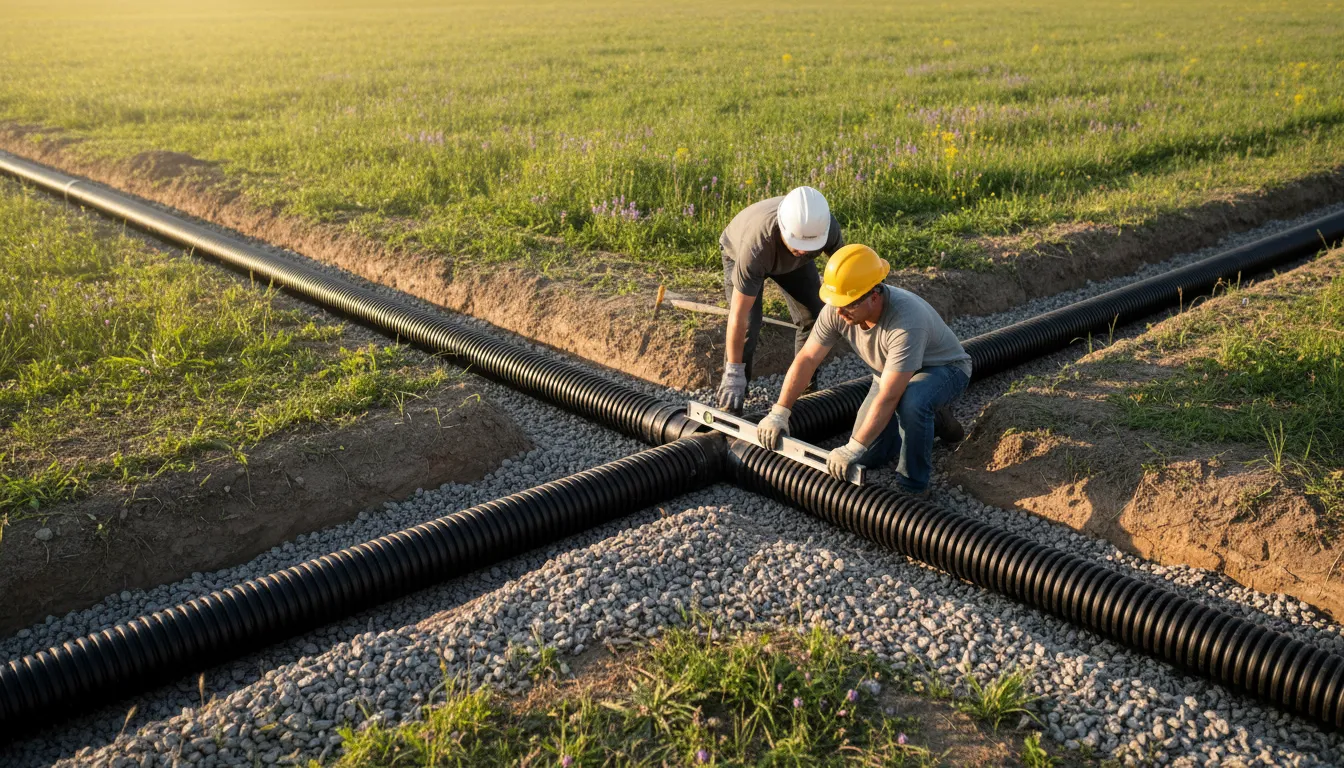
The drain field is a network of perforated pipes buried in trenches filled with gravel or other aggregate. After solids settle in the septic tank, the liquid effluent flows into the distribution box and is evenly dispersed through these pipes into the soil. The soil acts as a natural filter, removing harmful bacteria, viruses, and nutrients before the water rejoins the groundwater. A failure in this leach field means untreated wastewater can surface, creating health hazards and contaminating local water sources. In Rio Rancho's arid climate, protecting groundwater is especially important, making a functional absorption field non-negotiable.
Signs Your Rio Rancho Drain Field Needs Attention
Recognizing early warning signs can prevent a minor issue from becoming a catastrophic system failure. Common indicators include:
- Soggy Ground or Surfacing Effluent: Persistent wet, mushy, or foul-smelling spots in your yard, particularly over the drain field area, are a primary sign of failure.
- Slow Drains and Sewage Backups: If toilets, showers, and sinks drain slowly or back up, especially after heavy rain, it could indicate a saturated drain field that can no longer absorb water.
- Unusually Lush Grass: While a green patch might seem nice, grass that is significantly greener and grows faster over the leach field can signal a nutrient overload from surfacing wastewater.
- Persistent Odors: Foul sewage smells in your yard or home are a clear red flag that the system is not processing waste correctly.
If you notice any of these signs, it's time to contact a certified septic professional for an inspection.
The Inspection & Diagnosis Process in Rio Rancho
A thorough inspection by a certified professional is the first step. This process is also mandatory when selling a property with a septic system in New Mexico. The inspection typically involves:
- Permit & Record Search: The professional may check existing New Mexico Environment Department (NMED) records for your property to understand the system's original design and permit history 1.
- Locating & Opening the System: The technician will locate and access the septic tank and distribution box.
- Evaluating Components: They will check the tank's sludge and scum levels, inspect the baffles, and examine the distribution box for clogs or damage. The drain field area will be assessed for saturation 2.
- Issuing a Report: A certified inspector will provide a detailed report on the system's condition, which is crucial for both repair planning and real estate transactions 3.
This inspection determines if the problem is a simple clog in the distribution lines or a complete failure of the leach field, which dictates the next steps.
New Mexico and Rio Rancho Regulations You Must Know
Any work on a septic system in Rio Rancho is governed by state regulations enforced by the NMED. Key rules that directly impact drain field repair or replacement include:
- Permits Are Required: An NMED permit is mandatory for any repair, replacement, or modification of a septic system, including its drain field 4.
- Property Size Minimums: For a new conventional septic system (which includes a drain field), your property must be at least 0.75 acres (3/4 acre). Smaller lots may only be eligible for a holding tank or an advanced alternative treatment system 5.
- Critical Setbacks: Leach fields must be located a minimum of 100 feet from any water source, including wells, rivers, or lakes 6.
- Soil Evaluation: A percolation (perc) test is required to determine if the soil on your property can adequately absorb and treat wastewater. This test is a cornerstone of the permit application.
Find the perfect drain field repair companies for your needs
Get personalized recommendations and expert advice
Repair vs. Complete Replacement: Making the Decision
The inspection findings will guide whether a repair or a full replacement is necessary.
- Minor Repairs: Issues like a clogged distribution box or a broken pipe leading from the tank can sometimes be repaired without replacing the entire leach field. This is far less invasive and costly.
- Full Drain Field Replacement: If the soil is permanently saturated, compacted, or clogged with a thick biomat (a layer of bacterial slime), the drain field has likely failed. In this case, a complete replacement is usually the only permanent solution. This involves designing and installing a new leach field in a different location on your property, assuming space and soil conditions allow 7.
Factors Influencing Drain Field Work in Rio Rancho
Several local conditions can complicate or alter the approach to drain field work:
- Soil Type and Percolation: Sandy soils drain quickly, while clay soils drain slowly. Poor percolation results may force the use of an alternative system.
- High Water Table or Bedrock: If the groundwater level is high or bedrock is close to the surface, a traditional trench system may not work. Mound systems or other advanced treatment systems may be required to raise the drain field above the natural soil level 8 9.
- Space Limitations: Even if your lot meets the 0.75-acre minimum, other structures, setbacks, and the location of the failed field may limit where a new one can be placed. In very tight spaces, a holding tank may become the only option.
Understanding the Costs Involved
Drain field work is a significant investment. Costs in Rio Rancho can vary widely based on system size, soil conditions, and the type of system required.
- Permit Fees: NMED permit fees for a conventional system start around $225 to $500. Permits for alternative or advanced systems can range from $450 to $750 or more.
- Repair Costs: Fixing a clog or a single component may cost a few hundred to a couple thousand dollars.
- Replacement Costs: A full drain field replacement is a major excavation and construction project. Costs often start in the thousands of dollars and can easily exceed $10,000, especially if an alternative system like a mound is needed due to soil or space constraints 10.
Always get detailed, written estimates from multiple licensed and certified septic contractors in the Rio Rancho area.
The Permitting and Installation Process
Once you decide to proceed with a replacement, the process is methodical:
- Site Evaluation & Design: A licensed installer will conduct a thorough site evaluation, including a perc test, and design a system that meets NMED code for your property.
- Submit Permit Application: The installer will submit the engineering design and application to the NMED for review and approval.
- Construction: After permit approval, construction begins. This involves excavating the new leach field area, placing specific fill materials and aggregate, laying the distribution pipes, and connecting them to the existing tank via a new distribution box 11.
- Final Inspection: The NMED or a local authority will conduct a final inspection to ensure the installation matches the permitted design before the system is covered.
Frequently asked questions
Sources
Footnotes
-
SEPTIC SYSTEM INSPECTIONS IN NEW MEXICO - https://keeptheriogrand.org/wp-content/uploads/2021/09/SEPTIC_INSPECTIONS_SQT_04242017.pdf ↩
-
Septic Tank - Understanding Septic Tank Permits and Regulations - https://westcoastsanitationinc.com/understanding-septic-tank-permits-and-regulations/ ↩
-
Septic System Inspections in New Mexico - Keep the Rio Grande - https://keeptheriogrand.org/wp-content/uploads/2021/10/inspect-a-septic-system.pdf ↩
-
Aprill 2022: New Mexico Septic Regulations Area Big Deal! - https://questanews.com/aprill-2022-new-mexico-septic-regulations-area-big-deal/ ↩
-
Homeowners Information - https://www.env.nm.gov/septic/information-for-homeowners/ ↩
-
Septic System Inspections in New Mexico: What Homeowners Need ... - https://www.askmybroker.com/septic-system-inspections-in-new-mexico-what-homeowners-need-to-know-before-sel ↩
-
The Importance Of Your Septic System Drainfield Leach Field Repairs: What You Need To Know BioMicrobics | Septic System Drainfield Leach Field Repair - https://biomicrobics.com/articles/importance-septic-system-drainfield-leach-field-repair/ ↩
-
New Mexico Septic Regulations, A Guide For Homeowners - https://www.swanrealtyinc.com/blog/new-mexico-septic-regulations/ ↩
-
Florida Septic System Requirements & Drainfield Regulations (2025 Guide) - https://www.acesepticandwaste.com/ace-guide-to-floridas-onsite-septic-system-regulations/ ↩
-
The Ultimate Guide to Replacing a Septic Drain Field - https://www.rciseptic.com/the-ultimate-guide-to-replacing-a-septic-drain-field ↩
-
Fill Dirt Types for Safe Septic Installation - https://www.soilconnect.com/blog/comparing-fill-dirt-types-for-safe-septic-system-installation ↩