
Find the Best Drain Field Repair Companies for Your Business
No obligation • Fast responses • Nationwide coverage

Why you can trust Septic Spot
Septic Spot is a leading United States resource for understanding and comparing septic services. Our editors review providers using consistent criteria and verify key business details. Listings and scores are independent, and companies cannot pay to influence our content.
Search providers near you
Top Drain Field Repair Companies in Carson City, Nevada Ranked
A failing drain field is a serious issue for any homeowner with a septic system, leading to soggy yards, foul odors, and potential environmental contamination. Drain field repair and replacement involves diagnosing the cause of failure and implementing a solution, which can range from minor pipe repairs to a complete installation of a new leach field. This process is strictly regulated in Carson City to protect public health and groundwater. Understanding the local requirements and connecting with qualified professionals is the first step to restoring your property's wastewater treatment system.
Reno Septic Service
Reno, NV
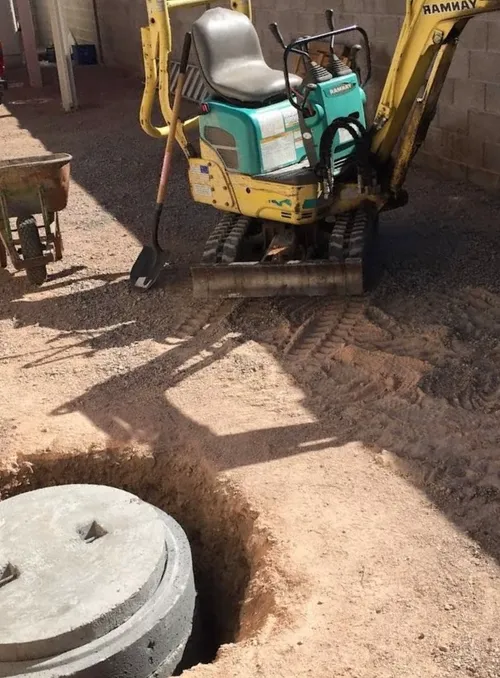
Reno Septic Service provides a full range of septic system services in Reno, NV, and surrounding areas including Sparks, Carson City, and Truckee. They handle septic tank pumping, installation, inspections, repairs, and sewer line services for both residential and commercial properties. Their team is licensed, bonded, and insured, equipped to manage projects of any size. Reno Septic Service offers specialized capabilities such as trenchless sewer line replacement and backflow testing to ensure system compliance and functionality. They provide 24/7 emergency services to address urgent septic issues promptly.
Easy Rooter Plumbing, Drain and Septic
Reno, NV
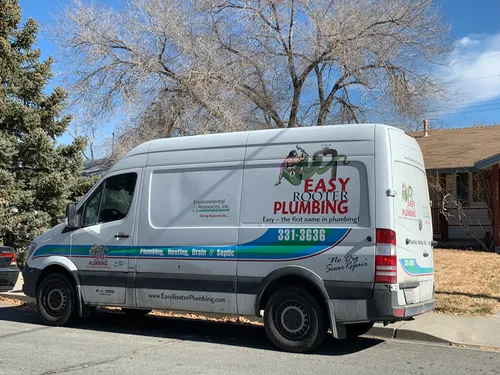
Easy Rooter Plumbing, Drain and Septic has been serving residential, commercial, and industrial customers in Reno, NV, since 1979. They offer a wide range of plumbing and septic services, including septic tank pumping, inspection, and repair, as well as drain field repair and replacement. The company uses advanced techniques such as hydro jetting and trenchless pipe repair to address plumbing challenges specific to Reno's climate and infrastructure. Their team is available 24/7 for emergency plumbing services, ensuring prompt assistance whenever needed.
Understanding Your Drain Field in Carson City
The drain field, also known as a leach field or absorption field, is the final and most critical component of a septic system. After solids settle in the tank, liquid effluent flows into a network of perforated pipes buried in trenches filled with gravel. This effluent slowly percolates into the soil, where natural processes provide final treatment. In Carson City's varied terrain and soil conditions, the performance of this soil absorption system is paramount. Common signs of failure include sewage odors, unusually lush or soggy grass over the field, and slow-draining or backing-up household fixtures.
The Regulatory Landscape: Northern Nevada Public Health
All septic system work in Carson City falls under the jurisdiction of Northern Nevada Public Health (NNPH) Environmental Health Services (EHS). This agency is responsible for permitting, plan review, and inspections for any repair or replacement of an onsite sewage disposal system. They enforce the Nevada Administrative Code (NAC) 444.874, which sets the standards for system design, construction, and maintenance to ensure safety and environmental protection 1. Before any shovel hits the ground, you must engage with their online permitting portal, and a certified septic contractor must perform the work.
The Permit Process for Repairs
Navigating the permit process is a non-negotiable first step. NNPH has streamlined applications through their online portal, Onenv.us.
- Initial Diagnosis & Contractor Engagement: Your first action should be to contact a licensed septic system contractor or professional. They will visit your site to diagnose the failure's cause and scope the necessary repairs.
- Submit the Repair Application: Your contractor will typically handle submitting the detailed repair application through Onenv.us. This application must include site plans and a description of the proposed corrective action.
- Plan Review Timeline: For repair applications, NNPH aims for a 7-day turnaround for plan review. This is faster than the approximately 14 days for a brand-new system permit.
- Pre-Construction Site Visit: An Environmental Health Specialist from EHS will conduct a mandatory site visit for every permit application. They evaluate the proposed repair area, check setbacks, and verify site conditions.
- Final Inspection: Once the repair or replacement work is complete, it must be inspected and approved by the EHS specialist before the system is covered. Only after passing this final inspection is the work considered legally compliant 2.
Key Requirements for Drain Field Work
Carson City and NNPH have specific technical requirements that must be met for any drain field project.
- Soil Evaluation (Test Trench): A cornerstone of the process is the Onsite Soils Evaluation (OSSE). Before designing a repair, a test trench (often excavated to 2-foot and 4-foot depths) must be inspected. This determines soil texture, structure, and the presence of limiting layers like high groundwater or bedrock. A percolation test may also be required to measure the soil's absorption rate 3.
- Reserve Area: Regulations often require identifying a "reserve" area on your property suitable for a future drain field. This ensures there is space for a replacement system if the primary field eventually fails.
- Critical Setbacks: New or replacement drain fields must maintain minimum distances from other features:
- 100 feet from any water well.
- 8-10 feet minimum from property lines and structures (specifics can vary) 4.
- Abandonment of Old Components: If you are replacing a septic tank or an entire drain field, you will also need a permit to properly abandon the old components. This usually involves pumping out the tank and either removing it or filling it with an inert material like gravel or concrete to prevent collapse 5.
Find the perfect drain field repair companies for your needs
Get personalized recommendations and expert advice
The Repair & Replacement Spectrum
Not all drain field problems require a full "replacement." A professional diagnosis is essential to determine the right solution.
- Minor Repairs: Issues might be isolated to a clogged or crushed distribution pipe, a malfunctioning distribution box, or a problem with a dosing pump. These repairs are less invasive and costly but still require a permit and professional execution 6.
- Field Expansion or Partial Replacement: If part of the field has failed due to soil compaction or biomat buildup, it may be possible to expand the existing field or replace only the failed sections, provided the soil evaluation supports it and there is adequate space.
- Complete Drain Field Replacement: This is the most extensive and expensive option, necessary when the entire soil absorption area has failed. It involves designing and installing a completely new leach field, often in the designated reserve area. This process will involve full soil testing, engineering, and significant excavation.
Understanding the Costs Involved
The financial investment for drain field work in Carson City varies widely based on the solution. It's crucial to budget for both official fees and contractor costs.
- Permit Fees: The permit fee paid to NNPH for plan review and inspections typically ranges from $200 to $500, depending on the complexity and scope of the repair project.
- Site Evaluation & Engineering: If required, the cost for a licensed consultant to conduct soil testing (test trench/percolation test) and prepare an engineering report can add significantly to the upfront cost.
- Contractor Costs: This is the largest variable. Simple pipe repairs may cost a few thousand dollars. A full drain field replacement, including all labor, materials (gravel, pipe, sand), excavation, and potential pump or tank work, can easily range from $10,000 to over $30,0007. Always obtain multiple detailed quotes from licensed contractors.
Working with Carson City Professionals
Choosing the right contractor is critical. Look for a professional licensed by the state of Nevada specifically for septic system work. They should be intimately familiar with NNPH's online portal, local soil conditions, and the specific codes enforced in Carson City. A reputable contractor will handle the permit application, coordinate the required EHS site visits, and ensure all work meets code before requesting the final inspection. For specific questions or to report a suspected system failure, you can contact Carson City Environmental Health directly at (775) 887-2190 8.
Maintaining Your New or Repaired System
Once your drain field is functioning correctly, protect your investment with proper maintenance. This includes regular septic tank pumping (typically every 3-5 years), conserving water to avoid hydraulically overloading the field, and never planting deep-rooted trees or driving heavy vehicles over the absorption area. A well-maintained system can last for decades, making proactive care far more economical than emergency repairs.
Frequently asked questions
Sources
Footnotes
-
Septic Systems & Liquid Waste - Northern Nevada Public Health - https://www.nnph.org/programs-and-services/environmental-health/land-development/septic-liquid-waste.php ↩
-
Septic System | Nevada County, CA - https://www.nevadacountyca.gov/2520/Septic-System ↩
-
Onsite Soils Evaluation (OSSE) | Nevada County, CA - https://www.nevadacountyca.gov/2516/On-Site-Soils-Evaluation-OSSE ↩
-
Septic & Well - Carson City Health and Human Services - https://www.gethealthycarsoncity.org/divisions/environmental-health/programs-inspections/septic-well ↩
-
Septic Systems & Liquid Waste - Northern Nevada Public Health - https://www.nnph.org/programs-and-services/environmental-health/land-development/septic-liquid-waste.php ↩
-
INDIVIDUAL SEWAGE DISPOSAL SYSTEM GUIDE - https://www.centralnevadahd.org/wp-content/uploads/2024/04/ISDS_CNHD2024.pdf ↩
-
NEVADA STATE HEALTH DIVISION FOR OFFICE USE ONLY - https://www.churchillcounty.org/DocumentCenter/View/1700 ↩
-
Development Engineering Division - Carson City - https://www.carsoncity.gov/government/departments-a-f/community-development/development-engineering-division ↩