Find the Best Drain Field Repair Companies for Your Business
No obligation • Fast responses • Nationwide coverage

Why you can trust Septic Spot
Septic Spot is a leading United States resource for understanding and comparing septic services. Our editors review providers using consistent criteria and verify key business details. Listings and scores are independent, and companies cannot pay to influence our content.
Search providers near you
Top Drain Field Repair Companies in Sparks, Nevada Ranked
A failing septic drain field is a serious issue that can lead to sewage backups, soggy lawns, and environmental contamination. Drain field repair or replacement is a major project that involves navigating local health department regulations, soil evaluations, and significant investment. This guide explains the process, costs, and key considerations for homeowners in Sparks, Nevada, helping you understand what to expect and how to connect with qualified local professionals for your leach field or soil absorption system needs.
Reno Septic Service
Reno, NV
Reno Septic Service provides a full range of septic system services in Reno, NV, and surrounding areas including Sparks, Carson City, and Truckee. They handle septic tank pumping, installation, inspections, repairs, and sewer line services for both residential and commercial properties. Their team is licensed, bonded, and insured, equipped to manage projects of any size. Reno Septic Service offers specialized capabilities such as trenchless sewer line replacement and backflow testing to ensure system compliance and functionality. They provide 24/7 emergency services to address urgent septic issues promptly.
Easy Rooter Plumbing, Drain and Septic
Reno, NV
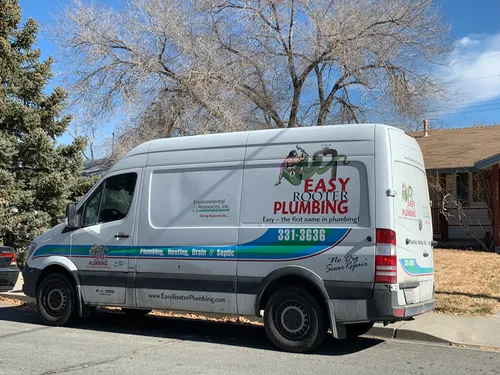
Easy Rooter Plumbing, Drain and Septic has been serving residential, commercial, and industrial customers in Reno, NV, since 1979. They offer a wide range of plumbing and septic services, including septic tank pumping, inspection, and repair, as well as drain field repair and replacement. The company uses advanced techniques such as hydro jetting and trenchless pipe repair to address plumbing challenges specific to Reno's climate and infrastructure. Their team is available 24/7 for emergency plumbing services, ensuring prompt assistance whenever needed.
Understanding Your Septic System and Drain Field
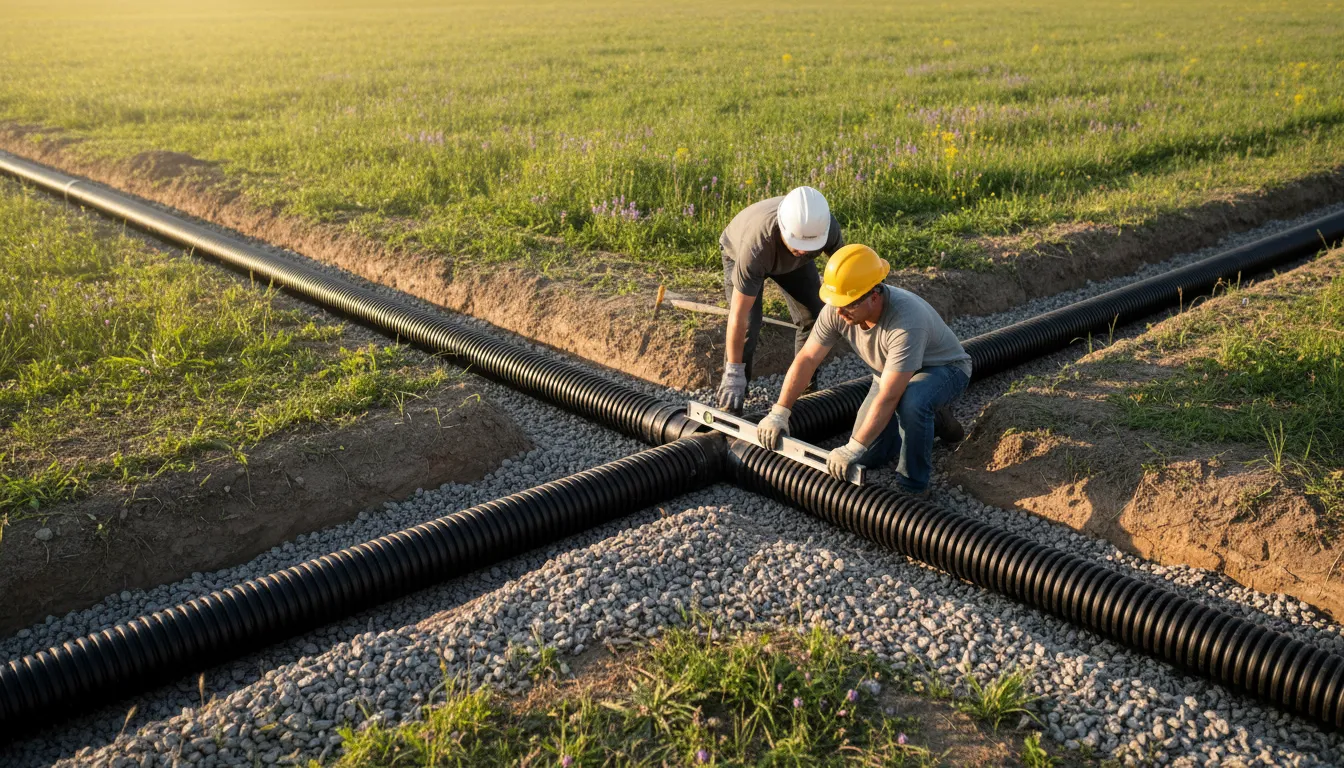
Your septic system is a two-part wastewater treatment system. The septic tank holds solids, allowing liquids to flow out into the drain field (also called a leach field or absorption field). This is a network of perforated pipes buried in gravel-filled trenches. The wastewater slowly percolates through the gravel and soil, where natural processes filter and treat it before it rejoins the groundwater.
When a drain field fails, it means the soil can no longer absorb the liquid. Common signs include:
- Sewage odors in the yard or home.
- Soggy, spongy, or standing water over the drain field area, even in dry weather.
- Slow-draining sinks and toilets, or sewage backups.
- Unusually green, lush grass over the drain field.
The Regulatory Landscape in Sparks, NV
All septic system work in Sparks is regulated by Northern Nevada Public Health (NNPH). You cannot begin any repair or replacement without their approval. The agency enforces the Nevada Administrative Code (NAC) Chapter 444, which sets the standards for sanitation and septic systems 1.
Key Regulatory Points:
- Permit Portal: All applications for repairs, replacements, or system abandonments must be submitted online through the OneNV.us portal.
- Review Time: NNPH aims for a 7-day turnaround for plan reviews on septic tank replacements, abandonments, and repairs.
- Building Triggers: Planning to add a garage, barn, or room addition? An upgrade or evaluation of your existing septic system is often required to ensure the drain field is not impacted and sufficient space remains for future repairs.
Why Do Drain Fields Fail in Sparks?
Understanding the cause of failure is critical to a proper fix. Common reasons in the Northern Nevada region include:
- Soil Composition: The clay-heavy soils common in our area can compact over time, losing their ability to absorb water. They can also be prone to "biomat" clogging, where a thick layer of organic matter forms at the soil-gravel interface, blocking flow.
- High Water Table: If the seasonal groundwater level rises too close to the bottom of your drain field trenches, there's no room for the wastewater to percolate. This can cause immediate failure and restricts the types of systems allowed 2.
- Physical Damage: Crushed or broken pipes from vehicle traffic, root intrusion from trees and shrubs planted too close, or deterioration of old pipes can all lead to failure.
- Overloading: Consistently exceeding the system's designed capacity with excessive water use (like long showers, frequent laundry loads, or leaking fixtures) can flood the field.
The Step-by-Step Process for Repair or Replacement
1. Professional Evaluation and Site Assessment
The first step is to hire a licensed septic professional or engineer. They will:
- Locate the System: Use county records (as-builts from NNPH) and electronic locating equipment to find the tank and existing drain field lines 3.
- Inspect and Diagnose: Pump the tank and conduct a thorough inspection to determine the exact cause and extent of failure.
- Site Evaluation (Perc Test): For a replacement, a licensed engineer will typically perform a percolation test and deep hole soil analysis. This determines the soil's absorption rate and identifies the depth to seasonal groundwater or restrictive layers like bedrock 4.
2. Design and Permitting
Based on the evaluation, a new system will be designed.
- Engineered Design: Most replacements in Sparks require an engineered design, especially given the challenging soils. The design will specify the type of system (e.g., conventional trench, pressure-dosed mound), its size, layout, and construction details 5 6.
- Submit for Permit: Your contractor or engineer will compile the design, application, and site plan and submit it through the OneNV.us portal to NNPH for review and permit issuance.
3. Construction and Installation
Once the permit is in hand, construction can begin.
- Abandonment: The old drain field is properly abandoned, often by crushing the old pipes and filling the trenches with clean soil.
- Excavation: New trenches are dug according to the approved plan, maintaining required separation distances from wells, property lines, and waterways.
- Installation: Gravel (aggregate), perforated pipe, and specialized fabric are placed in the trenches. For advanced systems, a dosing tank and pump may be installed.
- Final Inspection: A critical step! An NNPH inspector must visit the site to approve the installation before the trenches are covered with soil 7 8.
Find the perfect drain field repair companies for your needs
Get personalized recommendations and expert advice
Cost Breakdown for Drain Field Work in Sparks
Costs are highly variable, depending on system size, soil conditions, and the type of technology required. The figures below are estimates based on regional data.
- Drain Field Replacement: This is the largest expense. For a conventional leach field replacement, costs can range from $5,000 to $10,000+. Complex systems like pressure-dosed mounds or sand filters can exceed $15,000 to $25,000.
- Septic Tank Replacement/Installation: If the tank also needs replacing, add $1,500 to $5,000+, depending on size and material.
- Professional Engineering & Perc Testing: Budget $1,000 to $2,500+ for the essential site evaluation and design work.
- Permit Fees: Fees vary by project type. A permit for system abandonment, for example, typically costs between $100 and $250.
- Site Work & Restoration: After installation, regrading and reseeding the yard can cost an additional $1,000 to $3,300 9.
Total Project Cost: A full conventional septic system replacement in Nevada averages around $7,595, but with challenging Sparks soils, homeowners should be prepared for costs starting in the $10,000 to $20,000+ range for a complete engineered system solution 10 11.
Special Considerations for Sparks and Spanish Springs
- Spanish Springs Area: If your property is in the Spanish Springs area, it's important to check specific Washoe County ordinances. There may be different requirements or fee structures related to potential future sewer connections 12.
- Water Conservation: Given Northern Nevada's climate, using water-efficient fixtures and spreading out laundry loads can significantly extend the life of any septic system, new or old.
- System Maintenance: Remember, a new drain field is a major investment. Protect it by pumping your septic tank every 3-5 years, avoiding parking or building over the field, and never planting trees nearby.
Frequently asked questions
Sources
Footnotes
-
NAC: CHAPTER 444 - SANITATION - https://www.leg.state.nv.us/nac/nac-444.html ↩
-
Septic Permits: New Construction, Repairs, and Alterations - https://www.portland.gov/ppd/septic-permits ↩
-
OSSE and SEPTIC SYSTEMS COUNTY OF NEVADA - https://www.nevadacountyca.gov/2838/Did-you-Know ↩
-
Brentwood TN Septic System Installation | Williamson County - https://t2groundworks.com/septic-system-installation/ ↩
-
What is the best septic system if your land fails a perc test? - https://www.premiertechaqua.com/en-us/blog/best-septic-system-failed-perc-test ↩
-
nevada health authority - DPBH (nv.gov) - https://www.dpbh.nv.gov/siteassets/boards/boh/r-nnph-septic-regulation-changes-final.pdf ↩
-
Septic Systems & Liquid Waste - Northern Nevada Public Health - https://www.nnph.org/programs-and-services/environmental-health/land-development/septic-liquid-waste.php ↩
-
Septic System | Nevada County, CA - https://www.nevadacountyca.gov/2520/Septic-System ↩
-
Cost to Replace Septic Tank and Drain Field [2026 Data] | Angi - https://www.angi.com/articles/how-much-new-drain-fields-foot.htm ↩
-
Nevada Septic Systems Costs & Prices - ProMatcher Cost Report - https://septic-systems.promatcher.com/cost/nevada.aspx ↩
-
How Much Does a Septic System & Septic Tank Cost - https://www.nexgenseptics.com/septic-system-cost/ ↩
-
Ordinance Spanish Springs Sewer Rates - Washoe County - https://www.washoecounty.gov/bcc/files/ordinance%20files/ordinance-spanish-springs-sewer-rates.pdf ↩