Find the Best Drain Field Repair Companies for Your Business
No obligation • Fast responses • Nationwide coverage

Why you can trust Septic Spot
Septic Spot is a leading United States resource for understanding and comparing septic services. Our editors review providers using consistent criteria and verify key business details. Listings and scores are independent, and companies cannot pay to influence our content.
Search providers near you
Top Drain Field Repair Companies in Corvallis, Oregon Ranked
A failing drain field is a serious issue for any home with a septic system, leading to soggy yards, foul odors, and potential environmental contamination. Drain field repair and replacement are critical services that restore your property's wastewater treatment function and protect local groundwater. This guide explains the process, local regulations, and key considerations for homeowners in Corvallis, helping you understand what to expect and how to connect with qualified local professionals for your septic leach field needs.
Understanding Your Septic System's Drain Field
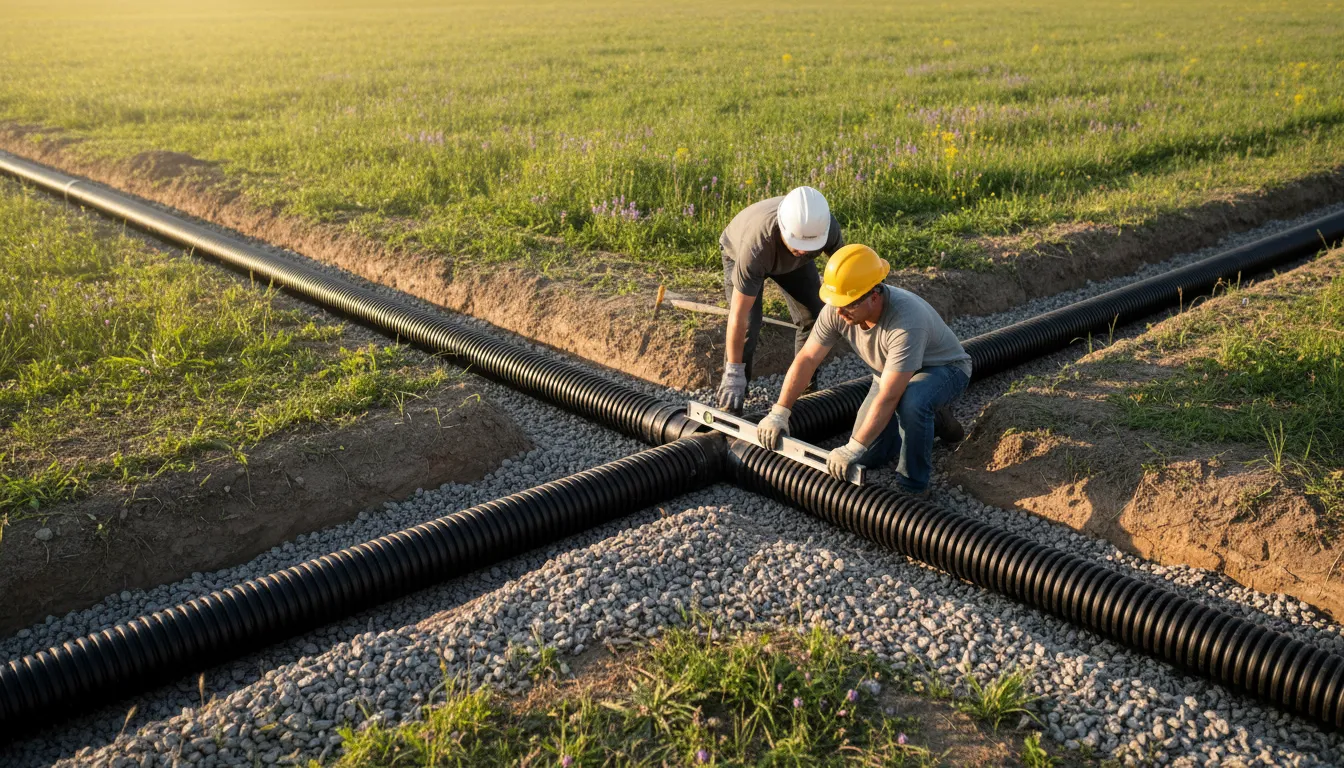
The drain field, also known as a leach field or absorption field, is the final and most crucial stage of a septic system. After solids settle in the tank, liquid effluent flows into a network of perforated pipes buried in trenches filled with gravel. This effluent slowly percolates through the soil, where natural processes provide final treatment before the water rejoins the groundwater table 1. When this area becomes saturated, compacted, or clogged with biomat (a layer of organic material), it can no longer absorb water, causing system failure. Recognizing early signs like slow drains, sewage odors, or unusually lush, wet patches in your yard is key to addressing problems before they escalate.
Why Drain Field Issues Occur in Corvallis
Local soil and environmental conditions significantly impact septic system performance. Corvallis and the surrounding Benton County area feature diverse soil types, from sandy loams to heavy clays. A proper site evaluation, including deep test pits, is required to assess the soil's absorption capacity and the depth to the seasonal high water table. High groundwater, especially during wet winter months, can saturate a drain field and cause it to fail. Furthermore, compacted soil from driving or parking over the area, or root intrusion from trees and shrubs, can physically damage the pipes and soil structure. Even with proper care, every drain field has a finite lifespan and will eventually require maintenance or full replacement.
The Regulatory Process: Permits and Professionals
In Oregon, all septic system work is regulated to protect public health and water quality. Any repair or alteration to your septic system, including drain field work, requires a permit.
- Permitting Authority: For properties in Corvallis and Benton County, permits are issued by the Benton County Community Development Department, located at 4500 SW Research Way, Corvallis.
- Licensed Installers: State law mandates that all septic system installation and repair work must be performed by a DEQ-licensed installer. These professionals understand local codes, can properly evaluate your system, and will ensure the work passes final inspection.
- The Site Evaluation: The process often begins with a new or updated site evaluation by a specialist. This involves digging deep observation pits (typically over 6 feet) to profile the soil layers and identify constraints like bedrock or a high water table. This evaluation determines if a conventional system is feasible or if an alternative engineered system is needed.
Steps for Drain Field Repair or Replacement
Addressing a failing leach field is a multi-step process that involves diagnosis, planning, and certified installation.
- Professional Diagnosis: A licensed installer will inspect your entire system. They will check the tank's sludge and scum levels, inspect the distribution box, and assess the drain field for signs of saturation or hydraulic failure. Sometimes, issues can be resolved with less invasive repairs like cleaning distribution lines or installing additional ventilation.
- Permit Application: If repair or replacement is necessary, your installer will typically help you prepare and submit the repair permit application to Benton County. The application will include the site evaluation and the proposed solution 2 3.
- System Design & Installation: For a full replacement, a new drain field must be designed for your property's specific conditions. Oregon law also requires that a designated replacement area be identified and protected for future use. This area must be kept clear of structures, driveways, and deep-rooted plants. The old field may be abandoned in place, and new trenches are constructed in the approved location.
- Final Inspection: Once installation is complete, a county health officer or DEQ representative will conduct a final inspection before the trenches are backfilled, especially if the septic tank is also being replaced or resized 4 5. Passing this inspection is required for the system to be legally operational.
Find the perfect drain field repair companies for your needs
Get personalized recommendations and expert advice
Key Considerations and Costs
Understanding the factors that influence your project can help in planning and decision-making.
- Site Constraints: Regulations mandate minimum separation distances from wells, property lines, water lines, and steep slopes 6 7. The available space on your lot will be a major factor in determining the feasibility and design of a replacement absorption field.
- Cost Factors: The cost for drain field work varies widely based on the size of the system, soil conditions, accessibility, and whether an alternative technology is needed. Based on regional data, full replacement of a septic tank and drain field typically ranges from $5,000 to $12,0008. Simple repairs or partial replacements will cost less, but a detailed quote from a licensed local installer is essential.
- Alternative Systems: If your soil has poor permeability or a high water table, a conventional trench system may not work. In these cases, a licensed designer may recommend an engineered septic system, such as a mound, sand filter, or aerobic treatment unit (ATU), which can cost significantly more but are designed for challenging sites 9 10.
Maintaining Your New or Repaired Drain Field
Protecting your investment is crucial. Proper maintenance can extend the life of your drain field for decades.
- Regular Pumping: Have your septic tank pumped regularly by a professional, typically every 3-5 years, or when the solids layer exceeds 40% of the tank's volume 11. This prevents excess solids from washing out and clogging the drain field.
- Mind What You Flush: Only human waste and toilet paper should go down the drain. Avoid chemicals, grease, wipes (even "flushable" ones), and excessive use of garbage disposals.
- Protect the Area: Only plant grass over your drain field and replacement area. Tree and shrub roots can seek out moisture and clog or break pipes. Never drive, park, or build structures (like sheds or patios) over the drain field 12. Keep roof drains and sump pump discharges directed away from the area.
Frequently asked questions
Sources
Footnotes
-
About Septic Systems : Residential Resources - Oregon.gov - https://www.oregon.gov/deq/residential/pages/onsite-about.aspx ↩
-
Septic Systems - Linn County Health Services - https://www.linncountyhealth.org/services/water-systems/septic/ ↩
-
Septic Systems - Community Development, Benton County, Oregon - https://cd.bentoncountyor.gov/septic-systems/ ↩
-
Residential Septic Permitting - Oregon.gov - https://www.oregon.gov/deq/residential/pages/residentialseptic.aspx ↩
-
Chapter 13.16 PRIVATE SEWAGE DISPOSAL SYSTEMS - https://www.codepublishing.com/OR/EaglePoint/html/EaglePoint13/EaglePoint1316.html ↩
-
Guide to Installing a Septic System in Central Oregon - https://www.blacksagedirtworks.com/blog/beginners-guide-installing-septic-system ↩
-
Oregon Septic System Requirements - Greenbar Excavation - https://greenbarexcavation.com/oregon-septic-system-requirements/ ↩
-
Cost to Replace Septic Tank and Drain Field [2026 Data] | Angi - https://www.angi.com/articles/how-much-new-drain-fields-foot.htm ↩
-
Septic System Repair or Replace Guide (2025) - https://www.vdwws.com/blog/traditional-septic-systems-when-to-repair-or-replace ↩
-
Expert Guide to Engineered Septic Systems for Homeowners - https://www.andersoneng.com/understanding-an-engineered-septic-system-for-your-home/ ↩
-
Septic System DO's and DON'Ts - Oregon.gov - https://www.oregon.gov/deq/FilterDocs/SepticDoDont.pdf ↩
-
Installing Septics Procedures - Oregon.gov - https://www.oregon.gov/deq/FilterDocs/newsysinstprocs.pdf ↩