Find the Best Drain Field Repair Companies for Your Business
No obligation • Fast responses • Nationwide coverage

Why you can trust Septic Spot
Septic Spot is a leading United States resource for understanding and comparing septic services. Our editors review providers using consistent criteria and verify key business details. Listings and scores are independent, and companies cannot pay to influence our content.
Search providers near you
Top Drain Field Repair Companies in Gresham, Oregon Ranked
A failing drain field, also known as a leach field or soil absorption system, is a serious issue for any homeowner with a septic system. When this critical component stops properly dispersing treated wastewater, it can lead to soggy yards, foul odors, and even sewage backups into your home. In Gresham, addressing these problems requires navigating specific local and state regulations to ensure a safe, legal, and lasting repair. This guide helps you understand the process, costs, and key considerations for drain field restoration in the Gresham area, connecting you with the information needed to find qualified local professionals.

Byers Septic Tank Service
Portland, OR
Byers Septic Tank Service is a septic tank pumping and installation company based in Portland, OR. They provide septic tank pumping, new septic system installation, and drain field repair or replacement. The company offers same-day service in most cases and does not charge extra for mileage or after-hours work. Byers Septic Tank Service emphasizes honest and affordable septic services backed by years of experience.
American On Site
Portland, OR
American On Site is a full-service septic provider based in Portland, OR, serving residential, commercial, and civil clients. They offer a wide range of septic services including inspections, pumping, installation, maintenance, and repairs such as drain field replacement and septic pump servicing. The company is experienced in handling all aspects of septic systems, using quality components to ensure proper function and longevity. Since 2003, American On Site has been serving the greater Willamette Valley area, providing expertise in septic system installation and maintenance. They cover multiple counties in Oregon and focus on delivering comprehensive septic solutions to their customers.
Understanding Your Drain Field in Gresham
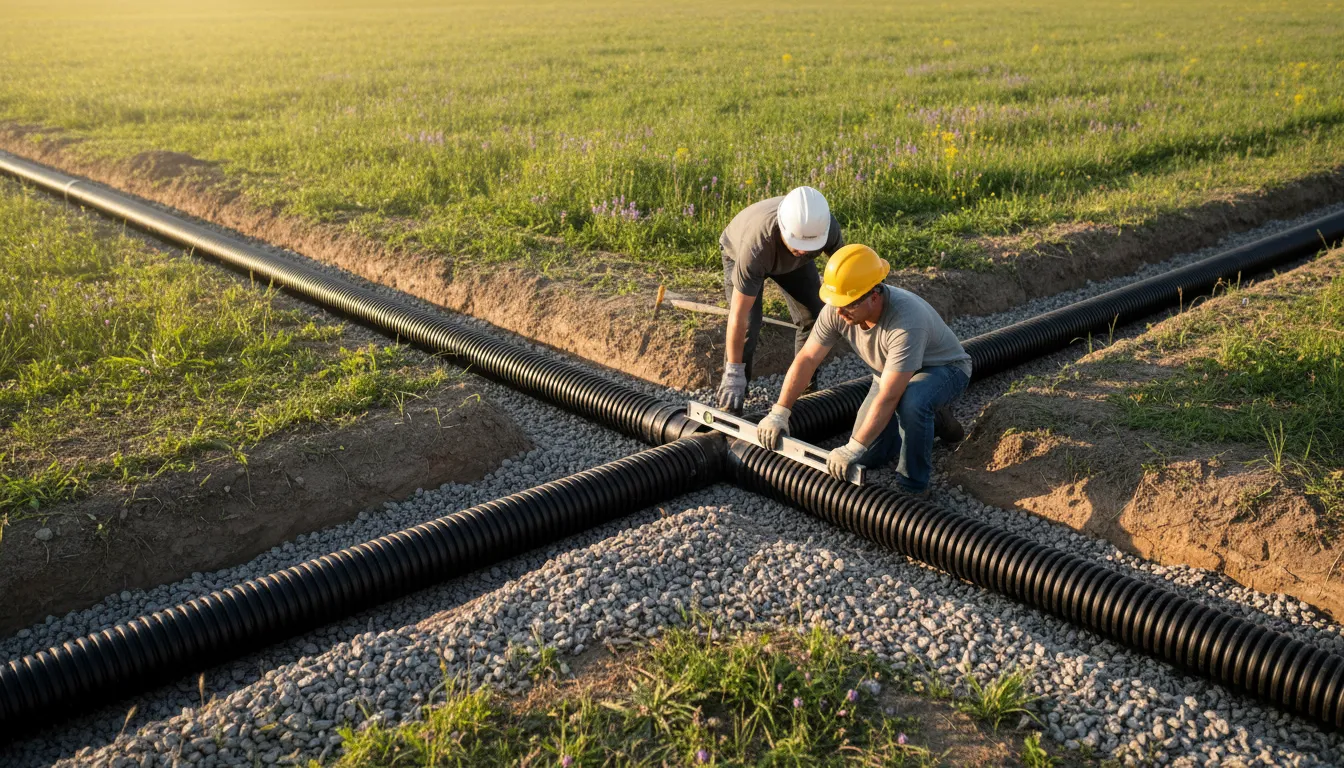
The drain field is the final and most extensive stage of your onsite wastewater treatment system. After solids settle in the septic tank, the liquid effluent flows through a network of perforated pipes buried in trenches filled with gravel. This effluent slowly percolates down through the soil, where natural biological processes provide the final treatment before it rejoins the groundwater.
In Gresham and throughout Multnomah County, these systems are governed by Oregon Department of Environmental Quality (DEQ) rules, specifically OAR 340-071. The local climate, with its wet winters, and varied soil types found in the area-from sandy loams to heavier clays-directly impact how a drain field performs and how it must be designed. A system that works well in one part of Gresham may not be suitable for another, making a professional site evaluation crucial.
Signs You Need Drain Field Repair or Replacement
Catching problems early can save significant money and hassle. Look for these common warning signs of a failing leach field:
- Soggy Ground or Surfacing Effluent: Puddles or persistently wet, spongy soil over the drain field area, especially when it hasn't rained.
- Sewage Odors: Unpleasant smells emanating from the yard near the drain field or even inside the home.
- Slow Drains and Backups: Gurgling pipes, slow-draining sinks and toilets, or sewage backups.
- Unusually Green Grass: Patches of grass over the drain field that are much lusher and grow faster than the rest of the lawn, indicating a nutrient surge from effluent.
- Failed Inspection: A routine septic inspection, recommended every 3 to 5 years 1, may reveal high liquid levels in the tank or biomat buildup indicating drain field failure.
If you notice any of these signs, it's time to consult a DEQ-licensed installer or evaluator to assess the situation.
The Regulatory Process: Permits and Evaluations in Multnomah County
Any significant repair or full replacement of a soil absorption system in Gresham requires formal approval. The process is designed to protect public health and groundwater quality.
1. The Mandatory Site Evaluation The first official step is a site evaluation, often called a feasibility study. A licensed professional must dig at least two test pits, typically six feet deep and spaced about 75 feet apart, to assess soil characteristics, depth to groundwater, and depth to bedrock. This evaluation determines the soil's permeability (how fast water moves through it) and dictates the size and type of drain field needed. It's important to note that any cutting, filling, or change to the land's contour since the original system was installed can invalidate prior approvals.
2. Obtaining a Repair Permit With the site evaluation report in hand, you or your contractor must apply for a formal "Repair Permit" from the local regulatory authority-for most in Gresham, this is the Multnomah County Environmental Health division, implementing DEQ rules 2. The application includes the evaluation, a proposed design, and payment of a permit fee, which typically amounts to several hundred dollars. The permit ensures the proposed repair meets all state standards, including critical setbacks from wells, property lines, waterways, and water pipes 3.
3. The Replacement Area Requirement A key rule in Oregon is the requirement for a designated "replacement area" 4 5. This is a protected portion of your property, separate from the current drain field, that is suitable for a future system. It must be kept clear of structures, driveways, and compaction so it is available if the primary system eventually fails. Your site evaluation will identify and designate this area.
Repair vs. Replacement: Understanding Your Options
Not all drain field problems require a complete overhaul. A licensed professional can diagnose the issue and recommend the appropriate solution.
Possible Drain Field Repairs:
- Jetting/Cleaning: Using high-pressure water to clear minor blockages in the distribution pipes.
- Biomat Remediation: Treatments to reduce the clogging layer that forms at the soil-gravel interface.
- Adding New Trenches (Extension): If space allows, adding new trenches to the existing field to increase absorption capacity.
Complete Drain Field Replacement: When the soil is saturated, pipes are crushed, or the entire area has failed, a full replacement is necessary. This involves excavating the old field and installing a brand-new soil absorption system based on the current site evaluation and permit. Modern systems might include advanced treatment components or alternative technologies like sand filters or mound systems if soil conditions are poor.
Find the perfect drain field repair companies for your needs
Get personalized recommendations and expert advice
Cost Factors for Drain Field Work in Gresham
The cost for drain field repair or replacement in Gresham is highly variable, but homeowners should be prepared for a significant investment. Key factors influencing price include:
- Extent of Work: A simple repair is less costly than a full replacement.
- System Size: Larger homes (typically measured by bedroom count) require larger systems. A standard system for a four-bedroom home, for example, must be served by a septic tank of at least 1,000 gallons 6.
- Soil and Site Conditions: Difficult soil, high groundwater, steep slopes, or limited space can increase complexity and cost.
- Permitting and Design: Fees for the site evaluation, permit application, and system design.
- Excavation Needs: Accessibility for heavy equipment like backhoes can affect cost.
Based on regional data, complete drain field replacement often ranges from $5,000 to $12,000 or more 7 8. If the septic tank also needs to be replaced, that can add another $3,000 to $10,000 7 9. It's essential to get detailed, written estimates from multiple licensed contractors that break down all costs, including permits, installation, and final inspection.
The Installation and Inspection Process
Once you have your repair permit, the installation phase begins:
- Excavation: The contractor carefully excavates the old drain field (if replacing) and prepares the area for the new system.
- Installation: New perforated pipes, gravel, and geotextile fabric are installed according to the permitted design. The system is connected to the existing septic tank.
- Final Inspection: Before the new drain field is covered with soil, a representative from Multnomah County must conduct a final inspection to verify the installation matches the permitted plans 10 11. This inspection is mandatory.
- Backfilling and Restoration: After passing inspection, the trenches are backfilled and the landscape is restored as agreed upon with your contractor.
Maintaining Your New or Repaired Drain Field
Protecting your investment is crucial. Proper maintenance extends the life of your entire septic system:
- Pump Regularly: Have your septic tank pumped by a professional typically every 3 to 5 years, or when solids fill more than 40% of the tank 12 13.
- Conserve Water: Spread out laundry loads and fix leaky fixtures to avoid hydraulically overloading the drain field.
- Mind What You Flush: Only human waste and toilet paper should go down the drain. Avoid chemicals, grease, wipes, and feminine products.
- Protect the Area: Never drive, park, or build over your drain field or its designated replacement area. Keep root-heavy trees and shrubs away from the lines 14.
- Divert Water: Ensure roof gutters, sump pumps, and yard drainage are directed away from the drain field to prevent saturation.
Frequently asked questions
Sources
Footnotes
-
Septic System Inspections: A Step-by-Step How-To Guide - https://westcoastsanitationinc.com/septic-inspection-service/ ↩
-
Septic Permits: New Construction, Repairs, and Alterations - https://www.portland.gov/ppd/septic-permits ↩
-
Site Evaluation Guide - Oregon.gov - https://www.oregon.gov/deq/FilterDocs/os-siteevalseptic.pdf ↩
-
Procedures and Requirements for Installing a New Septic System - https://www.oregon.gov/deq/FilterDocs/newsysinstprocs.pdf ↩
-
Oregon Septic System Requirements - Greenbar Excavation - https://greenbarexcavation.com/oregon-septic-system-requirements/ ↩
-
OAR 340-071-0220 - Standard Subsurface Systems - OregonLaws - https://oregon.public.law/rules/oar_340-071-0220 ↩
-
Septic System Installation Cost [2025 Data] - HomeAdvisor - https://www.homeadvisor.com/cost/plumbing/install-a-septic-tank/ ↩ ↩2
-
Cost to Replace Septic Tank and Drain Field [2026 Data] | Angi - https://www.angi.com/articles/how-much-new-drain-fields-foot.htm ↩
-
Sewage Disposal System Design - https://stamskiandmcnary.com/services/sewage-disposal-system-design/ ↩
-
Repair Permit Guide for Septic Systems - Oregon.gov - https://www.oregon.gov/deq/FilterDocs/os-RepairPermit.pdf ↩
-
Repair Permit for a Septic System Procedure and Criteria - https://www.washingtoncountyor.gov/hhs/documents/repair-procedure-and-criteria/download?inline ↩
-
About Septic Systems : Residential Resources - Oregon.gov - https://www.oregon.gov/deq/residential/pages/onsite-about.aspx ↩
-
GUIDE FOR SEPTIC TANK REPLACEMENT - Clackamas County - https://dochub.clackamas.us/documents/drupal/7d5e81a5-bc94-4777-92de-3f85b976b3c1 ↩
-
Septic System - https://clark.wa.gov/sites/default/files/media/document/2022-02/OSS%20Maintenance%20Brochure%202022.pdf ↩