Find the Best Drain Field Repair Companies for Your Business
No obligation • Fast responses • Nationwide coverage

Why you can trust Septic Spot
Septic Spot is a leading United States resource for understanding and comparing septic services. Our editors review providers using consistent criteria and verify key business details. Listings and scores are independent, and companies cannot pay to influence our content.
Search providers near you
Top Drain Field Repair Companies in Hillsboro, Oregon Ranked
A failing drain field is a serious issue for any homeowner with a septic system, leading to soggy yards, unpleasant odors, and potential health hazards. Drain field repair or replacement is a major project that requires navigating local health department regulations, site evaluations, and hiring qualified professionals. This guide explains the process, costs, and local requirements for addressing septic leach field issues in Hillsboro, helping you understand your options and make informed decisions for your property.
Understanding Your Septic System's Drain Field
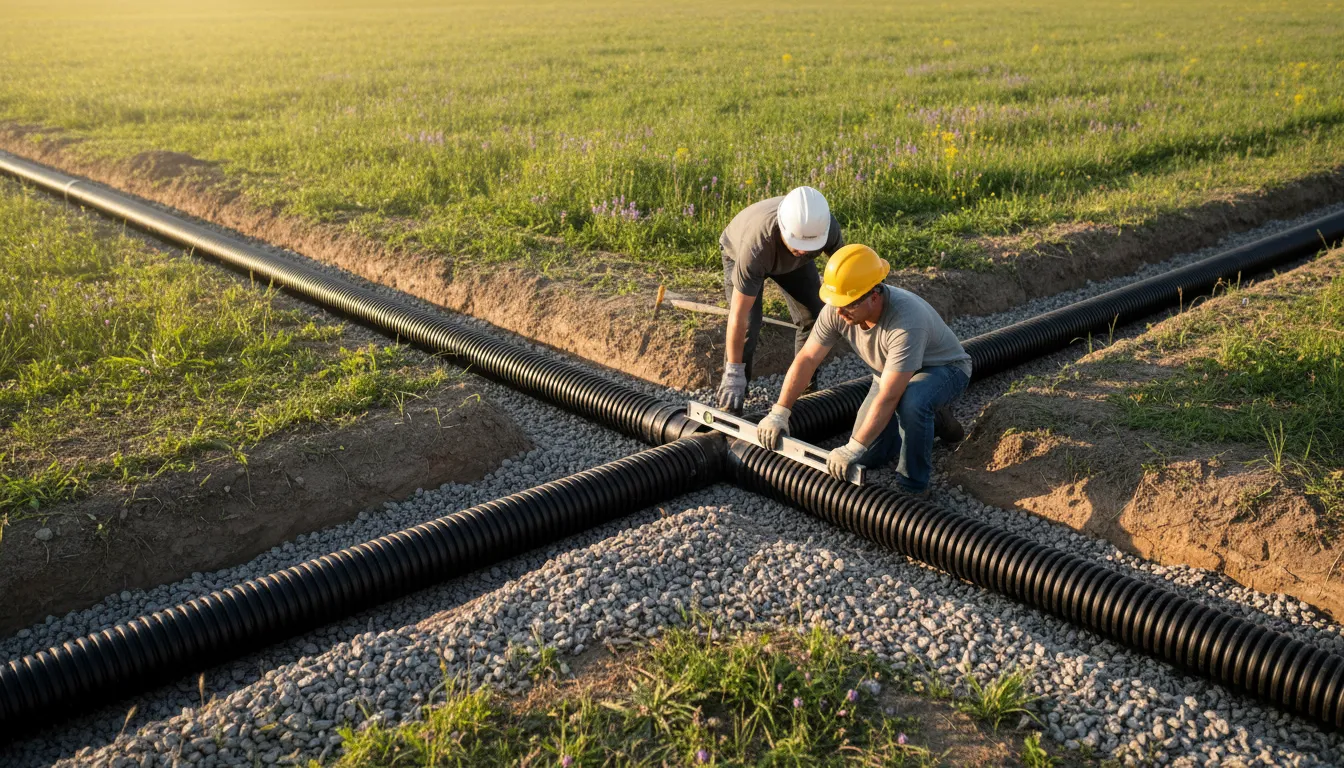
Often called a leach field or absorption field, the drain field is the final, critical stage of your onsite wastewater treatment system. After solids settle in the septic tank, liquid effluent flows into a network of perforated pipes buried in trenches filled with gravel. This effluent slowly percolates through the soil, where natural processes provide final treatment. When this area becomes clogged, saturated, or otherwise compromised, it can no longer absorb water, leading to system failure.
Signs You Need Drain Field Repair in Hillsboro
Recognizing early warning signs can prevent a complete system failure and more costly repairs. Be on the lookout for these common indicators in your yard and home:
- Wet, Soggy Spots: Persistent damp areas, lush green grass, or standing water over the drain field area, especially when it hasn't rained.
- Foul Odors: The smell of sewage in your yard or even inside your home.
- Slow Drains: Gurgling pipes, slow-draining sinks, tubs, or toilets.
- Sewage Backups: Wastewater backing up into household drains.
- Unusual Soil: Dark gray or black soil in the drain field area.
If you notice any of these signs, it's crucial to act quickly. Continuing to use a failing system can create unsanitary conditions and violate Oregon Department of Environmental Quality (DEQ) regulations 1.
The Regulatory Process: Washington County Permits
All major septic system repairs and replacements in Hillsboro are regulated by the Washington County Environmental Health Program, which enforces Oregon DEQ rules 2. You cannot simply hire a contractor to dig up and replace your leach field; you must obtain a Major Repair Permit.
Key Requirement: If your property is within 300 feet of an available public sewer line, Washington County and DEQ regulations typically require you to connect to the sewer instead of repairing your septic system 3. Your first step should be to verify sewer availability with Clean Water Services.
Step 1: The Mandatory Site Evaluation
Before a repair permit is issued, you must have a favorable site evaluation conducted per OAR 340-071. This evaluation determines if your property can support a new drain field. A licensed installer or soil evaluator will:
- Dig at least two test pits (approximately 75 feet apart) in the proposed repair area.
- Assess soil type (texture, structure, depth to restrictive layer).
- Measure the seasonal high water table.
- Evaluate the property size, slope, and proximity to wells, streams, and property lines.
The results dictate the design and size of the replacement system. Poor soil percolation or a high water table may require an advanced treatment system or a significantly larger leach field.
Step 2: The Repair Permit Application
Once you have a favorable site evaluation, you or your licensed installer must submit a repair application to Washington County Environmental Health. The application packet includes a detailed site plan showing the existing system, proposed repair area, test pit locations, and all required setbacks 4.
Step 3: Inspections and Installation
After the permit is issued (it's valid for one year), installation can begin. The work must be done by a DEQ-licensed onsite wastewater system installer or by the property owner themselves if they meet exemption criteria 5 6. A critical pre-cover inspection by a county Environmental Health Specialist is mandatory before the new drain field trenches are backfilled with soil 5.
Find the perfect drain field repair companies for your needs
Get personalized recommendations and expert advice
Costs for Drain Field Repair and Replacement in Hillsboro
This is a significant investment. Costs are highly variable and depend on soil conditions, system size, and the technology required.
- Drain Field Repair/Replacement: Major leach field work often starts around $7,000 or more and can climb much higher for complex situations or advanced systems.
- Septic Tank Replacement: If your tank also needs replacement, add an estimated $3,000 to $10,0007 8.
- Permit and Evaluation Fees: Washington County charges fees for the repair permit application and site evaluation review, which vary based on the project scope.
Planning for the Future: The Replacement Area
Oregon law requires that a suitable replacement area be designated on your property for a future full system replacement 9 10. This area must remain undisturbed and protected. When planning your current repair, consider how it affects this future reserve area.
Choosing a Professional for Your Leach Field Project
Given the technical and regulatory complexity, selecting the right professional is paramount. Look for a contractor who is:
- Licensed by the Oregon DEQ for onsite system installation and repair.
- Familiar with Washington County's specific procedures and inspectors.
- Transparent about the site evaluation process, design options, and detailed cost estimates.
- Willing to pull the necessary permits and coordinate county inspections.
A qualified professional will guide you through the entire process, from the initial site assessment to the final inspection, ensuring your new absorption field is built to last and complies with all health and safety codes.
Maintenance to Extend Your Drain Field's Life
After investing in a repair or replacement, protect it with proper care:
- Pump Your Tank Regularly: Every 3-5 years, depending on usage, to prevent solids from clogging the drain field.
- Conserve Water: Use water-efficient fixtures and spread out laundry loads to avoid hydraulically overloading the system.
- Divert Water: Ensure roof drains, sump pumps, and surface runoff are directed away from the drain field.
- Mind What You Flush: Only human waste and toilet paper should go down the drain. Avoid chemicals, grease, and non-biodegradable items.
Frequently asked questions
Sources
Footnotes
-
Department of Environmental Quality : About Septic Systems : Residential Resources : State of Oregon - https://www.oregon.gov/deq/residential/pages/onsite-about.aspx ↩
-
Onsite Sewage | Washington County, OR - https://www.washingtoncountyor.gov/environmental-health/onsite-sewage ↩
-
SEPTIC-TO-SEWER | Clean Water Services - https://cleanwaterservices.org/wp-content/uploads/2022/06/septic-to-sewer.pdf ↩
-
REPAIR PERMIT FOR A SEPTIC SYSTEM PROCEDURE ... - https://www.washingtoncountyor.gov/hhs/documents/repair-permit-pack/download?inline ↩
-
Repair Permit for a Septic System Procedure and Criteria - https://www.washingtoncountyor.gov/hhs/documents/repair-procedure-and-criteria/download?inline ↩ ↩2
-
Repair Permit Guide for Septic Systems - Oregon.gov - https://www.oregon.gov/deq/FilterDocs/os-RepairPermit.pdf ↩
-
Cost to Replace Septic Tank and Drain Field [2026 Data] | Angi - https://www.angi.com/articles/how-much-new-drain-fields-foot.htm ↩
-
My Property and The City of McMinnville's Private Sewer Lateral Replacement Program - https://www.mcminnvilleoregon.gov/sites/default/files/fileattachments/waste_water_services/page/318/lateral_guide_aq2011.pdf ↩
-
Procedures and Requirements for Installing a New Septic System - https://www.oregon.gov/deq/FilterDocs/newsysinstprocs.pdf ↩
-
Site Evaluation Guide - https://www.oregon.gov/deq/FilterDocs/os-siteevalseptic.pdf ↩