Find the Best Drain Field Repair Companies for Your Business
No obligation • Fast responses • Nationwide coverage

Why you can trust Septic Spot
Septic Spot is a leading United States resource for understanding and comparing septic services. Our editors review providers using consistent criteria and verify key business details. Listings and scores are independent, and companies cannot pay to influence our content.
Search providers near you
Top Drain Field Repair Companies in Goose Creek, South Carolina Ranked
A failing drain field, also known as a leach field or absorption area, is a serious issue for any homeowner with a septic system. When this critical component stops properly filtering and dispersing wastewater, it can lead to soggy yards, foul odors, and even sewage backups into your home. In Goose Creek, addressing these problems is a regulated process that requires specific expertise and permits. This guide explains the local requirements, the repair and replacement process, and how to find qualified professionals to restore your system's function and protect your property and the local environment.
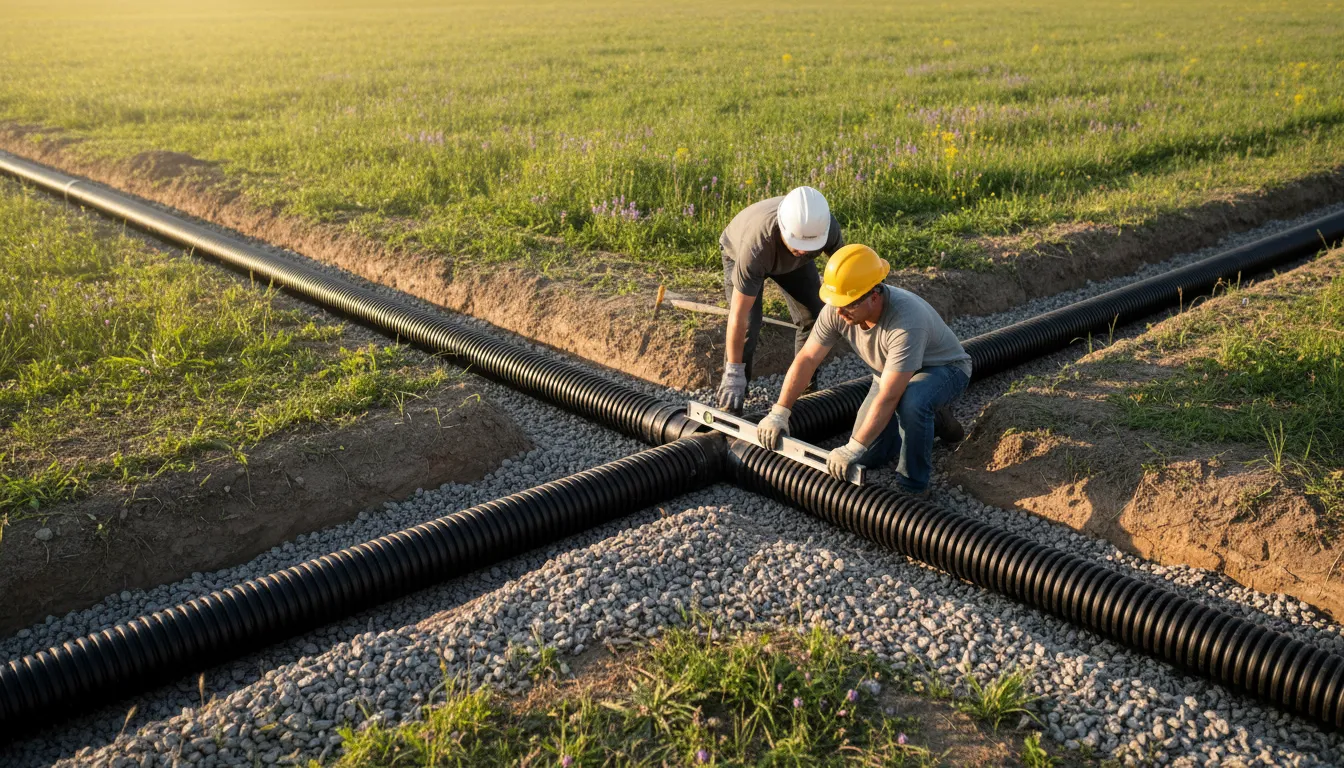
Understanding Your Drain Field and Local Regulations
The drain field is the final stage of your onsite wastewater system, where treated effluent from the septic tank is released into the soil for final purification. In Goose Creek and throughout Berkeley County, all work on this component is strictly regulated by the South Carolina Department of Environmental Services (SCDES, formerly DHEC) 1 2. The core rule is simple: you must obtain a permit and hire a licensed contractor for any repair or replacement of your leach field. Attempting construction without a permit can result in double fees 1.
A key planning requirement is the replacement area. For larger systems, a 50% replacement area is mandated, and it is strongly advised for all residential systems to have a dedicated repair area reserved on your property 3 4. This ensures that if your current absorption field fails, there is a suitable, pre-approved space to install a new one. It's also crucial to know that if public sewer becomes available at your property line, the City of Goose Creek requires homeowners to abandon their septic system and connect to the municipal sewer within 90 days 5.
The Critical Role of Site Evaluation and Soil
Before any permit is issued, a SCDES inspector must evaluate your site. The most critical factor in this evaluation is the soil. The Lowcountry's common clay soils present a significant challenge for drain field function, as they drain water very slowly. This often means that a leach field in Goose Creek must be much larger than one in an area with sandy soil to handle the same amount of wastewater.
The inspector will also assess several other key site constraints:
- Seasonal High-Water Table: The water table must be sufficiently deep to prevent groundwater contamination.
- Setbacks: The drain field must be located a specific distance from wells, surface waters (like ponds and creeks), property lines, and buildings.
- Slope: The lot's slope determines whether a standard gravity-fed system or a more complex pumped system is necessary 6.
These factors collectively determine if a conventional system is possible or if an advanced treatment system is required for your repair or replacement.
The Step-by-Step Process for Repair or Replacement
Navigating a drain field project involves a series of regulated steps. Understanding this process helps ensure your project stays on track and compliant.
- Consultation and Site Plan: Your first step is to consult with a licensed septic system installer. They will assess the problem, discuss options, and help prepare the necessary site plan for the permit application.
- Permit Application: You or your contractor must apply for a "Permit to Construct" from SCDES. This involves submitting your site plan and paying an application fee, which is currently $150 7 8. This permit is generally valid for five years 9.
- Preliminary Inspection: A SCDES inspector will visit your property to verify the site plan, measure setbacks, and evaluate the soil conditions before issuing the permit.
- Construction: Once the permit is in hand, your licensed contractor can begin the excavation and installation work for the new leach field or repair.
- Final Inspection (Before Covering): This is a mandatory, critical step. Before the new drain field trenches are covered with soil, a SCDES official or a certified inspector must perform a final inspection 10. There is an option for self-inspection: if a SCDES inspector cannot arrive within 30 minutes of a scheduled time, the licensed installer may perform the inspection themselves and file the documentation 11.
- Final Documentation: After passing inspection and covering the system, the installer must submit a Final Inspection Form (DES 4432) to SCDES within two business days 12.
Find the perfect drain field repair companies for your needs
Get personalized recommendations and expert advice
Costs and Considerations for Homeowners
The cost for drain field work in Goose Creek can vary widely based on the scope. A minor repair to a portion of the absorption area may cost a few hundred dollars. However, a full drain field replacement is a major excavation project and often costs several thousand dollars. It's important to note that SCDES does not provide funding or financing for these repairs or replacements.
For homeowners with aerobic treatment units (ATUs), which are more complex systems sometimes used in challenging soils, regular maintenance is not just recommended-it's often a permit condition. Annual inspection and servicing for these systems can range from $200 to $500 13. Proactive maintenance is always more cost-effective than emergency replacement.
Choosing a Licensed Professional
Given the regulatory complexity, choosing the right contractor is paramount. You must verify that any professional you hire is a licensed septic system installer/contractor in South Carolina 14. A qualified professional will:
- Understand local Berkeley County and SCDES regulations intimately.
- Handle the entire permitting process on your behalf.
- Accurately evaluate soil and site conditions.
- Provide a clear, detailed estimate and timeline.
- Ensure all inspections are scheduled and passed correctly.
Always ask for proof of licensing and references from recent, similar projects in the Goose Creek area.
Frequently asked questions
Sources
Footnotes
-
Septic - South Carolina Department of Environmental Services - https://des.sc.gov/taxonomy/term/561 ↩ ↩2
-
Requirements for Septic Systems - Berkeley County Government - https://berkeleycountysc.gov/dept/planning/requirements-for-septic-systems/ ↩
-
Septic Tanks - Residential, Single Home Builder - https://des.sc.gov/permits-regulations/septic-tanks/permits-licenses/septic-tanks-residential-single-home-builder ↩
-
Frequently Asked Questions - Berkeley County Government - https://berkeleycountysc.gov/dept/permitting/faq_permitting/ ↩
-
§ 93.102 USE OF SEPTIC TANKS. - American Legal Publishing - https://codelibrary.amlegal.com/codes/goosecreek/latest/goosecreek_sc/0-0-0-8647 ↩
-
Site Inspections | South Carolina Department of ... - https://des.sc.gov/permits-regulations/septic-tanks/homeowner-resources/site-inspections ↩
-
Septic Tanks - Residential, Single Home Builder - https://des.sc.gov/permits-regulations/septic-tanks/permits-licenses/septic-tanks-residential-single-home-builder ↩
-
Backups, Leaks and Odors | South Carolina Department of ... - https://des.sc.gov/permits-regulations/septic-tanks/homeowner-resources/backups-leaks-and-odors ↩
-
South Carolina Septic Tank Regulations - https://www.septicconnection.com/south-carolina-septic-tank-regulations ↩
-
Site Inspections | South Carolina Department of ... - https://des.sc.gov/permits-regulations/septic-tanks/homeowner-resources/site-inspections ↩
-
South Carolina Septic Tank Regulations - https://www.septicconnection.com/south-carolina-septic-tank-regulations ↩
-
Septic Tanks - Regulation, Forms, Fact Sheets - https://des.sc.gov/permits-regulations/septic-tanks/septic-tanks-regulation-forms-fact-sheets ↩
-
Basics for Septic Systems in Upstate SC - https://carolinacountrysideproperties.com/septic-systems-in-upstate-sc/ ↩
-
Septic Tanks - Licensing for OSWW System Professionals - https://des.sc.gov/permits-regulations/septic-tanks/permits-licenses/septic-tanks-licensing-osww-system-professionals ↩