Find the Best Drain Field Repair Companies for Your Business
No obligation • Fast responses • Nationwide coverage

Why you can trust Septic Spot
Septic Spot is a leading United States resource for understanding and comparing septic services. Our editors review providers using consistent criteria and verify key business details. Listings and scores are independent, and companies cannot pay to influence our content.
Search providers near you
Top Drain Field Repair Companies in North Charleston, South Carolina Ranked
A failing drain field is a serious issue for any home with a septic system, leading to soggy yards, foul odors, and potential environmental contamination. In North Charleston, repairing or replacing your leach field is a regulated process that requires working with licensed professionals and securing the proper permits from state and local authorities. This guide explains the critical steps, regulations, and costs involved, helping you understand how to navigate the process to restore your septic system's vital function.
Understanding Your Drain Field's Role
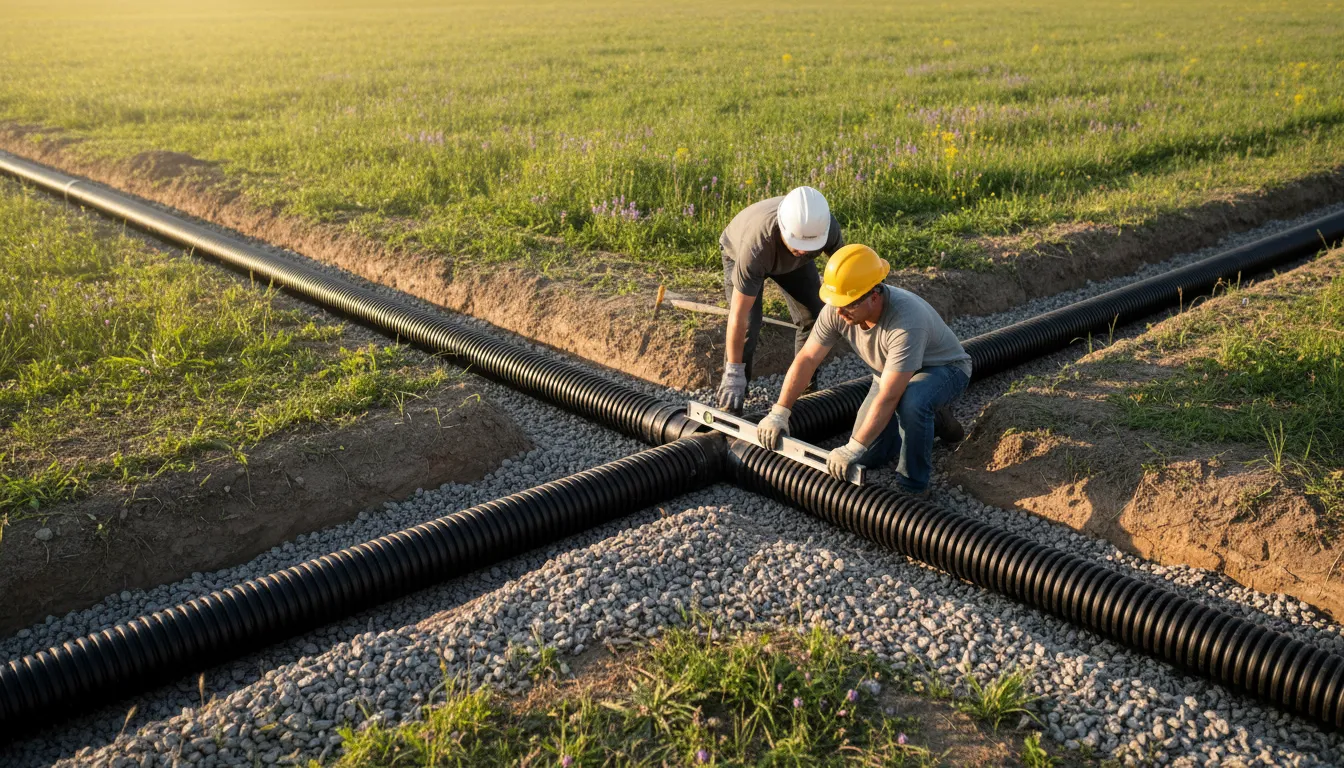
The drain field, also known as a leach field or absorption field, is the final and most crucial stage of your septic system. After solids settle in the tank, liquid effluent flows into a network of perforated pipes buried in trenches filled with gravel. This effluent slowly percolates into the soil, where natural processes filter and treat it before it rejoins the groundwater. When this area fails, untreated wastewater can surface, creating health hazards and violating state environmental codes 1.
Common signs of drain field failure in the North Charleston area include:
- Sewage odors in the yard or home.
- Spongy, soggy, or standing water over the drain field area, especially when it hasn't rained.
- Slow-draining toilets and fixtures throughout the house.
- Unusually lush, green grass growing over the drain field.
South Carolina's Regulatory Landscape
All septic system work in North Charleston is strictly regulated by the South Carolina Department of Environmental Services (SCDES, formerly DHEC). You cannot legally repair or replace a drain field without involving licensed professionals and obtaining the correct permits. The primary goal of these regulations is to protect public health and South Carolina's water resources by ensuring systems are properly sited and constructed.
Key Regulatory Requirements:
- Licensed Professionals: SCDES requires a state-licensed On-Site Wastewater (OSWW) contractor to inspect, repair, and pump out septic systems. These licenses must be renewed annually 2.
- Permit to Construct: A state permit from SCDES is mandatory for repairing or replacing a drain field. This "Permit to Construct" is generally valid for five years 3 4.
- Local Permits: The City of North Charleston also requires a plumbing permit for this work, with an application fee of approximately $30.00 plus $6.00 per system component 5.
- Replacement Area: State law requires that a replacement area equivalent to at least 50% of the size of the original system be held in reserve on your property for future repairs 6 7. This is a critical planning factor.
The Critical First Step: Soil and Site Evaluation
Before any repair plan can be approved, a professional must evaluate your property's soil. Soil type is the single most critical factor in a functional septic system, as not all soils in the Lowcountry are suitable for wastewater absorption.
A licensed installer or a Professional Soil Classifier (PSC) will conduct a site investigation to determine:
- Soil Texture and Structure: How quickly water moves through the soil layers.
- Depth to Restrictive Horizons: There must be more than 12 inches between the bottom of the proposed drain field trenches and any restrictive layer, such as dense clay or rock.
- Zone of Saturation (ZOS): The depth to the seasonal high water table must be at least 29 inches below the natural soil surface and at least 6 inches below the trench bottom. If the soil is too wet, SCDES may delay evaluations 8.
This evaluation will determine if a conventional repair is possible or if an engineered alternative system is needed.
The Repair and Replacement Process
Once a failing system is identified, the process follows a structured path.
1. Professional Diagnosis & Plan A licensed contractor will perform a thorough inspection, often including a tank pump-out, to diagnose the exact cause of failure. They will then develop a repair or replacement plan based on the soil evaluation.
2. Securing Permits Your contractor will typically handle the permit application process. This involves submitting the repair plan, property plot, and other details through the SCDES ePermitting Portal. The state permit application fee is approximately $150, plus the local North Charleston plumbing fees.
3. Installation and Repair Work With permits in hand, the licensed contractor executes the work. Repair or replacement options can include:
- Partial Repair: Fixing or replacing clogged or crushed distribution pipes.
- Full Leach Field Replacement: Excavating a new drain field in the designated replacement area on your property.
- Advanced System Installation: Installing an engineered system like infiltrator tanks or a drip irrigation field if soil conditions are poor.
- Leach Field Rejuvenation: Techniques like hydro-jetting or terralift to temporarily restore function in some cases 9.
4. Final Inspection Before the new or repaired drain field is covered, the installer must contact SCDES for a final inspection. If a state inspector does not arrive within 30 minutes of the scheduled time, the licensed installer may proceed with a formal self-inspection using the appropriate SCDES form (like D-3978), documenting that the work meets code 10.
Find the perfect drain field repair companies for your needs
Get personalized recommendations and expert advice
Understanding the Costs Involved
The cost for drain field work in North Charleston varies significantly based on the scope, system type, and soil conditions. It's important to budget for both professional services and permit fees.
- Permit and Evaluation Fees: Budget for the ~$150 SCDES permit fee, local plumbing fees ($30+), and the cost for the professional soil/site evaluation 11 12.
- Drain Field Repair/Replacement: For a full conventional leach field replacement, homeowners can expect costs ranging from $5,000 to $12,000 or more 13. The final price depends on the size of the home, the type of system (conventional anaerobic vs. engineered aerobic), and site accessibility.
- Emergency Services: Additional costs apply for emergency pumping and diagnostic visits.
- Engineered Systems: If poor soil necessitates an advanced treatment system, costs can be considerably higher.
Always get detailed, written estimates from multiple licensed SCDES contractors before proceeding.
Maintaining Your New Drain Field
Protect your investment by practicing good septic habits:
- Conserve Water: Spread out laundry loads and fix leaks to avoid hydraulically overloading the field.
- Mind What You Flush: Only human waste and toilet paper should go down the drain. Avoid chemicals, grease, wipes, and feminine products.
- Divert Water: Ensure roof gutters, sump pumps, and surface runoff are directed away from the drain field area.
- Keep It Clear: Never drive or park vehicles over the drain field, and avoid planting trees with deep roots nearby.
For specific questions or to report a failing system in North Charleston, you can contact the local SCDES Environmental Affairs office.
Frequently asked questions
Sources
Footnotes
-
Be Septic Safe - Clemson University - https://www.clemson.edu/extension/water/resources/be-septic-safe.html ↩
-
Septic Tanks - Licensing for OSWW System Professionals - https://des.sc.gov/permits-regulations/septic-tanks/permits-licenses/septic-tanks-licensing-osww-system-professionals ↩
-
Septic Tanks - Residential, Single Home Builder - https://des.sc.gov/permits-regulations/septic-tanks/permits-licenses/septic-tanks-residential-single-home-builder ↩
-
South Carolina Septic Tank Regulations - https://www.septicconnection.com/south-carolina-septic-tank-regulations ↩
-
Plumbing Permit - North Charleston - https://www.northcharleston.org/business/construction_and_development/permits/plumbing_permit.php ↩
-
Septic Tanks - Residential, Single Home Builder - https://des.sc.gov/permits-regulations/septic-tanks/permits-licenses/septic-tanks-residential-single-home-builder ↩
-
S.C. Code Regs. ch. 61, 61-56, 61-56.400, app 61-56.400.A - https://www.law.cornell.edu/regulations/south-carolina/S-C-Code-Regs-ch-61-61-56-61-56-400-app-61-56.400.A ↩
-
Site Inspections | South Carolina Department of ... - https://des.sc.gov/permits-regulations/septic-tanks/homeowner-resources/site-inspections ↩
-
Drain Field Repair | Lowcountry, SC - https://www.collinssepticsc.com/drain-field-repair ↩
-
Septic Tanks - Residential Subdivision Builder - https://des.sc.gov/permits-regulations/septic-tanks/permits-licenses/septic-tanks-residential-subdivision-builder ↩
-
Be Septic Safe: How to Apply for a South Carolina Septic Permit - https://hgic.clemson.edu/factsheet/be-septic-safe-how-to-apply-for-a-south-carolina-septic-permit/ ↩
-
Permit Fees - Welcome to City of North Charleston - https://www.northcharleston.org/business/construction_and_development/permits/permit_fees.php ↩
-
Cost to Replace Septic Tank and Drain Field [2026 Data] | Angi - https://www.angi.com/articles/how-much-new-drain-fields-foot.htm ↩