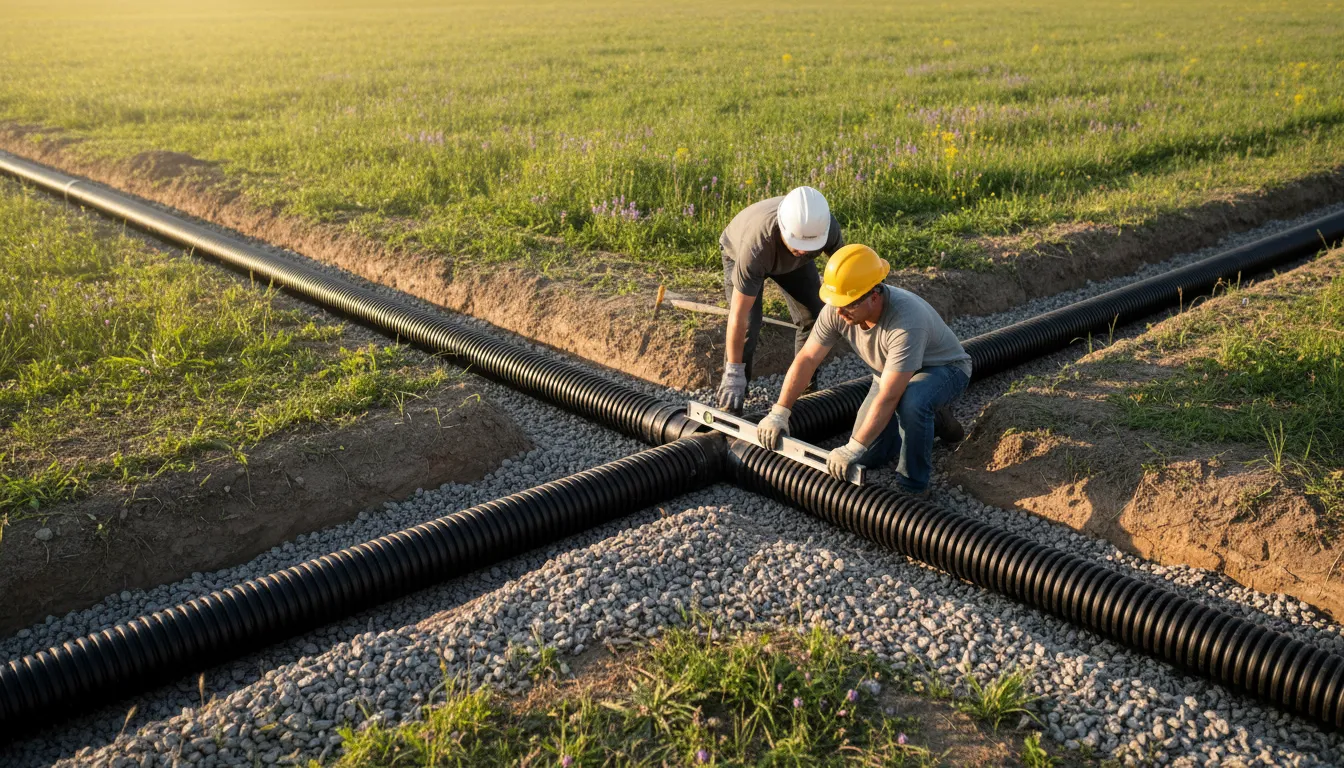
Find the Best Drain Field Repair Companies for Your Business
No obligation • Fast responses • Nationwide coverage

Why you can trust Septic Spot
Septic Spot is a leading United States resource for understanding and comparing septic services. Our editors review providers using consistent criteria and verify key business details. Listings and scores are independent, and companies cannot pay to influence our content.
Search providers near you
Best Drain Field Repair Companies in Washington Ranked
A failing drain field is a serious issue that can lead to sewage backups, foul odors, and environmental contamination. In Washington, repairing or replacing a septic system's leach field is a regulated process designed to protect public health and water quality. This guide explains the state and local requirements, typical costs, and steps involved, helping you understand how to connect with certified professionals who can assess your situation and navigate the permitting process to restore your system's function.
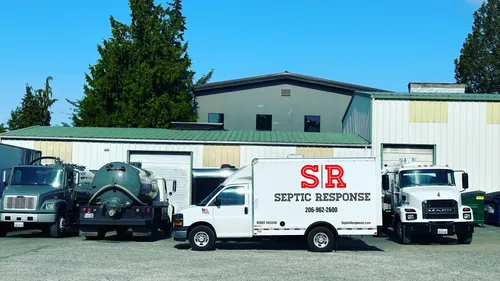
Septic Response
672 7th Ave, Kirkland, WA 98033
Septic Response is a septic tank service provider based in Seattle, WA, offering a wide range of services including septic tank pumping, inspection, repair, installation, and drain field replacement. They serve King County, Snohomish County, and Pierce County with expertise in maintaining both traditional and advanced septic systems. Their capabilities include inlet pipe cleaning using jetting technology and comprehensive septic system maintenance tailored to local soil and environmental conditions. The company emphasizes preventative maintenance and environmental compliance to extend system lifespan. Septic Response operates 24/7 to support urgent septic needs.
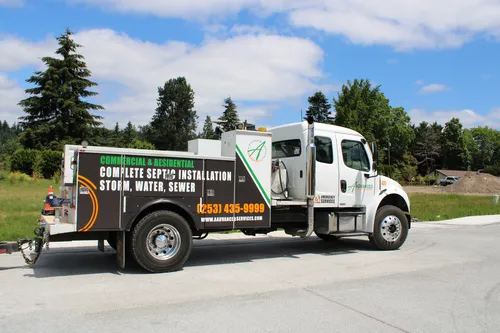
A Advanced Septic & Construction Services
1602 W Valley Hwy S, Auburn, WA 98001
A Advanced Septic & Construction Services is a family-owned business serving Tacoma, WA, and surrounding areas including Auburn, Puyallup, Bonney Lake, and Sumner. Established in 2006, they offer comprehensive septic services such as septic tank pumping, inspection, repair, installation, and drain field restoration. Their team also provides electrical and construction services related to septic systems. Known for handling emergency situations, they offer 24-hour emergency response to address urgent septic needs. The company combines modern equipment with experienced technicians to maintain and repair septic systems efficiently.
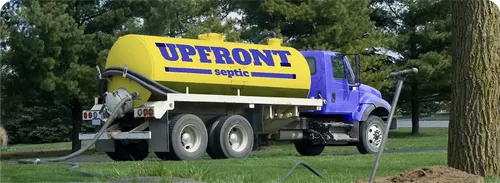
Upfront Septic & Plumbing
2367 Tacoma Ave S Suite 201, Tacoma, WA 98402
Upfront Septic & Plumbing is a septic service provider located in Tacoma, WA, serving King and Pierce County. They offer septic tank pumping, inspection, repair, and installation services for various septic systems including aerobic and anaerobic tanks made of concrete, metal, fiberglass, or plastic. The company also handles drain field repairs and provides emergency septic services available 24/7. Founded by a local resident, Upfront Septic & Plumbing emphasizes transparent pricing and straightforward service to address septic system needs efficiently.
AAA Septic & Plumbing LLC.
32228 116th Ave SE, Auburn, WA 98092
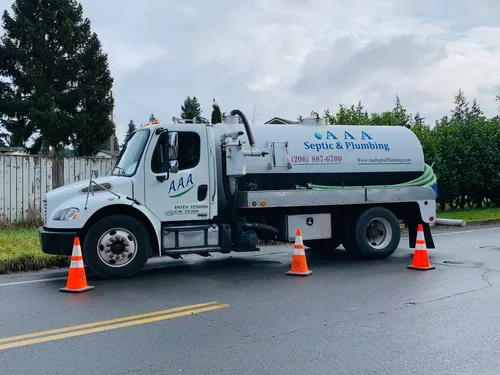
AAA Septic & Plumbing LLC. is a family-owned business serving Tacoma, WA, and surrounding counties including King, Pierce, Snohomish, and Thurston. They provide a full range of septic services such as septic tank pumping, system installation and repair, drainfield repair, and sewer line services. The company is licensed and certified, offering specialized capabilities like septic pump control panel troubleshooting and sewer scope inspections. With years of trusted experience, AAA Septic & Plumbing LLC. operates with a commitment to customer satisfaction and offers 24-hour emergency response for septic and plumbing issues.
The Septic Group (Formerly Woodinville Septic Service)
2822 Old Hartford Rd, Lake Stevens, WA 98258
The Septic Group (Formerly Woodinville Septic Service) is a septic service company based in Lake Stevens, serving Everett, WA, and the Greater Seattle area. With 60 years of experience, they provide septic tank pumping, inspection, repair, installation, and drain field replacement services. Their licensed experts conduct thorough system inspections, including mainlines and drainfields, and provide detailed pumping reports and county filings. The team also handles septic pump repair and replacement, offering personalized service throughout installation and maintenance.
Understanding Your Drain Field's Role
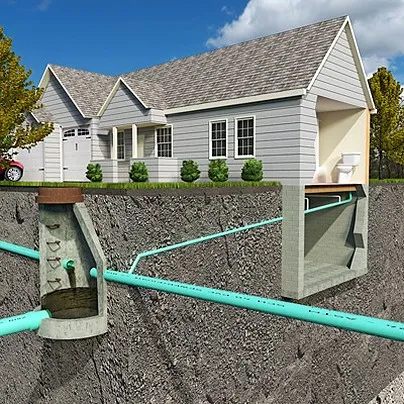
The drain field, also known as a leach field or soil absorption system, is the final and most critical stage of a septic system. After solids settle in the tank, liquid effluent flows into a network of perforated pipes buried in trenches. This effluent is then filtered and treated by the surrounding soil before rejoining the groundwater. When this area fails, untreated wastewater can surface, creating health hazards and polluting nearby streams, lakes, or Puget Sound.
Common signs of drain field failure include:
- Sewage odors in the yard or home.
- Soggy, spongy, or brightly green grass over the field.
- Slow-draining toilets and fixtures.
- Sewage backing up into the home or surfacing in the yard.
If you notice any of these signs, it's crucial to act quickly. Washington law requires homeowners to repair failing systems promptly.
Washington State Regulations and Oversight
All septic system work in Washington, including drain field repairs and full replacements, is governed by state law (WAC 246-272A). These rules set minimum standards for design, installation, and inspection to safeguard public health. The Washington State Department of Health provides oversight, but the actual permitting and enforcement are handled by local county health departments (often called Environmental Health or On-Site Sewage divisions).
This local control is important. Counties like King, Snohomish, Clallam, and Thurston may have regulations that are more restrictive than the state minimums 1. Always check with your specific county's health department for the exact requirements that apply to your property.
The Permit Process for Repairs and Replacements
You cannot legally begin work on your drain field without the proper permit from your local health jurisdiction. The process typically involves:
- Professional Assessment: A certified septic system professional (often a designer or installer) must evaluate the failure and propose a solution.
- Site Application: The professional submits a formal site application and design for the repair or replacement to the county health department. This application includes details about soil conditions, system design, and the proposed construction.
- Permit Issuance: If the design meets code, the county issues a repair permit. It's important to note that these permits typically expire six months after issuance, so planning must be timely 2.
- Installation & Inspection: A certified installer completes the work, which is then inspected and approved by the county health inspector.
Required Maintenance and Inspections
Preventative maintenance is the best way to avoid a costly drain field failure. Washington state mandates regular inspections to catch problems early 3 4.
- Gravity Systems: Must be inspected by a professional every three years.
- Pressure Distribution or Other Complex Systems: Require a professional inspection annually 5.
Homeowners in some counties can complete a training course to perform their own inspection, but the report must still be submitted to the local health department 6. Regardless of who does it, maintaining valid inspection records is essential for compliance and can prevent fines.
Routine maintenance also includes pumping the septic tank regularly (typically every 3-5 years, depending on use) and protecting the drain field area from heavy vehicles, deep-rooted plants, and excessive water from roofs or drains 7.
Find the perfect drain field repair companies for your needs
Get personalized recommendations and expert advice
Costs and Financial Considerations
The cost to address a drain field problem in Washington varies widely based on the extent of the damage, soil conditions, system size, and local permitting fees.
- Inspections: A routine professional inspection generally costs a few hundred dollars 8.
- Repairs: Partial repairs to a specific section of the field may cost a few thousand dollars.
- Full Replacement: Completely replacing a failed drain field is a significant investment. Costs often start around $5,000 and can easily exceed $10,000 to $15,000 or more for complex systems or difficult sites 9 10.
Financing Help: Washington homeowners should explore the Craft3 Clean Water Loan program. This initiative provides accessible financing specifically for septic system repair, replacement, and maintenance, helping to manage these substantial costs.
Steps to Take When Facing Drain Field Failure
- Stop Using Water: Minimize water use in the home to prevent exacerbating the problem.
- Contact a Certified Professional: Hire a Washington-licensed septic system designer, installer, or repair specialist to diagnose the issue.
- Consult Your Local Health Department: Reach out to your county's environmental health office to understand the specific permit requirements and application process for your area 11 12 13 14.
- Explore Financing: Investigate loan options like the Craft3 program to understand your budget.
- Secure Permits & Proceed: Work with your professional to submit the required designs, obtain the permit, and schedule the repair or replacement work.
Taking these steps with the guidance of certified experts ensures the work is done correctly, complies with all health regulations, and restores your property's wastewater treatment safely.
Frequently asked questions
Sources
Footnotes
-
Washington Septic License & Certification | 2024 Contractor Guide - https://www.servicetitan.com/licensing/septic/washington ↩
-
Chapter 246-272A WAC: - https://app.leg.wa.gov/wac/default.aspx?cite=246-272a&full=true ↩
-
Maintaining Your Septic System | Clallam County, WA - https://www.clallamcountywa.gov/506/Maintaining-Your-Septic-System ↩
-
Caring for Your Septic System | Washington State Department of ... - https://doh.wa.gov/community-and-environment/wastewater-management/septic-system/caring-your-system ↩
-
Homeowner Maintenance & Requirements - Thurston County - https://www.thurstoncountywa.gov/departments/public-health-and-social-services/environmental-health/septic-systems/homeowner-maintenance-requirements ↩
-
Do-It-Yourself Septic System Inspection Field Guide - https://doh.wa.gov/sites/default/files/legacy/Documents/Pubs//337-122.pdf ↩
-
Septic-Manual-Gravity-System.pdf - Washington Sea Grant - https://wsg.washington.edu/wordpress/wp-content/uploads/Septic-Manual-Gravity-System.pdf ↩
-
Septic system inspection requirements in Pierce County WA - https://www.thenewstribune.com/news/local/community/gateway/g-news/article290631874.html ↩
-
proposed rules - WASHINGTON STATE REGISTER - | WA.gov - https://lawfilesext.leg.wa.gov/law/wsr/2005/11/05-11-109.htm ↩
-
Septic Systems | Washington State Department of Health - https://doh.wa.gov/community-and-environment/wastewater-management/septic-system ↩
-
Septic System Permits | Clallam County, WA - https://www.clallamcountywa.gov/493/Septic-System-Permits ↩
-
On-site sewage/septic repair or replacement - King County - https://kingcounty.gov/en/dept/dph/health-safety/environmental-health/on-site-sewage-systems/applications-permits/repair-replacement ↩
-
Onsite Sewage Permits - https://www.washingtoncountyor.gov/environmental-health/onsite-sewage-permits ↩
-
Septic Permitting - https://www.snohd.org/166/Septic-Permitting ↩