Find the Best Drain Field Repair Companies for Your Business
No obligation • Fast responses • Nationwide coverage

Why you can trust Septic Spot
Septic Spot is a leading United States resource for understanding and comparing septic services. Our editors review providers using consistent criteria and verify key business details. Listings and scores are independent, and companies cannot pay to influence our content.
Search providers near you
Top Drain Field Repair Companies in Tacoma, Washington Ranked
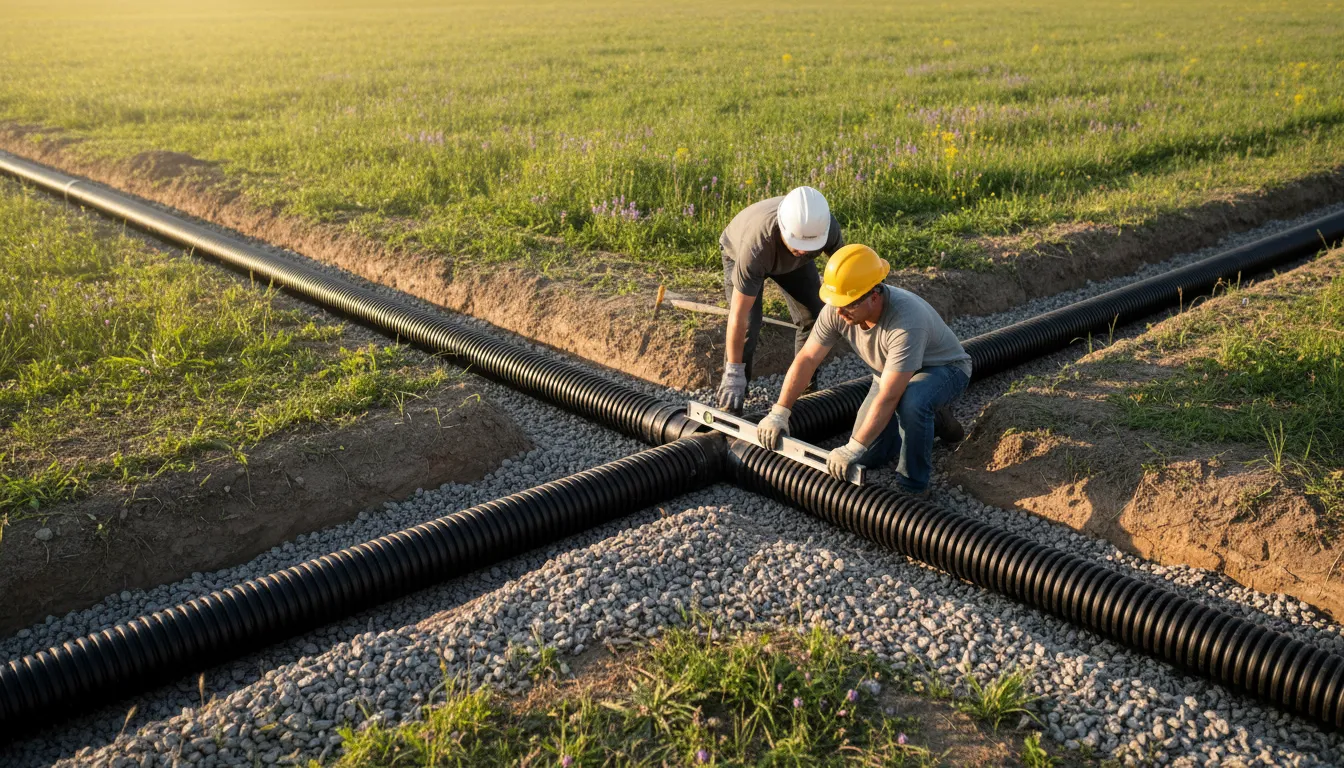
A failing septic drain field, also known as a leach field or absorption area, is a serious issue that can lead to sewage backups, soggy lawns, and environmental contamination. In Tacoma and Pierce County, repairing or replacing this critical component requires navigating specific local regulations and working with certified professionals. This guide explains the process, costs, and key considerations for Tacoma homeowners facing drain field issues, helping you understand your options and connect with qualified local specialists.
A Advanced Septic & Construction Services
1602 W Valley Hwy S, Auburn, WA 98001
A Advanced Septic & Construction Services is a family-owned business serving Tacoma, WA, and surrounding areas including Auburn, Puyallup, Bonney Lake, and Sumner. Established in 2006, they offer comprehensive septic services such as septic tank pumping, inspection, repair, installation, and drain field restoration. Their team also provides electrical and construction services related to septic systems. Known for handling emergency situations, they offer 24-hour emergency response to address urgent septic needs. The company combines modern equipment with experienced technicians to maintain and repair septic systems efficiently.
Upfront Septic & Plumbing
2367 Tacoma Ave S Suite 201, Tacoma, WA 98402
Upfront Septic & Plumbing is a septic service provider located in Tacoma, WA, serving King and Pierce County. They offer septic tank pumping, inspection, repair, and installation services for various septic systems including aerobic and anaerobic tanks made of concrete, metal, fiberglass, or plastic. The company also handles drain field repairs and provides emergency septic services available 24/7. Founded by a local resident, Upfront Septic & Plumbing emphasizes transparent pricing and straightforward service to address septic system needs efficiently.
AAA Septic & Plumbing LLC.
32228 116th Ave SE, Auburn, WA 98092
AAA Septic & Plumbing LLC. is a family-owned business serving Tacoma, WA, and surrounding counties including King, Pierce, Snohomish, and Thurston. They provide a full range of septic services such as septic tank pumping, system installation and repair, drainfield repair, and sewer line services. The company is licensed and certified, offering specialized capabilities like septic pump control panel troubleshooting and sewer scope inspections. With years of trusted experience, AAA Septic & Plumbing LLC. operates with a commitment to customer satisfaction and offers 24-hour emergency response for septic and plumbing issues.
Upfront Septic & Plumbing
600 1st Ave UNIT 516, Seattle, WA 98104
Upfront Septic & Plumbing is a septic service provider based in Seattle, WA, serving King and Pierce Counties. They offer septic tank pumping, inspection, repair, and installation services for various septic systems including aerobic and anaerobic tanks made of concrete, metal, fiberglass, or plastic. The company also handles drain field repair and provides emergency septic services available 24/7. Founded by David White, Upfront Septic aims to provide transparent pricing and straightforward service to local customers.
Bumblebee Services Inc.
9600 Canyon Rd E, Puyallup, WA 98371
Bumblebee Services Inc. is a septic and drain cleaning company based in Tacoma, WA. They provide a variety of septic services including pumping, inspections, repairs, installations, and troubleshooting. Their expertise includes hydro jetting to address blockages and clogs effectively. The company also offers site restoration services such as landscaping and grading to improve property appearance and safety. Bumblebee Services Inc. emphasizes a community-focused approach and maintains a small business atmosphere.
Understanding Your Septic System and Drain Field Failure
Your septic system is a two-part wastewater treatment system for homes not connected to a municipal sewer line. Solids settle and decompose in the tank, while the liquid effluent flows out into the drain field. This network of perforated pipes buried in trenches allows the effluent to slowly percolate through the soil, where natural processes provide final treatment.
Failure occurs when the soil in the drain field can no longer absorb and treat the effluent. Common signs include:
- Sewage odors in the yard or home.
- Soggy, spongy, or unusually green grass over the drain field area.
- Sewage backing up into household drains.
- Standing water or surfacing effluent.
In Tacoma-Pierce County, a failed system is a public health concern and must be addressed promptly.
The Tacoma-Pierce County Health Department (TPCHD) Regulatory Process
Any significant work on your septic system, including drain field repair or leach field replacement, is strictly regulated by the Tacoma-Pierce County Health Department (TPCHD).
Permits are Mandatory: You cannot begin any repair or replacement work without first obtaining a Permit to Repair from the TPCHD. This permit application must be submitted by a certified professional-a licensed designer, engineer, or installer-not by the homeowner. The department typically processes these permits within five business days.
Inspections are Critical: The process involves key inspections. After a professional assesses the failure, soil test pits may need to be dug for evaluation. Once work is complete but before the site is backfilled, a "pre-cover" inspection by the TPCHD is required. Finally, the installer must submit a record drawing (as-built) of the completed system to the department for final approval.
Repair Limits: It's important to know that the TPCHD has rules on how many times a system can be patched. According to local industry guidance, septic tanks and systems can only be repaired twice before a total replacement is mandated.
Key Site and Soil Factors Affecting Your Project
The feasibility and design of a drain field repair or new absorption system depend heavily on your specific property conditions. A certified professional will evaluate these critical factors:
- Soil Quality: The soil must have suitable texture and structure to allow for adequate effluent treatment and absorption. High-clay soils drain poorly, while sandy or rocky soils may not provide sufficient treatment.
- Seasonal Water Table: Pierce County's wet climate means many areas have a high seasonal water table. Regulations require a specific vertical separation distance (typically 1-4 feet) between the bottom of the drain field and the highest level of groundwater to prevent contamination.
- Slope: Steeply sloped properties present challenges and may require an engineered pressure-distribution system instead of a standard gravity-fed trench system.
- Setback Distances: Strict minimum distances are enforced between the proposed drain field and features like wells, property lines, buildings, streams, and wetlands. These setbacks are non-negotiable for environmental protection.
Find the perfect drain field repair companies for your needs
Get personalized recommendations and expert advice
Step-by-Step: The Repair or Replacement Process
Facing a drain field failure can feel overwhelming. Breaking it down into steps can make the process clearer:
- System Locating & Initial Assessment: Start by locating your septic tank and drain field. You can request records from the TPCHD. Then, contact a certified septic professional to inspect the system and confirm the cause and extent of the failure.
- Professional Evaluation & Design: The professional will evaluate your site's soil, slope, and water table, often by digging soil test pits for inspection 1. They will then design a repair or replacement solution that meets all TPCHD requirements.
- Permitting: Your chosen professional will submit the design plans and application for a Permit to Repair or Replace to the TPCHD on your behalf 2.
- Installation: Once the permit is issued, the installation work can begin. This may involve repairing a portion of the leach field, replacing the entire absorption area, or installing a completely new septic system.
- Inspections & Approval: The installer will call for the mandatory pre-cover inspection before backfilling the trenches 3. After passing inspection and submitting the final record drawing, the TPCHD will approve the system for use.
Understanding the Costs and Financial Assistance
Costs for drain field work in the Tacoma area vary widely based on the scope of the project, soil conditions, and system type.
- Inspection & Diagnosis: A professional inspection to diagnose the problem typically costs between $250 and $350, which often includes a mandatory $54 filing fee to the health department 4 5.
- Minor Repairs: Addressing a single clogged line or a small section may cost up to $1,500.
- Septic Tank Replacement: If the tank also needs replacement, costs can range from $1,770 to over $12,458, with an average often cited between $5,000 and $7,000 6.
- Full System Replacement: Completely replacing a failed septic system, including a new drain field, is a major project. Costs often start around $20,000 and can go significantly higher depending on site challenges and the technology required 7.
Financial Help is Available: The TPCHD recognizes this is a significant expense. They periodically offer financial assistance programs for qualifying residents, which can include $125 off an inspection, $125 off the installation of tank risers (for easier access), $200 off a pump-out, or $500 off repair costs 8. Additionally, organizations like Craft3 offer low-interest loans specifically for septic system repair and replacement projects 8.
Maintenance: Preventing Future Drain Field Failure
Regular maintenance is the best way to avoid another costly failure. Washington State recommends that standard gravity septic systems be inspected at least every three years 9. Systems with pumps or other advanced components require annual inspections. Regular pumping of the septic tank (typically every 3-5 years) is also crucial to prevent solids from washing out and clogging the drain field 9. Simple habits like conserving water, avoiding pouring grease down drains, and not using the toilet as a trash can will greatly extend the life of your entire system, including the leach field 9.
Frequently asked questions
Sources
Footnotes
-
Septic System Design Process in Washington State - https://streepysepticdesign.com/blog/the-complete-septic-system-design-process-in-washington-state-what-you-need-to-know/ ↩
-
RSS Repair, Replacement, and Testing Guide - https://www.tpcar.org/2024/06/04/rss-repair-replacement-and-testing-guide/ ↩
-
Septic System Failure - Tacoma-Pierce County Health Department - https://tpchd.org/homes/septic-systems/failure/ ↩
-
Frequently Asked Questions - Tacoma-Pierce County Health ... - https://tpchd.org/homes/septic-systems/operation-and-maintenance/faq/ ↩
-
Septic Systems | Washington State Department of Health - https://doh.wa.gov/community-and-environment/wastewater-management/septic-system ↩
-
Septic Tank Installation in Tacoma, WA - Costs 03 / 2026 - Homeyou - https://www.homeyou.com/wa/septic-tank-installation-tacoma-costs ↩
-
Septic system inspection requirements in Pierce County WA - https://www.thenewstribune.com/news/local/community/gateway/g-news/article290631874.html ↩
-
Financial Assistance for Septic Systems - Tacoma-Pierce County ... - https://tpchd.org/homes/septic-systems/operation-and-maintenance/financial-assistance/ ↩ ↩2
-
Caring for Your Septic System | Washington State Department of ... - https://doh.wa.gov/community-and-environment/wastewater-management/septic-system/caring-your-system ↩ ↩2 ↩3