
Find the Best Septic System Repair Companies for Your Business
No obligation • Fast responses • Nationwide coverage

Why you can trust Septic Spot
Septic Spot is a leading United States resource for understanding and comparing septic services. Our editors review providers using consistent criteria and verify key business details. Listings and scores are independent, and companies cannot pay to influence our content.
Search providers near you
Top Septic System Repair Companies in Queen Creek, Arizona Ranked
A failing septic system is a serious issue for any homeowner, requiring prompt and professional attention to protect your property, health, and the local environment. Septic system repair involves diagnosing and fixing problems with your onsite wastewater treatment system, from minor component replacements to major drain field rehabilitation. In Queen Creek, these repairs are strictly regulated by county health departments, making it essential to work with licensed professionals who understand local codes. This guide will help you understand the repair process, local requirements, and how to find qualified service providers in your area.
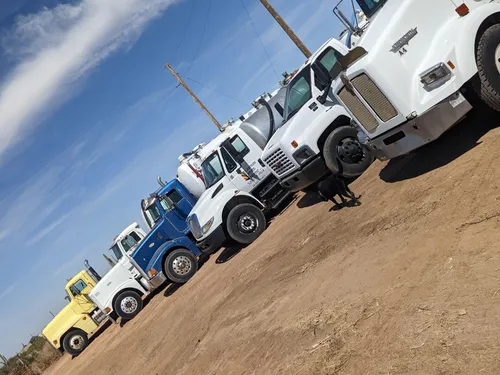
Canyon State Septic LLC
Phoenix, AZ
Canyon State Septic LLC is a septic service provider located in Phoenix, AZ. The company offers a range of services including septic tank pumping, inspections for certified transfer of ownership, installations, excavation, and septic pump repair or replacement. They hold certifications such as NAWT# 14870ITC and ADEQ# 2673, indicating compliance with industry standards.
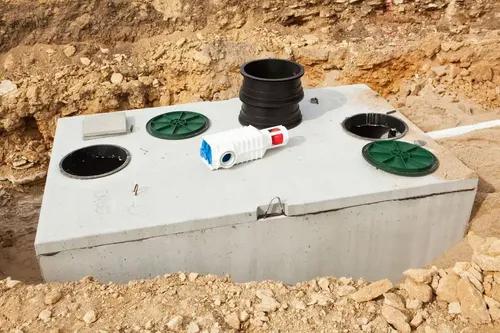
Simply Rooter and Septic Mesa
236 S Alma School Rd, Mesa, AZ 85210
Simply Rooter and Septic Mesa is a family-owned company providing septic system installation, repair, pumping, and inspection services in Phoenix, AZ, and the surrounding areas including Maricopa and Mesa. With over 25 years of experience, they specialize in advanced septic system solutions tailored to local environmental and regulatory conditions. Their services include emergency septic repairs available 24/7, using precise engineering and diagnostic methods to ensure long-term system performance and environmental responsibility.
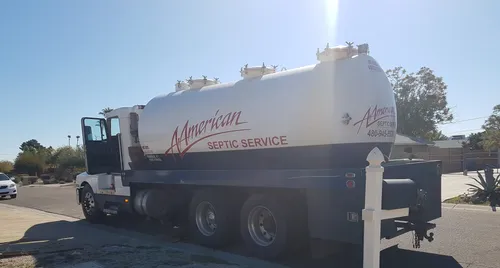
A-American Septic Service
1737 E Jackson St, Phoenix, AZ 85034
A-American Septic Service provides residential and commercial septic tank services in Phoenix, AZ. Their offerings include septic tank inspections, pumping, cleaning, maintenance, repair, installation, and design. The company also handles grease trap cleaning and preventative maintenance. A-American Septic Service works directly with clients to assess and address their septic system needs.
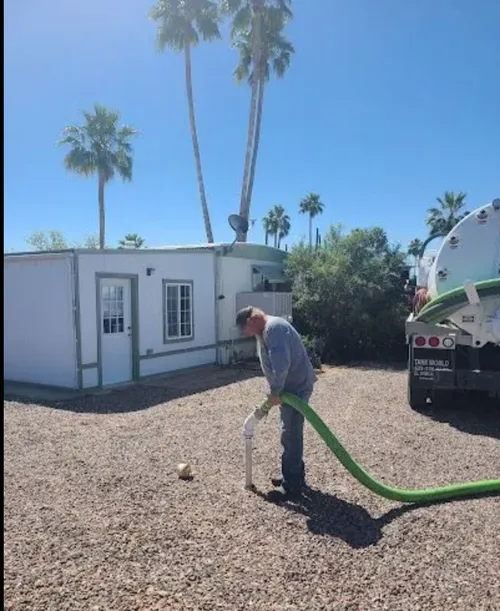
Arizona Pumping
Phoenix, AZ
Arizona Pumping is a septic tank pumping, installation, and repair company serving Phoenix, AZ, and surrounding areas including Apache Junction. Owned and operated by Cade, who has over 30 years of experience, the company offers comprehensive septic services for both residential and commercial clients. Their capabilities include septic system installations, maintenance, repairs, sewer taps, and septic tank excavating. Arizona Pumping focuses on providing personalized, hands-on service with attention to detail, ensuring septic systems operate efficiently and reliably.
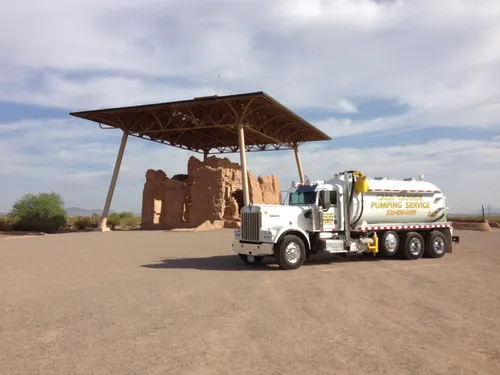
Casa Grande Septic Services
Casa Grande, AZ 85122
Casa Grande Septic Services is a family-owned company based in Phoenix, AZ, providing septic tank pumping, inspection, and repair services. Serving residential, commercial, and industrial clients, they offer a range of services including electronic septic tank locating, drain cleaning, excavation, and high-pressure jetting. The company has an ADEQ certified inspector for septic inspections and repairs. With over 60 years of experience since 1953, Casa Grande Septic Services operates 24/7 to address septic system concerns promptly.
Understanding Septic System Regulations in Queen Creek
Septic system maintenance and repair in Queen Creek are governed by a specific set of rules. The town is uniquely situated across two counties-Maricopa and Pinal-each with its own Environmental Services Department that enforces Arizona Department of Environmental Quality (ADEQ) guidelines 1 2. This means the specific permitting process for your septic work depends on which side of the county line your property resides.
A core principle is that any significant repair or alteration to your system must be performed by a state-licensed contractor, and most work requires prior approval from the county. You or your contractor must obtain an "Approval to Construct" or an "Alteration Permit" before starting work on a failing system. For major repairs, this often begins with submitting a "Notice of Intent to Discharge" application. Even after the repair is complete, a county inspector must approve the work before it is backfilled 3. This regulatory framework is designed to ensure repairs are done correctly, safeguarding groundwater quality in the region.
Common Types of Septic Repairs
Not all septic issues require a full system replacement. Repairs generally fall into three categories, ranging from simple fixes to complex projects.
Minor Component Repairs
These are the most common and least invasive fixes. They address problems before they cause system-wide failure. Examples include:
- Replacing Tank Baffles: The inlet and outlet baffles inside your tank are crucial for preventing scum and sludge from clogging the drain field. If damaged, they must be replaced.
- Installing or Repairing Risers and Lids: Modern, secure risers bring tank access to the surface, making inspection and pumping easier. Repairing a damaged or unsafe lid is a critical safety upgrade.
- Fixing Broken Pipes: Repairing the pipe between your house and the septic tank, or the effluent pipe to the drain field, can resolve backups and leaks.
Major System Alterations
When key components fail, more extensive work is needed. This level of repair always requires a county permit.
- Tank Replacement: A cracked, collapsed, or leaking septic tank must be replaced. In some cases, upgrading to a larger tank may be required by current code.
- Drain Field Repair or Replacement: This is often the most costly repair. If the soil absorption area (leach field) has failed-evidenced by soggy ground, sewage odors, or effluent surfacing-it may need to be repaired, expanded, or completely replaced 4 5.
Advanced Treatment System Maintenance
Many newer homes in Queen Creek, especially those with smaller lots or challenging soil, use Alternative Treatment Systems (also called Advanced Treatment Units or ATUs). These systems have mechanical components like pumps, aerators, alarms, and filters that require specialized knowledge to service and repair 6 7.
System Abandonment
In cases where repair is not feasible or a home is connecting to a new municipal sewer line, the old septic system must be properly abandoned. This involves pumping out all waste, having the tank physically crushed or filled with an inert material like sand, and ensuring the drain field is safely taken out of service. A permit is required for this process as well.
Find the perfect septic system repair companies for your needs
Get personalized recommendations and expert advice
The Inspection & Diagnosis Process
Before any repair can be planned, a thorough inspection is necessary to diagnose the problem. For property sales, this inspection is mandatory and results in a formal Report of Inspection (ROI) 8. The typical inspection process includes:
- Locating & Uncovering the Tank: The technician will locate the tank and dig to expose the access lids.
- Visual Assessment: They check the liquid level in the tank. A level higher than the outlet pipe suggests a drain field blockage, while a low level could indicate a tank leak.
- Pumping & Internal Inspection: The tank is pumped to remove sludge and scum, allowing for a clear view of the tank's interior walls, baffles, and the outlet filter (if present) for cracks or damage 9.
- Drain Field Evaluation: The yard is inspected for classic signs of failure: unusually lush or green grass over the field, soggy soil, or standing effluent 10 11.
- Reporting: The findings are documented. This report is used to determine the necessary repairs and is submitted to the county as part of the permit application for major work.
Understanding Repair Costs in Queen Creek
The cost of septic work varies widely based on the repair's complexity, the system's size, and soil conditions. Below are general price ranges for common services in the area 12 13 14 15.
- Comprehensive Inspection & Pumping: $400 - $1,000+. The price depends on tank accessibility and size. Pumping is almost always part of a proper inspection.
- Minor Repairs (Baffles, Risers, Pipes): $500 - $1,500. These are relatively straightforward fixes once the tank is accessed.
- Major Repairs (Drain Field Repair/Replacement): $3,000 - $10,000+. This is a significant excavation project. Costs soar if a completely new leach field is required or if alternative treatment components need replacement.
- New System Installation: $15,000 - $40,000+. This is the cost if the existing system is beyond repair and must be completely replaced with a new, permitted system.
Proactive Maintenance to Avoid Costly Repairs
The best repair is the one you can prevent. Consistent maintenance is far more affordable than emergency septic service.
- Pump Regularly: The single most important step is to have your tank pumped every 3 to 5 years by a licensed professional 16. This prevents solids from overflowing into and clogging the drain field, which is the leading cause of system failure.
- Conserve Water: Reducing overall water use lessens the hydraulic load on your drain field, helping it absorb and treat effluent effectively 17.
- Keep Detailed Records: Maintain a file of all inspection reports, pumping receipts, and repair permits. This is invaluable for troubleshooting and is required documentation during a property transfer 18.
- Know Your Emergency Options: Several licensed, local companies in Queen Creek offer 24/7 emergency service for sudden backups or failures 19 20.
Frequently asked questions
Sources
Footnotes
-
Septic System Repairs: Guidelines and Limitations - https://www.graham.az.gov/DocumentCenter/View/763/Septic-System-Repairs---Guidelines-and-Limitations-PDF ↩
-
Frequently Asked Questions - CivicPlus.CMS.FAQ - Pinal County - https://www.pinal.gov/Faq.aspx?TID=27,25,26,30,31,36 ↩
-
Commercial/T.I. Inspection Requirements - Pinal County - https://www.pinal.gov/DocumentCenter/View/434/017B---Commercial-TI-Inspection-Requirements-PDF ↩
-
Frequently Asked Questions - CivicPlus.CMS.FAQ - Pinal County - https://www.pinal.gov/m/faq ↩
-
Septic Systems - Cochise County - https://www.cochise.az.gov/898 ↩
-
Frequently Asked Questions - CivicPlus.CMS.FAQ - https://www.maricopa.gov/2564/Onsite-Wastewater-Septic-Systems-FAQs ↩
-
Septic Tank Regulations Homeowners Compliance Guide | Blog - https://www.blueribbonseptic.com/blog/septic-tank-regulations-homeowners-compliance ↩
-
WQD | Permit | OSWW Type 4.02 - 4.23 GP - ADEQ - http://azdeq.gov/wqd-permit-osww-type-402-423-gp ↩
-
Arizona Septic Tank Requirements - https://www.ntotank.com/blog/arizona-septic-tank-requirements ↩
-
Arizona Septic Tank Inspection Guide - https://www.clickapro.com/septic-tank-inspection-guide/ ↩
-
What You Should Know When You're Having Your Septic System ... - https://extension.arizona.edu/sites/default/files/2024-08/az1554-2018.pdf ↩
-
Sunset Septic: Arizona Septic Pumping - https://www.sunsetsepticaz.com/ ↩
-
Inspecting Your Household Septic System | UA Cooperative Extension - https://extension.arizona.edu/publication/inspecting-your-household-septic-system ↩
-
Local septic tank pumping Experts in Queen Creek, AZ - https://queen-creek-az.lincolnnesepticservice.com/ ↩
-
How Much Does a Septic Inspection Cost in Arizona? - https://www.advantageairmechanical.com/blog/septic-inspection-cost-arizona ↩
-
Septic System Repairs: Guidelines and Limitations - Graham.az.gov - https://www.graham.az.gov/DocumentCenter/View/763/Septic-System-Repairs---Guidelines-and-Limitations-PDF ↩
-
Septic Systems in Arizona: A Comprehensive Overview. - https://blackmountainsepticservices.com/septic-systems-in-arizona-a-comprehensive-overview/ ↩
-
Navigating a Septic Certification in Arizona - https://www.machocontracting.com/navigating-septic-certification-in-arizona ↩
-
Foster Septic Tank Pumping, Cleaning, Repair & Installation - https://fosterseptictank.com/ ↩
-
Plumbing & Septic Services | San Tan Valley, AZ | Cartright's ... - https://www.cartrightsplumbing.com/ ↩