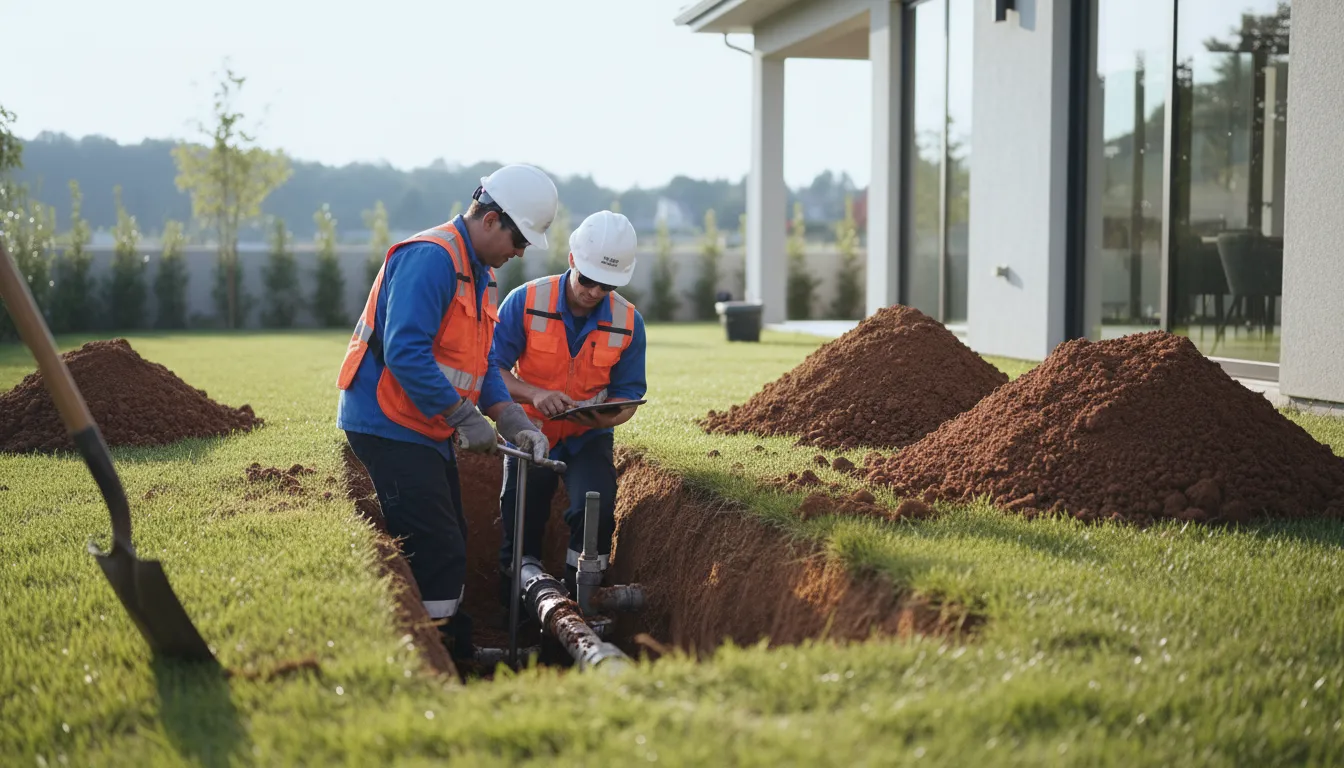
Find the Best Septic System Repair Companies for Your Business
No obligation • Fast responses • Nationwide coverage

Why you can trust Septic Spot
Septic Spot is a leading United States resource for understanding and comparing septic services. Our editors review providers using consistent criteria and verify key business details. Listings and scores are independent, and companies cannot pay to influence our content.
Search providers near you
Top Septic System Repair Companies in Azusa, California Ranked
When your home's onsite wastewater treatment system fails, it's more than an inconvenience-it's a potential health hazard and a complex regulatory issue. Septic system repair in Azusa involves diagnosing and fixing components of your private sewage system, from the tank to the drainfield, to restore safe and compliant operation. This work is strictly governed by Los Angeles County to protect local groundwater and public health. Understanding the process, costs, and local rules can help you navigate finding a qualified professional to restore your system efficiently.
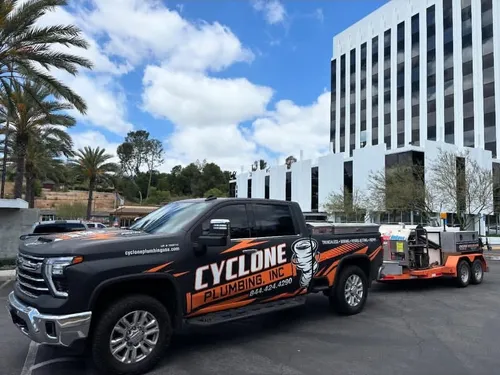
Cyclone Plumbing USA
1440 N Harbor Blvd suite 840, Fullerton, CA 92835
Cyclone Plumbing USA is a plumbing company based in Fullerton, CA, serving homes and businesses throughout Orange County. They offer a wide range of plumbing services, including septic tank inspection and septic system repair, as well as drain cleaning, hydro jetting, water heater installation, and leak detection. The company uses advanced equipment such as sewer cameras to diagnose issues and provides same-day repairs when needed. Cyclone Plumbing USA operates 24/7, offering emergency plumbing services at any time. The team at Cyclone Plumbing USA consists of licensed and insured professionals with years of hands-on experience. They emphasize transparency and fair pricing while delivering quality workmanship. Their commitment to customer satisfaction and comprehensive maintenance plans helps prevent costly repairs and ensures plumbing systems function efficiently.

High Speed Rooter & Plumbing
3831 Arden Dr, El Monte, CA 91731
High Speed Rooter & Plumbing is a septic tank pumping and repair company based in Los Angeles, CA. They provide comprehensive septic system services, including routine maintenance and complex repairs, using advanced technology and certified master plumbers. Their fully stocked trucks and state-of-the-art equipment enable efficient service delivery. The company also offers professional gas line installation and repair. High Speed Rooter & Plumbing provides 24/7 emergency services to address urgent plumbing and septic issues promptly.
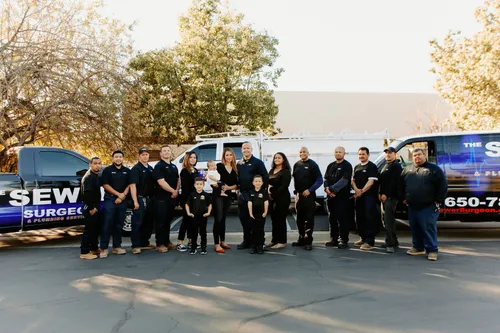
The Sewer Surgeon
220 S Glendora Ave ste a, Glendora, CA 91741
The Sewer Surgeon is a septic system repair company based in Los Angeles, CA, offering a wide range of plumbing services including drain cleaning, sewer repair, and septic to sewer conversions. They specialize in trenchless sewer line repair using robotic technology, which minimizes surface disruption during repairs. With over 20 years of experience, The Sewer Surgeon serves both residential and commercial clients and provides 24/7 emergency plumbing services without overtime charges.
AAP ALL AMERICAN PLUMBING HOME SERVICES
6711 Studio Pl, Riverside, CA 92509
AAP ALL AMERICAN PLUMBING HOME SERVICES is a plumbing and septic service provider based in Riverside, CA. They offer a wide range of services including septic tank pumping, septic system repair, and septic pump replacement. The company also provides commercial plumbing services with 24/7 availability for high-volume businesses. Their capabilities include hydro jetting, trenchless sewer repairs, and slab leak detection and repair. With over two decades of experience working with homeowners associations and property managers across Southern California, they bring extensive knowledge and resources to their work.
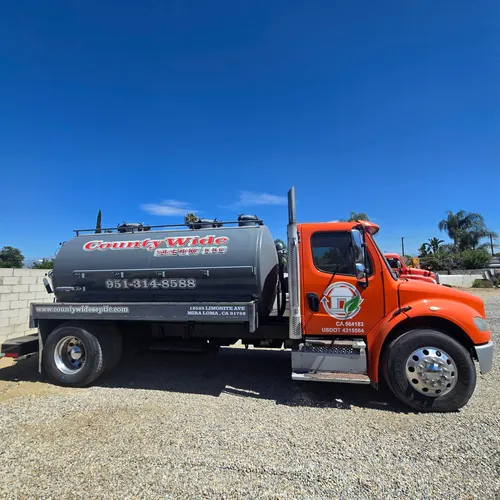
Countywide Septic Pumping LLC
5290 Capella Ct, Jurupa Valley, CA 91752
Countywide Septic Pumping LLC provides septic tank installation, pumping, inspection, and repair services in Los Angeles, CA, and surrounding counties including Riverside, Orange, and San Bernardino. They serve both residential and commercial clients, handling everything from soil sampling and permit acquisition to system maintenance and emergency repairs. The company offers 24-hour emergency septic tank pumping and repair services to address urgent needs promptly. Countywide Septic Pumping uses updated equipment to ensure effective septic system performance and safe installation, supporting properties where municipal water and sewage services are unavailable.
Understanding Septic Systems and Local Regulations
An onsite wastewater treatment system (OWTS) is a self-contained sewage treatment plant for properties not connected to a municipal sewer line 1. In Azusa, these systems are under the jurisdiction of the Los Angeles County Department of Public Health, Environmental Health Division. They enforce state and local standards to ensure systems do not contaminate soil or groundwater, which is a critical concern 2.
A key regulation that directly impacts repair options is the mandatory sewer connection rule. If a public sewer line is available within 200 linear feet of your property line, the county may deny a permit to repair a failing septic system. Instead, you will likely be required to connect to the public sewer, which is a different and often more costly project 3 4. A system is typically considered "failing" if there is surfacing sewage, sewage backup into the home, or a structural defect that allows untreated waste to escape 5.
When Do You Need a Septic System Repair?
Recognizing the signs of a failing system early can prevent environmental damage and more expensive fixes. Common indicators include:
- Sewage Backups: Slow drains or sewage backing up into household toilets, showers, or sinks.
- Surface Ponding: Wet, soggy, or foul-smelling areas in your yard, particularly over the drainfield or tank.
- Unusually Lush Grass: Patches of grass over the drainfield that are much greener and grow faster than the rest of the lawn, indicating a nutrient surge from leaking effluent.
- Gurgling Sounds: Persistent gurgling noises from your plumbing fixtures.
- Bad Odors: Persistent sewage smells inside your home or around your yard.
If you notice any of these signs, it's crucial to contact a professional for an inspection immediately to assess the need for septic tank repair or drainfield work.
The Professional Diagnostic Process
Before any repair can be planned, a thorough inspection is necessary to pinpoint the problem. A qualified technician will typically follow a multi-step diagnostic process 6 7:
- Locating and Opening the Tank: The first step is to find the tank and its access lids. If lids are buried, the installation of risers may be recommended for future ease of service.
- Sludge and Scum Measurement: Using specialized tools, the technician measures the levels of sludge (solid waste) and scum (floating waste) in the tank. Excessive buildup is a common cause of system failure and indicates a need for pumping or more serious intervention.
- Tank and Baffle Inspection: The interior of the tank is checked for structural cracks, and the inlet and outlet baffles (which control the flow of waste) are inspected for damage or blockage. Failed baffles are a common repair item 8.
- Drainfield Evaluation: The area above the leach field is examined for signs of failure, such as standing water or overly lush vegetation.
- Advanced Diagnostics: For hidden problems, professionals may use a sewer camera to inspect pipes for breaks, roots, or blockages 9. A dye test may also be performed, where non-toxic dye is flushed into the system to visually confirm if wastewater is surfacing in the yard 10.
Common Types of Septic Repairs in Azusa
The scope and cost of repairs vary widely based on the problem's nature and location. Here are some of the most frequent septic fixes performed in the area:
- Minor Component Repairs: This includes fixing or replacing damaged tank lids, risers, or inlet/outlet baffles. These are generally the least invasive and most affordable repairs, often necessary after an inspection.
- Pipe Repair or Replacement: Broken pipes between your house and the septic tank or between the tank and the drainfield can cause leaks and backups. Repairing or replacing these lines typically involves excavation, though trenchless methods are sometimes available to minimize landscape damage 11 12.
- Drainfield Rehabilitation or Replacement: This is often the most significant and expensive repair. If the soil absorption area (leach field or seepage pits) has failed due to clogging, compaction, or hydraulic overload, it may need to be replaced. Costs can escalate based on soil conditions, accessibility, and the need for new percolation tests.
- Full Tank Replacement: In cases of severe structural failure, the entire septic tank may need to be excavated and replaced with a new, modern unit that meets current code.
Find the perfect septic system repair companies for your needs
Get personalized recommendations and expert advice
Understanding Repair Costs and Permitting
Getting a clear estimate is vital. In Azusa and across California, repair costs are influenced by the repair type, soil conditions, system accessibility, and county permit fees. Based on regional data, here is a general cost breakdown for septic system repairs 13 14 15:
- System Inspection/Diagnostics: $275 - $1,800
- Minor Repairs (baffles, lids): $300 - $900
- Pipe Repair/Replacement: $1,200 - $4,000
- Drainfield or Seepage Pit Replacement: $5,000 - $15,000+
- Full Septic Tank Replacement: $9,500 - $15,000
Crucially, most repairs require a permit from LA County Environmental Health. This includes any work involving structural changes, component replacements, or addressing surfacing sewage 16. The permitting process ensures the repair plan complies with all health and safety codes. Your licensed contractor should typically handle the permit application, but it's your responsibility as the homeowner to verify that permits are pulled. Working without a required permit can lead to fines, invalidate your homeowner's insurance for related damages, and create problems if you sell your home.
Choosing a Licensed Professional for Repairs
Not every plumber is qualified to work on septic systems. In California, septic system repair must be performed by a licensed contractor. The relevant license classifications include a General Engineering (Class A) license or specialty licenses like C-42 (Sanitation System) or C-36 (Plumbing) 17. Always ask for and verify the contractor's state license number.
When evaluating local providers, look for companies with specific experience in septic diagnostics and repair, not just pumping. They should be familiar with Los Angeles County's specific regulations and permit process. Many established service providers in the greater San Gabriel Valley, such as those based in Arcadia, San Dimas, and Glendora, serve Azusa residents 18 19.
Frequently asked questions
Sources
Footnotes
-
Onsite Wastewater Treatment System (OWTS) | Environmental Health | County of Santa Clara - https://deh.santaclaracounty.gov/land-use/onsite-wastewater-treatment-system-owts ↩
-
ENVIRONMENTAL HEALTH - https://www.waterboards.ca.gov/lahontan/water_issues/programs/owts/docs/lamp_tracking/la_lamp_20180517.pdf ↩
-
homeowners-guide-eh-review-septic-system.pdf - http://www.publichealth.lacounty.gov/eh/docs/business/homeowners-guide-eh-review-septic-system.pdf ↩
-
Rebuilding a Home with an Existing Septic System - https://recovery.lacounty.gov/rebuilding/septic-systems/ ↩
-
Rebuilding a Home with an Existing Septic System - http://www.publichealth.lacounty.gov/Eh/docs/safety/rebuilding-home-existing-septic-system-en.pdf ↩
-
How to Inspect a Private Septic System - https://www.youtube.com/watch?v=URhIPaX-csA&t=20 ↩
-
Septic Tank Testing & Inspection | What to Expect Guide | Blog - https://www.blueribbonseptic.com/blog/septic-tank-testing-and-inspection ↩
-
A 3-Step Checklist for Septic Tank Inspection - https://www.aaapumpingservice.net/a-3-step-checklist-for-septic-tank-inspection ↩
-
Septic Inspection Process Septic 911: A Comprehensive Guide - https://septic911.com/septic-inspection-process-septic-911/ ↩
-
Septic System Inspection and Maintenance - https://www.youtube.com/watch?v=uzksFrBBlzM&t=36 ↩
-
Drain & Sewer Services in Azusa, CA - Power Pro Plumbing - https://www.powerproplumbing.com/sewer/drain-sewer-services-azusa-ca ↩
-
Get Leach Line Repair in Monrovia, CA - https://monroviaseptic.com/get-leach-line-repair ↩
-
How Much Does Septic System Repair Really Cost in California - https://www.lanikseptic.com/septic-repair-cost/ ↩
-
Common Septic Tank Repairs In California (& What They Cost) - https://cacciaplumbing.com/blog/common-septic-tank-repairs-in-california/ ↩
-
Septic Repair Cost in California: Complete Breakdown of Pricing Factors and Variations - https://www.lanikseptic.com/septic-repair-cost/ ↩
-
Who needs a permit for a septic system? - https://www.waterboards.ca.gov/centralcoast/water_issues/programs/septics/permits.html ↩
-
Onsite Wastewater Treatment System in Los Angeles County - http://www.publichealth.lacounty.gov/eh/business/septic-systems.htm ↩
-
Plumbing Services in Azusa, CA - The Sewer Surgeon - https://casewersurgeon.com/service-areas/azusa-ca/ ↩
-
TOP 10 BEST Septic Tank Pumping near Azusa, CA - Yelp - https://m.yelp.com/search?find_desc=Septic+Tank+Pumping&find_loc=Azusa%2C+CA ↩