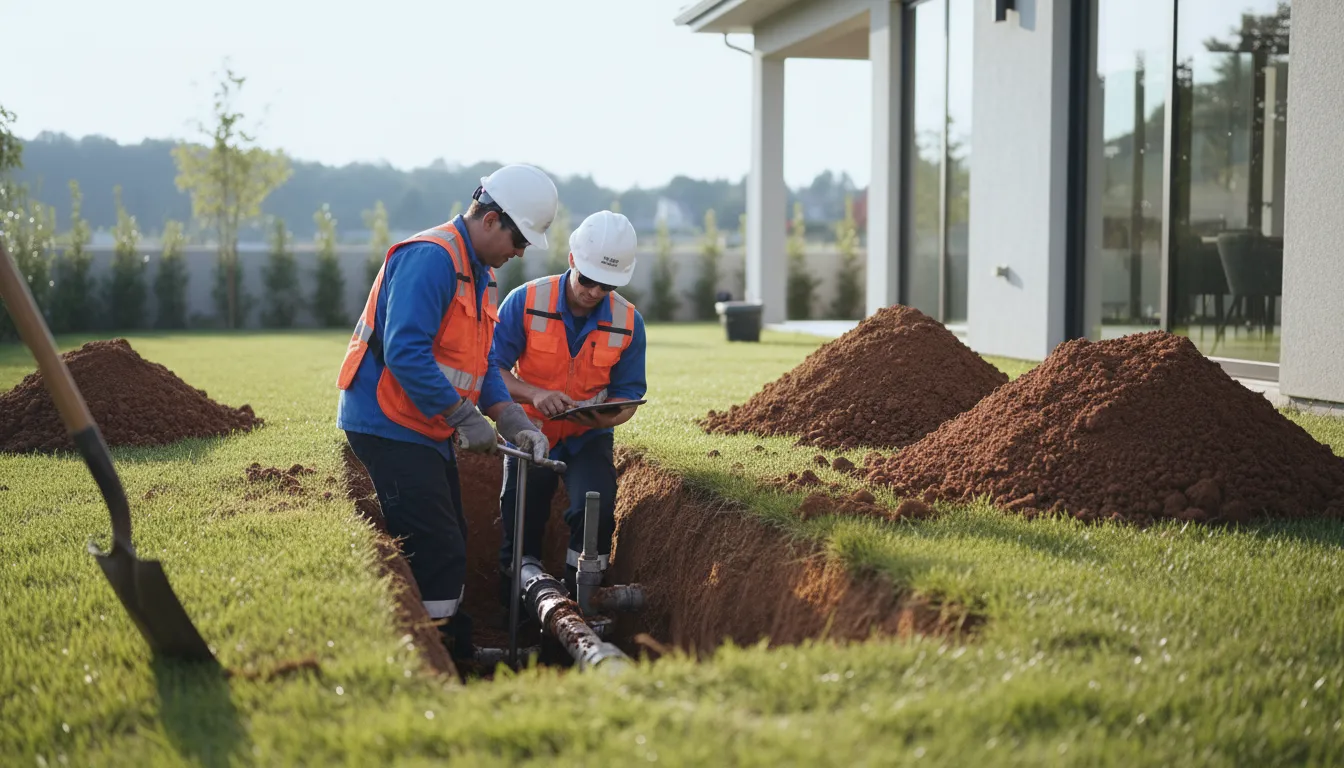
Find the Best Septic System Repair Companies for Your Business
No obligation • Fast responses • Nationwide coverage

Why you can trust Septic Spot
Septic Spot is a leading United States resource for understanding and comparing septic services. Our editors review providers using consistent criteria and verify key business details. Listings and scores are independent, and companies cannot pay to influence our content.
Search providers near you
Top Septic System Repair Companies in Lancaster, California Ranked
A properly functioning septic system is essential for protecting your home's value, your family's health, and the local environment in Lancaster. When components fail, timely and professional septic system repair is critical to prevent backups, property damage, and regulatory issues. This guide explains the common repairs needed for onsite wastewater treatment systems in the Antelope Valley, outlines the local permitting process, and provides a framework for finding qualified local specialists to restore your system to full operation.

Brothers Plumbing And Septic
42552 3rd St E, Lancaster, CA 93535
Brothers Plumbing And Septic is a family-owned business with over 20 years of experience serving Los Angeles, CA, and surrounding areas. They offer a range of septic system services including inspections, maintenance, repairs, and full replacements. The company also handles general plumbing issues and commercial plumbing needs. Their expertise includes diagnosing septic tank problems and providing reliable repairs to protect properties. Brothers Plumbing And Septic provides 24/7 emergency plumbing services to address urgent issues promptly.
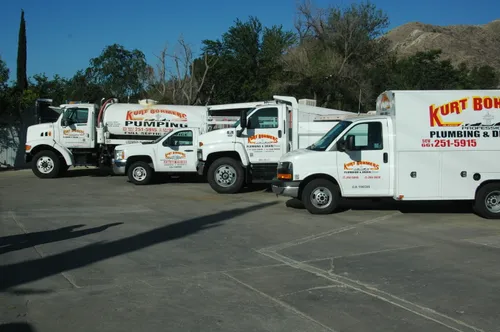
Kurt Bohmer Plumbing Inc.
16743 Sierra Hwy, Canyon Country, CA 91351
Kurt Bohmer Plumbing Inc. is a plumbing and septic service provider based in Los Angeles, CA. They serve the Santa Clarita Valley, Antelope Valley, and Ventura County, offering residential and commercial plumbing solutions. Their services include septic tank pumping, installation, repairs, and complete system design, supported by a fleet of pumping trucks and 24/7 availability for septic tank pumping. They also provide sewer and drain cleaning with high-pressure water jetting and video camera inspections. With over 35 years of experience, Kurt Bohmer Plumbing Inc. has established a long-standing presence in Southern California.
Understanding Your Septic System in Lancaster
Before diving into repairs, it's helpful to know what you're working with. A standard septic system in Lancaster typically consists of a watertight tank that separates solids from liquids, and a dispersal area, often called a drainfield or leach field, where treated effluent is absorbed into the soil. Many older properties in the area may also use seepage pits, which are deep, vertical absorption systems. Proper maintenance of all these components is key to avoiding major septic tank fixes and ensuring your household wastewater is processed safely.
Common Signs You Need Septic Repairs
Ignoring warning signs can turn a minor fix into a catastrophic failure. Be alert for these indicators that your onsite wastewater system requires attention:
- Sewage Backups: The most urgent sign, often appearing in drains, toilets, or showers.
- Foul Odors: Persistent sewage smells near the tank, drainfield, or inside the home.
- Soggy Lawn: Unusually lush, wet, or spongy patches of grass over the drainfield, especially when it hasn't rained.
- Slow Drains: Gurgling sounds or slow drainage throughout the house that isn't resolved with plunging.
- Standing Water: Puddles of grey or black water surfacing in your yard.
If you notice any of these, it's time to contact a professional for an inspection to diagnose the problem.
The Professional Repair Process: From Diagnosis to Completion
A reputable septic service provider will follow a systematic approach to ensure the job is done correctly and complies with all regulations.
Step 1: Comprehensive Inspection & Diagnosis
The repair process begins with a thorough assessment. A technician will locate and uncover your tank's manhole covers to perform an internal inspection, checking water levels, scum, sludge, and the integrity of inlet/outlet baffles. They may conduct a flow test or use a camera to inspect pipes for blockages or cracks. For drainfield issues, a percolation or soil assessment test is often necessary to determine if the soil still has adequate absorption capacity 1 2.
Step 2: Understanding Lancaster & LA County Permitting
This is a critical step. The Los Angeles County Department of Public Health (LACDPH) has strict jurisdiction over all Onsite Wastewater Treatment Systems (OWTS) in Lancaster 3. A permit is required for virtually any repair, replacement, or modification of the tank or dispersal system 4. Furthermore, if an inspection reveals a "nonconforming" system (one that doesn't meet current code), or if you are adding bedrooms to your home, you will be required to bring the entire system up to current standards as part of the repair. This can significantly impact the project's scope and cost. Some repairs may also necessitate a formal site feasibility report 4 3.
Step 3: Executing the Repair
Once diagnosed and permitted, the physical repair work begins. Repairs must be performed by a contractor appropriately licensed for the work, such as a C-42 contractor in California. It's crucial to adhere to all county-setback requirements, which dictate minimum distances from the system to wells, homes, property lines, and other structures.
Find the perfect septic system repair companies for your needs
Get personalized recommendations and expert advice
Types of Septic System Repairs and Typical Costs
The cost of fixing your septic system in Lancaster varies dramatically based on the component that has failed. Below is a breakdown of common septic tank repairs and their associated price ranges, based on regional data 5.
Minor Component Repairs ($300 - $4,000)
These are typically contained fixes that address specific parts of the system.
- Baffle or Filter Repair/Replacement ($300 - $900): The baffles at the tank's inlet and outlet are crucial for preventing solids from escaping into the drainfield. These can crack or deteriorate over time.
- Pipe Repair ($1,200 - $4,000): This involves repairing or replacing the sewer line from the house to the tank or the effluent line from the tank to the drainfield. Costs depend on the length, depth, and accessibility of the pipe.
Major Drainfield Repairs ($5,000 - $15,000+)
When the soil absorption area fails, repairs become extensive and costly.
- Drainfield (Leach Field) Repair: Options can include installing a new leach field in a different area, replacing clogged pipes, or adding additional lines. A full replacement is often the only solution for a failed field.
- Seepage Pit Repair: Specialized repair or rehabilitation of these deep pits, which are common in older Lancaster systems, can be complex and expensive 6.
Full System Replacement ($8,000 - $22,000+)
In cases of catastrophic tank failure (collapse), severe drainfield failure, or when a nonconforming system must be brought to code, a complete system replacement may be the only viable option. This involves designing and installing a brand-new system that meets all current LA County health codes.
Maintaining Your System After Repairs
A repair is an investment worth protecting. To extend the life of your repaired system and avoid future problems:
- Pump Regularly: Have the tank pumped every 3 to 5 years by a professional to prevent solids from migrating to and clogging the drainfield 7.
- Conserve Water: Reduce strain on the system by fixing leaks and spreading out laundry loads.
- Mind What You Flush: Only human waste and toilet paper should go down the drain. Avoid chemicals, grease, wipes, and feminine products.
- Protect the Area: Never drive or park vehicles over the tank or drainfield, and avoid planting trees with deep roots nearby. Do not pave over the system 8 9.
Frequently asked questions
Sources
Footnotes
-
Understanding Septic Tank Inspections: A Complete Homeowner's ... - https://septic-masters.com/septic-tank-inspection-homeowner-guide/ ↩
-
Point of Sale Septic Inspections: What to Expect - https://westcoastsanitationinc.com/point-of-sale-septic-inspections-what-to-expect/ ↩
-
Conventional and Non-Conventional Onsite Wastewater Treatment ... - http://ph.lacounty.gov/eh/docs/ep_lu_ProfessionalGuide.pdf ↩ ↩2
-
Rebuilding a Home with an Existing Septic System - https://recovery.lacounty.gov/rebuilding/septic-systems/ ↩ ↩2
-
Common Septic Tank Repairs In California (& What They Cost) - https://cacciaplumbing.com/blog/common-septic-tank-repairs-in-california/ ↩
-
Lancaster CA Septic System Service - https://jlgsepticllc.com/service-areas/california/lancaster/ ↩
-
Southern California Septic System Regulations: What You Need to ... - https://www.lanikseptic.com/socal-septic-regulations/ ↩
-
The Californian's Guide To Septic Tanks - https://cacciaplumbing.com/blog/california-septic-tank-guide/ ↩
-
Home Septic System Education - https://www.lafayettela.gov/docs/default-source/stormwater-documents/home-septic-system-education.pdf?sfvrsn=b54e01f_2 ↩