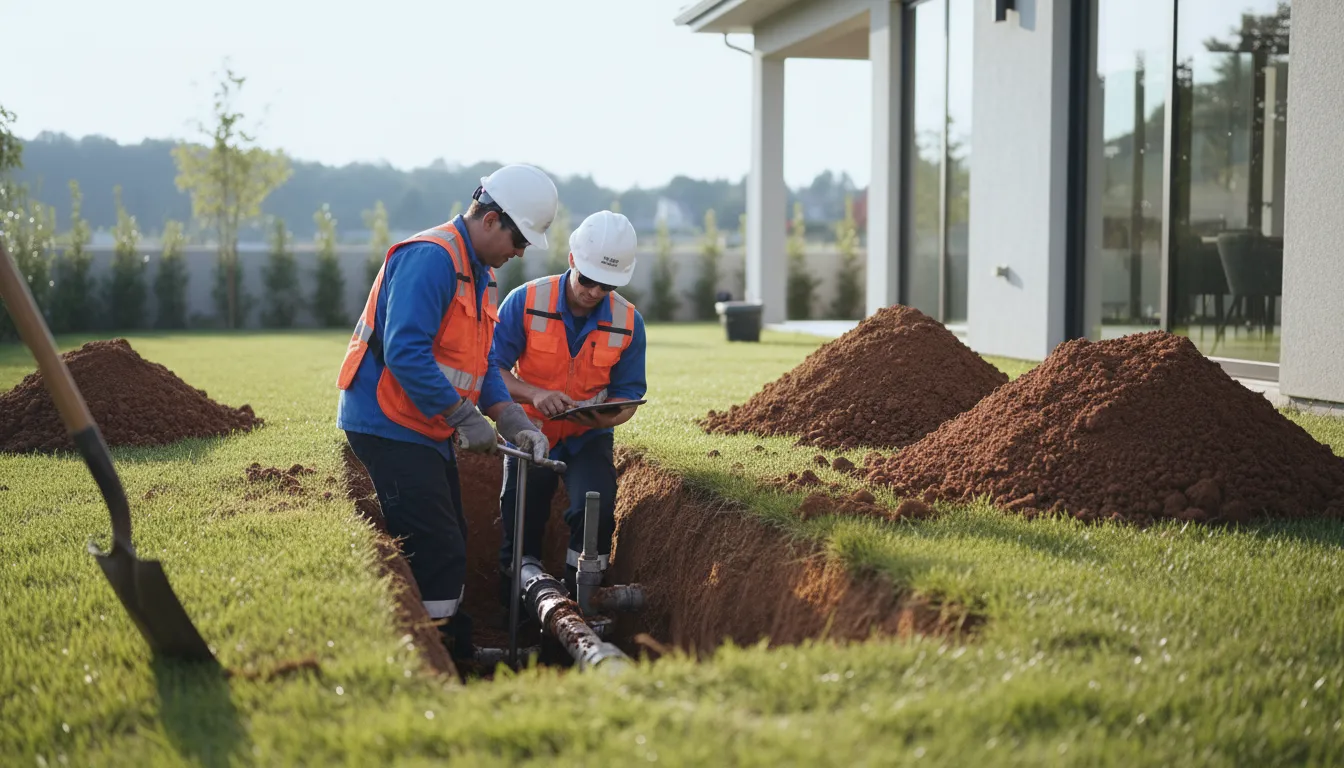
Find the Best Septic System Repair Companies for Your Business
No obligation • Fast responses • Nationwide coverage

Why you can trust Septic Spot
Septic Spot is a leading United States resource for understanding and comparing septic services. Our editors review providers using consistent criteria and verify key business details. Listings and scores are independent, and companies cannot pay to influence our content.
Search providers near you
Top Septic System Repair Companies in Santa Clarita, California Ranked
A failing septic system is a serious issue for any Santa Clarita homeowner, posing health risks and potential property damage. Septic system repair involves diagnosing and fixing problems with your onsite wastewater treatment system (OWTS), from minor pipe leaks to complete leach field replacements. Understanding the local regulations and repair process is crucial, as Los Angeles County has specific codes governing these systems. This guide will help you navigate the essentials of septic repair in Santa Clarita, from recognizing failure signs to working with licensed professionals and securing the necessary permits.
Advanced Sanitation - Septic Tank Pumping, Installation & Repair Ventura County
3379 Somis Rd Unit E, Somis, CA 93066
Advanced Sanitation - Septic Tank Pumping, Installation & Repair Ventura County provides septic system services in Los Angeles, CA, and surrounding areas including Ventura County and nearby cities. They offer septic tank pumping, installation, inspection, and repairs, as well as grease trap maintenance. The company uses modern equipment such as advanced camera technology for system inspections and works with registered geological engineers for septic system design and installation. With over 30 years of experience, Advanced Sanitation serves both residential and commercial clients and offers flexible hours to accommodate business schedules.
Sewer Man Septic Tank Pumping
16065 Foothill Blvd # B, Sylmar, CA 91342
Sewer Man Septic Tank Pumping provides septic tank pumping, cleaning, inspection, repair, and installation services in Los Angeles, CA. They use specialized equipment such as vacuum trucks and high-pressure water jets to maintain and clean septic systems, helping prevent backups and slow drainage. The company offers emergency septic pumping services for urgent needs and serves a wide range of nearby communities. Sewer Man Septic Tank Pumping is experienced in handling various septic system maintenance tasks to support property owners in the Los Angeles area.
Michael Penta Septic Tank Pumping
Los Angeles, CA
Michael Penta Septic Tank Pumping provides a range of septic services in Los Angeles, CA, including septic tank pumping, installation, inspection, and repair. The company also handles drain field repairs, sewage ejection pump services, and sewer line replacements. Their expertise includes advanced capabilities such as camera inspections for leaks and cracks, soil analysis for leach line repair, and installation of micro septic systems that treat wastewater to a higher quality. They ensure compliance with local regulations and offer comprehensive maintenance to extend the life of septic systems.
Conejo Bros Plumbing
1386 Del Verde Ct, Thousand Oaks, CA 91320
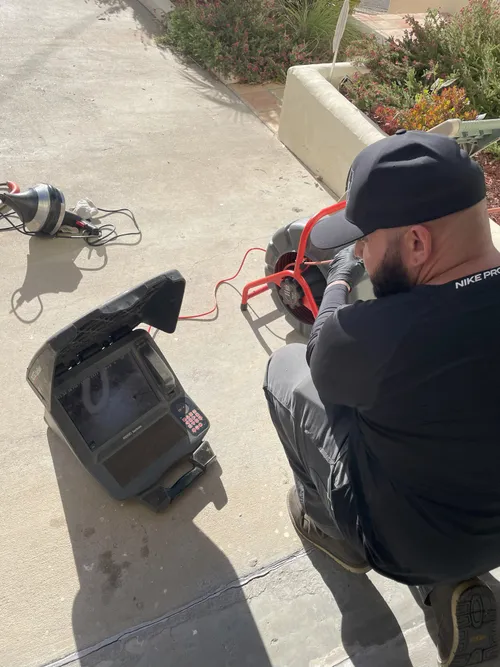
Conejo Bros Plumbing is a septic tank and plumbing service provider based in Oxnard, CA. They offer a wide range of services including septic tank inspection, pumping, repair, and replacement, as well as sewer mainline inspection and trenchless sewer and drain repair. Their capabilities include advanced trenchless pipe relining techniques that allow for pipe repairs without extensive digging, preserving property landscapes. Serving both residential and commercial clients throughout Ventura County and Conejo Valley, Conejo Bros Plumbing also provides 24/7 support for clearing blockages and other urgent plumbing needs.
Universal Plumbers
3315 Glendale Blvd #10, Los Angeles, CA 90039
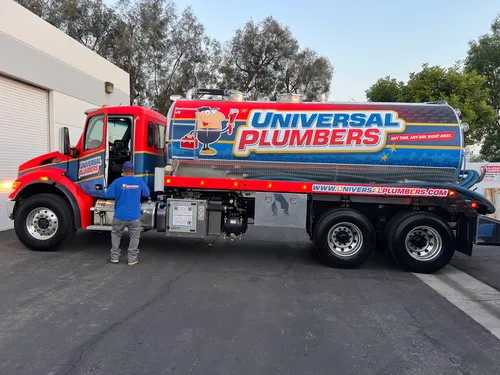
Universal Plumbers is a septic tank pumping, inspection, and repair company serving Los Angeles, CA. With over 30 years of experience in the plumbing industry and more than 30,000 residential and commercial jobs completed, they offer a wide range of plumbing services including emergency plumbing and sewer system maintenance. The company provides 24/7 emergency plumbing services, ensuring help is available at any time for urgent issues such as leaks, clogs, and sewer repairs. Established in 2008, Universal Plumbers combines extensive industry knowledge with around-the-clock availability to address plumbing needs efficiently.
Recognizing Signs of a Failing System
Before diving into repairs, you must identify that a problem exists. A malfunctioning onsite wastewater system will give you clear warnings. Ignoring these signs can lead to environmental contamination, costly property damage, and violations of county health codes.
Common indicators include:
- Sewage Backups or Slow Drains: Toilets, showers, and sinks that drain very slowly or back up are a primary red flag.
- Foul Odors: Unpleasant sewage smells around the drain field or inside your home signal a serious issue.
- Soggy Ground or Lush Grass: Overly wet, spongy soil or patches of grass that are much greener and faster-growing than the surrounding area over your leach field indicate effluent is surfacing.
- Gurgling Sounds: Strange noises from your plumbing when water is running can point to a blockage or failure in the system.
- Failed Dye Test: A professional inspection often includes a dye test, where colored water flushed down a drain appears on the ground surface, confirming a failure 1.
Santa Clarita and LA County Repair Regulations
All septic system maintenance and remediation work in Santa Clarita falls under the jurisdiction of the Los Angeles County Department of Public Health. The rules are designed to protect public health and groundwater quality. A key regulation is that if a public sewer line is available within 200-300 feet of your property, the county may require you to connect to it instead of repairing your existing OWTS. This is often a long-term solution mandated for failing systems.
For repairs, a permit is always required from the LA County Department of Public Health 2. The process begins with an evaluation by a qualified, licensed septic contractor who will determine if the system can be repaired or must be completely replaced. Their repair plan must then be submitted to the county for permit approval before any work begins. The area's regulations are guided by LA County Code 20.32 (Sanitary Sewers) and the City of Santa Clarita Unified Development Code 3 4.
The Professional Inspection & Evaluation Process
You cannot repair what you haven't properly diagnosed. A professional inspection is the critical first step and is often required by the county for a permit application. In California, the average cost for a thorough septic inspection is around $800. This inspection provides the blueprint for all subsequent repair work.
A comprehensive evaluation typically includes:
- System History Review: The contractor will discuss the system's age, maintenance history, and any past issues.
- Locating and Uncovering: The exact locations of the tank, distribution box, and drain field are identified and excavated for access.
- Visual and Functional Testing: The contractor runs water through the system, checks for leaks at tank seams and pipe connections, and may perform a dye test.
- Liquid Level and Sludge Check: This is crucial. The inspector measures the levels of sludge and scum inside the tank. If the sludge layer is too thick, it can flow into and clog the drain field, causing system failure 5.
- Soil Assessment: The condition and absorption capacity of the soil in the leach field are evaluated.
Find the perfect septic system repair companies for your needs
Get personalized recommendations and expert advice
Common Types of Septic System Repairs
The nature of the repair depends entirely on the inspection findings. Repairs can range from simple fixes to extensive excavations.
- Tank Repairs: This includes replacing broken or deteriorated inlet/outlet baffles, sealing cracks or leaks in the tank structure, or installing new access risers to make future pumping and inspection easier 6.
- Leach Field/Drain Field Repair: This is often the most complex and costly part. Solutions can involve replacing clogged sections of perforated pipe, "rejuvenating" the field with specialized treatments, or extending the field into new soil areas. In some cases, a new seepage pit may be installed if soil conditions allow 7.
- Pipe and D-Box Repairs: Repairing or replacing broken pipes between the house and tank or between the tank and drain field, as well as fixing the distribution box that evenly disperses effluent.
- Full System Replacement: If the tank has collapsed, the drain field has completely failed, or the system is too old and undersized for the home, a full replacement may be the only option. This involves designing and installing a completely new OWTS that meets current codes 8 9.
Understanding Repair Costs and Scope
Costs for septic system remediation in Santa Clarita vary widely based on the problem's severity. Minor repairs, such as fixing a pipe or replacing a baffle, may range from $500 to $2,000. A standard inspection, as noted, averages around $800 in California 10. However, significant drain field repairs or a complete system replacement are major projects. These can cost anywhere from $3,000 to well over $10,000, depending on the system size, soil conditions, and accessibility 11 12. It's essential to get detailed, written estimates from multiple licensed contractors that break down parts, labor, and permit fees.
The Permitting and Repair Workflow
Navigating the official process is a key part of any septic system fix. Following the correct steps ensures your repair is legal, safe, and will pass final inspection.
- Contact a Licensed Professional: At the first sign of trouble, hire a contractor licensed by the state of California to work on OWTS. They will perform the initial diagnostic inspection.
- Submit a Repair Plan: Based on the evaluation, your contractor will prepare a detailed plan for the necessary repairs or replacement and submit it, along with the required application forms, to the LA County Department of Public Health.
- Obtain the Permit: Do not start any work until the county has issued the official permit. Your contractor usually handles this submission.
- Perform the Repairs: The licensed professional executes the approved repair plan. All work must adhere to the county's health and safety codes.
- Schedule Final Inspections: Once repairs are complete, the county health department inspector must perform a final inspection before the system is covered back up 13 14. This ensures the work complies with the permitted plans and is functioning correctly.
Maintaining Your System Post-Repair
After investing in repairs, proper maintenance is vital to protect your investment and avoid future failures. This includes regular pumping (typically every 3-5 years), conserving water to avoid overloading the system, avoiding flushing harmful chemicals or non-biodegradable materials, and protecting the drain field from heavy vehicles or deep-rooted plants. A well-maintained septic system can last for decades.
Frequently asked questions
Sources
Footnotes
-
How to Get Septic to Pass Inspection - https://www.guardianangelinspections.com/how-to-get-septic-to-pass-inspection ↩
-
Onsite Wastewater Treatment System in Los Angeles County - http://www.publichealth.lacounty.gov/eh/business/septic-systems.htm ↩
-
Conventional and Non-Conventional Onsite Wastewater Treatment ... - https://www.rpvca.gov/DocumentCenter/View/13078/ep_lu_OWTS_ReqAndProc ↩
-
Sanitation - Engineering Services - City of Santa Clarita - https://santaclarita.gov/engineering-services/sanitation/ ↩
-
California Septic Tank Requirements | Onsite Wastewater ... - https://www.ntotank.com/blog/california-septic-tank-requirements ↩
-
Septic Tank Regulations Homeowners Compliance Guide | Blog - https://www.blueribbonseptic.com/blog/septic-tank-regulations-homeowners-compliance ↩
-
Septic System Inspections in Santa Clarita, CA | SewerMan - https://sewerman.com/santa-clarita-ca/services/oil-to-gas-conversions/ ↩
-
Southern California Septic System Regulations: What You Need to ... - https://www.lanikseptic.com/socal-septic-regulations/ ↩
-
Rebuilding a Home with an Existing Septic System - https://recovery.lacounty.gov/rebuilding/septic-systems/ ↩
-
How Much Does a Septic Inspection Cost? [2026 Data] - Angi - https://www.angi.com/articles/septic-inspection-cost.htm ↩
-
Maintaining your Septic System A Guide for Homeowners - https://www.ihs.gov/california/tasks/sites/default/assets/File/SFC-MaintainingYourSepticSystemGuide.pdf ↩
-
What to Expect from a Septic Inspection - Wind River Environmental - https://www.wrenvironmental.com/blog/2023/may/what-to-expect-from-a-septic-inspection/ ↩
-
ONSITE SYSTEMS MANUAL - California Water Boards - https://www.waterboards.ca.gov/sanfranciscobay/board_info/agendas/2016/January/SantaClaraOWTS/SCC_OWTS_B_Onsite_Systems_Manual.pdf ↩
-
Application for repair of failing septic/OWTS - https://deh.santaclaracounty.gov/land-use/onsite-wastewater-treatment-system-owts/application-repair-failing-septicowts ↩