Find the Best Septic System Repair Companies for Your Business
No obligation • Fast responses • Nationwide coverage

Why you can trust Septic Spot
Septic Spot is a leading United States resource for understanding and comparing septic services. Our editors review providers using consistent criteria and verify key business details. Listings and scores are independent, and companies cannot pay to influence our content.
Search providers near you
Top Septic System Repair Companies in Pensacola, Florida Ranked
A failing septic system is more than an inconvenience; it's a serious health and environmental concern for Pensacola homeowners. Septic system repair involves diagnosing and fixing issues with your onsite sewage treatment and disposal system, from the tank to the drainfield. Proper maintenance and timely fixes are crucial to protect your property, local groundwater, and the delicate ecosystems of the Florida Panhandle. This guide will help you understand the repair process, local regulations, and what to expect when you need to restore your system to proper working order.
Understanding When You Need Septic Repairs
Recognizing the signs of a failing septic system early can save you significant time and money. Common red flags include slow-draining sinks and toilets, unpleasant sewage odors in your yard or home, soggy or unusually lush grass over the drainfield, and sewage backing up into your home. In Pensacola's sandy soils and high water table, system failure can happen due to age, lack of maintenance, hydraulic overload, or root intrusion. If you notice any of these warning signs, it's time to contact a professional for an inspection to determine if septic tank servicing or a full system repair is necessary.
The Regulatory Landscape for Repairs in Escambia County
All septic system repair work in Pensacola requires oversight from state and local health authorities. The primary rulebook is the Florida Administrative Code Chapter 64E-6, which sets the standards for onsite sewage treatment and disposal systems. For any repair, alteration, or modification, you must obtain a permit from the Florida Department of Health in Escambia County. It's important to note that while the Department of Health (DOH) manages the permitting and inspection process, the Florida Department of Environmental Protection (DEP) now oversees long-term compliance for these systems.
The permit process is designed to ensure repairs meet current safety and environmental standards. A licensed septic contractor or homeowner must submit an application, a detailed site plan, and an "Existing System and System Repair Evaluation Form" to the local health department. Crucially, the actual repair work must be performed by a registered septic tank contractor or a licensed plumber-DIY repairs on critical components are not permitted 1. This ensures the work is done correctly and protects public health.
Common Types of Septic System Repairs
Septic issues can range from simple fixes to major excavations. Understanding the scope helps in planning and budgeting.
- Minor Repairs: These are often the most common and least invasive fixes. They include replacing broken inlet or outlet pipes, damaged baffles or tees inside the tank, clogged effluent filters, or adding/repairing access risers for easier future maintenance. Addressing these issues promptly can prevent more significant system failure.
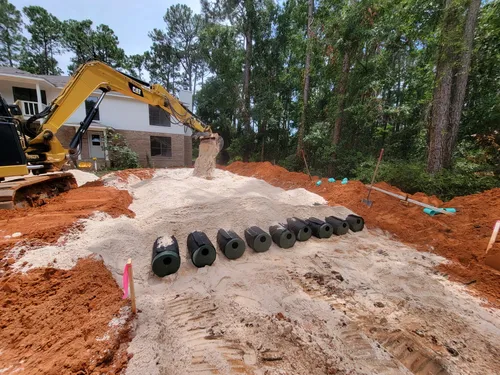
- Tank Replacement: If a septic tank is cracked, leaking, or structurally unsound, it must be replaced. Older tanks made of steel can corrode, and even concrete tanks can fail over time. Replacement involves excavating the old tank, disposing of it properly, and installing a new tank that meets current Florida standards 2 3.
- Drainfield Repair or Replacement: This is typically the most extensive and costly type of repair. A drainfield (or leach field) fails when the soil becomes clogged and can no longer absorb treated effluent. Symptoms include surfacing sewage and soggy ground. Repair might involve replacing a portion of the field, or a full replacement may be necessary, which requires a new site evaluation and percolation test 4 5.
- System Upgrades: In some cases, especially in environmentally sensitive areas or where the original system cannot handle the household's needs, a repair may involve upgrading the entire system. This could mean installing an advanced treatment unit, such as an Aerobic Treatment Unit (ATU), which provides additional treatment to reduce nutrients like nitrogen before the effluent reaches the drainfield 6.
The Step-by-Step Repair Process
Navigating a septic repair project involves several key stages, each with specific requirements.
- Professional Site Inspection & Diagnosis: The first step is a thorough evaluation by a licensed professional to pinpoint the exact cause of failure. They will locate all system components, assess the tank's condition, and probe the drainfield to determine the extent of the problem.
- Permit Application & Approval: Once a repair plan is developed, your contractor will submit the required paperwork to the Escambia County Health Department. The review process ensures the proposed fix complies with code 64E-6 7 8. In areas near water bodies, repairs may be required to include enhanced nutrient-reducing technology 9.
- Site Evaluation & Soil Testing: For drainfield work, a new site evaluation and percolation test are almost always required. This test determines the soil's absorption rate, which dictates the size and design of the replacement drainfield.
- Execution of Repairs: With permit in hand, the contractor will perform the approved work. This stage must be done precisely according to the permitted plans regarding depth, materials, and layout.
- Mandatory Inspections: Florida law requires inspections during and after the repair. A mid-project inspection occurs before any repaired components (like a new drainfield) are covered with soil. A final inspection verifies the entire repair meets the approved design 10. The system cannot be used until it passes final inspection.
Find the perfect septic system repair companies for your needs
Get personalized recommendations and expert advice
Understanding the Costs of Septic Repairs in Pensacola
The cost for fixing a septic system in Pensacola varies dramatically based on the repair's complexity. It's essential to get multiple estimates from licensed contractors.
- Permit and Inspection Fees: The permit application fee for a repair is typically a few hundred dollars (e.g., around $350, though fees can change) 11. Inspection costs are often bundled into the contractor's total price, but sometimes a third-party inspector is required, adding $200-$400 12.
- Minor Repairs: Fixing pipes, baffles, or risers can range from $500 to $2,000, depending on accessibility and parts needed.
- Tank Replacement: Replacing a standard 1,000-gallon septic tank typically costs between $1,500 and $5,000, including excavation, disposal, and the new tank.
- Drainfield Replacement: This is the most significant expense. Replacing a conventional drainfield in Pensacola can cost between $5,000 and $15,000 or more. The final price depends on the size needed, soil conditions, and accessibility 13 14.
- System Upgrades: Installing an advanced treatment system or building a mound system for difficult sites can cost between $10,000 and $20,000+ 15.
Financial Assistance Note: Homeowners should inquire about the Florida Septic Upgrade Incentive Program, which may provide funding to help cover the cost of upgrading to a nutrient-reducing system, particularly for properties in designated priority areas or near vulnerable water bodies.
Choosing a Qualified Repair Contractor
Your choice of contractor is critical for a successful, code-compliant repair. Always verify that the company is a registered septic tank contractor with the state of Florida. Ask for proof of insurance and references from recent repair jobs. A reputable contractor will handle the permit process, communicate clearly about costs and timelines, and ensure all work passes the required health department inspections. They should also provide a detailed written contract outlining the scope of work, materials, and warranty information.
Maintenance: The Best "Repair" is Prevention
While repairs are sometimes unavoidable, consistent maintenance is the most effective way to avoid major system failures and costly excavations. Have your septic tank pumped regularly by a licensed professional (typically every 3-5 years for an average household). Avoid flushing non-biodegradable items, excessive use of garbage disposals, and pouring grease or harsh chemicals down drains. Conserve water to prevent hydraulic overload. Protecting your drainfield from vehicle traffic and deep-rooted plants also extends its life. A well-maintained system in Pensacola can last for decades.
Frequently asked questions
Sources
Footnotes
-
Septic Permits in Florida: Do You Need One? (2025 Guide) - https://landperc.com/do-i-need-a-permit-for-a-septic-system-in-florida/ ↩
-
Florida Septic Tank Requirements | Onsite Sewage Treatment ... - https://www.ntotank.com/blog/florida-septic-tank-requirements ↩
-
Local Septic Regulations Florida Homeowners Should Know - https://www.yoursepticmasters.com/local-septic-regulations-florida-homeowners-should-know ↩
-
Septic Permit Application Types - Florida Department of Health in ... - https://lee.floridahealth.gov/programs-and-services/environmental-health/onsite-sewage-disposal/permits/ ↩
-
Frequent Questions on Septic Systems | US EPA - https://www.epa.gov/septic/frequent-questions-septic-systems ↩
-
Septic System Owner's Guide - St. Johns County Health Department - https://stjohns.floridahealth.gov/wp-content/uploads/sites/57/2025/06/septic-folder-8x11-link2.pdf ↩
-
Florida Well and Septic System Placement Regulations for New ... - https://flengineeringllc.com/florida-well-septic-placement-2025/ ↩
-
Onsite Sewage Disposal (Septic Systems) - Florida Department of ... - https://lee.floridahealth.gov/programs-and-services/environmental-health/onsite-sewage-disposal/ ↩
-
Florida New Septic System Law: What Homeowners Need to ... - https://rooterone.com/florida-homeowners-new-septic-system-law/ ↩
-
Septic Inspections Made Easy: What Every Contractor Needs ... - https://flengineeringllc.com/septic-inspections-guide-contractors-2025/ ↩
-
Failing Septic System Repair Application Requirements - https://lee.floridahealth.gov/programs-and-services/environmental-health/onsite-sewage-disposal/permits/ostds-repair-permit/ ↩
-
Your Complete Guide to Septic System Inspections in Florida - https://southernsepticanddesign.com/septic-services-blog/your-complete-guide-to-septic-system-inspections-in-florida-what-contractors-and-property-owners-need-to-know/ ↩
-
What are the costs and maintenance requirements for new septic ... - https://www.facebook.com/groups/TinyHouseFL/posts/2594963570663282/ ↩
-
Stay Compliant with Septic Tank Requirements in Florida - https://mathisandsonsseptic.com/mathis-sons-septic-blog-orlando-fl/florida-septic-tank-regulations-and-incentives-what-homeowners-need-to-know/ ↩
-
Septic Tank Servicing Florida: Maintenance Tips & Schedule - https://crewssepticsolutions.com/how-often-should-a-septic-tank-be-serviced-under-floridas-septic-maintenance-rules/ ↩