Find the Best Septic System Repair Companies for Your Business
No obligation • Fast responses • Nationwide coverage

Why you can trust Septic Spot
Septic Spot is a leading United States resource for understanding and comparing septic services. Our editors review providers using consistent criteria and verify key business details. Listings and scores are independent, and companies cannot pay to influence our content.
Search providers near you
Top Septic System Repair Companies in Honolulu, Hawaii Ranked
When your home's onsite wastewater system fails, it's more than an inconvenience-it's a potential health hazard and environmental concern. In Honolulu, managing a septic system or cesspool comes with specific state and local regulations designed to protect our unique island ecosystem. Septic system repair involves diagnosing and fixing issues with your tank, pipes, or drain field to restore safe, functional wastewater treatment on your property. This guide explains the process, regulations, and options for homeowners in Honolulu, helping you understand what to expect and how to connect with qualified local professionals to address your system's needs.
Understanding Your Onsite Wastewater System
Before diving into repairs, it's helpful to know what you're working with. Most homes in Honolulu not connected to the municipal sewer rely on either a septic system or a cesspool. A conventional septic system has two main parts: a watertight tank where solids settle and begin to decompose, and a drain field (or leach field) where the treated liquid effluent is dispersed into the soil for further purification. Cesspools, which are simply holes in the ground that discharge untreated wastewater, are now recognized as a significant source of pollution and are subject to a statewide conversion mandate.
Recognizing the signs of a failing system is the first step toward necessary septic repair. Common red flags include:
- Sewage odors around the yard or home.
- Slow-draining sinks, toilets, or showers.
- Gurgling sounds in plumbing.
- Soggy, spongy, or unusually green grass over the drain field.
- Sewage backing up into the home.
If you notice any of these issues, it's time to call a professional for an inspection.
The Critical Role of Permits and Licensing in Hawaii
One of the most important aspects of septic system repair in Honolulu is compliance with state law. All work, from minor fixes to full system replacements, is regulated by the Hawaii Department of Health (DOH) Wastewater Branch. Performing unpermitted work can result in fines and complicate future property sales.
Key Regulatory Points:
- Permits Are Mandatory: Any repair, modification, or replacement of an Individual Wastewater System (IWS) requires an approved permit from the DOH 1.
- Licensed Contractors Only: Installation and repair work must be performed by a contractor holding specific licenses, such as A, C-9, C-37, C-37a, or C-43.
- Professional Engineering: For new system designs or major repairs, a licensed professional engineer (PE) must prepare the plans and specifications to ensure they meet Hawaii Administrative Rules Chapter 11-62 2 3.
- The Cesspool Conversion Law: Hawaii has mandated that all cesspools be upgraded to septic systems or connected to sewer lines by 2050. If you have a failing cesspool, repair is often not an option-conversion to a septic system is the required path forward 4.
Navigating these rules is a core part of a professional repair service's job, ensuring your system is not only fixed but also legally compliant.
The Professional Repair Process: From Inspection to Completion
A reputable septic service provider will follow a structured process to diagnose and resolve your system's issues.
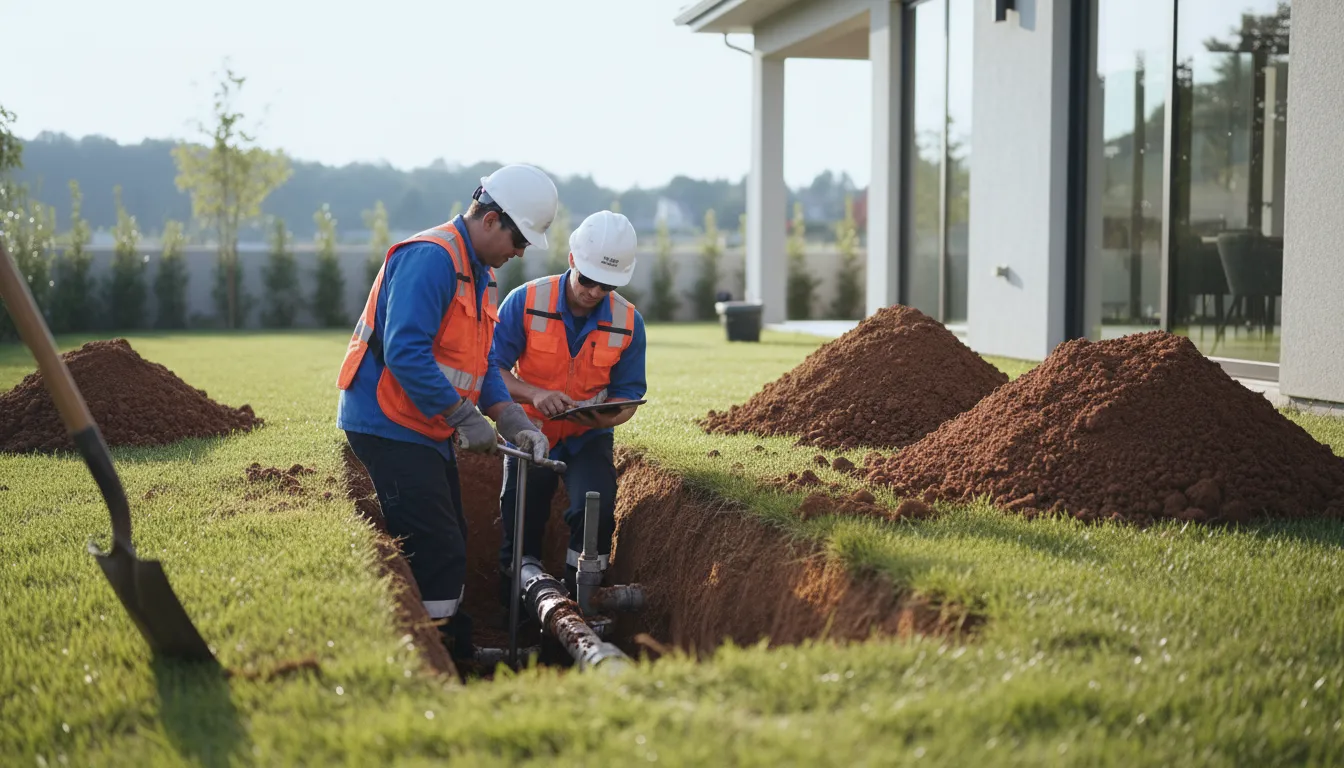
- Site Assessment and Inspection: A technician will first discuss the symptoms with you and then perform a thorough inspection. This often involves locating and excavating tank access points, checking for tank integrity, assessing sludge levels, and evaluating the drain field for signs of failure 5 6.
- Diagnosis and Proposal: Based on the inspection, the professional will diagnose the root cause-whether it's a cracked tank, blocked inlet/outlet pipes, a failed baffle, or a saturated drain field. They will then provide a detailed repair proposal, including the necessary permit applications and engineering requirements.
- Permitting and Design: For significant work, your contractor will typically coordinate with a licensed engineer to create the required plans and submit the permit application to the DOH Wastewater Branch on your behalf 7.
- Execution of Repairs: Once the permit is secured, the repair crew will perform the work. This is done with care to minimize landscape disruption and will adhere strictly to the approved plans.
- Final Approval: After repairs are complete, the DOH often requires a final inspection or a certified report from the engineer of record to close the permit and document that the system is functioning properly 8.
Find the perfect septic system repair companies for your needs
Get personalized recommendations and expert advice
Common Types of Septic Repairs and Upgrades in Honolulu
The repair needed depends entirely on the diagnosis. Here are some of the most common septic system fixes and upgrades performed for Honolulu homeowners:
- Tank Repairs and Replacement: This can range from sealing minor cracks to replacing severely damaged or corroded tanks. Older tanks may also be undersized for modern household water use and require replacement with a larger, code-compliant tank (typically 1,000-1,250 gallons or more).
- Drain Field Rehabilitation or Replacement: The most serious and expensive failure is often a clogged or saturated leach field. Repair might involve cleaning existing lines, or more commonly, installing a new drain field in a different location. In areas with challenging soil or space constraints, proprietary advanced treatment systems may be recommended 9.
- Component Upgrades: Modernizing older systems is a common repair. This includes installing effluent filters to protect the drain field, replacing broken or missing tank risers and lids for safer access, and repairing or replacing damaged distribution boxes and pipes 10.
- Cesspool to Septic System Conversion: As required by law, converting a cesspool involves designing and installing a complete new septic system, including a tank and a proper drain field. This is considered a new installation but is often triggered by the failure of an existing cesspool 11.
- Advanced System Installation: For sites with poor soil percolation, high groundwater, or environmental sensitivities, an Advanced Treatment Unit (ATU) may be required. These systems provide a higher level of treatment before effluent reaches the drain field 12.
Understanding the Costs of Septic System Repair
Repair costs in Honolulu vary widely based on the scope of work, site accessibility, soil conditions (rocky soil significantly increases excavation costs), and engineering fees. It's always wise to get multiple detailed estimates.
Based on local industry data, here is a general cost range for repairs and conversions 13 14:
- Minor Repairs: Fixing pipes, baffles, or risers typically ranges from $2,000 to $5,000.
- Tank Replacement: Removing an old tank and installing a new one can cost between $10,000 and $25,000.
- Full System Replacement / Cesspool Conversion: This major project, including design, permitting, tank, and drain field, often falls between $20,000 and $50,000 or more. Complex sites on rocky terrain or those requiring advanced treatment technology will be at the higher end of this spectrum.
Maintaining Your System to Avoid Future Repairs
The best repair is the one you never need. Proactive maintenance is the key to extending the life of your septic system and avoiding costly emergencies.
- Regular Pumping: The Hawaii Department of Health recommends pumping your septic tank every 5 to 7 years, depending on household size and usage 15 16.
- Routine Inspections: Have a professional inspect your system every 3 years to catch small issues before they become big problems 17.
- Mind What You Flush: Only human waste and toilet paper should go down the drain. Avoid flushing chemicals, grease, wipes, and feminine hygiene products.
- Protect the Drain Field: Never drive or park vehicles over the drain field, and avoid planting trees with deep roots nearby. Divect rainwater drainage away from the area.
If you have questions about system care or need to report a suspected violation, you can contact the DOH Wastewater Branch directly for guidance 18 19.
Frequently asked questions
Sources
Footnotes
-
Chapter 11-62, Hawaii Administrative Rules (Unofficial) - https://health.hawaii.gov/wastewater/home/rule/ ↩
-
Condition Assessment Survey of Onsite Sewage Disposal Systems ( ... - https://health.hawaii.gov/wastewater/files/2018/04/Pilot_Inspection_Report.pdf ↩
-
SEPTIC SYSTEMS EXPLAINED - CTAHR.hawaii.edu - https://www.ctahr.hawaii.edu/pigsinparadise/currentmgmt/mgmtexamples/ASPA%20Septic%20Sys.pdf ↩
-
Cesspools in Hawaii | US EPA - https://www.epa.gov/uic/cesspools-hawaii ↩
-
Individual Wastewater Systems - Hawaii Department of Health - https://health.hawaii.gov/wastewater/home/iws/ ↩
-
Septic Inspections near Honolulu County, Hawaii - ACSI - https://acsihawaii.com/septic-inspections-near-honolulu-county-hawaii ↩
-
Individual Wastewater Systems - Hawaii Department of Health - https://health.hawaii.gov/wastewater/home/iws/ ↩
-
Residential Wastewater Services near Honolulu County, Hawaii | Safe, Precise - https://acsihawaii.com/residential-wastewater-services-near-honolulu-county-hawaii ↩
-
Drain Field Replacement near Honolulu County, Hawaii | Know When It Is Time - https://acsihawaii.com/drain-field-replacement-near-honolulu-county-hawaii ↩
-
Residential Wastewater Services near Honolulu County, Hawaii - ACSI - https://acsihawaii.com/residential-wastewater-services-near-honolulu-county-hawaii ↩
-
Cesspool to Septic Conversion in Hawaiʻi - Part Two - Hawaii Real Estate Market & Trends - https://www.hawaiilife.com/blog/cesspool-to-septic-conversion-in-hawaii-part-two/ ↩
-
Hawaii Septic Tank Requirements | Individual Wastewater ... - https://www.ntotank.com/blog/hawaii-septic-tank-requirements?srsltid=AfmBOooMaLcS8eWzLz543Bay2C3AhFtzWpfcvBRqDKW4EEtQgfh7M5XM ↩
-
Foresignt Engieering | Septic System FAQ | Hawaii - https://www.foresight-hi.com/what-you-need-to-know ↩
-
Septic System Design Costs in Kauai: What to Expect - https://kauaiwastewatersolutions.com/blog/cost-of-septic-system-design-kauai/ ↩
-
General Info and FAQ | Wastewater Branch - https://health.hawaii.gov/wastewater/home/general-info-and-faq/ ↩
-
Wastewater | Clean Water Branch - Hawaii Department of Health - https://health.hawaii.gov/cwb/clean-water-branch-home-page/polluted-runoff-control-program/wastewater/ ↩
-
Residential Septic Repair Hawaii | Field & Tank Rehabilitation - https://acsihawaii.com/residential-septic-system-repair-near-honolulu-county-hawaii ↩
-
Wastewater Treatment Works | Wastewater Branch - https://health.hawaii.gov/wastewater/home/wwtw/ ↩
-
Wastewater Branch - State of Hawaii, Department of Health - https://health.hawaii.gov/wastewater/ ↩