Find the Best Septic System Repair Companies for Your Business
No obligation • Fast responses • Nationwide coverage

Why you can trust Septic Spot
Septic Spot is a leading United States resource for understanding and comparing septic services. Our editors review providers using consistent criteria and verify key business details. Listings and scores are independent, and companies cannot pay to influence our content.
Search providers near you
Top Septic System Repair Companies in Waipahu, Hawaii Ranked
If you're a homeowner in Waipahu dealing with a failing septic system, you're not alone. Septic system repair is a critical service for maintaining a safe and functional wastewater system for your property. In Hawaii, these repairs are strictly regulated to protect public health and the environment. This guide explains the common types of septic repairs, the essential regulatory steps you must follow, and how to connect with qualified local professionals who can diagnose and fix your system correctly.
Understanding Your On-Site Wastewater System
Before diving into repairs, it's helpful to know what you're working with. Most homes in Waipahu not connected to a municipal sewer line use an Individual Wastewater System (IWS), commonly a septic system. This system is a mini wastewater treatment plant buried in your yard, consisting of a septic tank and a drain field (or leach field). The tank separates solids from liquids, and the treated effluent is dispersed into the soil. When any component fails-from a cracked tank to a clogged drain field-prompt and proper remediation is essential to prevent backups, odors, and environmental contamination.
Common Septic System Issues in Waipahu
Several problems can plague a residential wastewater system. Recognizing the signs early can save you from more extensive and costly damage.
- Slow Drains and Backups: The most immediate sign of trouble. If multiple household drains are slow or toilets back up, it could indicate a full tank, a blocked pipe, or a failing drain field.
- Soggy Lawn or Foul Odors: Puddles of wastewater or a persistently soggy, bright green patch of grass over your drain field are red flags. Unpleasant sewage smells around the yard or home are a clear signal your system needs attention.
- System Component Failure: Specific parts can break down. This includes broken inlet or outlet baffles inside the tank, which can allow sludge to escape and clog the drain field. For systems with pumps (like aerobic treatment units), pump failure can halt the entire process.
The Hawaii Department of Health Repair Process: A Step-by-Step Guide
Repairing a septic system in Waipahu isn't a simple DIY project. The Hawaii Department of Health (DOH) Wastewater Branch has a defined approval process to ensure all work meets state standards. Skipping these steps can result in fines and an unusable system.
1. Initial Inspection and Diagnosis
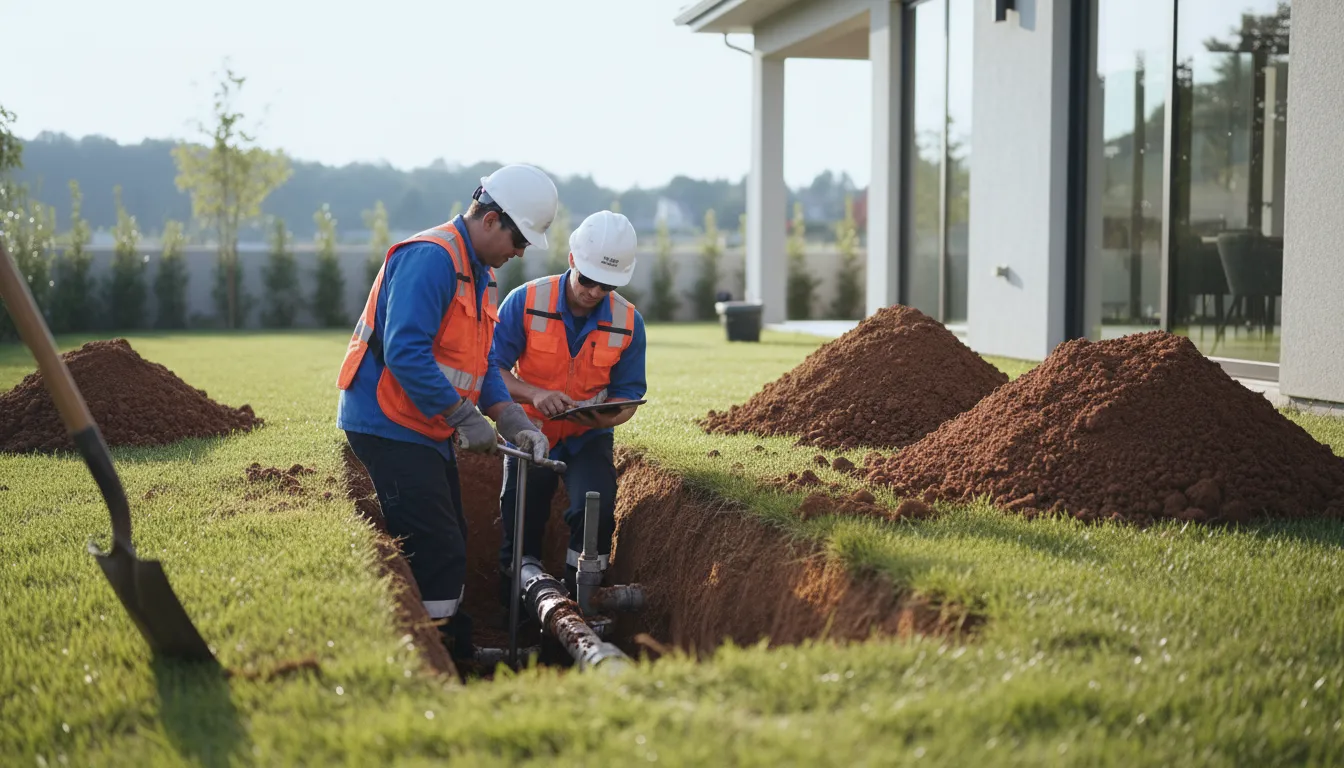
The first step is always a professional assessment. You must hire a licensed septic inspector or civil engineer to evaluate the system. They will locate the tank, check scum and sludge levels, inspect components, and assess the drain field's performance to pinpoint the exact problem 1 2. This inspection typically costs between $300 and $600.
2. Permit Application and DOH Approval
Once the issue is identified, the repair plan must be submitted to the DOH Wastewater Branch for approval. Your contractor or engineer will handle this. This is a non-negotiable step. The DOH reviews the proposed fix to ensure it complies with all health and environmental regulations. For existing systems, it's helpful to locate any "as-built" design records from the DOH to inform the repair plan.
3. Hiring a Licensed Contractor
Only Hawaii state-licensed contractors with specific classifications are legally allowed to perform septic system construction and repair. Relevant licenses include General Engineering (A), Masonry (C-9), or the specialty classifications for excavating and foundation work (C-37, C-37a, C-43). Always verify a contractor's license before hiring them for your wastewater system work.
4. Completing the Repairs
With a permit in hand, the licensed contractor can begin the onsite wastewater system repair. Common fixes include:
- Septic Tank Pumping/Cleaning: For minor issues caused by a full tank, this routine maintenance may be the only solution.
- Baffle Repair/Replacement: Fixing or replacing the concrete or plastic baffles inside the tank to prevent solids from escaping.
- Drain Field Rehabilitation/Replacement: This is a major repair. It may involve installing new perforated pipes, adding a new leach field area, or using advanced techniques to rejuvenate a clogged field.
- Pump System Repair: Fixing or replacing the effluent pump in systems that require one 3.
5. Final Inspection and Approval to Use
After repairs are complete, a licensed engineer must inspect the work to confirm it matches the approved plans. The engineer's report is then submitted to the DOH for a final review. Once satisfied, the DOH issues an approval-to-use letter, officially authorizing you to use your repaired system.
Find the perfect septic system repair companies for your needs
Get personalized recommendations and expert advice
The Cesspool Upgrade Mandate: A Critical Consideration
A unique and crucial factor for many Waipahu homeowners is Hawaii's statewide mandate to upgrade all cesspools by 2050. If your property currently uses a cesspool and it requires a significant repair, you may be legally required to upgrade it to a modern septic or aerobic treatment system instead of simply fixing it. This involves a new system design by a licensed civil engineer and a full installation permit from the DOH. While a larger upfront investment, it brings your property into compliance and is often a more reliable long-term solution 4 5.
Cost Overview for Septic System Repairs
Repair costs can vary widely based on the problem's severity, your property's soil conditions, and site accessibility. It's important to get multiple estimates from licensed professionals.
- Minor Repairs: Fixing issues like baffles or small pipe problems often ranges from $1,000 to $2,000.
- Major Repairs: Drain field rehabilitation or partial replacement is a significant undertaking and frequently exceeds $5,000 to $10,000+.
- System Replacement: If a repair isn't feasible or you're upgrading a cesspool, a full system replacement can cost over $20,000 6 7 8.
Proactive Maintenance Prevents Costly Repairs
The best way to avoid an emergency septic system fix is through regular care. Have your tank pumped every 3-5 years (more often for smaller tanks or larger households). Avoid pouring grease, chemicals, or non-biodegradable items down the drain. Be mindful of what you plant over your drain field and never park heavy vehicles on it. Scheduling a professional inspection every three years can catch small issues before they become catastrophic failures 9 10.
Frequently asked questions
Sources
Footnotes
-
Septic Inspections near Honolulu County, Hawaii | Honest ... - https://acsihawaii.com/septic-inspections-near-honolulu-county-hawaii ↩
-
Frequent Questions on Septic Systems | US EPA - https://www.epa.gov/septic/frequent-questions-septic-systems ↩
-
Residential Septic Repair Hawaii | Field & Tank Rehabilitation - https://acsihawaii.com/residential-septic-system-repair-near-honolulu-county-hawaii ↩
-
General Info and FAQ | Wastewater Branch - https://health.hawaii.gov/wastewater/home/general-info-and-faq/ ↩
-
Hawaii Septic Tank Requirements | Individual Wastewater ... - https://www.ntotank.com/blog/hawaii-septic-tank-requirements ↩
-
Septic Repair in Waipahu, HI - Costs 01 / 2026 - Homeyou - https://www.homeyou.com/hi/septic-repair-waipahu-costs ↩
-
Septic System Inspections: A Step-by-Step How-To Guide - https://westcoastsanitationinc.com/septic-inspection-service/ ↩
-
Essential Septic System Inspection Guide for Homeowners - https://smartsepticpros.com/blog/septic-system-inspection-for-homeowners/ ↩
-
How to Care for Your Septic System | US EPA - https://www.epa.gov/septic/how-care-your-septic-system ↩
-
Septic Inspection and How It Works | Buying a Home in Olympia WA - https://www.youtube.com/watch?v=ZvdpLybXV3c ↩