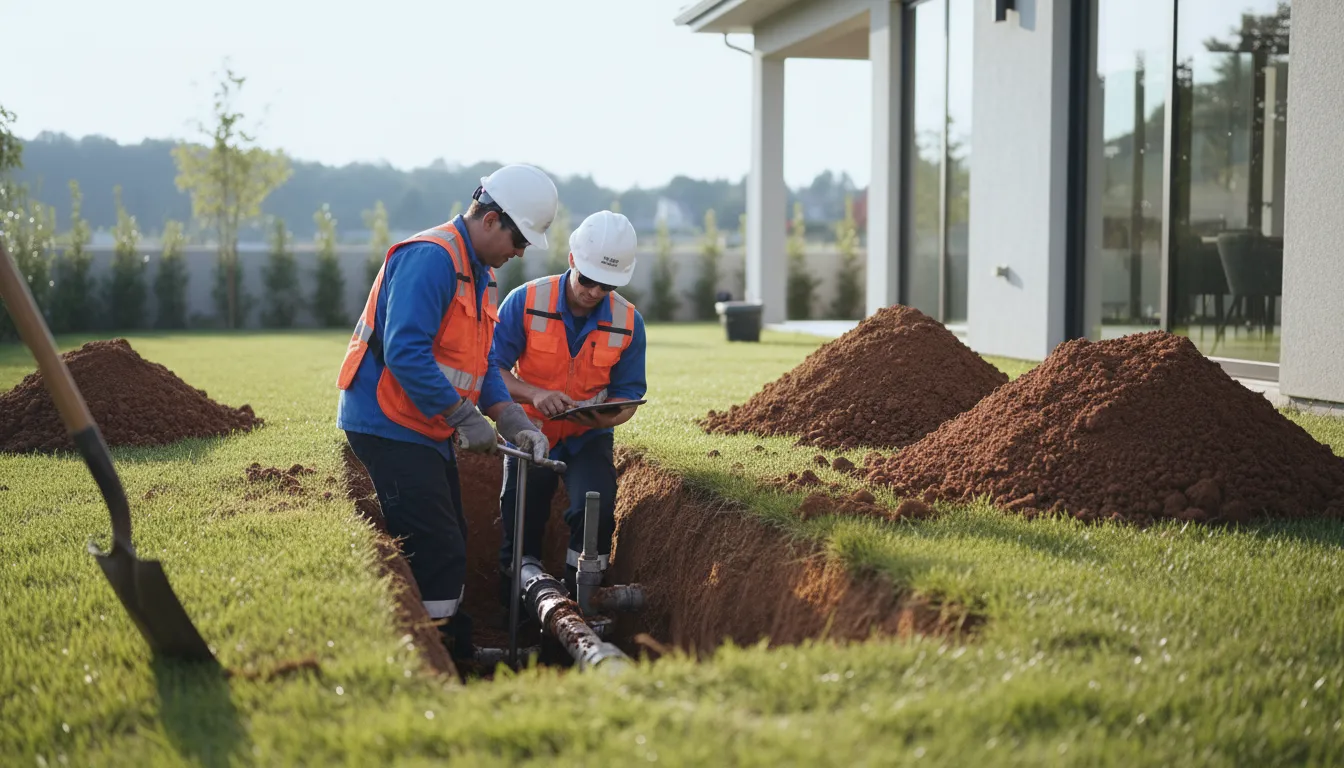
Find the Best Septic System Repair Companies for Your Business
No obligation • Fast responses • Nationwide coverage

Why you can trust Septic Spot
Septic Spot is a leading United States resource for understanding and comparing septic services. Our editors review providers using consistent criteria and verify key business details. Listings and scores are independent, and companies cannot pay to influence our content.
Search providers near you
Top Septic System Repair Companies in Bolingbrook, Illinois Ranked
When your home's private wastewater treatment system fails, it's more than an inconvenience-it's a potential health hazard and a significant property issue. Septic system repair in Bolingbrook involves diagnosing and fixing problems with your septic tank, drain field, or related components to restore proper function and ensure environmental safety. This guide is designed to help Bolingbrook homeowners understand the local regulations, common repair types, and the process for finding qualified, licensed professionals to handle this critical work. By knowing what to expect, you can make informed decisions to protect your home, your family, and your community's groundwater.
Suburban Plumbing Sewer Line and Drain Cleaning Experts
9100 Plainfield Rd Suite #9A, Brookfield, IL 60513
Suburban Plumbing Sewer Line and Drain Cleaning Experts is a full-service plumbing company serving Chicago, IL, and the greater Chicagoland area. They provide a wide range of services including septic tank pumping, inspections, repairs, and new system installations, as well as sewer line repairs, drain cleaning, water heater services, and flood control solutions. With over 30 years of experience, their licensed and insured technicians use advanced equipment like hydro jetting and sewer camera inspections to deliver effective plumbing solutions. The company offers 24/7 emergency plumbing services to address urgent issues promptly.
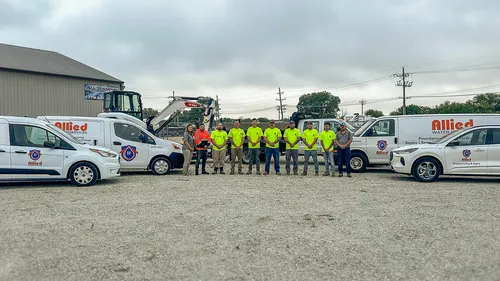
Allied Water Services
Joliet, IL
Allied Water Services is a septic system repair and installation company based in Joliet, IL. They specialize in comprehensive underground and water management solutions, including septic system repairs, septic tank installations, drainage system design, and waterproofing. The company is equipped to handle challenging soil and water conditions common in the region. Their services cover a broad area including Kankakee, DuPage, Will, Iroquois, Cook, Livingston, and Grundy counties. Allied Water Services emphasizes code compliance and thorough project planning, providing documentation and warranties for their work.
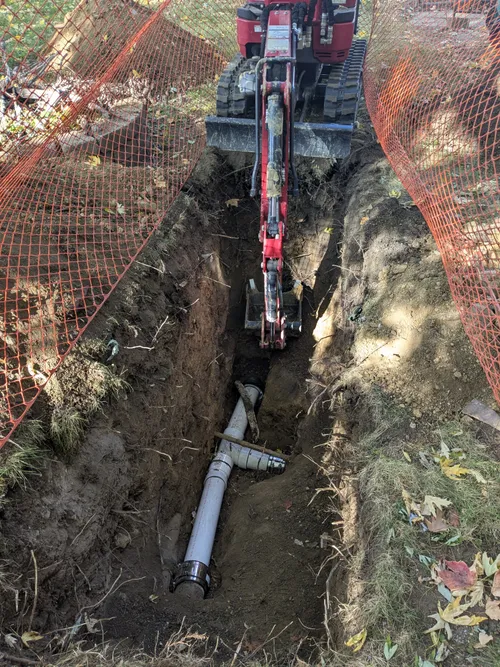
Midwest Septic and Drain Inc.
503 Davy Ln, Wilmington, IL 60481
Midwest Septic and Drain Inc. is a septic service provider located near Joliet, IL. They offer septic tank installation, pumping, and repair services. The company serves multiple counties including Will, Cook, Grundy, Kendall, and Kankakee. Midwest Septic and Drain Inc. handles a range of septic system needs, focusing on installation and maintenance to ensure proper function.
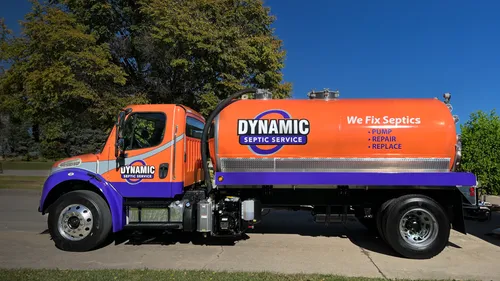
Dynamic Septic Service
18600 Rte 59, Shorewood, IL 60404
Dynamic Septic Service is a locally owned company based in Shorewood, Illinois, providing septic pumping, inspection, repair, and installation services in Chicago, IL, and surrounding counties including Will, DuPage, Cook, Kendall, Grundy, and Kankakee. With over 30 years of hands-on experience, they specialize in diagnosing septic system issues and offering clear options for repair or replacement. Their expertise includes routine pumping and complex system repairs, ensuring long-term functionality of septic systems.
FreeFlow Environmental of Cook County
7030 Centennial Dr Suite 133, Tinley Park, IL 60477
FreeFlow Environmental of Cook County offers septic tank pumping and septic system repair services in Chicago, IL. They serve residential and commercial clients, addressing septic, sewer, and drainage issues with licensed and insured professionals. The company uses advanced technology for septic system repair, pumping, and sewer line cleaning, including no-dig sewer line repairs. Their services cover system maintenance, emergency repairs, and full restorations to ensure efficient operation and prevent backups. FreeFlow Environmental also emphasizes environmental stewardship in their work.
Understanding Bolingbrook's Septic System Regulations
All septic system maintenance and repair work in Bolingbrook and Will County is strictly regulated to protect public health and the environment. The Will County Health Department enforces the Illinois Private Sewage Disposal Licensing Act and Code (77 Ill. Adm. Code 905) 1. The cornerstone of these regulations is the permit requirement. A sewage permit must be issued by the Health Department before any repair, alteration, or construction on your system can legally begin 2. This is not a suggestion; it's a mandatory first step.
Furthermore, all repair work must be performed by an Illinois licensed Private Sewage Disposal Installation Contractor 3. Hiring an unlicensed individual can result in improper repairs, failed inspections, and potential fines. After the repair is completed, but before it is covered with soil, a county inspector must visit the site to approve the work 4. This inspection ensures the repair meets all state and local codes before your system is put back into operation.
Homeowners should also be aware of the mandatory evaluation rule. In Will County, private septic systems must be evaluated every five years, or within three years of a new installation 5. If your system is failing-for instance, if effluent is rising to the surface of your yard-the health department may require immediate and regular tank pumping until permanent repairs are made 5.
Common Types of Septic Repairs Needed in Bolingbrook
Septic system issues can range from minor component failures to major drain field problems. Identifying the correct type of repair is the first step toward a solution.
-
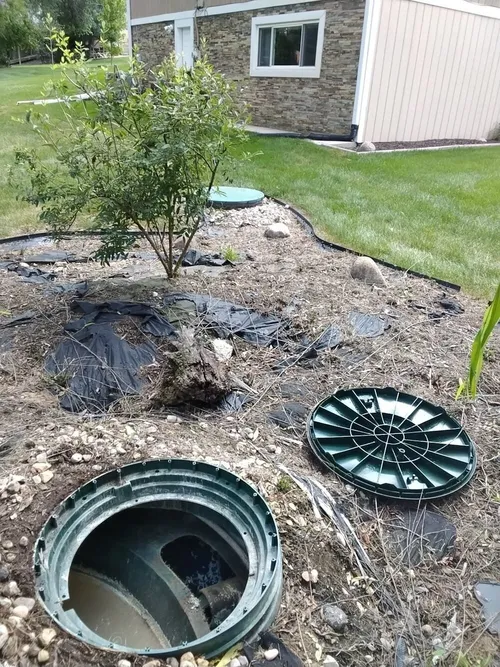
Tank Repairs: The septic tank itself can develop problems. Common tank fixes include replacing damaged, broken, or submerged inlet and outlet baffles, which are crucial for preventing solids from escaping into the drain field. Cracks in concrete tanks, often from ground shifting or root intrusion, must be professionally sealed to prevent groundwater infiltration and sewage leakage. Installing risers (access ports that extend to the surface) is also a common upgrade that makes future inspection and pumping much easier and less disruptive to your landscaping.
-
Drain Field (Lateral Field) Repairs: This is often where the most serious and costly problems occur. The network of perforated pipes in your drain field can become clogged with solids or biomat (a bacterial layer). Repairs here may involve hydro-jetting, which uses high-pressure water to clear clogged pipes. In more severe cases, sections of distribution lines may need to be cleared with specialized equipment or entirely replaced. If the soil in the absorption area has become completely saturated and sealed (a condition called "failure"), the soil may need to be replaced or the entire field may need to be relocated or expanded 6.
-
Component Upgrades and Additions: Sometimes, improving system function involves adding new components. Installing an effluent filter on the tank's outlet can prevent small solids from entering and clogging the drain field. Replacing or leveling a faulty distribution box (D-box) ensures wastewater is evenly distributed across all lateral lines, preventing overloading in one area.
-
System Replacement or Expansion: If a system is chronically failing, undersized for the home (a common issue with home additions), or irreparably damaged, a full or partial system replacement may be the only option. This could involve installing a larger conventional system or an alternative system, such as an aerobic treatment unit (ATU), which may be required in areas with poor soil conditions.
The Professional Inspection: Diagnosing the Problem
Before any repair can be quoted or planned, a thorough professional inspection is essential. This diagnostic process determines the exact cause and location of the failure.
A comprehensive inspection typically involves:
- Locating and Uncovering: The technician will locate the tank and drain field, often using metal probes, and then excavate to uncover the tank's access lids and possibly the distribution box.
- Measuring Tank Solids: Using a tool called a "sludge judge," the inspector measures the levels of sludge (at the bottom) and scum (at the top). If the combined sludge and scum depth exceeds one-third of the tank's liquid depth, pumping is urgently needed, and it may indicate a larger problem 7.
- Baffle and Component Check: The inlet and outlet baffles inside the tank are inspected to ensure they are intact and functioning. The condition of the tank walls and the presence of any cracks are also noted 8.
- Dye and Flow Testing: Water is run through the home's plumbing to check for leaks and to ensure it is flowing to the tank. Dye may be introduced to verify the liquid effluent is moving from the tank to the drain field and being absorbed, not pooling on the surface 9.
- Distribution Box Analysis: If accessible, the distribution box is checked to confirm it is level and distributing wastewater evenly to all lateral lines 10.
This inspection provides the blueprint for the necessary repairs and is often required by the health department when applying for a repair permit.
Find the perfect septic system repair companies for your needs
Get personalized recommendations and expert advice
Understanding Repair Costs in the Bolingbrook Area
The cost of septic system repairs can vary widely based on the severity of the problem, the size of the system, and local labor and material rates. In the Chicago and Will County area, homeowners can expect the following general price ranges 11:
- Tank Pumping: Often the first step in addressing issues or as a temporary measure for a failing system, pumping typically costs between $300 and $600, depending on tank size.
- Minor Repairs: Fixing or replacing baffles, sealing minor tank cracks, or installing access risers generally ranges from $500 to $1,200 12 13.
- Major Drain Field Repairs: Addressing clogged lines with hydro-jetting or replacing a section of the lateral field can cost between $1,500 and $5,000 or more 14.
- Full System Replacement: When a system is beyond repair, a complete replacement is a major excavation and installation project. Costs for a new conventional system often start upwards of $10,000 and can exceed $20,000, especially if an alternative system is required 15 16.
- Permit Fees: Don't forget to factor in the permit fees required by the Will County Health Department. These fees vary based on the type and scope of the repair work being permitted 17.
It is highly recommended to obtain multiple detailed estimates from licensed contractors. A reputable professional will provide a breakdown of costs for parts, labor, and the permit process.
Choosing a Licensed Septic Repair Contractor
Selecting the right contractor is the most critical decision you will make. Always start by verifying that the company holds a current Illinois Private Sewage Disposal Installation Contractor license. You can ask to see their license or verify it through state resources. Ensure they are familiar with Will County's specific permit and inspection procedures-a local contractor will have experience navigating the Health Department's requirements.
Look for companies with strong local reputations, proper insurance, and warranties on their workmanship. Ask for references from recent repair jobs similar to yours. A trustworthy contractor will insist on pulling the proper permit before starting work and will schedule the required county inspections. They should provide a clear, written contract detailing the work to be performed, the total cost, and the timeline.
Maintaining Your System After Repairs
Once your system is repaired and approved, proper maintenance is key to preventing future failures. Adhere to the county's five-year evaluation rule. Have your tank pumped regularly (typically every 3-5 years, depending on usage and tank size). Be mindful of what goes down your drains-avoid flushing chemicals, grease, wipes, and excessive garbage disposal use. Conserve water to avoid hydraulically overloading the system. Protect your drain field by not driving or parking heavy vehicles over it and by directing rainwater runoff away from the area.
Frequently asked questions
Sources
Footnotes
-
Illinois Septic Tank Requirements - https://www.ntotank.com/blog/illinois-septic-tank-requirements ↩
-
5-2-3: PERMIT REQUIREMENTS: - American Legal Publishing - https://codelibrary.amlegal.com/codes/grundycountyil/latest/grundycounty_il/0-0-0-2457 ↩
-
Illinois Septic Tank Requirements - https://www.ntotank.com/blog/illinois-septic-tank-requirements ↩
-
§ 51.08 INDIVIDUAL MECHANICAL SEWAGE TREATMENT ... - https://codelibrary.amlegal.com/codes/willcounty/latest/willcounty_il/0-0-0-31758 ↩
-
SEPTIC SYSTEMS OWNERS - Field Street Properties, LLC - https://www.fieldstreetproperties.com/pdf/Septic%20System%20Owners.pdf ↩ ↩2
-
8-2-6: MAINTENANCE OF SYSTEMS; LOT SIZE AND CONDITION: - https://codelibrary.amlegal.com/codes/leecountyil/latest/leecounty_il/0-0-0-3084 ↩
-
Septic System Inspections - InterNACHI® - https://www.nachi.org/inspecting-septic-systems.htm ↩
-
septic-systems.pdf - Illinois Environmental Protection Agency - https://epa.illinois.gov/content/dam/soi/en/web/epa/documents/water/conservation/lake-notes/septic-systems.pdf ↩
-
Septic Inspections When Buying or Selling a Home - https://www.mecindustries.com/morse-engineering-and-construction-industries/septic-inspections-when-buying-or-selling-a-home ↩
-
Do-It-Yourself Septic System Inspection Field Guide - https://doh.wa.gov/sites/default/files/legacy/Documents/Pubs/337-121.pdf ↩
-
Understanding the Different Types of Septic Repairs - https://septiccleanings.com/blog/different-types-of-septic-repairs/ ↩
-
How to Inspect a Private Septic System - https://www.youtube.com/watch?v=URhIPaX-csA&t=20 ↩
-
Preparing for Septic Tank Inspection: 7 Key Steps - https://septic911.com/preparing-for-septic-tank-inspection/ ↩
-
Private Sewage Disposal - Illinois Department of Public Health - https://dph.illinois.gov/topics-services/environmental-health-protection/private-sewage-disposal.html ↩
-
THE BEST 10 Septic Services in BOLINGBROOK, IL - Yelp - https://m.yelp.com/search?cflt=septicservices&find_loc=Bolingbrook%2C+IL%2C+USA ↩
-
Pre-Purchase Septic Inspections: Protect Your Investment | Septic System Professionals - https://septic911.com/prepurchase-septic-inspections/ ↩
-
§ 51.05 SEWAGE TREATMENT OR DISPOSAL SYSTEMS. - https://codelibrary.amlegal.com/codes/willcounty/latest/willcounty_il/0-0-0-31672 ↩