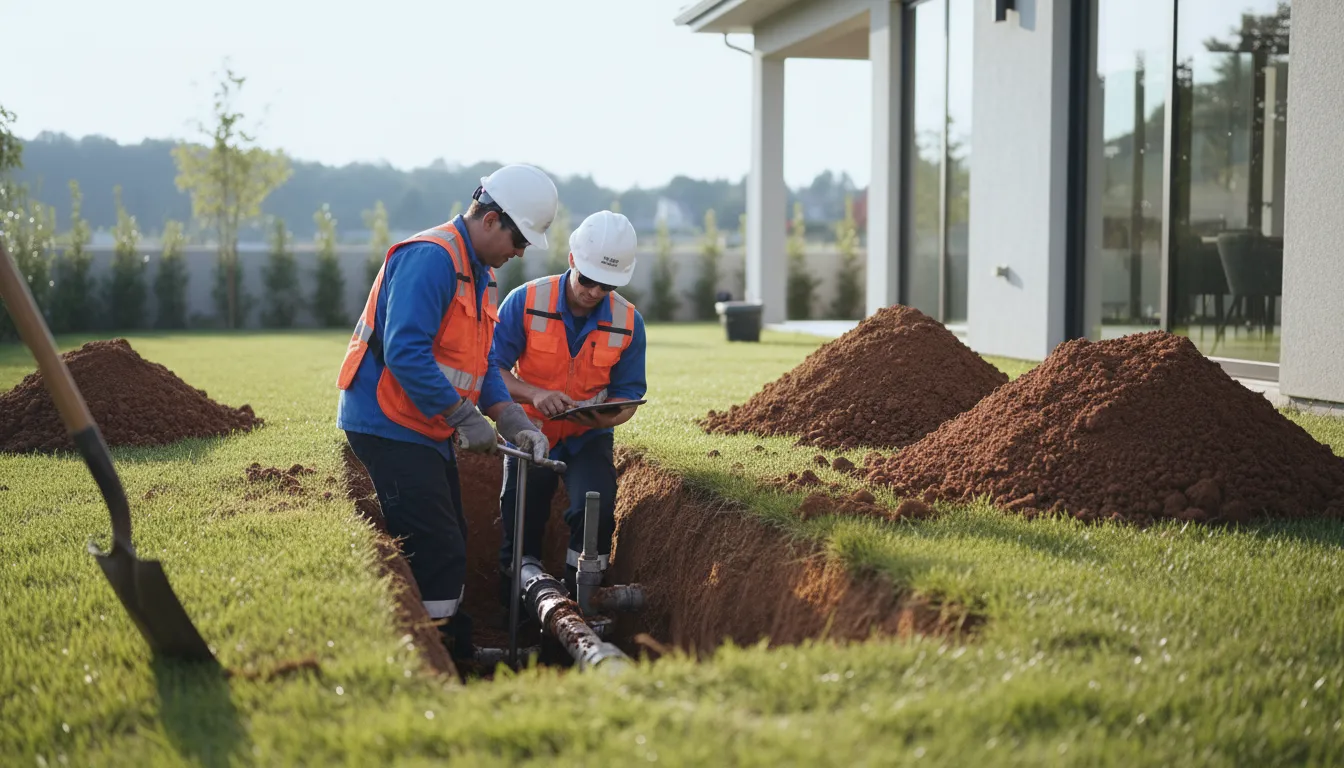
Find the Best Septic System Repair Companies for Your Business
No obligation • Fast responses • Nationwide coverage

Why you can trust Septic Spot
Septic Spot is a leading United States resource for understanding and comparing septic services. Our editors review providers using consistent criteria and verify key business details. Listings and scores are independent, and companies cannot pay to influence our content.
Search providers near you
Top Septic System Repair Companies in Tinley Park, Illinois Ranked
Maintaining a functional septic system is crucial for the health, safety, and property value of your Tinley Park home. When components fail, timely and professional septic system repair is essential to prevent environmental contamination, costly property damage, and public health issues. This guide provides a detailed overview of the repair process, local regulations, and maintenance tips to help you understand your system and connect with qualified local specialists for service.

Suburban Plumbing Sewer Line and Drain Cleaning Experts
9100 Plainfield Rd Suite #9A, Brookfield, IL 60513
Suburban Plumbing Sewer Line and Drain Cleaning Experts is a full-service plumbing company serving Chicago, IL, and the greater Chicagoland area. They provide a wide range of services including septic tank pumping, inspections, repairs, and new system installations, as well as sewer line repairs, drain cleaning, water heater services, and flood control solutions. With over 30 years of experience, their licensed and insured technicians use advanced equipment like hydro jetting and sewer camera inspections to deliver effective plumbing solutions. The company offers 24/7 emergency plumbing services to address urgent issues promptly.
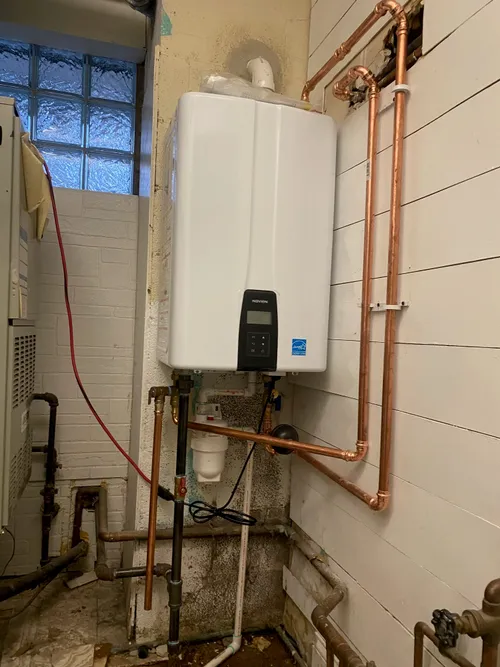
Feikema Plumbing & Sanitation
1854 Ridge Rd, Munster, IN 46321
Feikema Plumbing & Sanitation is a family-owned business based in Munster, IN, serving the Chicago, IL area with plumbing and septic system services. Established in 1956, they offer a wide range of solutions including septic tank pumping, septic system repairs, drain cleaning, water heater installation, and sewer maintenance. Their expertise includes advanced diagnostics using sewer cameras and modern rodding tools. With over 60 years of experience, Feikema Plumbing & Sanitation combines local community focus with licensed, bonded, and insured service.
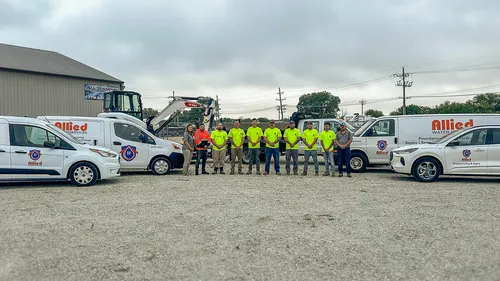
Allied Water Services
Joliet, IL
Allied Water Services is a septic system repair and installation company based in Joliet, IL. They specialize in comprehensive underground and water management solutions, including septic system repairs, septic tank installations, drainage system design, and waterproofing. The company is equipped to handle challenging soil and water conditions common in the region. Their services cover a broad area including Kankakee, DuPage, Will, Iroquois, Cook, Livingston, and Grundy counties. Allied Water Services emphasizes code compliance and thorough project planning, providing documentation and warranties for their work.
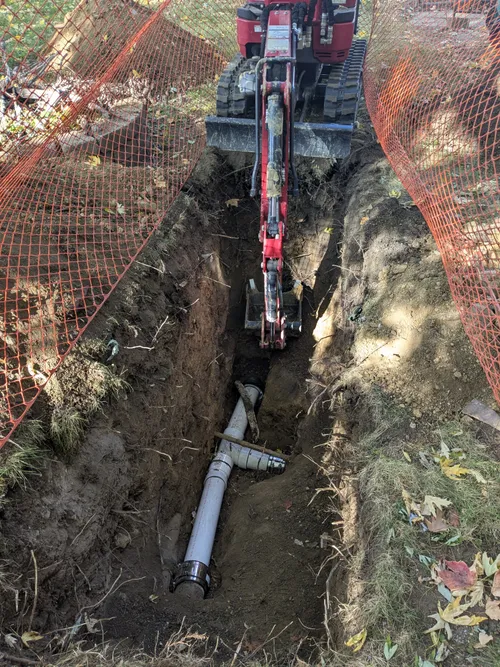
Midwest Septic and Drain Inc.
503 Davy Ln, Wilmington, IL 60481
Midwest Septic and Drain Inc. is a septic service provider located near Joliet, IL. They offer septic tank installation, pumping, and repair services. The company serves multiple counties including Will, Cook, Grundy, Kendall, and Kankakee. Midwest Septic and Drain Inc. handles a range of septic system needs, focusing on installation and maintenance to ensure proper function.
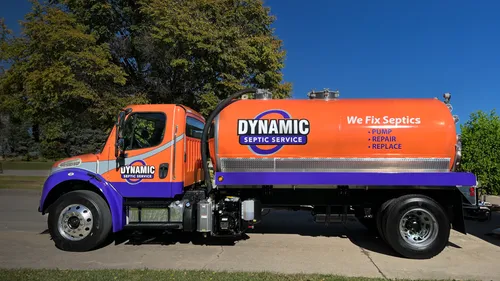
Dynamic Septic Service
18600 Rte 59, Shorewood, IL 60404
Dynamic Septic Service is a locally owned company based in Shorewood, Illinois, providing septic pumping, inspection, repair, and installation services in Chicago, IL, and surrounding counties including Will, DuPage, Cook, Kendall, Grundy, and Kankakee. With over 30 years of hands-on experience, they specialize in diagnosing septic system issues and offering clear options for repair or replacement. Their expertise includes routine pumping and complex system repairs, ensuring long-term functionality of septic systems.
Understanding Your Septic System and Local Oversight
A residential septic system is an on-site wastewater treatment structure, typically consisting of a tank and a drain field (or leach field). In Tinley Park, which is part of Cook County, all septic system installations, repairs, and major alterations are overseen by the Cook County Department of Public Health (CCDPH) 1. The state mandates that all systems comply with the Illinois Private Sewage Disposal Code (77 Ill. Admin. Code 905) 1 2. This means any significant septic work requires permits and must be performed by licensed professionals-either licensed installation contractors or environmental health practitioners 1.
Regular system evaluations are not just a good idea; they are often legally required. An inspection is typically mandated during a home sale, after a major remodel, or when adding a bedroom to a home 3. Proactive maintenance, including pumping every 3-5 years and annual checks for sludge buildup, is your first and best defense against needing major repairs.
Common Signs You Need Septic Repairs
Ignoring early warning signs can turn a simple fix into a catastrophic and expensive failure. Be alert for these indicators that your system needs attention:
- Slow Drains and Sewage Backups: Gurgling pipes, slow-draining sinks and tubs, or worse, sewage backing up into household drains.
- Unpleasant Odors: Foul smells of sewage around the tank or drain field area, or even inside the home.
- Soggy Lawn or Surfacing Effluent: Unusually lush, green grass over the drain field, standing water, or sewage bubbling up to the surface.
- Alarm Activation: Many modern systems have pumps and alarms; a sounding alarm indicates a pump failure or high water level in the tank.
- Failed Inspection: A routine or real estate inspection that uncovers issues like broken baffles, tank cracks, or a failing drain field 4.
The Professional Diagnostic Process
When you suspect a problem, a licensed professional will follow a systematic process to diagnose the issue. This evaluation is critical for determining the correct repair path.
- Locate System Components: The technician will first locate the tank and lateral fields, often using original permit records or probing tools.
- Uncover and Inspect the Tank: The tank access lids are uncovered to visually inspect the interior. They measure sludge and scum levels; if sludge exceeds 35% of the tank depth, pumping is immediately recommended 5 6.
- Check Critical Components: The inlet and outlet baffles (or tees) are inspected for damage. These devices are vital for preventing solids from flowing out into the drain field.
- Evaluate the Drain Field: The professional will check the lateral field for signs of failure, such as surfacing sewage, persistently wet spots, or overly saturated soil 7.
- Check for Leaks and Structural Issues: The tank itself is checked for cracks, and the overall structure is assessed for integrity.
This thorough inspection, which typically costs between $200 and $900 in the Tinley Park area, provides the blueprint for any necessary repairs 8.
Find the perfect septic system repair companies for your needs
Get personalized recommendations and expert advice
Types of Septic System Repairs
The nature of the repair depends entirely on which component has failed. Costs can range significantly, from minor fixes to major excavations.
1. Baffle Repair or Replacement
The baffles inside your tank are crucial for proper function. If they are broken or missing, untreated solids can escape into the drain field, causing rapid clogging and failure. Repairing or replacing these baffles is a common and essential fix to protect your entire system.
2. Tank Repair or Replacement
Cracks in a concrete tank or damage to a plastic tank can lead to groundwater infiltration or sewage leakage. Small cracks may sometimes be sealed, but significant structural damage often requires a full tank replacement. This is a major excavation project.
3. Drain Field (Leach Field) Repairs
This is often the most complex and costly type of repair. Problems arise from biomat buildup (a layer of bacteria that clogs soil pores), soil compaction, or hydraulic overloading.
- Rejuvenation: Techniques like jetting or adding specific additives may temporarily alleviate minor clogs.
- Repair or Expansion: Sometimes, a portion of the lateral field can be repaired or new lines can be added.
- Complete Replacement: In worst-case scenarios, a brand-new drain field must be installed in a different location on the property. Major drain field work is a leading reason repair costs can reach $12,000 or more 9.
4. Pump or Lift Station Repair
If your home's topography requires a pump to move effluent to a drain field at a higher elevation, a failing pump will cause system-wide failure. Repair or replacement of the pump and float switches is necessary to restore function.
Costs and Proactive Maintenance
While repair costs can be high-ranging from $3,500 for significant repairs to over $12,000 for full component replacements-they pale in comparison to the cost of environmental cleanup or property devaluation from a failed system 10 11. The single most effective way to avoid these costs is through consistent, proactive maintenance.
Follow the "Do's and Don'ts" of septic care:
- DO pump your tank every 3 to 5 years, without fail.
- DO have your system inspected regularly by a professional, checking sludge levels annually.
- DO conserve water to avoid hydraulically overloading the system.
- DON'T pour cooking fats, oils, or grease down the drain.
- DON'T flush anything besides human waste and toilet paper (no wipes, feminine products, or chemicals).
- DON'T use harsh chemical drain cleaners or antibacterial soaps excessively, as they can kill the essential bacteria in your tank 12 13.
Staying informed and scheduling regular service is the key to a long-lasting, trouble-free septic system for your Tinley Park home.
Frequently asked questions
Sources
Footnotes
-
Illinois Septic Tank Requirements - https://www.ntotank.com/blog/illinois-septic-tank-requirements ↩ ↩2 ↩3
-
SEPTIC SYSTEMS OWNERS - Field Street Properties, LLC - https://www.fieldstreetproperties.com/pdf/Septic%20System%20Owners.pdf ↩
-
Septic - Cook County Department of Public Health - https://cookcountypublichealth.org/environmental-health/water-and-sewage/septic/ ↩
-
Buying and Selling Homes | Septic Systems - Illinois Extension - https://extension.illinois.edu/septic-systems/buying-and-selling-homes ↩
-
How to Get Septic to Pass Inspection - https://www.guardianangelinspections.com/how-to-get-septic-to-pass-inspection ↩
-
SEPTIC SYSTEMS - https://www.linncountyda.org/sites/default/files/fileattachments/health_services/page/3375/os_17-a_homeowners_guide_to_operation_and_maintenance.pdf ↩
-
Inspection of Septic Systems | Oklahoma State University - https://extension.okstate.edu/fact-sheets/inspection-of-septic-systems.html ↩
-
How Much Does a Septic Inspection Cost? [2026 Data] | Angi - https://www.angi.com/articles/septic-inspection-cost.htm ↩
-
Septic Services in Central, IL - https://www.steverayplumbing.com/septic ↩
-
How to Care for Your Septic System | US EPA - https://www.epa.gov/septic/how-care-your-septic-system ↩
-
How Much Does a Septic System Cost? [2026 Data] | Angi - https://www.angi.com/articles/what-does-it-cost-install-septic-system.htm ↩
-
Septic System Maintenance - Illinois EPA - https://epa.illinois.gov/topics/drinking-water/private-well-users/septic-system-maintenance.html ↩
-
septic-systems.pdf - Illinois Environmental Protection Agency - https://epa.illinois.gov/content/dam/soi/en/web/epa/documents/water/conservation/lake-notes/septic-systems.pdf ↩