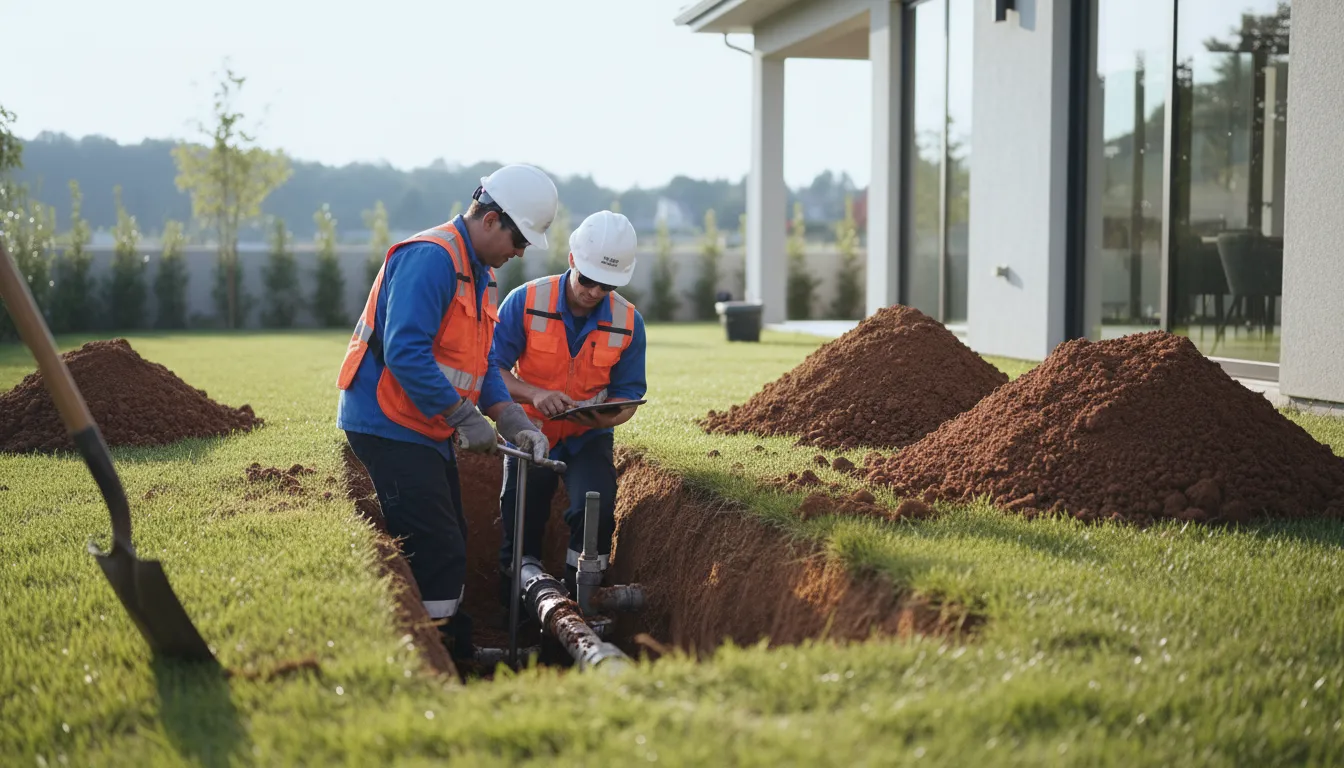
Find the Best Septic System Repair Companies for Your Business
No obligation • Fast responses • Nationwide coverage

Why you can trust Septic Spot
Septic Spot is a leading United States resource for understanding and comparing septic services. Our editors review providers using consistent criteria and verify key business details. Listings and scores are independent, and companies cannot pay to influence our content.
Search providers near you
Top Septic System Repair Companies in White Plains, New York Ranked
When your home's onsite wastewater treatment system fails, it's more than an inconvenience-it's a potential health hazard and a regulatory issue. Septic system repair in White Plains involves diagnosing and fixing components of your private sewage system to restore proper function and ensure environmental safety. These repairs are strictly governed by Westchester County to protect local groundwater and public health. Understanding the process, from identifying a problem to navigating county permits and choosing a qualified contractor, is essential for any homeowner with a septic system.
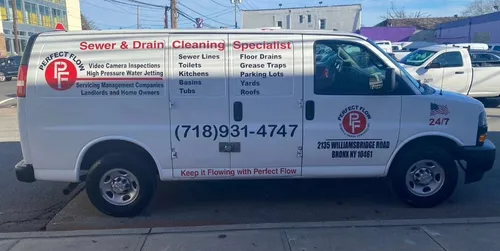
Perfect Flow Sewer & Drain Services
2135 Williamsbridge Rd, Bronx, NY 10461
Perfect Flow Sewer & Drain Services provides septic tank inspection and septic system repair in Yonkers, NY. They offer thorough inspections, efficient cleaning, and precise repairs to maintain reliable sewer and drain systems. Their services focus on ensuring seamless flow and system functionality.
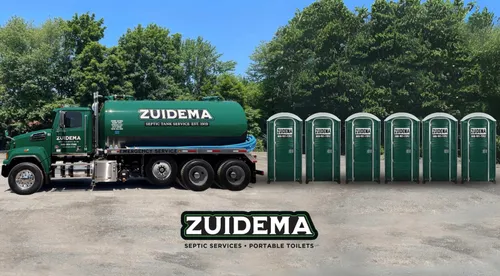
Zuidema Septic Services & Portable Toilets
90 Midland Ave, Midland Park, NJ 07432
Zuidema Septic Services & Portable Toilets provides residential and commercial septic services along with portable toilet and restroom trailer rentals in New York, NY. With over 100 years of experience since 1919, they offer septic tank pumping, inspections, repairs, and grease trap services. Their use of advanced sewer camera technology helps identify and address sewer line issues effectively. Zuidema also offers 24/7 emergency service for septic and portable toilet needs, ensuring support is available at any time.
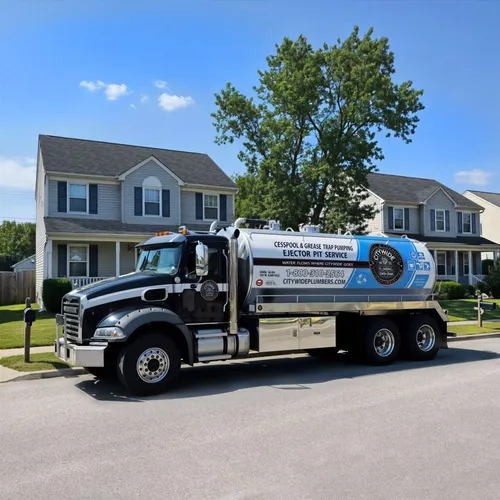
Citywide Grease Trap Maintenance | Cesspool Pumping Service Long Island
110 Voice Rd, Carle Place, NY 11514
Citywide Grease Trap Maintenance | Cesspool Pumping Service Long Island provides septic and cesspool pumping, inspection, repair, and installation services in New York, NY. Serving both residential and commercial clients, they offer comprehensive maintenance and cleaning to prevent system failures. Their skilled technicians use advanced equipment for installations and repairs, including grease trap pumping and sewage ejector pit services. With over 65 years of experience, Citywide operates 24/7 to address emergency needs promptly.
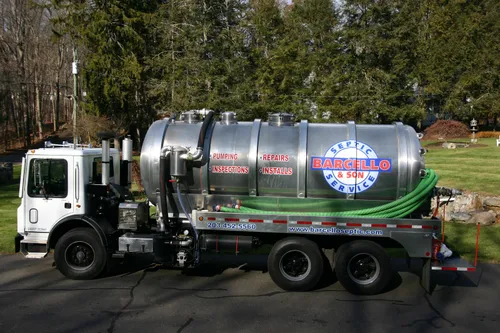
Barcello & Son Septic Service LLC
334 Wilson Rd, Easton, CT 06612
Barcello & Son Septic Service LLC is a family-owned business based in Easton, CT, serving the Bridgeport area with septic tank pumping, inspection, repair, design, and installation services. With over 20 years of experience in Fairfield County, they handle all sizes and types of septic systems using a proprietary 12-step pumping process and the latest equipment. Their expertise covers comprehensive septic system solutions, including real estate appraisal support and system design. The company emphasizes transparent pricing and guarantees their work. Barcello & Son Septic Service LLC is known for clear communication about service timing and procedures, aiming to provide a straightforward and reliable customer experience.
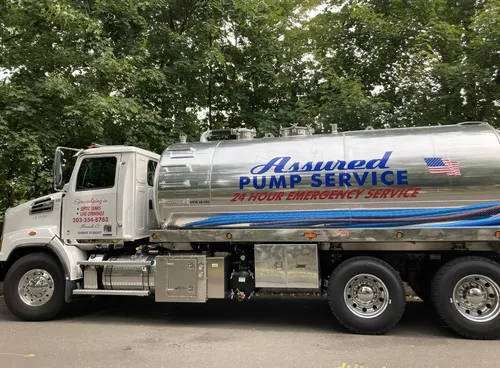
Assured Pump Services
Stamford, CT
Assured Pump Services is a septic tank pumping, inspection, and repair company based in Stamford, CT. Serving Fairfield County, they offer a full range of septic system services including pumping, drain clearing, and repairs. With over 25 years of experience, the company provides 24/7 emergency response to address urgent septic issues promptly. Their licensed technicians use state-of-the-art equipment to ensure thorough and reliable service.
Understanding Your Septic System and Common Failures
A standard septic system is comprised of two main parts: a watertight tank where solids settle and begin to decompose, and a drainage field (or leach field) where the clarified liquid effluent is dispersed into the soil for final treatment. Repair needs can arise in either component. Common signs of trouble include slow-draining fixtures, sewage backups into the home, soggy ground or standing water over the drain field, and unpleasant odors around the tank or yard.
Failures often stem from age, lack of maintenance, or physical damage. A system that isn't pumped regularly can send solids into the leach field, causing clogs and premature failure. Tree root intrusion can crack pipes and tanks, while compacted soil from vehicles or construction can crush drainage lines. In White Plains, the local soil conditions and high water table in some areas can also accelerate system wear, making proactive maintenance and timely repairs critical.
The Regulatory Landscape: Westchester County Health Department
All septic system work in White Plains falls under the jurisdiction of the Westchester County Department of Health (WCDH). The county enforces Article VIII of the Laws of Westchester County concerning sewage to ensure all repairs meet strict sanitary codes. This means you cannot hire just any handyman; work must be performed by a licensed septic contractor.
Key regulations homeowners must follow include:
- Permitting and Design Approval: Any significant repair or modification to an Onsite Wastewater Treatment System (OWTS) requires WCDH approval before work begins. For major fixes, a design plan prepared by a licensed Professional Engineer or Registered Architect is typically required 1.
- Pre-Notification: Your licensed contractor is required to notify the WCDH at least 24 hours before starting any repair or emergency work.
- Mandatory Inspections: A critical rule is that no part of a repaired system can be covered or backfilled until it has been inspected and approved by a health department inspector 2. This ensures the repair meets code before being hidden from view.
- Maintenance Law: Westchester County law mandates that all septic systems be inspected and pumped at least once every five years, which helps catch minor issues before they become major, costly repairs 3.
Types of Septic Repairs and Remediation Strategies
The approach to fixing your system depends entirely on the diagnosis. Reputable contractors will perform a thorough evaluation to recommend the most effective and cost-efficient solution.
Minor Component Repairs and Upgrades
These are common fixes that address specific, isolated problems without overhauling the entire system.
- Baffle Replacement: The baffles in your tank prevent scum and solids from exiting into the drain field. If they are corroded or broken, they must be replaced to protect the leach field.
- Riser Installation: Adding risers to bring septic tank access lids up to ground level is a popular upgrade. It provides easy access for future pumping and inspections, saving time and money on locating and digging up the lid each time.
- Pipe and Distribution Box Repairs: Cracked inlet/outlet pipes or a damaged distribution box (D-box) can be excavated and repaired or replaced to restore proper flow from the tank to the field 4 5.
Leach Field Rehabilitation and Repair
When the drain field is failing, solutions range from remediation to full replacement.
- Jet Cleaning: High-pressure water jetting can sometimes clear biological matting and minor clogs from the perforated pipes in the leach field, restoring flow.
- Restoning or Adding Laterals: In some seepage pit systems, the stone aggregate can become clogged. Restoning the pit or adding new distribution laterals (if space permits) can extend the field's life.
- Technology Upgrades: Installing advanced drainage products like infiltrator chambers can improve the efficiency and absorption capacity of an existing, underperforming field 6.
Major Repairs and System Replacement
If the tank is structurally compromised, the drain field is completely saturated, or the system is severely undersized for the home, a full or partial system replacement may be the only option. This is a major construction project requiring new engineering design, county permits, and significant excavation 7.
Find the perfect septic system repair companies for your needs
Get personalized recommendations and expert advice
The Diagnostic and Repair Process: What to Expect
A professional repair follows a logical sequence to ensure the correct problem is fixed.
- System Locating and Evaluation: The first step is to locate all system components-tank, D-box, and leach field lines. Contractors may use probe rods or electronic locating equipment.
- Pump-Out and Tank Inspection: The tank is pumped to allow for a safe internal inspection. The contractor will check for structural cracks, verify baffle condition, and look for root intrusion 8 9.
- Advanced Diagnostics: For suspected pipe blockages or leach field issues, a video camera inspection of pipes can pinpoint problems without extensive digging 10. For proposed field expansions or replacements, a soil evaluation or percolation test may be required to determine the soil's absorption rate 11.
- Plan Development and Permitting: For repairs beyond simple component swaps, your contractor or a hired engineer will develop a repair plan to submit to the WCDH for approval, including the associated $500 residential application fee 12.
- Execution and Inspection: Once permitted, the repair work is performed. The contractor will notify the county for the required inspection before backfilling any excavations 13.
Understanding Costs and Financial Assistance
Repair costs in White Plains vary dramatically based on the work required. Minor repairs like replacing a baffle or installing risers may cost a few hundred dollars. Rehabilitating a leach field with jetting or new laterals can cost several thousand. A complete system replacement is a significant investment, often ranging from $15,000 to $30,000 or more, depending on soil conditions and system size 14 15.
Fortunately, financial assistance programs exist:
- NYS Septic System Replacement Fund: This state program offers eligible homeowners reimbursement of up to 50% of replacement costs, with a maximum grant of $10,000, for replacing a failing system with a new innovative/alternative (I/A) system 16 17.
- Westchester County Maintenance Reimbursement: The county offers a septic maintenance reimbursement program in certain sewer districts to help offset the cost of the mandated five-year pumping and inspection.
For official information on permits and regulations, you can contact the Westchester County Health Department Bureau of Environmental Health at (914) 864-7341.
Frequently asked questions
Sources
Footnotes
-
Septic Systems | Lewisboro, NY - https://www.lewisborony.gov/community/page/septic-systems ↩
-
Sewerage System Permits - IIS Windows Server - https://docs.ryebrook.org/WebLink/DocView.aspx?id=167835&dbid=0&repo=VillageOfRyeBrook ↩
-
Septic System Management - https://health.westchestergov.com/component/content/article/septic-system-management?Itemid=2956&catid=133 ↩
-
Septic System Repairs and Modifications in Saratoga Springs, NY - https://sewerman.com/saratoga-springs-ny/services/pipe-repairs/ ↩
-
Use Permits & Inspections - https://www.cosepticmr.com/post/use-permits-inspections ↩
-
on-site wastewater treatment system checklist - https://health.westchestergov.com/images/stories/Environmental%20Forms/Realty/contructionapprovalchecklist25.pdf ↩
-
Septic Repair vs. Replacement: A Guide to Costs & Red Flags - https://prosepticri.com/septic-repair-vs-replacement-guide/ ↩
-
Septic Repair Services in New York and New Jersey - https://www.davidzuidema.com/septic-services/septic-repair/ ↩
-
Septic Inspections - https://www.shelars.com/index.php/septic-system-inspections-formal-informal-at-time-of-sale-and-cost ↩
-
Septic System Operation and Maintenance - https://www.health.ny.gov/publications/3208/ ↩
-
New York Septic License & Certification | 2024 Contractor Guide - https://www.servicetitan.com/licensing/septic/new-york ↩
-
on-site wastewater treatment system checklist - https://health.westchestergov.com/images/stories/Environmental%20Forms/Realty/contructionapprovalchecklist25.pdf ↩
-
OWTS repair form - Westchester County Department of Health - https://health.westchestergov.com/images/stories/Environmental%20Forms/Septic/septicrepairform25.pdf ↩
-
Leach Field and Seepage Pit Repairs | Monroe, NY - Septic Solutions - https://www.septicsolutionsny.com/leach-field-seepage-pit-repairs ↩
-
Septic Systems - Westchester County Planning - https://planning.westchestercountyny.gov/septic-systems ↩
-
SECTION 1285-U Septic system replacement fund - NYS Senate - https://www.nysenate.gov/legislation/laws/PBA/1285-U ↩
-
NYS Septic Replacement Fund - Niagara County - https://www.niagaracounty.gov/departments/a-f/environmental_health/nys_septic_replacement_fund/index.php ↩