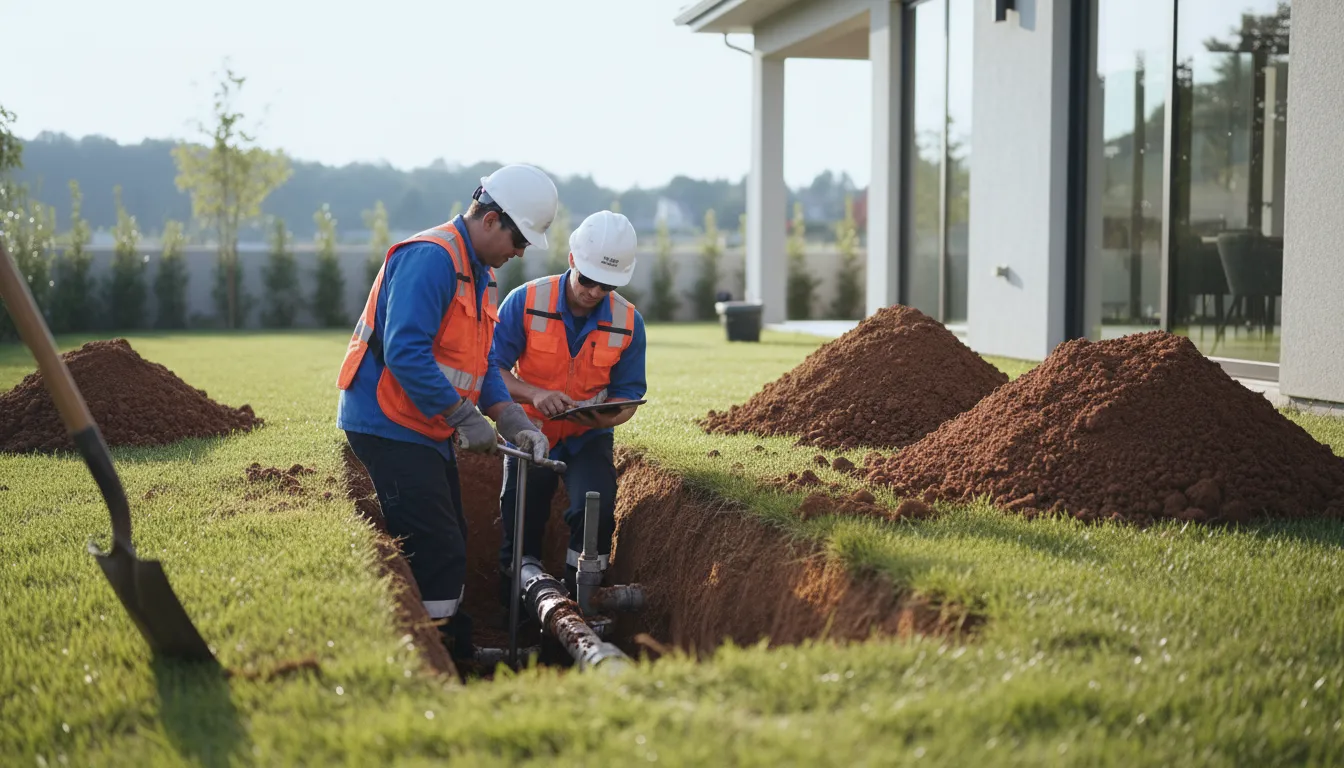
Find the Best Septic System Repair Companies for Your Business
No obligation • Fast responses • Nationwide coverage

Why you can trust Septic Spot
Septic Spot is a leading United States resource for understanding and comparing septic services. Our editors review providers using consistent criteria and verify key business details. Listings and scores are independent, and companies cannot pay to influence our content.
Search providers near you
Top Septic System Repair Companies in Lakewood, Washington Ranked
A failing septic system is more than an inconvenience; it's a potential health hazard and environmental concern. In Washington, repairing an onsite sewage system is a regulated process designed to protect public health and water quality. This guide explains the essential steps, costs, and regulations for septic system repair across the state, helping you understand what to expect and how to connect with qualified local professionals to restore your system's function.
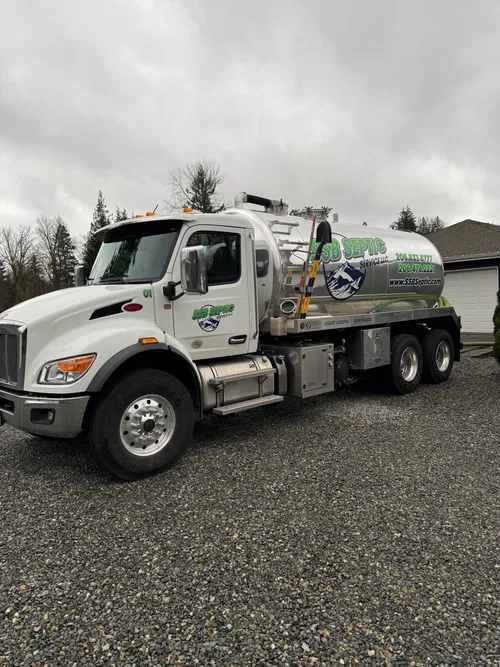
SSB Septic Services
Kent, WA
SSB Septic Services is a family-owned company serving Kent, WA, and the surrounding areas. They provide a range of septic services including tank pumping, system repair, and installation. With over a decade of experience, they focus on eco-friendly solutions and long-term customer satisfaction. The company offers 24/7 emergency response to handle urgent septic system issues promptly. Their expertise includes environmental compliance and sustainable septic system practices.
Sterling Septic & Plumbing LLC
11920 58 Ave E, Puyallup, WA 98373
Sterling Septic & Plumbing LLC provides septic tank pumping, inspections, and repair services in Tacoma, WA. They serve homeowners and realtors across Pierce, King, and Thurston counties. The company offers same-day service and specializes in septic system maintenance and repairs.
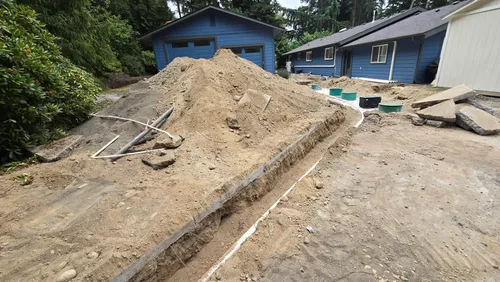
Lilly's Septic Service
26207 Maple Valley Black Diamond Rd SE Ste D1, Maple Valley, WA 98038
Lilly's Septic Service is a septic tank pumping, inspection, repair, and installation company based in Kent, WA. Serving King County and the Puget Sound region, they offer comprehensive septic system services including certified installations and thorough inspections. With over 48 years of experience, Lilly's Septic Service provides expertise in maintaining safe and efficient septic systems for both homes and businesses.

Drain Beast - Kent
600 Central Ave S, Kent, WA 98032
Drain Beast - Kent is a septic system repair company located in Kent, WA. They specialize in trenchless relining, a method that refurbishes old piping systems with minimal excavation by inserting a new lining through a single access point. This approach reduces disruption compared to traditional pipe replacement methods. Drain Beast aims to address plumbing and sewer issues efficiently while minimizing the impact on homeowners' properties.
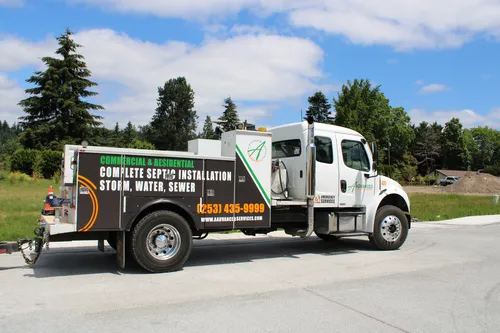
A Advanced Septic & Construction Services
1602 W Valley Hwy S, Auburn, WA 98001
A Advanced Septic & Construction Services is a family-owned business serving Tacoma, WA, and surrounding areas including Auburn, Puyallup, Bonney Lake, and Sumner. Established in 2006, they offer comprehensive septic services such as septic tank pumping, inspection, repair, installation, and drain field restoration. Their team also provides electrical and construction services related to septic systems. Known for handling emergency situations, they offer 24-hour emergency response to address urgent septic needs. The company combines modern equipment with experienced technicians to maintain and repair septic systems efficiently.
Understanding Washington's Septic Repair Regulations
All residential septic system repairs in Washington are governed by state regulations under WAC 246-272A 1. These rules are enforced by your local county health department or district, which acts as the local health jurisdiction (LHJ). The core principle is that any repair, replacement, or modification to a system component requires a permit. This ensures the work meets standards for proper wastewater treatment and environmental protection.
The regulatory focus is on maintaining or restoring the system's ability to treat sewage effectively. Key factors include soil suitability, vertical separation (the depth of unsaturated soil below the drainfield), and mandatory setbacks from wells, surface water, and property lines 2. If a conventional repair isn't feasible, the local health officer may approve an alternative or "smaller" repair solution that still provides better treatment than the failing system 3.
The Step-by-Step Repair Process
Navigating a septic repair involves several defined stages. Following this process helps avoid costly mistakes and ensures your system is legally compliant.
-
Identify the Problem and Obtain Records: The first step is a professional inspection to diagnose the failure. Common signs include sewage backups, soggy ground or odors in the drainfield area, and unusually green grass over the field. You should also request the "as-built" record drawing of your system from your local health department. This blueprint shows the tank and drainfield location, which is crucial for planning repairs 4.
-
Apply for a Repair Permit: Before any work begins, the property owner must file a repair permit application with their local health jurisdiction (e.g., Grant County Health District, King County, etc.) 5 6. The application typically requires the as-built, a site plan, and the proposed repair design.
-
Site and Soil Evaluation: A new soil evaluation is often required for drainfield repairs or replacements. This may involve a percolation (perc) test and soil depth analysis to confirm there is adequate, suitable soil with the required vertical separation-usually 12 to 36 inches of unsaturated soil-to treat wastewater 7 8.
-
System Design: For anything beyond minor component swaps, a licensed septic designer or professional engineer must design the repair 9. The design must comply with current codes and site conditions, specifying materials, construction methods, and the type of system (e.g., gravity, pressure-dosed, or advanced treatment).
-
Construction and Inspection: Once the permit is issued, a licensed septic installer can perform the work. The local health inspector will conduct one or more inspections during construction to verify compliance with the approved design 10.
-
Final Approval: After passing the final inspection, the health department will issue a certificate of completion or final approval, closing the permit.
Find the perfect septic system repair companies for your needs
Get personalized recommendations and expert advice
Common Types of Repairs and Associated Costs
Repair costs in Washington vary widely based on the system type, extent of failure, soil conditions, and local labor rates. Below is a breakdown of common repair scenarios and their typical cost ranges 11.
-
Minor Component Repairs ($500 - $2,000): This covers replacing accessible parts like deteriorated tank lids, damaged inlet/outlet baffles, or adding inspection risers. These are the most straightforward and least expensive fixes 12.
-
Pump or Pump Chamber Repairs ($1,500 - $4,000): For systems with pumps (e.g., pressure distribution or elevated drainfields), repairing or replacing a failed pump, float switches, or the pump chamber itself falls into this range.
-
Drainfield Repair or Replacement ($5,000 - $15,000+): This is the most significant and costly repair. Partial repair of a clogged section may be on the lower end, while a complete new drainfield installation can easily reach $12,000 to $15,000 or more, depending on size and technology (gravity vs. pressure-dosed) 13 14.
-
Advanced/Alternative System Repairs ($10,000 - $20,000+): Systems with aerobic treatment units (ATUs), sand filters, or other advanced components have more complex mechanical and electrical parts. Repairing or replacing these specialized components is considerably more expensive.
It's important to note that these are estimated price ranges. The only way to get an accurate cost for your situation is to obtain detailed assessments and quotes from licensed repair professionals in your area.
Maintenance and Inspection: Preventing Costly Repairs
Proactive maintenance is the most effective way to avoid emergency septic system repairs. Washington state has specific inspection requirements based on system type 15 16:
- Conventional Gravity Systems: Must be inspected at least every three years.
- Advanced Systems (with pumps, pressure distribution, or ATUs): Require annual inspection and maintenance.
A system is legally considered "failed" if it poses a public health risk-such as sewage backing up into the home, discharging to the ground surface, or contaminating groundwater 17. Beyond inspections, the cornerstone of maintenance is regular pumping. Having your septic tank pumped every 3 to 5 years (or as recommended based on usage) prevents solids from flowing into and clogging the drainfield, which is a leading cause of system failure 18.
Choosing a Qualified Repair Professional in Washington
Selecting the right contractor is critical. Always verify that any professional you contact holds the appropriate Washington state licenses for septic system design, installation, and repair. They should be familiar with the specific regulations of your county's health department. A reputable professional will:
- Pull the as-built record for your property.
- Conduct a thorough diagnostic inspection.
- Clearly explain the problem, proposed solution, and all associated costs.
- Handle the permit application process on your behalf.
- Provide references from past clients in your area.
Frequently asked questions
Sources
Footnotes
-
WAC 246-272A-0010: - | WA.gov - https://app.leg.wa.gov/wac/default.aspx?cite=246-272A-0010 ↩
-
WAC 246-272A-0280: - | WA.gov - https://app.leg.wa.gov/wac/default.aspx?cite=246-272A-0280 ↩
-
Title V Septic System Repairs Information and Process - https://www.townofbernardston.org/board-health/page/title-v-septic-system-repairs-information-and-process ↩
-
Chapter 246-272A WAC, On-site Sewage Systems - https://sboh.wa.gov/sites/default/files/2024-03/RuleRevision-OSS-ConciseExplanatoryStatement.pdf ↩
-
On-Site Septic Applications | Grant County Health District, WA - https://www.granthealth.org/269/On-Site-Septic-Applications ↩
-
Septic System Permits | Clallam County, WA - https://www.clallamcountywa.gov/493/Septic-System-Permits ↩
-
Septic - Pacific County Government - https://www.co.pacific.wa.us/dcd/Septic.htm ↩
-
Perc Testing and Soil Testing - What You Need to Know - https://buildingadvisor.com/buying-land/septic-systems/soil-and-perc-testing/ ↩
-
Anderson Engineering's Guide to Septic Permitting in Utah - https://www.andersoneng.com/a-clear-guide-to-the-septic-system-permitting-process-today/ ↩
-
On-site sewage/septic repair or replacement - King County - https://kingcounty.gov/en/dept/dph/health-safety/environmental-health/on-site-sewage-systems/applications-permits/repair-replacement ↩
-
Onsite Sewage Systems | Lincoln County, WA - https://www.healthylincowa.com/218/Onsite-Sewage-Systems ↩
-
Septic Tank - California Septic System Regulations: A Guide to Compliance - https://westcoastsanitationinc.com/california-septic-system-regulations/ ↩
-
Septic System Pricing Guide for Washington State Homeowners ... - https://www.caringrealestate.com/blog/septic-system-pricing-guide-for-washington-state-homeowners-2025/ ↩
-
How Much Does Failed Septic System Cost? - https://www.septicconnection.com/how-much-does-failed-septic-system-cost ↩
-
On-Site Sewage Program - Septic Systems - Skamania County - https://www.skamaniacounty.org/departments-offices/community-development/environmental-health/onsite-sewage ↩
-
Chapter 15.42 ON-SITE SEWAGE SYSTEM CODE - https://www.codepublishing.com/WA/CowlitzCounty/html/CowlitzCounty15/CowlitzCounty1542.html ↩
-
Septic Systems - Washington State Department of Health - https://doh.wa.gov/community-and-environment/wastewater-management/septic-system ↩
-
Caring for Your Septic System | Washington State Department of ... - https://doh.wa.gov/community-and-environment/wastewater-management/septic-system/caring-your-system ↩