Find the Best Septic Tank Inspection Companies for Your Business
No obligation • Fast responses • Nationwide coverage

Why you can trust Septic Spot
Septic Spot is a leading United States resource for understanding and comparing septic services. Our editors review providers using consistent criteria and verify key business details. Listings and scores are independent, and companies cannot pay to influence our content.
Search providers near you
Top Septic Tank Inspection Companies in North Little Rock, Arkansas Ranked
A septic tank inspection is a critical evaluation of your onsite wastewater system's health and functionality, conducted by a licensed professional. In North Little Rock, these assessments are not just a good idea-they are often a regulatory requirement to protect public health and the local environment. This guide explains what a septic system evaluation entails, why it's essential for homeowners, and how you can find qualified local technicians to perform this vital service.
Understanding Septic System Inspections
A septic inspection, often called a system evaluation or assessment, is a thorough check-up of your private wastewater treatment system. Unlike a municipal sewer connection, your septic system is your responsibility. Regular check-ups are crucial because a failing system can lead to costly repairs, environmental contamination, and health hazards. In Arkansas, the Arkansas Department of Health (ADH) regulates these systems through local health units, and inspections must be performed by a licensed Septic Tank Cleaner 1.
The core purpose of an inspection is to determine if your tank and drain field are operating correctly. A professional will assess the structural integrity of the tank, measure waste levels, check critical components, and evaluate the absorption field's performance. This process helps catch small issues before they become major, expensive problems and is frequently required during real estate transactions.
Why Inspections Are Required in North Little Rock
Local and state regulations mandate proper septic system maintenance. For most properties in Pulaski County, your system must have been permitted by the ADH during installation. The key regulations driving the need for inspections include:
- Licensing Requirements: Only individuals or companies holding a valid Arkansas Septic Tank Cleaner License are legally allowed to pump and inspect systems 2.
- Permit Compliance: Systems are generally required to be permitted unless located on 10 acres or more with specific setbacks from water sources.
- Real Estate Transactions: A passing inspection is almost always a contingency for home sales involving a septic system. Lenders and buyers require assurance the system is functional 3.
- System Longevity: Proactive maintenance is the best way to extend the life of your system, which can represent a significant property investment.
What a Professional Inspection Involves
A comprehensive septic tank inspection in North Little Rock follows a detailed, step-by-step process conducted by a licensed technician. Here's what you can expect during a standard evaluation:
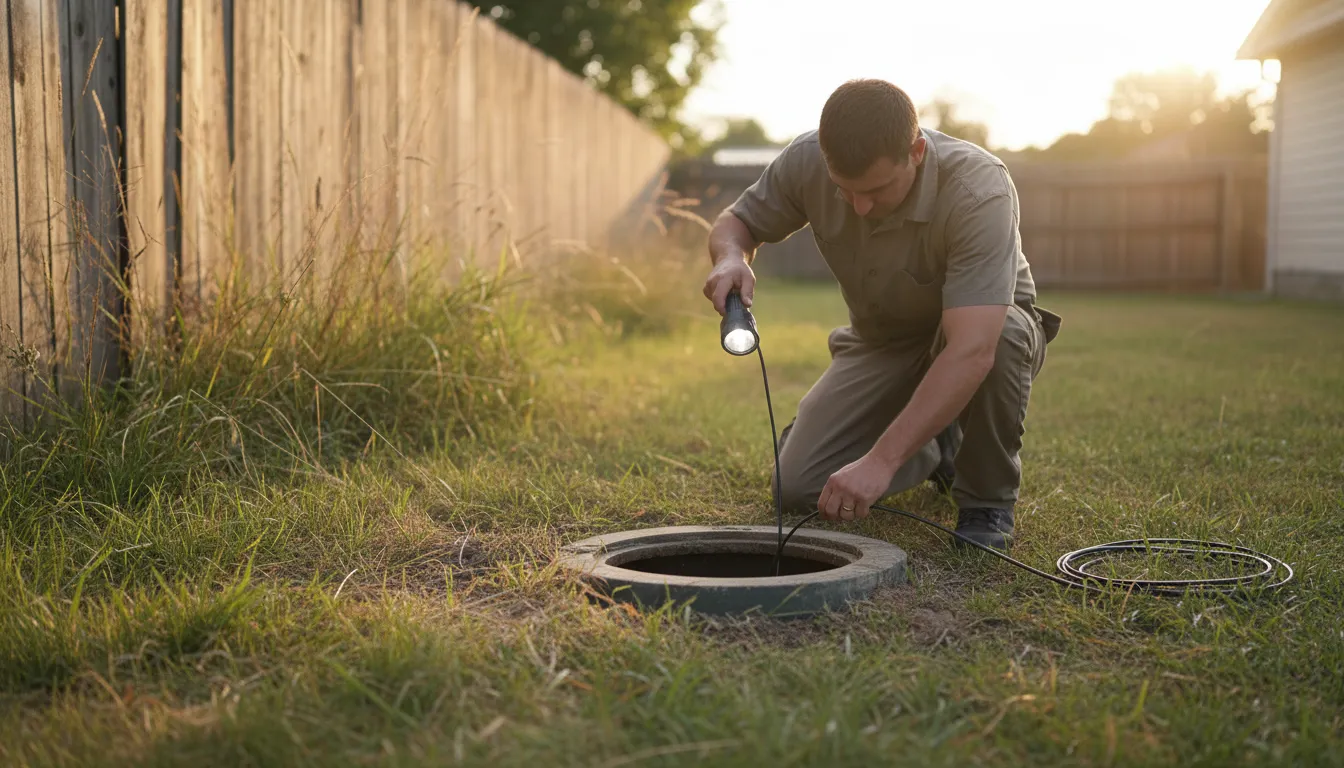
1. Locating and Opening the Tank The technician will first locate the tank and riser lids. They will check for any visible damage, cracks, or intrusion from tree roots that could compromise the tank's structure.
2. Evaluating Scum and Sludge Levels This is a core part of the inspection. The professional will measure the depth of the scum layer (floating fats and greases) and the sludge layer (settled solids) at the bottom of the tank. These measurements determine if the tank needs to be pumped. If the combined depth of sludge and scum exceeds about one-third of the tank's liquid depth, pumping is recommended.
3. Checking Baffles and Outlets The inlet baffle (where house waste enters) and outlet baffle (where liquid exits to the drain field) are inspected for damage or blockage. Functional baffles are essential for preventing solids from escaping into the drain field, which is a leading cause of system failure 4.
4. Performing a Flow Test The inspector will run water through multiple fixtures in the home (toilets, sinks, showers) to confirm wastewater is flowing properly into the tank and to check for any backups in the household plumbing 5.
5. Inspecting the Drain Field The technician will examine the area over the drain field (also called a leach field) for signs of failure. Warning signs include soggy, spongy soil, foul odors, or surfacing sewage. They may also check for an inspection port, which is required on systems like Sand-Lined Trenches to monitor water levels 6.
6. Providing a Detailed Report After the assessment, you should receive a written report detailing all findings, any issues discovered, and recommendations for repair or maintenance, such as pumping. If the inspection is for a real estate transaction, this report may be submitted to the local health unit 7.
Find the perfect septic tank inspection companies for your needs
Get personalized recommendations and expert advice
Inspection Frequency and Costs
How often should you schedule a septic system evaluation? The Arkansas Department of Health and the EPA recommend having your system inspected every 1 to 3 years. Pumping is typically needed less frequently, about every 3 to 5 years, but the inspection will determine the exact need based on sludge and scum accumulation.
When it comes to cost, understanding the scope of service is important. A full septic inspection in the North Little Rock area generally ranges from $300 to $600 8 9. It's crucial to note that this fee is typically for the inspection and report only. If the inspection reveals that pumping is necessary, that is a separate service with its own cost, which varies based on tank size and accessibility 8 10. Always clarify what is included in an inspector's quoted price.
Finding a Qualified Inspector in North Little Rock
Choosing the right professional is the most important step. Always verify that the technician or company holds a current Arkansas Septic Tank Cleaner License. You can ask to see their license or confirm their status. Look for providers with strong local reputations, proper insurance, and clear communication.
For questions about local regulations or to find contact information for the environmental health specialist covering Pulaski County, you can reach out directly to the Arkansas Department of Health's Onsite Wastewater Program 11.
Preparing for Your Inspection
A little preparation can make the inspection process smoother and more accurate:
- Know Your System's Location: Have a general idea of where your tank and drain field are. If you have a map or diagram from the home's original permit, that is ideal.
- Ensure Access: Clear any debris, vehicles, or landscaping from above the tank lid and risers.
- Provide Documentation: Have any records of past maintenance, pumping, or repairs available for the inspector.
- Be Available: Plan to be home to provide access to the interior plumbing for the flow test and to answer any questions about the system's history.
Frequently asked questions
Sources
Footnotes
-
Onsite Wastewater FAQs - Arkansas Department of Health - https://healthy.arkansas.gov/programs-services/public-health-safety/onsite-wastewater/onsite-wastewater-faqs/ ↩
-
Arkansas Department of Health - https://arkleg.state.ar.us/Home/FTPDocument?path=%2FAssembly%2FMeeting+Attachments%2F040%2F26359%2FD.8.c+DOH+SBH+Rules+Pertaining+to+Septic+Tank+Cleaners+and+Acts+137+and+457+of+2023.pdf ↩
-
Septic Systems: Homebuyer's Guide - https://www.centralarinspections.com/blog/septic-systems-homebuyers-guide/ ↩
-
Preparing for Septic Tank Inspection: 7 Key Steps - https://septic911.com/preparing-for-septic-tank-inspection/ ↩
-
Septic Tank Inspections - https://www.tidytimsinc.com/septics/inspections ↩
-
Arkansas Administrative Code, Division 04, Rule 007.04.93-005 - https://regulations.justia.com/states/arkansas/agency-007/division-04/rule-007-04-93-005/ ↩
-
Septic System Inspection Guide for Homeowners - https://uneeksepticservices.com/septic-system-inspection-guide-for-homeowners/ ↩
-
Arkansas Septic System Requirements - National Tank Outlet - https://www.ntotank.com/blog/arkansas-septic-system-requirements ↩ ↩2
-
Septic Systems: Homebuyer's Guide | Little Rock % - https://www.centralarinspections.com/blog/septic-systems-homebuyers-guide/ ↩
-
Frequent Questions on Septic Systems | US EPA - https://www.epa.gov/septic/frequent-questions-septic-systems ↩
-
Onsite Wastewater - Arkansas Department of Health - https://healthy.arkansas.gov/programs-services/public-health-safety/onsite-wastewater/ ↩